
Aug19

1 in a series of 4
Every leadership team looks strong when business is predictable.
Revenue is steady. Customers are happy. Employees know their jobs. Decisions have the luxury of being debated. Almost anyone can appear to be an effective leader when conditions are calm.
Pressure changes everything.
A major customer leaves. A cyberattack shuts down operations. A supply chain collapses. The founder announces retirement. Suddenly the leadership team is making decisions with incomplete information, competing priorities, and enormous consequences.
That is when succession planning reveals its true value.
Most companies think succession planning is about replacing executives when they retire. In reality, it is about building a leadership pipeline that performs under pressure—not just under normal circumstances.
The Biggest Mistake Companies Make
Many privately held companies identify successors by asking one question – one that’s too simple:
"Who's our best performer?"
Unfortunately, being exceptional in today's role says very little about someone's ability to lead through uncertainty tomorrow.
The manager who consistently delivers operational excellence may struggle when faced with ambiguity. The technical expert may never have managed competing stakeholder interests. The sales leader who thrives in growth may not know how to stabilize an organization during a downturn.
Pressure exposes leadership gaps that day-to-day operations often hide.
That's why succession planning cannot be based solely on performance.
It must be based on readiness.
Pressure Is a Skill
One of the most overlooked aspects of leadership development is deliberately exposing future leaders to situations that stretch their judgment.
If every important decision is made by the owner or CEO, future leaders never develop the confidence to make difficult calls themselves.
If emerging leaders never lead a crisis, manage conflict across departments, recover from failure, or present difficult recommendations to senior leadership, they remain untested.
And untested leaders become risky leaders.
The objective isn't to make their jobs harder.
The objective is to make them stronger.
Build Depth, Not Just Replacements
Another common mistake is creating a succession plan around a single successor.
That works until the successor resigns.
Or decides they don't want the role. (JP Morgan, 2026)
Or receives an offer they can't refuse.
Strong companies don't build replacement plans.
They build leadership depth.
Every critical position should have multiple developing candidates at different stages of readiness. Some may be capable today. Others may need two or five years of development.
A healthy pipeline creates options.
Options reduce organizational risk.
Give Future Leaders Enterprise Experience
The best future CEOs rarely spend their careers in one department.
They understand finance, operations, customers, strategy, talent, and execution because they have experienced more than one part of the business.
Cross-functional assignments, special projects, acquisitions, product launches, customer meetings, and strategic planning discussions all expand a leader's perspective.
These experiences build enterprise thinking.
Enterprise thinking is what allows leaders to make sound decisions when the pressure is highest.
The Real Test
One of my clients believed they had the perfect future CEO inside their ranks. On paper, he looked great. He had outstanding technical expertise, years of loyalty, and consistently exceeded every performance goal.
Then we asked a simple question:
"What enterprise-level decisions has he actually made?"
The room went quiet.
He had never owned company-wide strategy. He had never managed executive conflict. He had never presented to lenders or major customers. He had never led through a significant business disruption.
He wasn't unqualified.
He was inexperienced and unprepared.
Fortunately, the company had enough time to change that. Over the next several years, they intentionally broadened his experiences before the transition occurred.
That's what succession planning is supposed to do.
Final Thought
Leadership pipelines don't fail because companies choose the wrong people.
They fail because organizations mistake high performance for leadership readiness.
The strongest succession plans aren't built for smooth sailing. They're built for the moments when the business is under the greatest pressure.
Because that's when your next generation of leaders will either hold the organization together—or reveal the cracks that have been there all along.
Keywords: Entrepreneurship, HR, Leadership
 2027 Predictions for Cybersecurity: The Agent Is the New Insider
 FROM THE AISLE Field Notes on AI Implementation
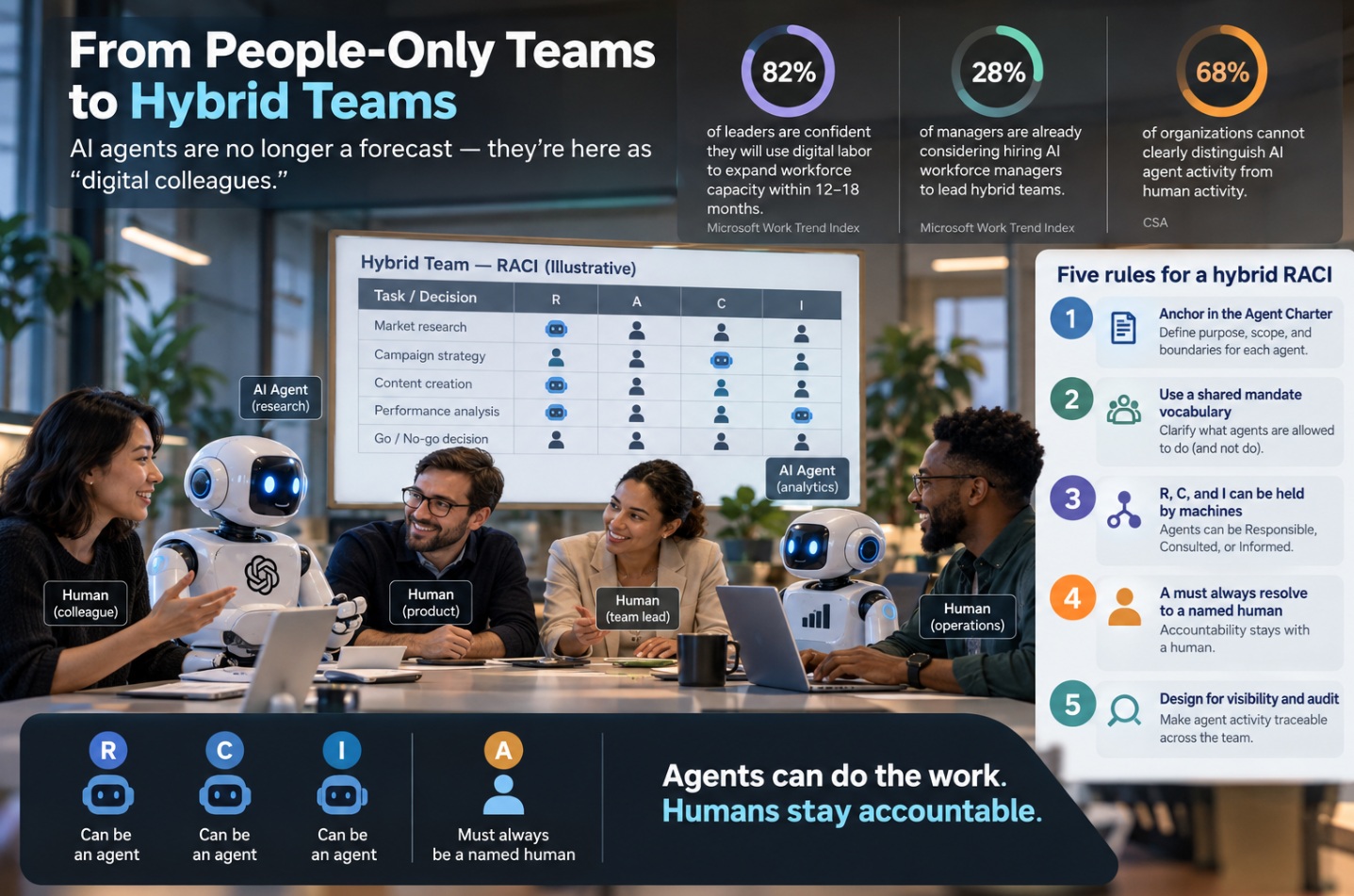 The Hybrid Team: Rethinking RACI When Some of Your Team Members Are Machines
 Two Clocks, One Truck: The Army's Need for Speed Meets New Defense Sourcing Rules
 Sustainable Transformation: The Elephant and The Mouse In The Room