Nov06
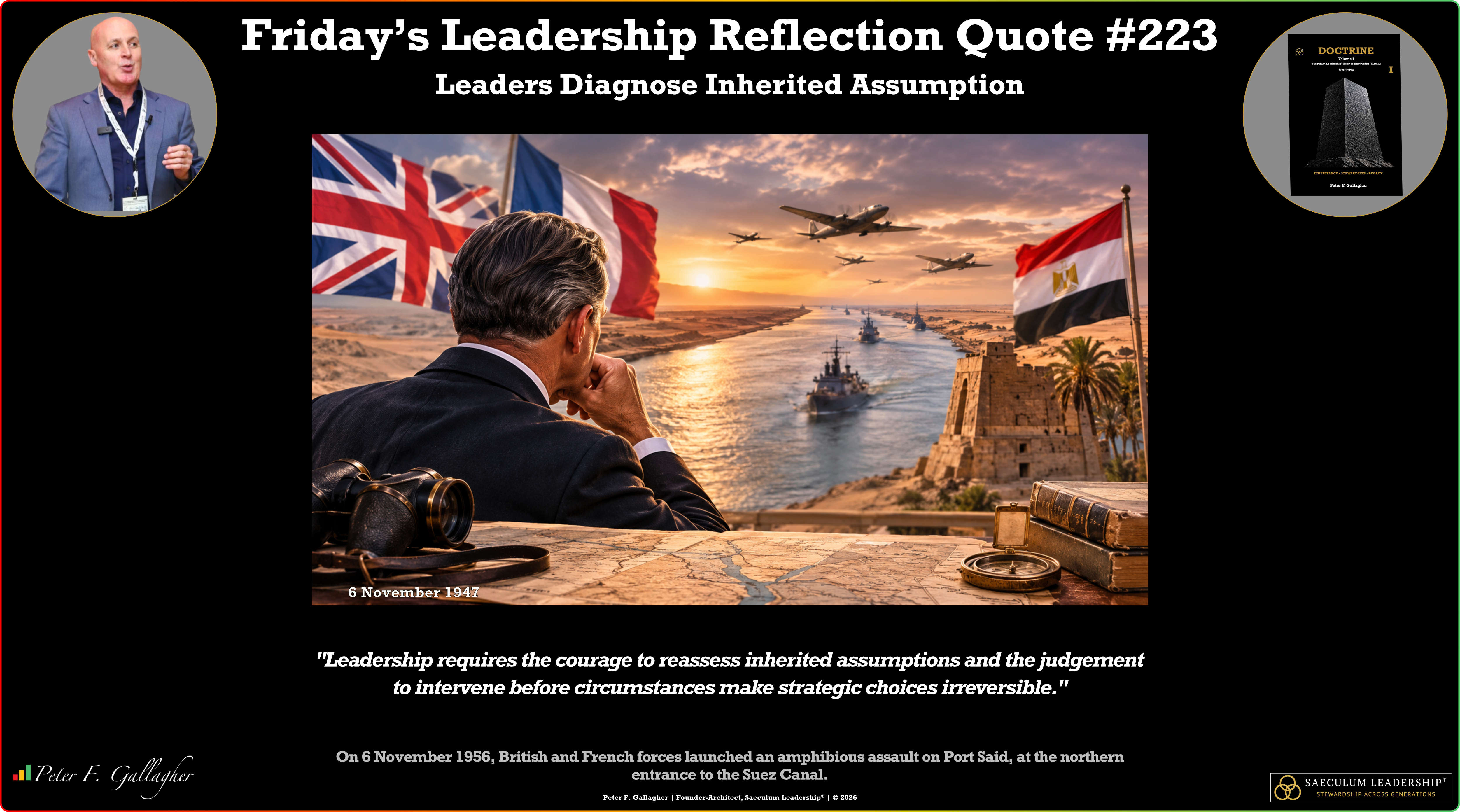
FLRQ223 | Leadership Learning - What should leaders do when inherited assumptions no longer reflect reality?
On 6 November 1956, British and French forces launched an amphibious assault on Port Said, at the northern entrance to the Suez Canal. The operation represented the culmination of a military intervention that had already encountered growing international opposition. The crisis began after Egyptian President Gamal Abdel Nasser nationalised the Suez Canal Company on 26 July 1956. Britain and France regarded the move as a threat to their interests and to access through a waterway vital to global trade. Israel invaded Egypt's Sinai Peninsula on 29 October. Britain and France then issued an ultimatum demanding that both sides withdraw from the Canal Zone, which Egypt rejected.
Anglo-French air attacks began on 31 October. On 5 November, British and French airborne forces seized key positions, including El Gamil airfield and Port Fuad. The following morning, amphibious forces landed at Port Said. The United Nations General Assembly had called for a ceasefire and withdrawal of foreign forces. The United States opposed the invasion and applied financial pressure as sterling came under strain. Soviet threats raised the risk of wider confrontation, while the Hungarian uprising added to international instability. On 6 November, under mounting international and financial pressure, Prime Minister Anthony Eden announced that Britain and France would cease military operations at midnight on 6–7 November. Withdrawals followed over subsequent months. A United Nations Emergency Force was deployed, and the Canal remained blocked until April 1957. Egypt retained sovereignty over the waterway.
Suez exposed the limits of military power when diplomatic legitimacy, economic resilience and international support are absent. It also exposed the declining capacity of Britain and France to exercise independent global power without the diplomatic, economic and strategic support of their principal allies. Strategic influence increasingly depended on alliances, financial capacity and international institutions.
For leadership, the episode exposes the danger of allowing strategic assumptions to become institutional commitments that resist reassessment. Decision-makers rarely possess complete information during crises. However, uncertainty does not justify impulsive action, nor does previous commitment justify persistence when evidence challenges the original rationale. Responsible leadership demands continuous scrutiny of assumptions, emerging conditions, consequences and the options still available. Suez demonstrates how the failure to reassess strategic direction can progressively surrender control to circumstances beyond the decision-makers' influence.
This is a Strategic Stewardship Signal within Saeculum Leadership®. It highlights the responsibility to recognise when inherited assumptions no longer reflect strategic realities and when intervention becomes necessary to protect institutional interests. The central Leadership Responsibility is Intervene: reassess established positions and act before strategic choices disappear.
Saeculum Leadership® Lessons: Suez demonstrates that stewardship requires more than commitment to a course of action; it requires continual reassessment of whether the assumptions supporting that course remain valid. Saeculum leaders diagnose inherited assumptions against emerging strategic realities before treating historical authority, precedent or established positions as sufficient justification for continuing a chosen course. They distinguish verifiable evidence from interpretation, testing political claims, institutional assumptions and emerging risks before reaching consequential decisions. Saeculum leaders mobilise institutional relationships and credible alliances, recognising that strategic legitimacy depends on wider systems of trust, cooperation and support. They execute decisions with strategic flexibility, adjusting direction and intervening before delay closes viable options. Saeculum leaders steward consequences beyond immediate outcomes, protecting institutional continuity and considering what future generations will inherit. Leaders Diagnose Inherited Assumptions.
“Leadership requires the courage to reassess inherited assumptions and the judgement to intervene before circumstances make strategic choices irreversible.”
From the Canon — Practice 4 — Micro-Correction: Micro-Correction recognises that leadership rarely fails through a single decision. More often, difficulties emerge when leaders persist with assumptions that no longer reflect changing realities. Effective leadership therefore requires continual reassessment of evidence, conditions and consequences rather than reliance on precedent, authority or past success.
This practice requires disciplined attention to weak signals, emerging constraints and evidence that challenges established thinking. Leaders must distinguish between what is known, what is assumed and what has changed since earlier decisions were made. Small adjustments made early can preserve strategic choice, while delayed intervention can narrow options, compound institutional weaknesses and increase stewardship debt. Micro-Correction is not an admission of failure but a demonstration of responsible stewardship under uncertainty.
The objective is not constant change for its own sake, but maintaining alignment between strategic intent and evolving reality. Through timely reassessment and measured intervention, leaders protect institutional resilience and preserve freedom of action. The ultimate test of Micro-Correction is whether leaders recognise changing circumstances early enough to adapt before assumptions become liabilities and opportunities become constraints. Leadership effectiveness is therefore measured not only by commitment to a course, but by the judgement to adjust it when reality demands.
The Stewardship Reflection Lens:
What are we inheriting? What assumptions, commitments or strategies have we inherited that may no longer reflect the realities we face?
How should we steward it? What evidence challenges our established assumptions, and where must we reassess, adapt or intervene before strategic options diminish?
What legacy are we creating? What inheritance will future generations receive from the decisions we choose to maintain, change or delay today?
INHERITANCE • STEWARDSHIP • LEGACY
Further Reading: Saeculum Leadership® Body of Knowledge (SLBoK); Saeculum Leadership®: Doctrine — Volume I (forthcoming).
For further insights into Saeculum Leadership®, institutional stewardship and leadership across generations, please contact Peter F. Gallagher at Peter.gallagher@a2B.consulting.
For further insights please visit our websites: https://www.a2b.consulting https://www.peterfgallagher.com Amazon.com: Peter F Gallagher: Books, Biography, Blog, Audiobooks, Kindle
Saeculum Leadership® Body of Knowledge (SLBoK): Volumes 1-10.A-E & 0, I-VI
~ Leadership of Change® Volume 1 - Change Management Fables
~ Leadership of Change® Volume 2 - Change Management Pocket Guide
~ Leadership of Change® Volume 3 - Change Management Handbook
~ Leadership of Change® Volume 4 - Change Management Leadership
~ Leadership of Change® Volume 5 - Change Management Adoption
~ Leadership of Change® Volume 6 - Change Management Behaviour
~ Leadership of Change® Volume 7 - Change Management Sponsorship
~ Leadership of Change® Volume 8 - Change Management Charade
~ Leadership of Change® Volume 9 - Change Management Insanity
~ Leadership of Change® Volume 10 - Change Management Dilenttante
~ Leadership of Change® Volume A - Change Management Gamification - Leadership
~ Leadership of Change® Volume B - Change Management Gamification - Adoption
Keywords: Business Strategy, Change Management, Leadership
Friday’s Leadership Reflection Quote – Saeculum Leadership: Leaders Diagnose Inherited Assumption The Corix Partners Friday Reading List - November 6, 2026
 The Silent Cost of Leadership: What Organizations Lose When Employees Stop Speaking Up
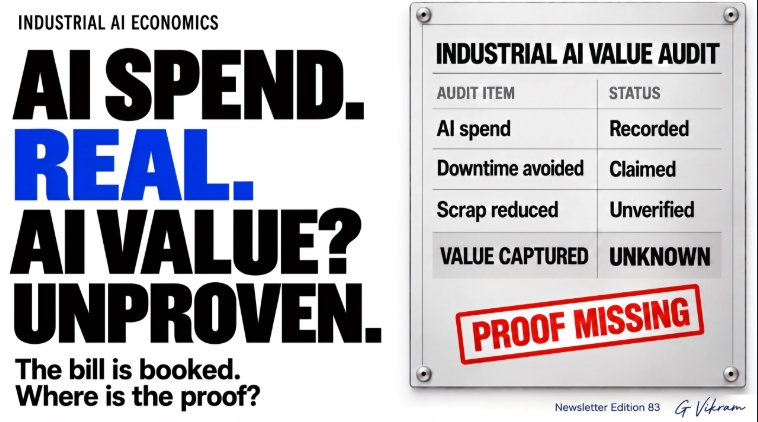 AI Spend Is Real. But Where Is the Proof of AI Value?
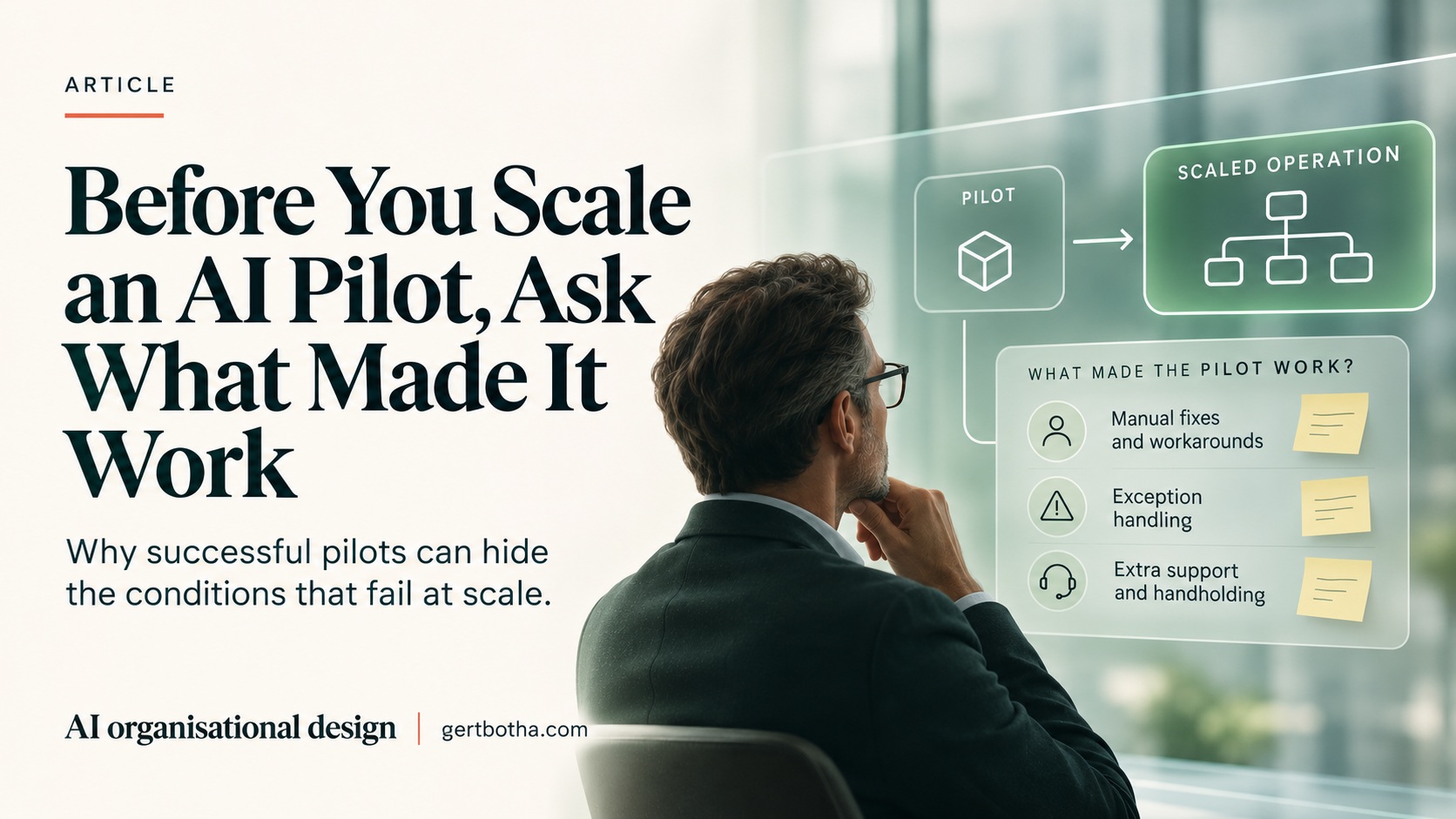 Before You Scale an AI Pilot, Ask What Made It Work