
Nov05

There is a particular kind of silence that should concern every organizational leader. It is not the quiet concentration of employees engaged in meaningful work, but the silence that develops when individuals begin to believe their observations, concerns, and ideas are no longer welcome, valued, or capable of influencing change.
From the outside, an organization experiencing this condition may appear remarkably stable. Meetings proceed without disagreement, employees fulfill their responsibilities, and management encounters little resistance. Leadership may interpret this absence of conflict as evidence of organizational alignment.
Yet beneath that appearance of stability, something important may be deteriorating. Employees may have stopped asking questions, offering alternative perspectives, identifying operational weaknesses, or challenging decisions they believe could produce unfavorable outcomes.
An organization can achieve compliance while quietly losing commitment. It can maintain productivity while diminishing initiative. And it can preserve the appearance of unity while allowing trust to erode.
One of the most consequential misconceptions in organizational leadership is the assumption that silence represents agreement. In reality, organizational silence may indicate that employees have learned that speaking up carries greater professional or interpersonal risks than remaining quiet.
For leaders responsible for developing effective teams, the question is not simply whether employees are communicating. It is whether the environment encourages them to communicate honestly, particularly when their observations challenge established assumptions or authority.
Human behavior within organizations is shaped by more than job descriptions, compensation, or individual motivation. Employees continuously interpret their social environments, assess interpersonal risks, and adjust their behavior according to the responses they receive.
This process is rooted in social psychology. Individuals have fundamental needs for belonging, acceptance, security, and recognition. Within workplace environments, these needs interact with organizational hierarchies, professional reputations, and the consequences of challenging authority.
When an employee raises a concern and receives a dismissive response, the experience communicates more than disagreement. It provides information about the potential consequences of speaking openly. When suggestions are repeatedly ignored, employees may question whether further contributions justify the effort.
Over time, these experiences can create a pattern of learned restraint. Employees do not necessarily lose the ability to recognize problems or develop solutions. Instead, they become increasingly selective about whether those observations are worth sharing.
Organizational psychologist Elizabeth Morrison has extensively examined employee voice and silence, demonstrating how interpersonal concerns, perceived effectiveness, and organizational conditions influence whether employees communicate important information.
An employee who remains quiet because they have nothing to contribute is fundamentally different from an employee who possesses valuable information but believes sharing it would be ineffective or professionally risky.
Organizations are social systems containing formal hierarchies, informal relationships, unwritten rules, and patterns of influence that shape how individuals interact.
Although organizational charts identify reporting relationships, they rarely reveal the complete distribution of social power. Influence may emerge through tenure, access to leadership, specialized knowledge, personal relationships, or control over information and opportunities.
Consider a workplace where certain individuals consistently dominate meetings, control access to important conversations, or discourage participation from colleagues whose perspectives differ from their own. Management may never explicitly authorize these behaviors. Nevertheless, if they persist without correction, employees may interpret them as accepted elements of the organizational culture.
Sociologically, workplace norms develop through repeated interaction and reinforcement. Employees observe which behaviors receive recognition, which attract criticism, and which individuals influence decisions. They subsequently adapt their conduct to the environment they experience.
This creates an important leadership challenge: Organizational culture is not determined exclusively by the values an organization announces. It is also shaped by the behaviors leadership permits.
A company may promote collaboration while tolerating information hoarding. It may celebrate innovation while discouraging disagreement. It may emphasize respect while allowing influential employees to marginalize others.
When these contradictions persist, employees learn that stated values and operational realities are not necessarily the same.
Harvard Business School professor Amy Edmondson introduced the concept of team psychological safety in influential research examining learning behavior within work teams. Her findings associated psychological safety with behaviors supporting organizational learning, including asking questions, acknowledging mistakes, and discussing concerns.
Psychological safety is sometimes misunderstood as an expectation that leaders must avoid disagreement, difficult conversations, or performance accountability.
Psychological safety does not require leaders to accept every recommendation or eliminate professional standards. It establishes conditions in which individuals can participate honestly while remaining responsible for their conduct and performance.
A psychologically safe team can experience disagreement without allowing disagreement to become personal hostility. Employees can question a strategy without being characterized as disloyal. Leaders can acknowledge uncertainty without surrendering authority.
Effective leadership requires both psychological safety and accountability. Without accountability, teams may struggle to maintain standards. Without psychological safety, they may become reluctant to acknowledge the problems those standards are intended to address.
Many managers describe themselves as approachable and emphasize that employees are welcome to raise concerns. Open-door policies, employee surveys, and feedback channels are common features of organizational management.
However, the existence of a communication channel does not guarantee that employees believe using it is safe or worthwhile.
Research by James Detert and Ethan Burris examined the relationship between leadership behavior and employee voice. Their findings demonstrated the importance of managerial openness and psychological safety in encouraging employees to offer improvement-oriented suggestions.
Employees evaluate leadership accessibility through observed behavior, not organizational declarations.
A leader may invite feedback but respond defensively when concerns challenge a preferred decision. A manager may encourage innovation while consistently favoring recommendations from a small group of trusted individuals.
The true test of an open-door culture is not whether someone can enter the conversation. It is whether that person can leave with their professional dignity intact, even when leadership disagrees.
The consequences of employee silence extend beyond morale. They can influence operational performance, innovation, risk management, employee development, and organizational adaptability.
Frontline employees frequently possess information that senior management cannot observe directly. They understand where processes create delays, where training fails to reflect operational realities, and where proposed changes may encounter practical limitations.
When these observations do not move through the organization, leadership decisions become increasingly dependent on incomplete information.
An organization may invest heavily in technology while overlooking implementation challenges employees recognized early. A process may continue producing avoidable errors because individuals no longer believe reporting them will produce meaningful improvement.
Innovation suffers when employees stop contributing ideas. Operational risk increases when important concerns remain unreported. Leadership development weakens when emerging talent learns that conformity is more advantageous than independent judgment.
There is also a less visible consequence: the loss of discretionary contribution.
Employees may continue fulfilling formal responsibilities while withdrawing the curiosity, initiative, creativity, and collaborative effort that help organizations improve.
The organization continues receiving the employee's labor, but it may no longer receive the full benefit of the employee's judgment.
For executives, this distinction deserves greater attention in discussions about productivity and organizational performance.
Addressing organizational silence requires more than encouraging employees to speak. Leaders must examine the conditions influencing whether participation feels worthwhile.
I propose the VOICE Framework, a practical leadership approach built around five interconnected responsibilities.
V — Validate Perspectives. Recognize that employees may possess valuable information regardless of organizational position. Validation does not require agreement; it requires thoughtful consideration rather than immediate dismissal.
O — Open Communication Channels. Provide credible opportunities for employees to contribute through team discussions, individual conversations, structured feedback, and appropriate confidential reporting mechanisms. These channels must be responsive and protected against retaliation.
I — Include Diverse Voices. Examine whose perspectives consistently influence decisions and whose contributions remain underrepresented. Meaningful inclusion requires attention to informal power structures, meeting dynamics, and access to opportunities.
C — Create Psychological Safety. Demonstrate that respectful disagreement, constructive questioning, and identifying problems are legitimate professional responsibilities. Employees should not have to choose between maintaining their dignity and communicating important information.
E — Establish Accountability and Follow-Through. Not every suggestion can be implemented, but employees deserve clarity about how concerns are evaluated, why decisions are made, and what actions will follow.
The VOICE Framework is a proposed practical leadership model, not a validated psychological assessment. Its purpose is to translate established organizational behavior principles into observable management practices.
Employee participation cannot be sustained through encouragement alone. It must be supported by an environment where contributions are respected, considered, and capable of influencing outcomes.
As artificial intelligence becomes increasingly integrated into organizational decision-making, employee voice may become even more important.
AI systems can identify patterns, support forecasting, and automate operational workflows. However, their usefulness depends on the quality of available information, assumptions embedded in system design, and human participants' ability to recognize when recommendations do not reflect operational reality.
Employees closest to implementation frequently observe conditions that may not appear in executive dashboards or automated reports. They may recognize unexpected system behavior, inconsistent processes, or gaps between designed workflows and actual workplace practices.
If employees do not feel comfortable questioning AI-generated recommendations or reporting implementation concerns, organizations risk allowing incomplete assumptions to persist without appropriate scrutiny.
This is particularly relevant when leadership interprets employee hesitation as resistance to technological change rather than investigating whether legitimate concerns exist.
Successful AI integration requires more than technical proficiency. It requires organizational environments where human judgment remains valued and employees can challenge automated outcomes without being perceived as obstacles to progress.
Artificial intelligence can help organizations recognize patterns in their data. It cannot compensate for a culture that discourages people from sharing what they know.
Most organizations measure financial performance, operational efficiency, customer satisfaction, and employee retention. Fewer systematically examine whether employees believe their voices influence decisions.
Leaders should evaluate whether employees feel comfortable challenging assumptions, whether concerns receive meaningful responses, and whether participation is distributed across the organization.
These indicators require careful interpretation. An increase in reported concerns may indicate improving trust rather than deteriorating culture. Conversely, a low number of complaints does not necessarily establish employee satisfaction.
The objective should not be to manufacture positive survey results. It should be to understand the environment employees actually experience.
This requires consistent leadership behavior. When managers tolerate exclusion, information gatekeeping, public embarrassment, or retaliation, they influence everyone observing those situations.
Conversely, when leaders address inappropriate behavior, welcome constructive disagreement, and demonstrate genuine consideration for employee concerns, they establish different expectations.
Listening is an organizational discipline.
Organizations rarely lose their capacity for honest communication overnight. More often, that capacity erodes through small, repeated experiences that gradually alter employee expectations.
A dismissed concern becomes a lesson. An ignored suggestion becomes a precedent. An unchallenged act of exclusion becomes an informal rule. Eventually, individuals adapt to an environment where silence appears safer than participation.
Leadership may not immediately recognize what has changed. Meetings continue, reports are submitted, and responsibilities are fulfilled.
Yet something essential may have been lost: the willingness of capable people to contribute their full judgment, experience, and perspective.
The most effective leaders do not measure success by how rarely they are challenged. They recognize that thoughtful disagreement, constructive criticism, and honest feedback are necessary ingredients of organizational learning.
Employee voice is not a threat to authority. Properly supported, it is one of the mechanisms through which leadership becomes more informed, accountable, and effective.
Ultimately, organizational health cannot be determined solely by what employees say in meetings or how confidently executives describe their culture. It must also be examined through the conversations that never happen, the concerns that remain unreported, and the ideas employees decide are no longer worth sharing.
Because one of the greatest failures of leadership is not discovering that employees disagree with you. It is creating an environment where they no longer believe they can tell you.
Keywords: Change Management, Leadership, Management
The Silent Cost of Leadership: What Organizations Lose When Employees Stop Speaking Up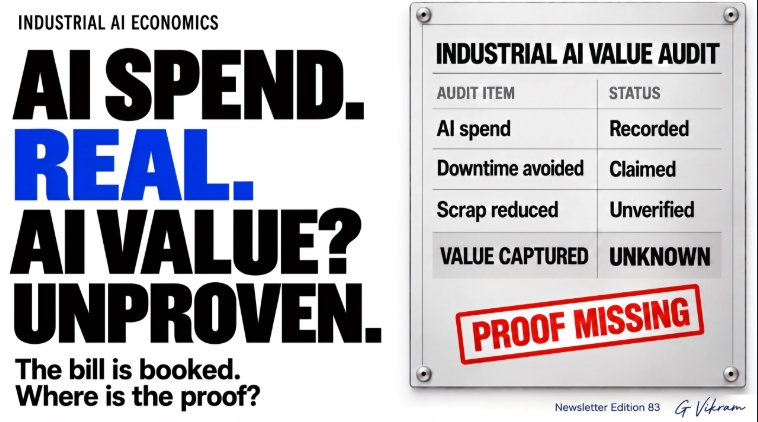 AI Spend Is Real. But Where Is the Proof of AI Value?
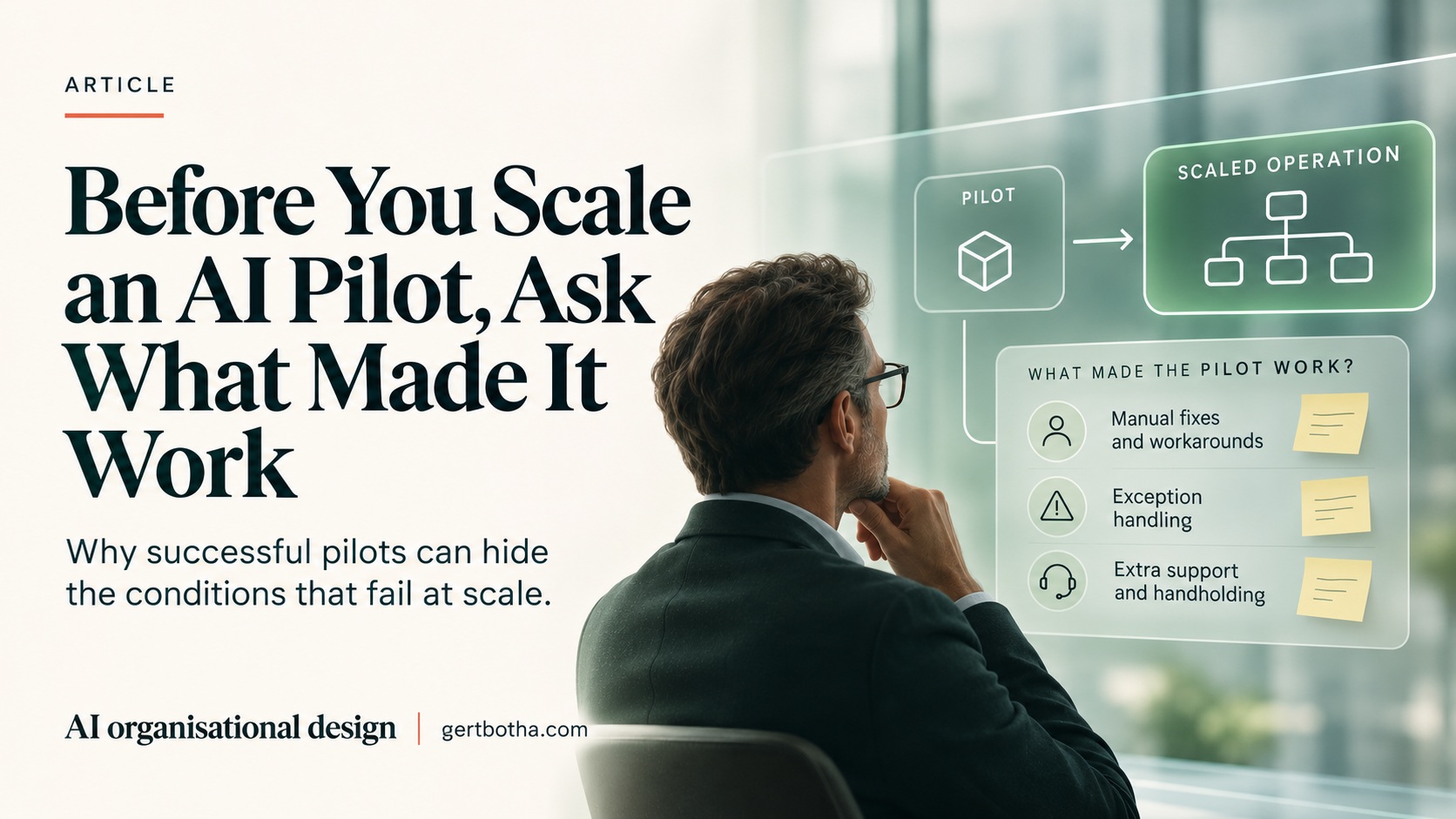 Before You Scale an AI Pilot, Ask What Made It Work
 Operational Competence: What Training Records Cannot Prove
 A Fair Review