

Industry 4.0 & Digital Transformation Enthusiast | Business Strategist | Manufacturing IT Professional | Avid Storyteller | Tech Geek | Public Speaker & Trainer | Tech Partnerships | AI Auditor
Available For: Advising, Authoring, Consulting, Influencing, Speaking
Travels From: Chennai, India
| G Vikram | Points |
|---|---|
| Academic | 0 |
| Author | 80 |
| Influencer | 169 |
| Speaker | 0 |
| Entrepreneur | 0 |
| Analyst | 0 |
| Total | 249 |
Points based upon Thinkers360 patented algorithm.

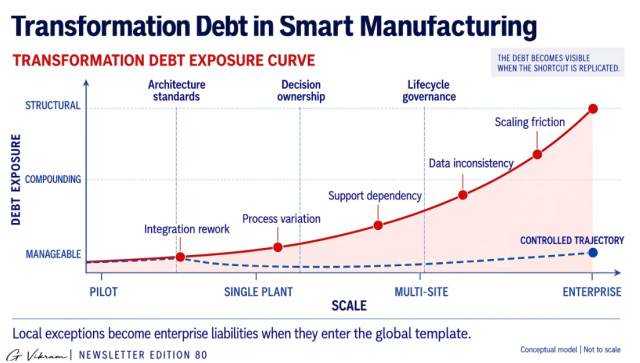 Transformation Debt in Smart Manufacturing: Why Pilot Shortcuts Become Enterprise Costs
Tags: AI Governance, Digital Transformation, Manufacturing
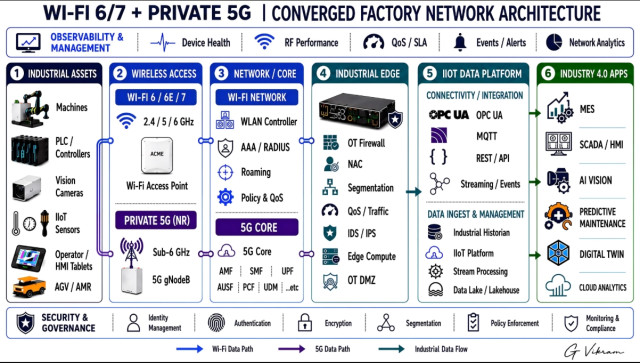 Wi-Fi or Private 5G?
Tags: AI Governance, Digital Transformation, Manufacturing
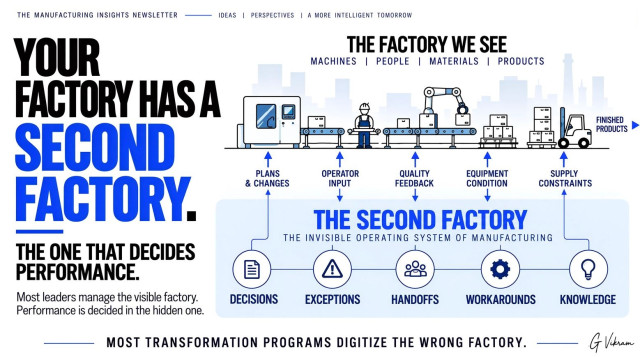 What if the biggest factory problem is the one you cannot see?
Tags: AI Governance, Digital Transformation, Manufacturing
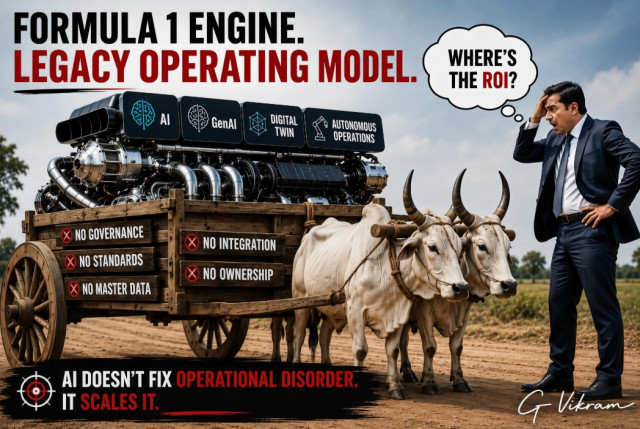 Formula 1 Engine. Legacy Operating Model
Tags: AI Governance, Digital Transformation, Manufacturing
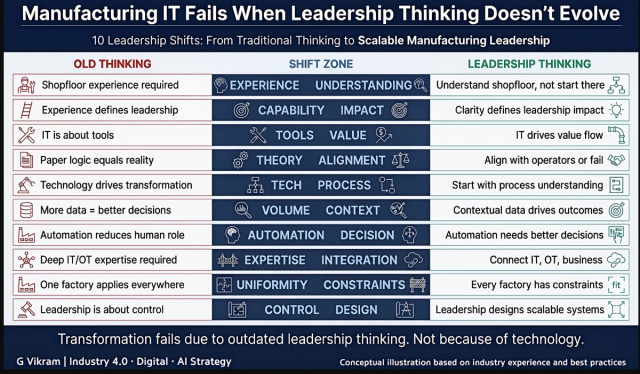 Manufacturing IT Fails When Leadership Thinking Doesn’t Evolve
Tags: AI Governance, Digital Transformation, Manufacturing
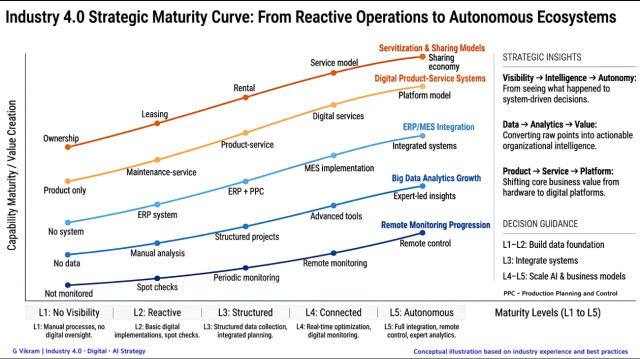 From Reactive to Autonomous: Rethinking Industry 4.0 Through the Maturity Curve
Tags: AI Governance, Digital Transformation, Manufacturing
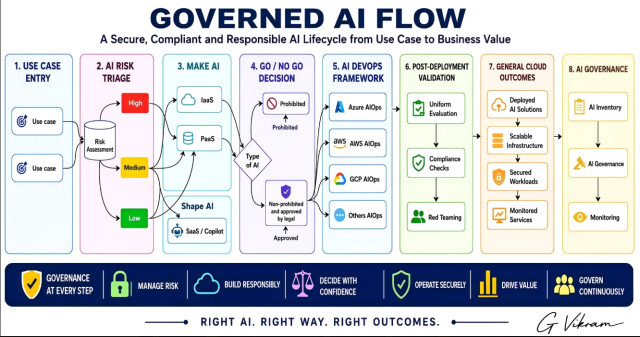 From AI Experiments to Enterprise AI: Why Governance Must Come Before Scale
Tags: AI Governance, Digital Transformation, Manufacturing
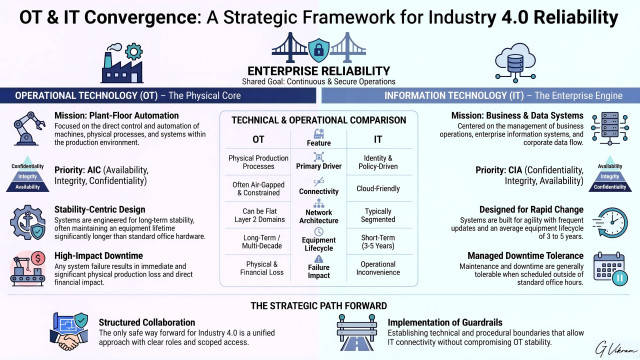 OT & IT Convergence - The Goal Is Not Integration. It Is Reliability.
Tags: Digital Transformation, Manufacturing
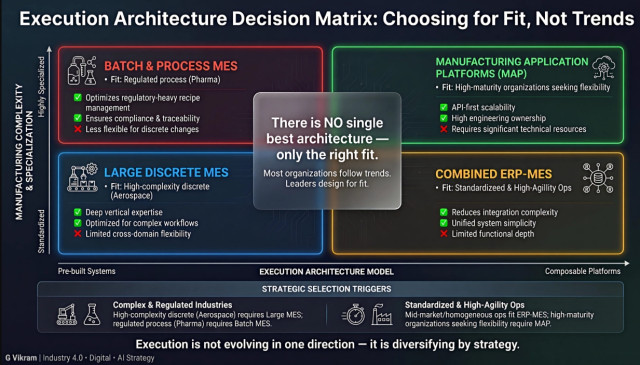 MES Is Not a Tool Decision. It’s an Operating Model Decision.
Tags: AI Governance, Digital Transformation, Manufacturing
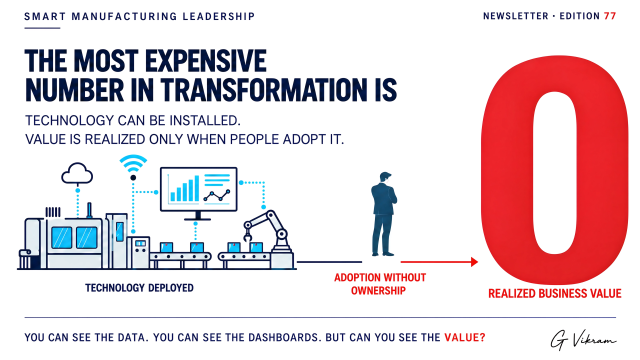 THE ZERO-VALUE FACTORY When technology is live - but transformation is not
Tags: Digital Transformation
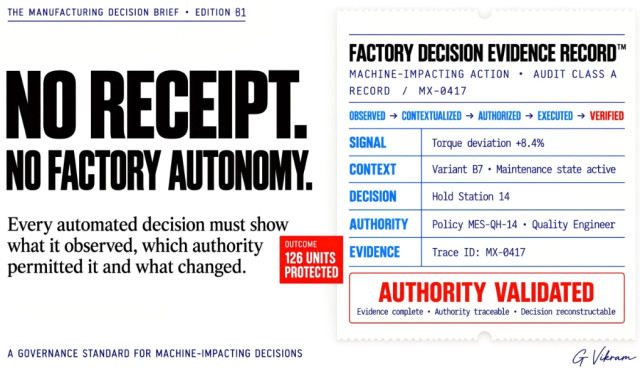 Before Factory AI, Build the Decision Receipt
Tags: AI Governance, Digital Transformation, Manufacturing
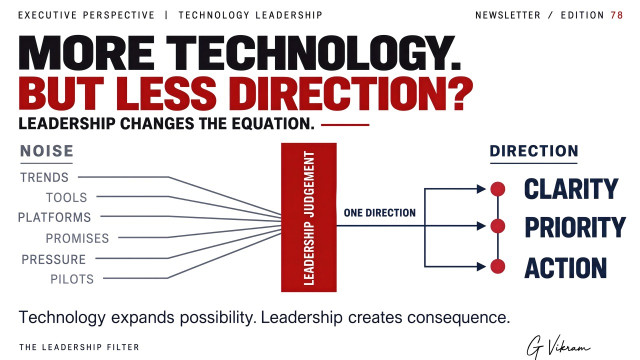 MORE TECHNOLOGY. BUT LESS DIRECTION?
Tags: Business Strategy, Digital Transformation, Manufacturing
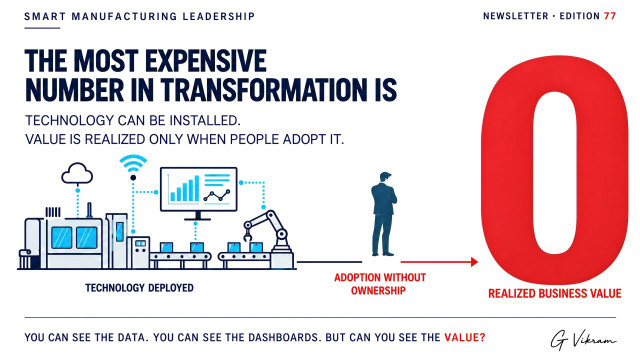 THE ZERO-VALUE FACTORY When technology is live - but transformation is not
Tags: Business Strategy, Digital Transformation, Manufacturing
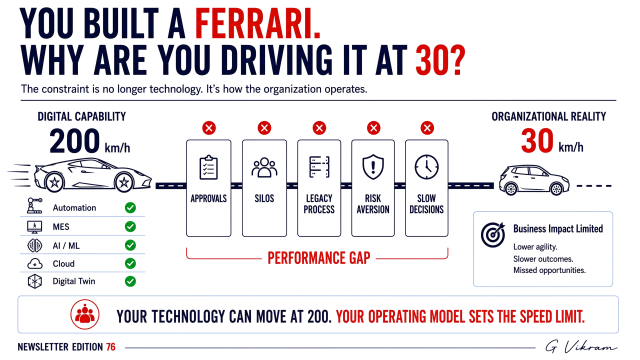 Your Technology Is Fast. Your Organization Isn’t.
Tags: Digital Transformation
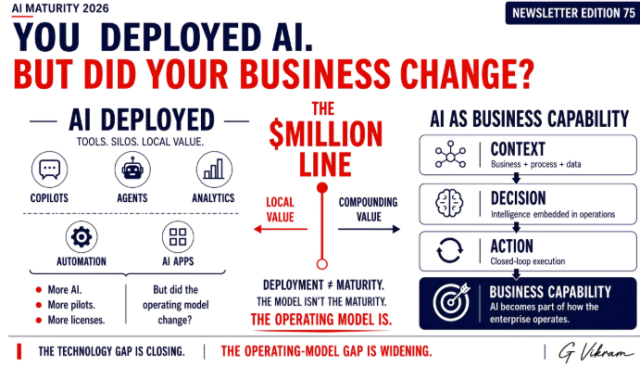 The Next AI Divide Is Not Technology. It’s the Operating Model.
Tags: AI, Business Strategy, Digital Transformation
 Your AI Agent Made the Decision. Who Is Accountable?
Tags: Agentic AI, AI Governance, Manufacturing
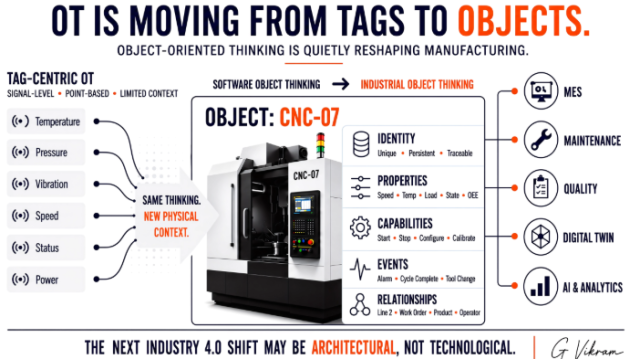 OT Is Moving from Tags to Objects. Are We Ready?
Tags: AI, Digital Transformation, Manufacturing
 Manufacturing Doesn’t Have a Data Problem
Tags: Big Data, Manufacturing
 Smart Factories Are Not Enough. We Need Trust Factories.
Tags: Culture, Manufacturing
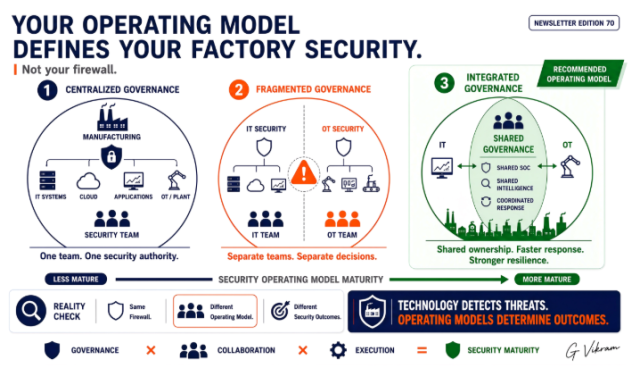
Your Firewall Isn't Your Biggest Security Decision
Tags: Cybersecurity, Manufacturing
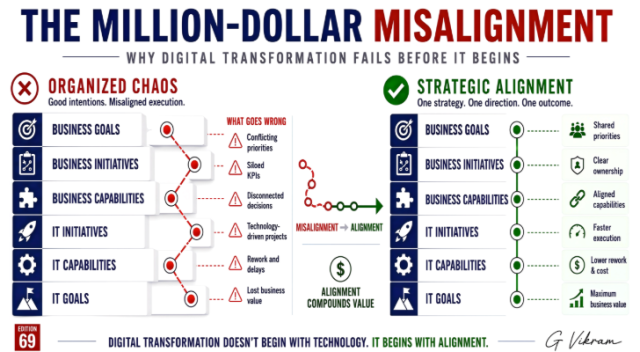 The Million-Dollar Misalignment Why Digital Transformation Fails Before It Begins
Tags: Business Strategy, Digital Transformation
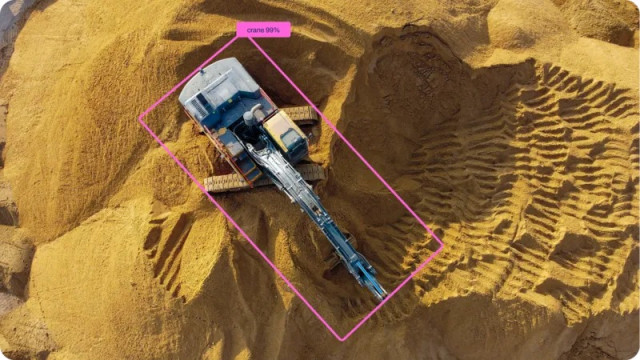 Precision Matters: Unlocking the Potential of Oriented Bounding Box (OBB) Detection in Computer Vision
Tags: AI, Digital Transformation, Manufacturing
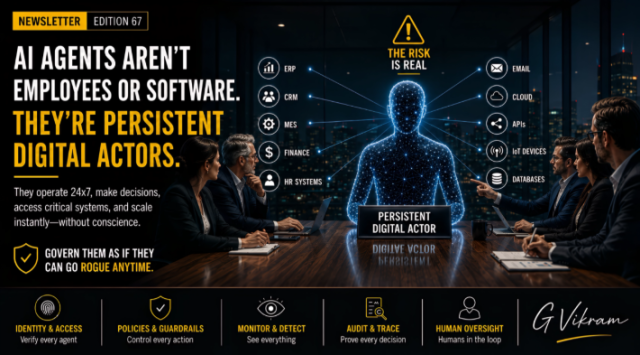 AI AGENTS REQUIRE A NEW GOVERNANCE MODEL
Tags: Agentic AI, AI, AI Governance
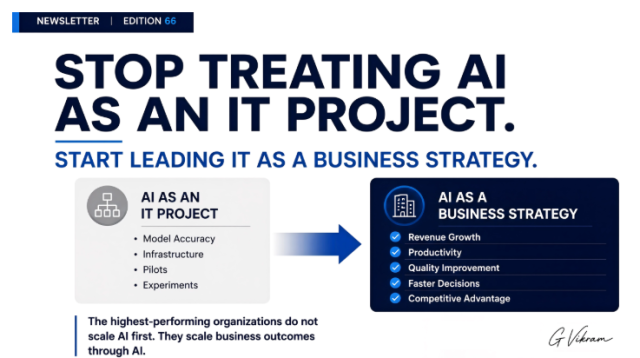 Why Most AI Initiatives Fail - And What Leaders Must Do Differently
Tags: AI Governance, Business Strategy, Digital Transformation
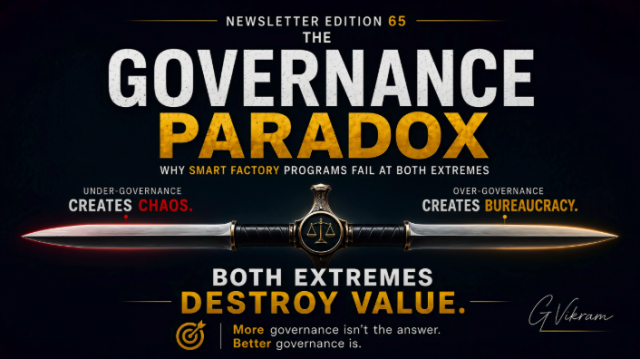 Why Smart Factory Programs Fail at Both Extremes
Tags: AI Governance, Digital Transformation, Manufacturing
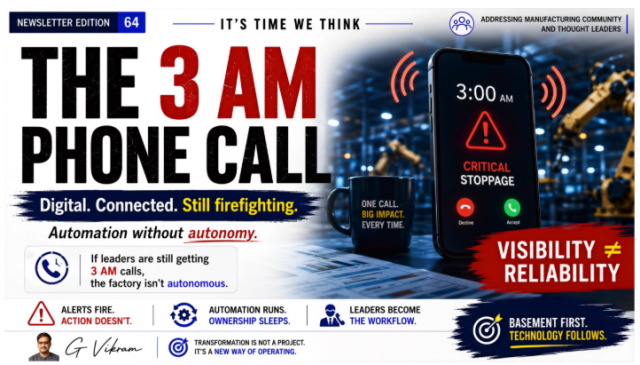 THE 3 AM PHONE CALL Why Leaders Still Get Emergency Calls in Digital Factories
Tags: Digital Transformation, Leadership, Manufacturing
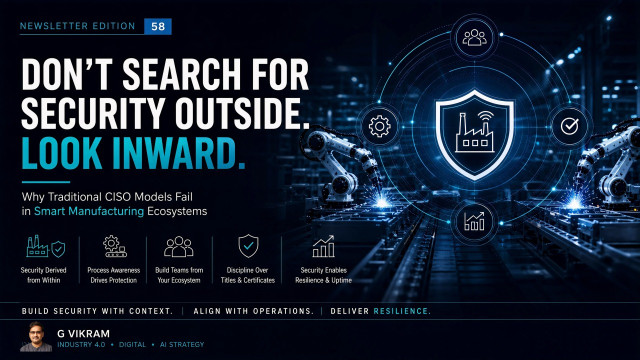 The Next Shift in Manufacturing Security
Tags: AI Governance, Digital Transformation, Manufacturing
 The Hidden Energy Cost of AI - A Reality Check for 2025 and Beyond
Tags: AI Governance, Digital Transformation, Manufacturing
 GenAI Security: Striking the Right Balance Between Innovation and Protection
Tags: AI Governance, Digital Transformation, Manufacturing
 The Six Dimensions of Data Integration – From Ad Hoc to Augmented
Tags: AI Governance, Digital Transformation, Manufacturing
 Azure OpenAI: Smart Pricing & Deployment Strategies for Sustainable Innovation
Tags: AI Governance, Digital Transformation, Manufacturing
 SMART MANUFACTURING 2025: From Promise to Performance
Tags: AI Governance, Digital Transformation, Manufacturing
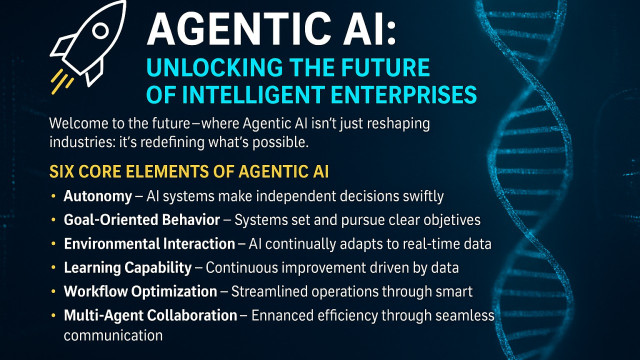 Agentic AI: Unlocking the Future of Intelligent Enterprises
Tags: AI Governance, Digital Transformation, Manufacturing
 Welcome to the Age of AI-Driven Transformation
Tags: AI Governance, Digital Transformation, Manufacturing
 Your SAP S/4HANA implementation can be successful.
Tags: AI Governance, Digital Transformation, Manufacturing
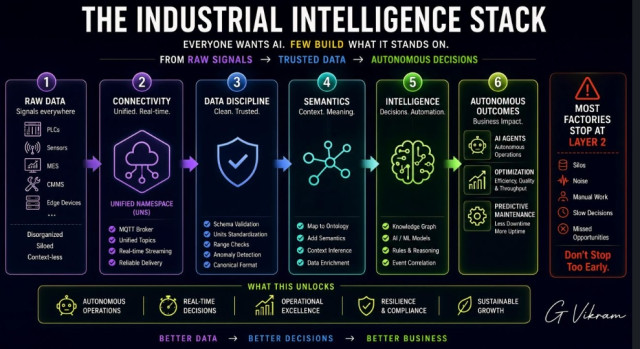 A Practical Blueprint for Industrial AI That Actually Delivers Value
Tags: AI Governance, Digital Transformation, Manufacturing
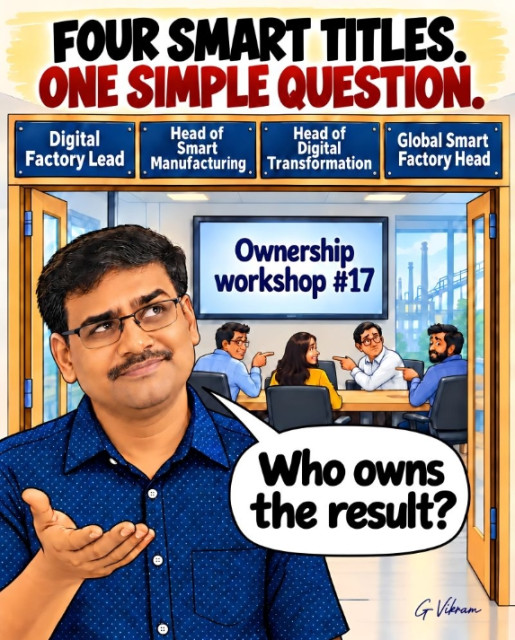 Four impressive titles. One uncomfortable question.
Tags: AI Governance, Digital Transformation, Manufacturing
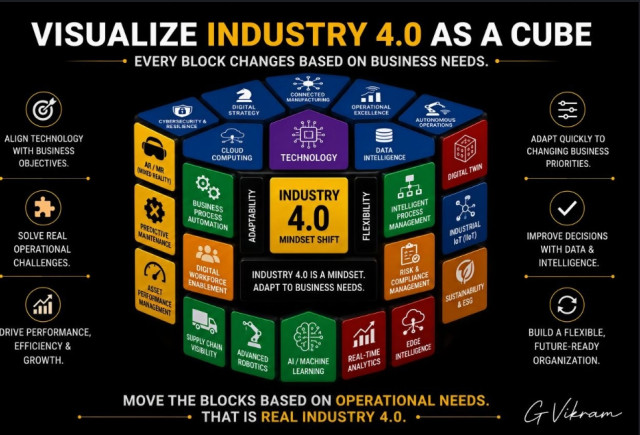 What if Industry 4.0 was a Rubik's Cube?
Tags: AI Governance, Digital Transformation, Manufacturing
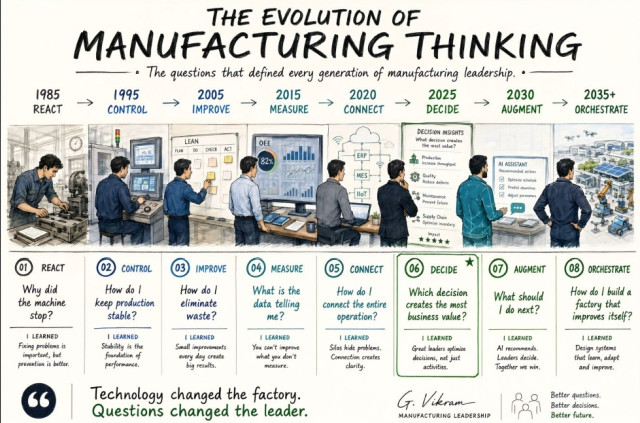 The biggest upgrade in manufacturing isn't AI.
Tags: AI Governance, Digital Transformation, Manufacturing
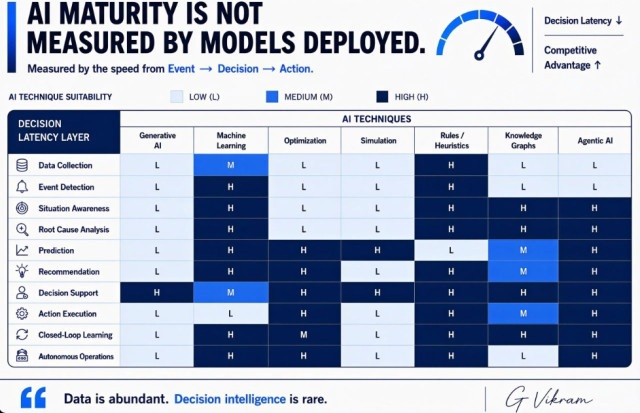 Your AI Isn't Slow. Your Organization Is.
Tags: AI Governance, Digital Transformation, Manufacturing
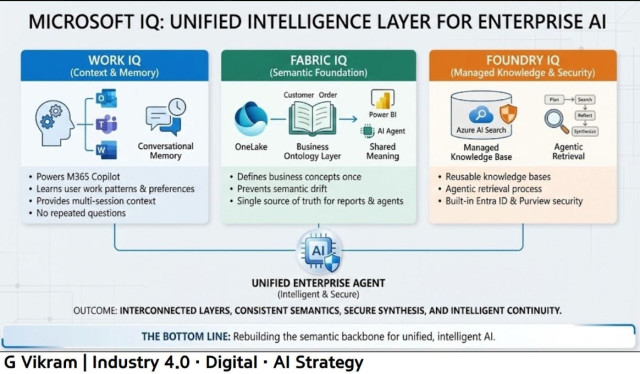 Microsoft IQ Unleashed?
Tags: AI Governance, Digital Transformation, Manufacturing
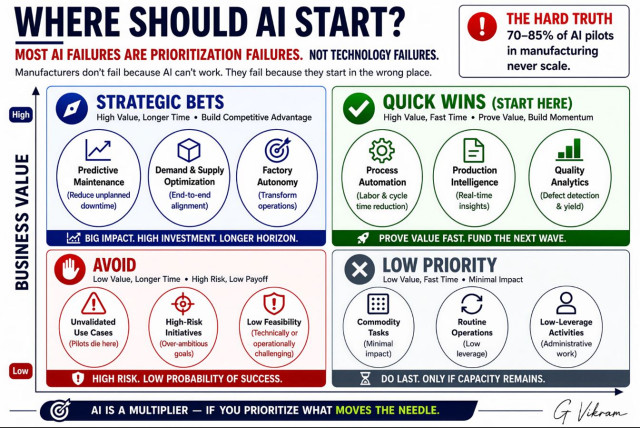 The board wants an AI roadmap. The plant head wants fewer rejected parts by Friday.
Tags: AI Governance, Digital Transformation, Manufacturing
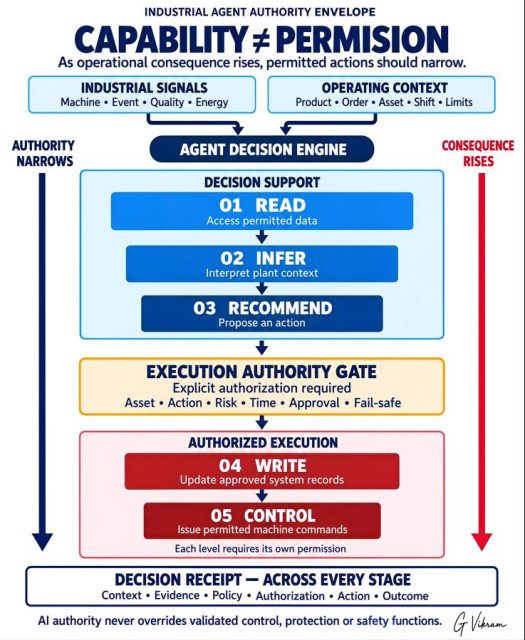 Your AI agent can be right - and still have no authority to act.
Tags: AI Governance, Digital Transformation, Manufacturing
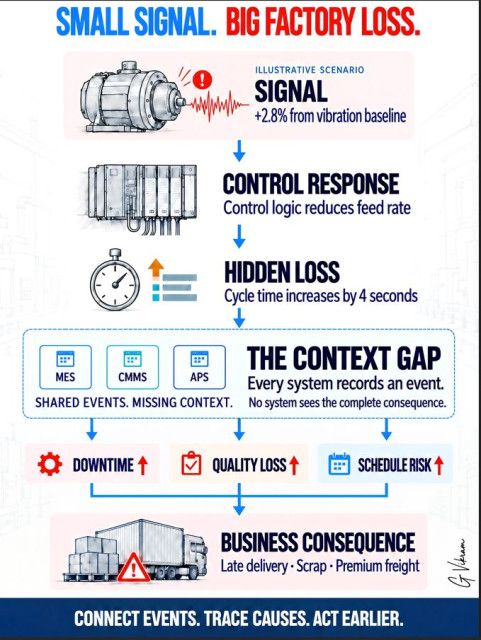 That's the uncomfortable reality behind many Smart Manufacturing transformations.
Tags: AI Governance, Digital Transformation, Manufacturing
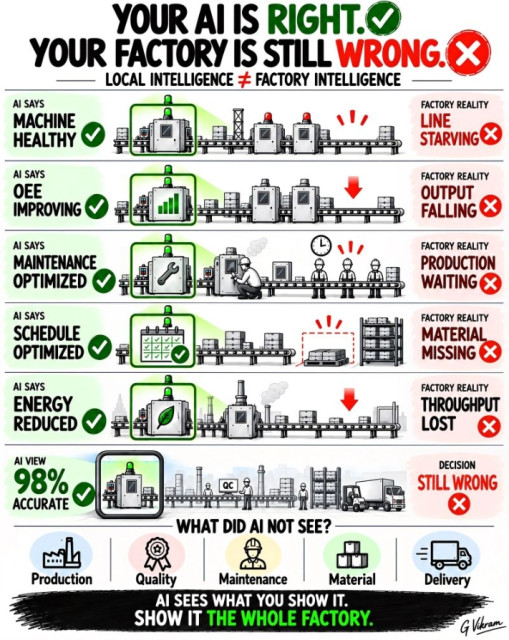 We give AI 10% of the factory - and blame it for not understanding the other 90%.
Tags: AI Governance, Digital Transformation, Manufacturing
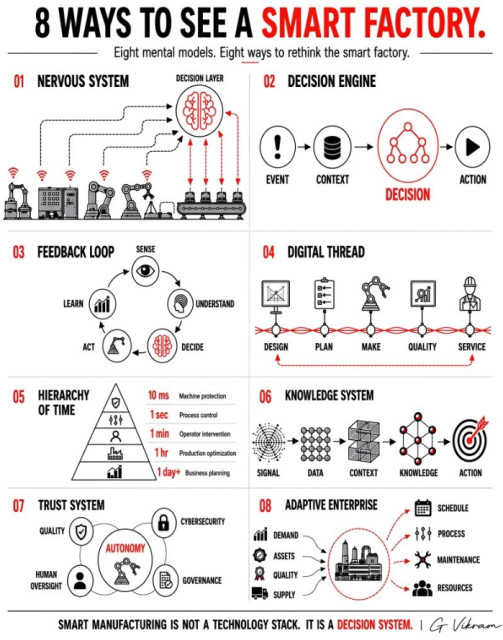 We often describe a Smart Factory by listing technologies.
Tags: AI Governance, Digital Transformation, Manufacturing
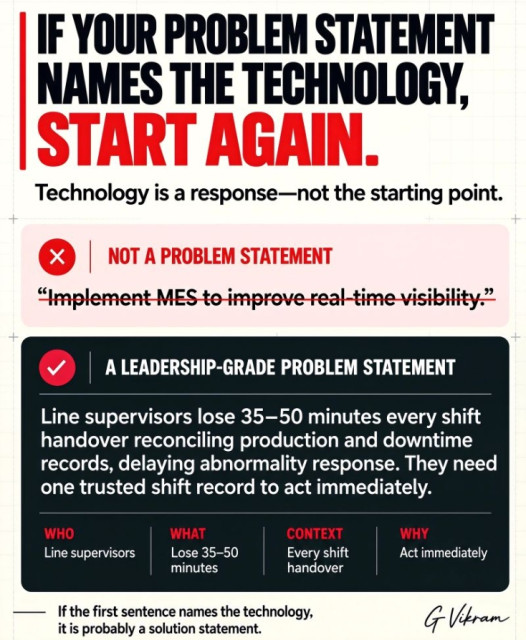 Most projects do not need a better solution.
Tags: Digital Transformation, Manufacturing
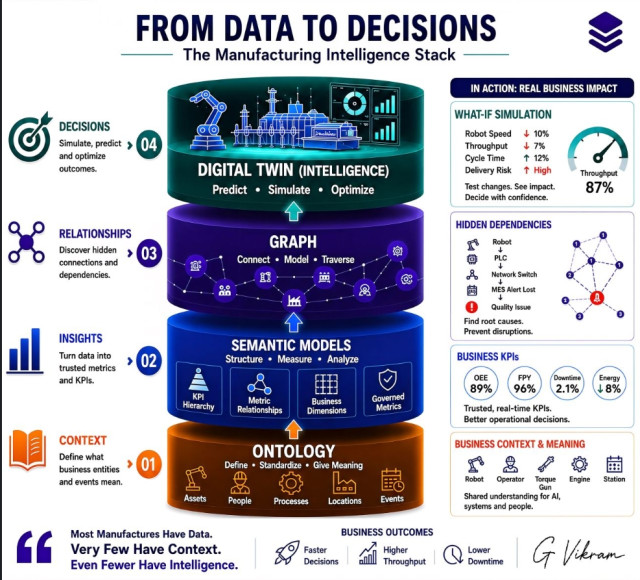 The future of manufacturing will not be defined by how much data we collect.
Tags: AI Governance, Digital Transformation, Manufacturing
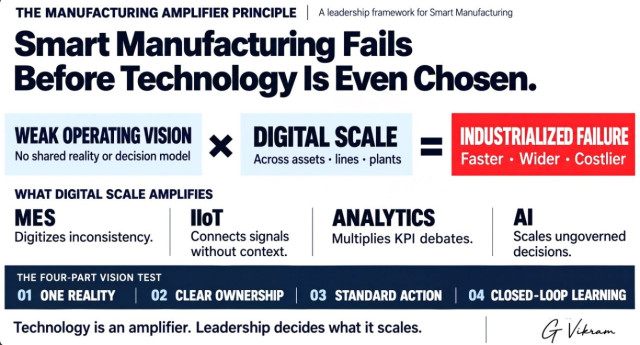 Your next MES may not fix the factory.
Tags: AI Governance, Digital Transformation, Manufacturing
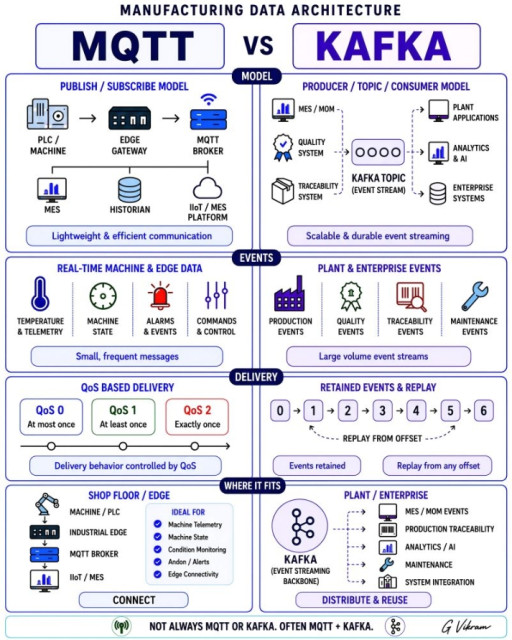 Your machine reported a failed torque cycle. Can your business reconstruct what happened tomorrow?
Tags: AI Governance, Digital Transformation, Manufacturing
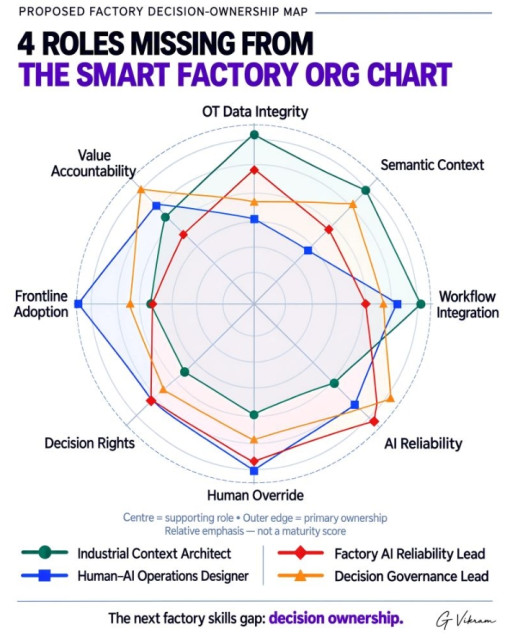 4 Smart Factory Roles We Keep Overlooking—Until an AI Decision Goes Wrong
Tags: AI Governance, Digital Transformation, Manufacturing
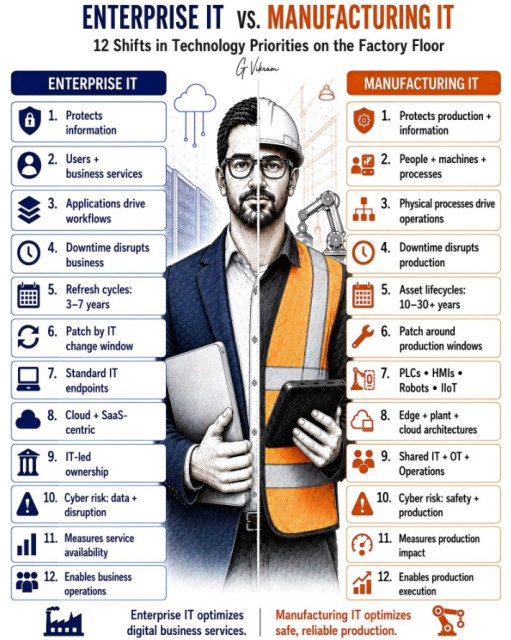 The Technology May Be IT. The Operating Reality Isn’t.
Tags: AI Governance, Digital Transformation, Manufacturing
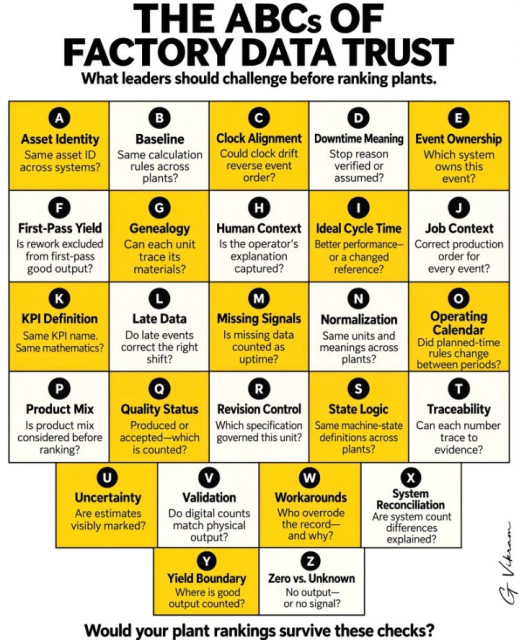 Your best-performing plant may have the most forgiving KPI rules.
Tags: AI Governance, Digital Transformation, Manufacturing
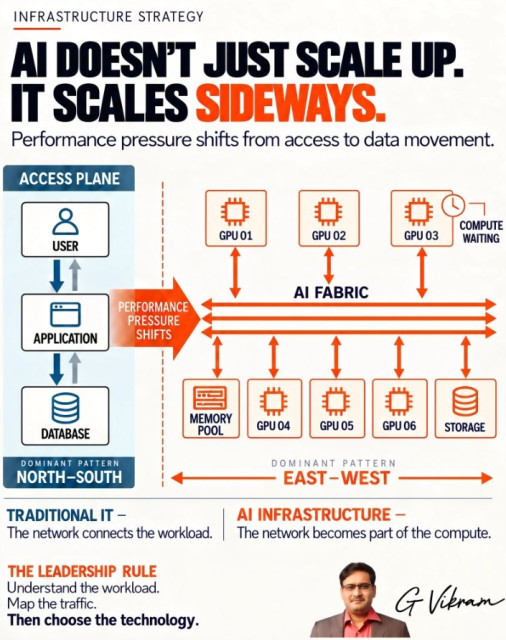 Most AI investments are still being approved using the wrong scaling model.
Tags: AI Governance, Digital Transformation
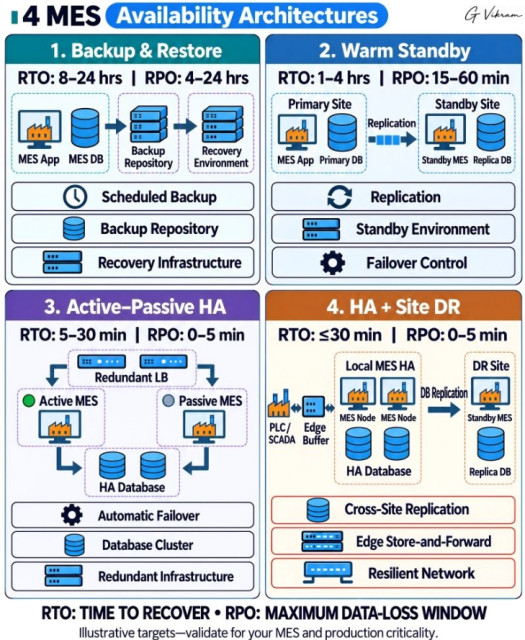 Do we talk enough about MES availability?
Tags: AI Governance, Digital Transformation, Manufacturing
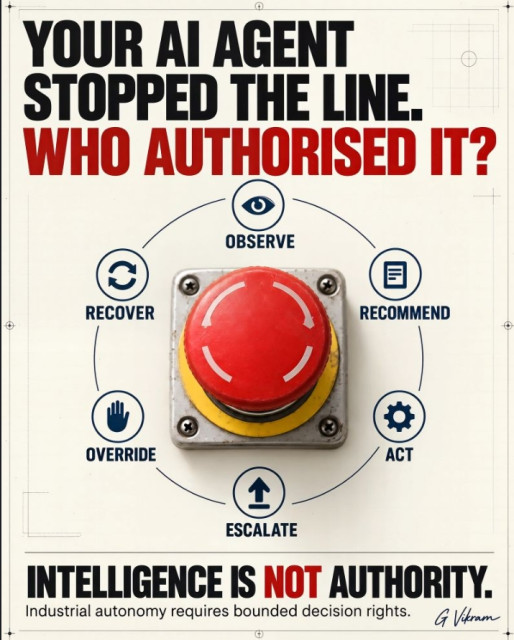 Most factories are discussing what AI agents can do.
Tags: AI Governance, Digital Transformation, Manufacturing
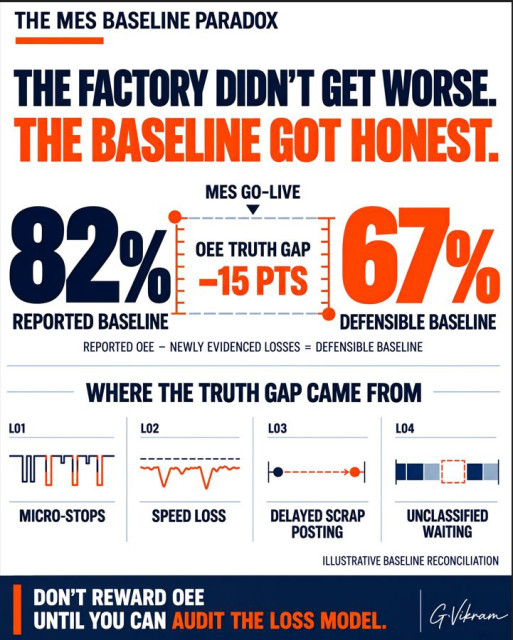 Your OEE can fall after MES go-live—and that can be progress.
Tags: Digital Transformation, Manufacturing
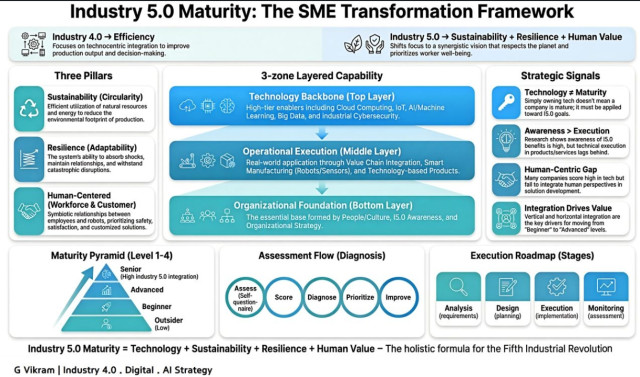 The Industry 5.0 Maturity Blueprint - From Efficiency to Value
Tags: AI Governance, Digital Transformation, Manufacturing
 A connected factory is not created by simply connecting more machines.
Tags: AI Governance, Digital Transformation, Manufacturing
 Startup life does not test only your capability.
Tags: AI Governance, Digital Transformation, Manufacturing
 A system can go live while the factory keeps working around it.
Tags: AI Governance, Digital Transformation, Manufacturing
Date : September 17, 2026
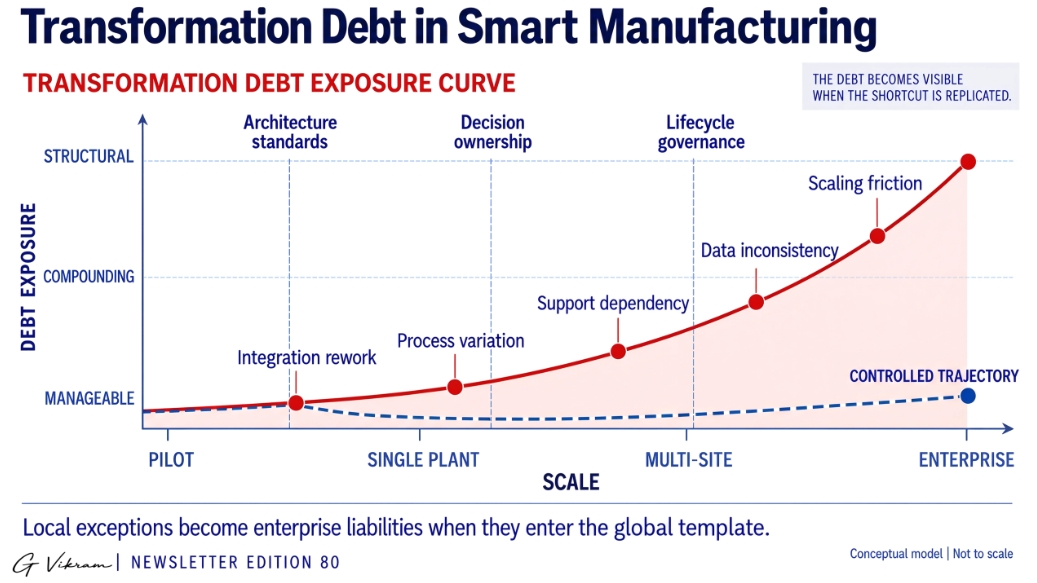 The most dangerous debt in a smart factory isn’t financial.
A pilot succeeds. The dashboard works. The machine is connected. The team demonstrates value, and leadership approves the next phase.
Then scaling begins.
What worked for one machine becomes difficult across a line. What worked for one plant requires exceptions at the next. Integrations multiply, data definitions drift, support becomes dependent on a few individuals, and every new site takes longer than expected.
This is transformation debt.
It is the future operational cost created when today’s digital progress depends on shortcuts that were never designed to scale.
Transformation debt is not always the result of poor execution. In many cases, the original shortcut was reasonable. A pilot needed speed. A production problem required an immediate workaround. A local team could not wait for a global standard.
The real issue begins when a temporary decision quietly becomes part of the permanent operating model.
The Debt Becomes Visible When the Shortcut Is Replicated
During a pilot, transformation debt is usually manageable.
The scope is narrow. The team knows the architecture. Data can be corrected manually. A specialist understands the workaround. An unreliable interface can be monitored closely.
The same conditions rarely survive scale.
As the solution moves from pilot to plant, multi-site and enterprise deployment, small compromises begin to compound:
The organisation may believe it is replicating a successful solution. In reality, it may also be replicating every exception hidden inside that solution.
That is why transformation debt often appears late. It is created during experimentation but exposed during replication.
How Transformation Debt Progresses
At pilot stage, speed is valuable. Teams experiment, learn and prove feasibility.
Some exceptions are unavoidable.
The risk is not the exception itself. The risk is failing to document:
A pilot should be allowed to move quickly. It should not be allowed to create invisible commitments.
At plant level, informal knowledge often keeps the solution working.
Engineers know which data points are unreliable. Operators understand when the workflow needs manual intervention. The local IT or OT team knows which interface must be restarted and whom to call when it fails.
This can create a false impression of maturity.
The solution appears stable because experienced people are compensating for its weaknesses. The operating cost exists, but it is hidden inside human effort.
The challenge changes when the solution reaches additional plants.
Each site has different:
Without clear guardrails, every rollout creates another version of the solution.
The organisation is no longer scaling one platform. It is scaling a family of exceptions.
At enterprise level, transformation debt starts affecting investment decisions, cybersecurity, support models, vendor strategy and the ability to introduce new capabilities.
Teams spend more time maintaining inherited complexity than creating value.
At this point, the cost is no longer limited to technology. It appears as:
The transformation has scaled—but so has the debt.
Five Warning Signs Leaders Should Watch
Some site-level discovery is always necessary. But if each plant requires the architecture to be rediscovered, the organisation has not created a repeatable deployment model.
When operational continuity depends on individual memory, knowledge has become a hidden system dependency.
An exception without an owner, review date or retirement plan is no longer temporary. It has become architecture.
If the same KPI means something different at each site, the organisation may have global reporting without global operational meaning.
A scalable solution should reduce the effort required for subsequent deployments. If complexity grows faster than site count, transformation debt is compounding.
Three Leadership Controls That Flatten the Curve
Transformation debt cannot be eliminated completely. It can, however, be made visible, governed and deliberately retired.
Architecture standards: standardise before replication
Before a pilot moves to the next site, define the minimum production architecture.
This should cover more than technology selection. It should clarify:
The objective is not to eliminate local flexibility. It is to prevent local flexibility from silently becoming enterprise complexity.
Decision ownership: give every exception an owner
Every significant deviation should have a named decision owner.
That owner should be responsible for answering:
When everyone is responsible for transformation debt, no one is responsible for it.
Lifecycle governance: retire workarounds before scale
A successful pilot is not automatically ready for enterprise deployment.
Before replication, teams need a deliberate industrialisation stage to:
This step may appear to slow the rollout. In practice, it prevents a much larger delay later.
A Practical Transformation Debt Review
Before approving the next stage of a manufacturing transformation, leadership teams can ask seven questions:
These questions should be asked before scale—not after complexity becomes visible.
The Leadership Shift
Smart manufacturing programmes often measure the speed of deployment.
They should also measure the amount of complexity carried forward.
The objective is not to remove experimentation or force every plant into an inflexible global template. It is to distinguish clearly between:
A local exception becomes an enterprise liability when it enters the global template without visibility, ownership or an exit plan.
The most scalable manufacturing transformation is not necessarily the one that moves fastest during the pilot.
It is the one that reaches the next plant without carrying every shortcut with it.
Leadership takeaway
Before scaling a successful pilot, standardise the architecture, assign ownership to every exception and retire the workarounds that should not become part of the enterprise operating model.
What transformation debt is your organisation carrying from pilot to scale?
Tags: Digital Transformation, Manufacturing, AI Governance
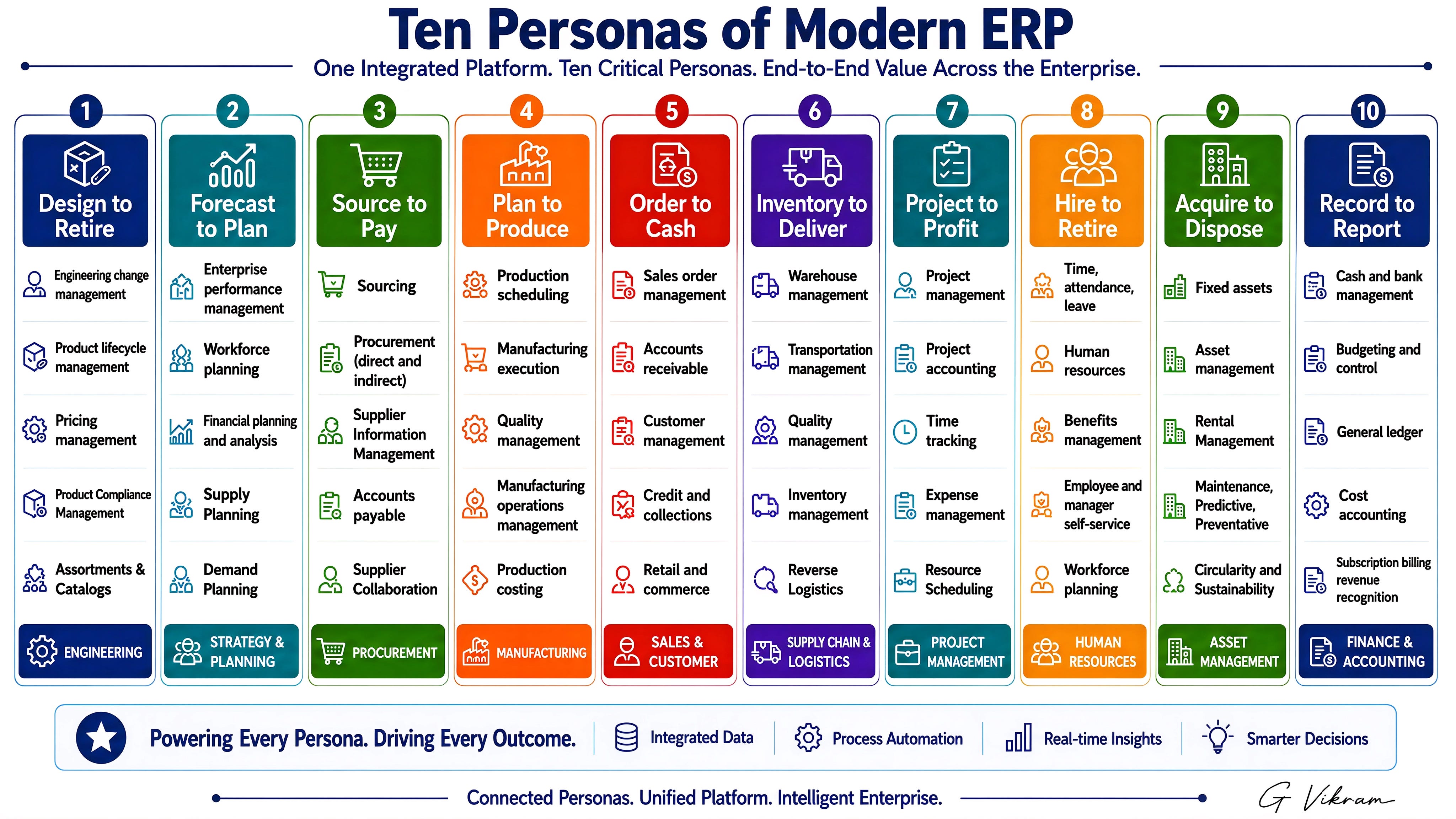 The Ten Personas of Modern ERP
It is becoming the enterprise operating system that connects people, processes, data, and decisions across the full business value chain.
For years, ERP was discussed in terms of modules.
Finance module. Procurement module. Inventory module. HR module. Manufacturing module.
But that language is becoming outdated.
The better question today is not:
“Which ERP modules do we need?”
The better question is:
“Which enterprise personas are we enabling?”
Because ERP value is not created by software alone.
It is created when every critical business persona can make faster, cleaner, and better decisions from one connected platform.
This is the engineering and product lifecycle persona.
It covers engineering change management, product lifecycle management, compliance, pricing, assortments, and catalogs.
The real value is simple:
Build the right product before trying to build it efficiently.
This is the strategy and planning persona.
It connects enterprise performance management, workforce planning, financial planning, supply planning, and demand planning.
This persona helps organizations move from reactive planning to continuous business alignment.
Strategy becomes executable only when planning is connected.
This is the procurement persona.
It includes sourcing, procurement, supplier management, accounts payable, and supplier collaboration.
Modern procurement is no longer only about buying cheaper.
It is about building resilient supplier ecosystems.
Procurement becomes strategic when supplier decisions are connected to cost, quality, risk, and demand.
This is the manufacturing persona.
It connects production scheduling, manufacturing execution, quality management, operations management, and production costing.
This is where ERP meets the shop floor.
The goal is not just production efficiency.
The goal is predictable, quality-driven, demand-aligned manufacturing.
Manufacturing value is created when planning and execution speak the same language.
This is the sales and customer persona.
It covers sales order management, accounts receivable, customer management, credit and collections, retail, and commerce.
Revenue is not created when an order is booked.
Revenue is created when the entire commercial cycle is executed without friction.
Customer demand must flow cleanly into cash realization.
This is the supply chain and logistics persona.
It includes warehouse management, transportation, quality, inventory management, and reverse logistics.
Modern supply chains are not judged only by how much inventory they hold.
They are judged by how well they respond.
The future of supply chain is not inventory visibility alone. It is delivery intelligence.
This is the project management persona.
It includes project management, project accounting, time tracking, expense management, and resource scheduling.
For project-driven organizations, execution and profitability must be visible together.
A project is not successful just because it is completed. It is successful when it delivers margin, discipline, and measurable value.
This is the human resources persona.
It covers attendance, leave, human resources, benefits, employee self-service, manager self-service, and workforce planning.
ERP transformation often talks about process and technology.
But workforce capability is where transformation becomes real.
People are not just users of ERP. They are the enterprise capacity behind it.
This is the asset management persona.
It includes fixed assets, asset management, rental management, maintenance, predictive maintenance, circularity, and sustainability.
Assets are not just accounting entries.
They are performance engines.
The modern enterprise must manage assets for uptime, lifecycle value, sustainability, and return on capital.
This is the finance and accounting persona.
It includes cash and bank management, budgeting, general ledger, cost accounting, subscription billing, and revenue recognition.
Finance remains the enterprise source of truth.
But modern finance is moving beyond reporting history.
Finance must become a real-time performance intelligence function.
The Bigger ERP Shift
The real power of ERP is not in any one persona.
It is in the connection between them.
Design influences procurement.
Procurement impacts production.
Production affects inventory.
Inventory affects delivery.
Delivery affects revenue.
Revenue affects finance.
Finance influences planning.
Planning shapes workforce and asset decisions.
This is why ERP must be treated as an integrated enterprise platform, not a set of disconnected departmental systems.
The Four Foundations
Every modern ERP transformation depends on four foundations.
Integrated data creates one source of truth across the enterprise.
Process automation reduces manual effort and improves consistency.
Real-time insights help leaders act before problems become expensive.
Smarter decisions turn ERP from a recording system into a decision platform.
Without these foundations, ERP becomes another expensive transaction system.
With them, ERP becomes the intelligence layer of the enterprise.
Final Thought
Modern ERP is not about digitizing departments.
It is about connecting enterprise personas.
The strongest organizations will not be the ones with the most ERP modules.
They will be the ones where engineering, planning, procurement, manufacturing, supply chain, projects, HR, assets, and finance operate from one shared platform.
That is when ERP stops being back-office software.
That is when ERP becomes the operating system of the modern enterprise.
Modern ERP is not a system of records anymore.
It is a system of connected decisions.
Tags: Digital Transformation, Manufacturing
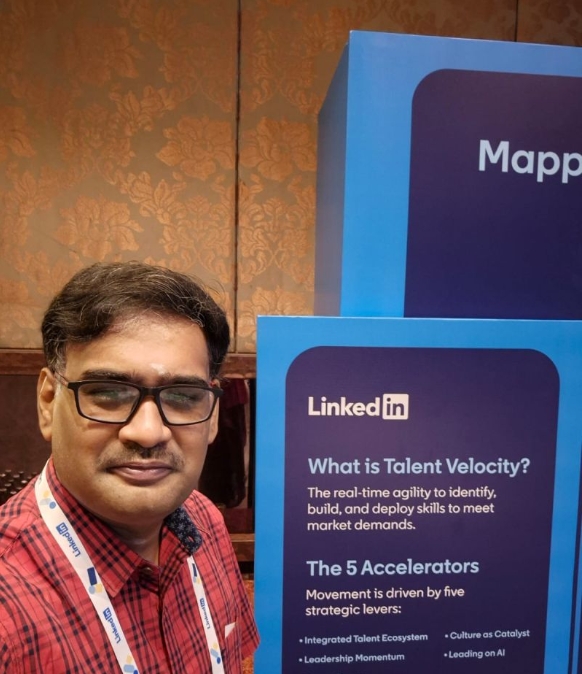 Developing Next Generation Work force - Talent Velocity
Location: Chennai India Date : May 05, 2026 - May 05, 2026 Organizer: Linkedin
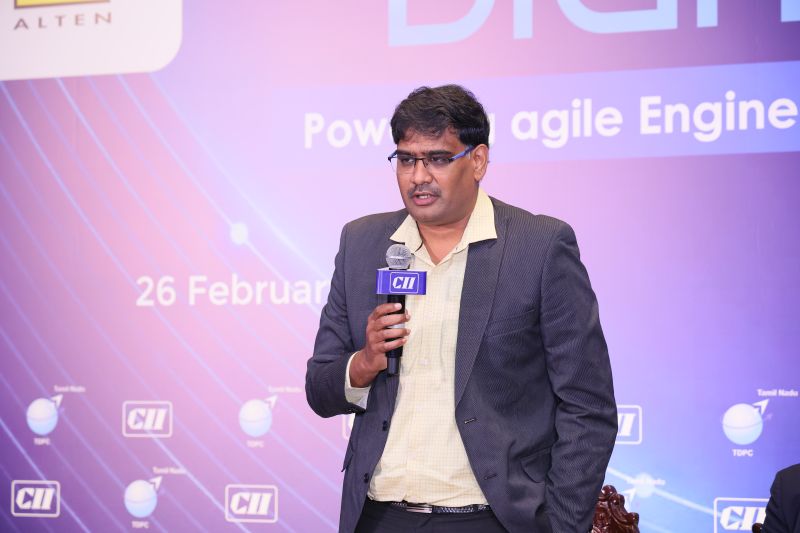 Conference on Digital Twin
Location: Chennai India Date : February 10, 2026 - February 12, 2026 Organizer: Confederation of Indian Industries
 A Practical Blueprint for Industrial AI That Actually Delivers ValueYour SAP S/4HANA implementation can be successful.Four impressive titles. One uncomfortable question. The most dangerous debt in a smart factory isn’t financial.The Ten Personas of Modern ERP