


Transformational Leadership | Transformation Architect | Keynote Speaker | Best-Selling Author
I believe transformation is the #1 capability we need to thrive in an uncertain world, yet it is also one of the most difficult to master.
My work on transformational leadership is built around five core ideas:
• Being is always becoming. Transformation is continuous, not a project.
• Transformation comes full circle: ME > WE > ALL OF US. It starts with ourselves, expands to the organisations we lead and ultimately affects society and the planet.
• Organisations need an X-ray before they determine the cure. Too often, organisations tend to solve surface issues or apply the wrong cure to the wrong problem. A deeper diagnosis is needed to uncover and address the root cause.
• Transformation is context-specific. What is under-active? What is actually needed? What is overactive? What should we start, strengthen, continue, reduce or stop?
• You cannot transform what you cannot see. Our level of awareness determines what we are capable of transforming.
These ideas underpin StepWise®, my whole-system transformation architecture, and my work with leaders, organisations and boards.
My trilogy follows the same expanding circle:
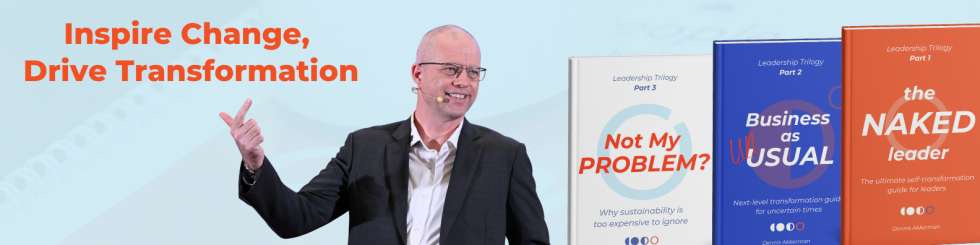
The Naked Leader : Self Transformation = ME
Business As UNusual : Business Transformation = WE
Not My Problem? : Sustainable Transformation = ALL OF US
Over the past 25+ years, I've experienced transformation from multiple perspectives: leading and consulting on business and technology transformation within multinational organisations, developing leaders and teams across countries and cultures, and researching and writing about why transformation succeeds or fails.
As a Dutchman living in Asia for 13+ years, I bring together Western and Eastern leadership perspectives to develop a more holistic and international approach to transformation.
I help leaders and organisations determine what they really need to transform, see what they may not yet see, and turn that awareness into meaningful and lasting change. My work has taken me to more than 30 countries and includes organisations such as HSBC, Shell and Coca-Cola.
Contact me for a conversation about transformation.
#orbis #transformation #stepwise #transformationalleadership #thenakedleader #businessasunusual #notmyproblem
Available For: Consulting, Influencing, Speaking
Travels From: Kuala Lumpur, Malaysia
Speaking Topics: Transformational Leadership, Self Transformation, Business Transformation, Sustainable Transformation
| Dennis Akkerman MBA | Points |
|---|---|
| Academic | 0 |
| Author | 203 |
| Influencer | 152 |
| Speaker | 39 |
| Entrepreneur | 46 |
| Analyst | 0 |
| Total | 440 |
Points based upon Thinkers360 patented algorithm.

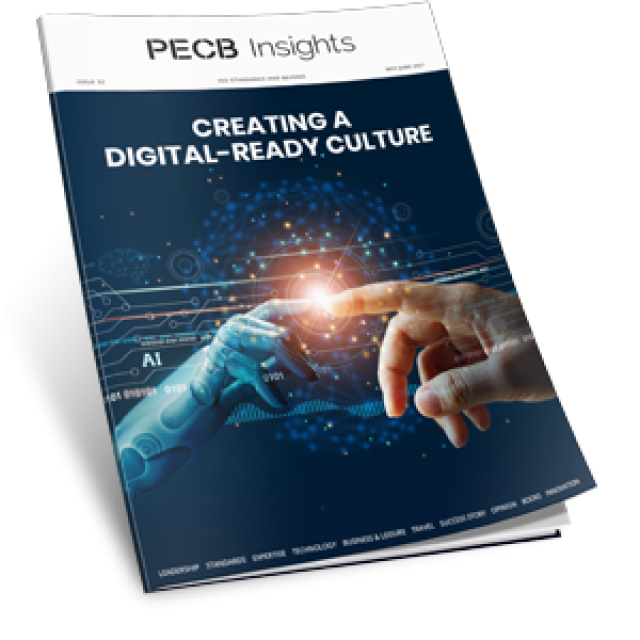 Digital Transformation - what's in it for your business?
Tags: Digital Transformation, Leadership, Transformation
Tags: Business Strategy, Change Management, Leadership
Tags: Sustainability
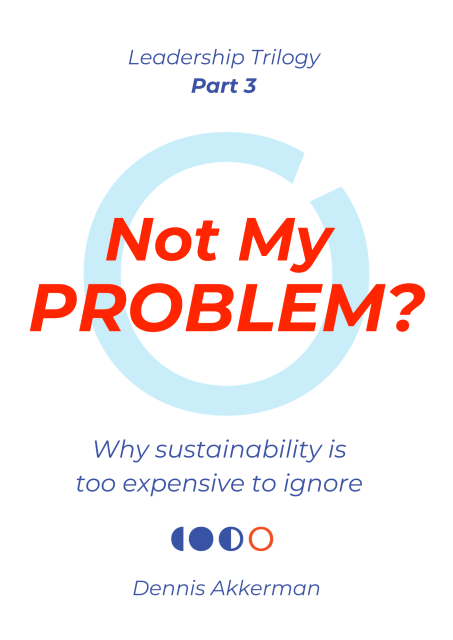 Not My Problem? - Why sustainability is too expensive to ignore
Tags: Leadership, Sustainability, Transformation
 Business As UNusual - next-level transformation guide for uncertain times
Tags: Business Strategy, Leadership, Transformation
 The Naked Leader
Tags: Change Management, Coaching, Leadership
 Orbis Business School
Tags: Coaching, Leadership, Transformation
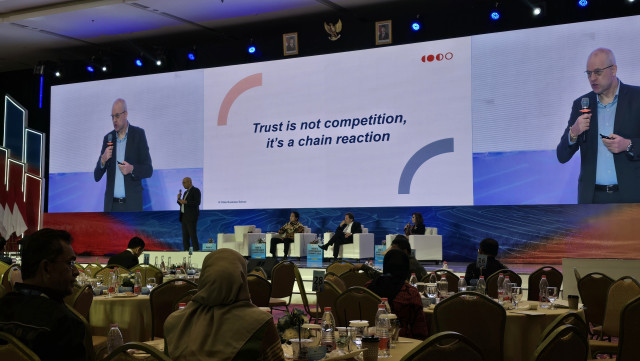 Ethics at scale: transforming mindsets and behaviours for sustainable value creation
Tags: Risk Management, Sustainability, Transformation
 Be A Naked Leader
Tags: Transformation
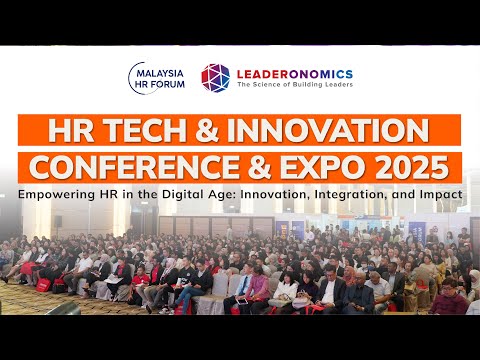
Tags: HR, Transformation
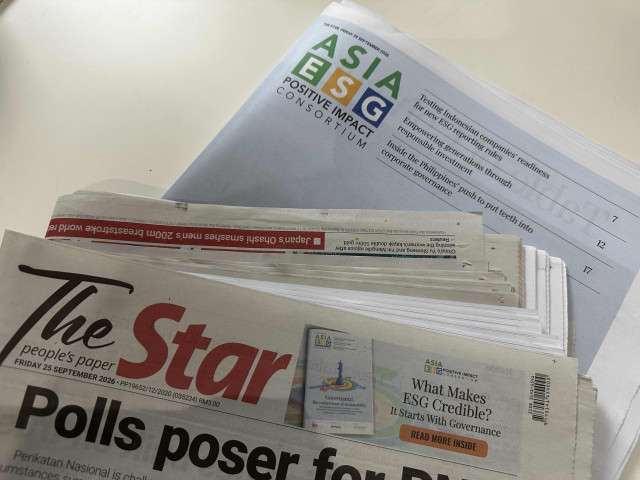 Governance, the cornerstone of sustainability
Tags: Leadership, Sustainability, Transformation

Tags: Coaching, Leadership, Transformation
Tags: Transformation
Tags: Transformation
Tags: Transformation
Tags: Transformation
Tags: Entrepreneurship, Transformation
Tags: Leadership, Transformation
Tags: Transformation
Tags: Leadership, Transformation
Tags: Transformation
Tags: Transformation
Tags: Digital Transformation, Transformation
Tags: Digital Transformation, Entrepreneurship, Transformation
Date : September 30, 2026
 The Empty Chair: a powerful practice in leadership, coaching and self-reflection
Recently, I returned to my in-laws' house, following the passing of my father-in-law last month. Walking into the house, I was confronted with a simple reality: his chair was empty.
A physical reminder that someone who had been part of our lives was no longer there.
It made me reflect on something I have used for many years, both professionally and personally: the empty chair.
An ordinary chair can be a powerful instrument for leadership, coaching, empathy and personal reflection. It allows us to make space for someone who is not physically present, yet whose perspective, experience or wisdom deserves our attention.
Over the years, I have found several ways to use this practice.
One of the best-known applications of the empty chair comes from Amazon.
Jeff Bezos famously introduced the practice of leaving an empty chair in meetings to represent the customer, reminding everyone that the most important person in the room might not actually be present.
I regularly refer to this principle in my leadership workshops.
Organisations spend considerable time discussing strategy, financial performance, operational efficiency, technology and internal processes, but often overlook the all-important questions:
What would our customers think about this decision? Would they experience the benefits we are discussing?
Are we solving a genuine customer problem, or merely making our internal processes more convenient?
The practice is simple, but its implications can be significant.
And while Amazon used the concept in relation to customers, I use the empty chair in other contexts too.
In my executive coaching practice, I sometimes invite leaders to imagine one of their employees sitting in an empty chair.
Perhaps someone who is struggling with performance. Someone who disagrees with a decision. Or someone whose behaviour the leader finds difficult to understand.
I ask the leader to imagine looking at the situation through that person's eyes.
How would they experience the decision I am making?
What concerns might they have that I haven't considered?
What might they need from me as their leader?
This can be particularly relevant during organisational transformation.
Leaders frequently approach transformation through strategic objectives, milestones, restructuring plans and performance indicators.
Employees may experience the same transformation very differently.
They may worry about their future, their relationships, their competence or their sense of belonging.
Neither perspective necessarily tells the whole story.
The empty chair helps leaders recognise that their interpretation of a situation is only one of several possible interpretations.
Importantly, empathy does not mean you have to agree with that person. It means making the effort to understand their perspective and how your decisions may affect them before acting.
The empty chair can also represent someone who does not yet exist: your older self.
Imagine yourself sitting in that chair, twenty or thirty years from now.
Looking back on your life, your career, your relationships and the choices you made.
What would that older version of yourself say?
Will I be at peace with the choices I made?
Did I spend my time on what truly mattered?
Did I have the courage to act according to my values?
I find this particularly useful when coaching leaders who face important career or personal decisions.
Many decisions are made under pressure from immediate circumstances: financial targets, expectations from others, career opportunities or fear of losing something.
But looking back, much of what seemed urgent at the time may turn out to have been little more than noise and distraction.
Applying this technique can help us make better decisions today.
In my personal meditation practice, I sometimes use the empty chair to connect with another person's experience, their great qualities and their struggles.
When I imagine a good friend sitting in the chair, it comes naturally.
What would your best friend advise you? What would you tell him/her?
But I also use this technique for someone I dislike.
What might this person be experiencing?
What fears, insecurities or past experiences might influence their behaviour?
Can I still recognise their humanity, even when I strongly disagree with their actions?
This does not mean I'm excusing harmful behaviour or accepting unacceptable conduct.
It helps me maintain boundaries while still recognising that they, too, have their own experiences and struggles.
And then there is the empty chair that started this reflection.
The chair of someone who has passed away.
The person who once occupied it continues to influence our lives in many ways.
Their wisdom lives on.
The love and laughter we shared.
The inspiration they gave.
Their influence may be reflected in our values, our behaviour, the decisions we make and the way we treat others.
I strongly believe that leadership extends beyond our physical presence.
What mindset, culture and impact remain in an organisation long after we are no longer there?
Across these different applications, the empty chair is fundamentally a metaphor for awareness.
Becoming aware of the experiences of others, the consequences of our decisions and the assumptions that shape our thinking.
This is closely connected to my philosophy of transformational leadership.
Transformation involves more than changing what we do. It involves a change in being.
Being with yourself and being with the other.
The empty chair is a powerful and practical way to cultivate that awareness.
Who would you place in your empty chair?
Dennis Akkerman, MBA, is a transformation catalyst, keynote speaker and author of three books on leadership and transformation. He has worked with leaders and organisations across more than 30 countries, exploring the relationship between personal, organisational and societal transformation.
Tags: Leadership, Coaching, Transformation
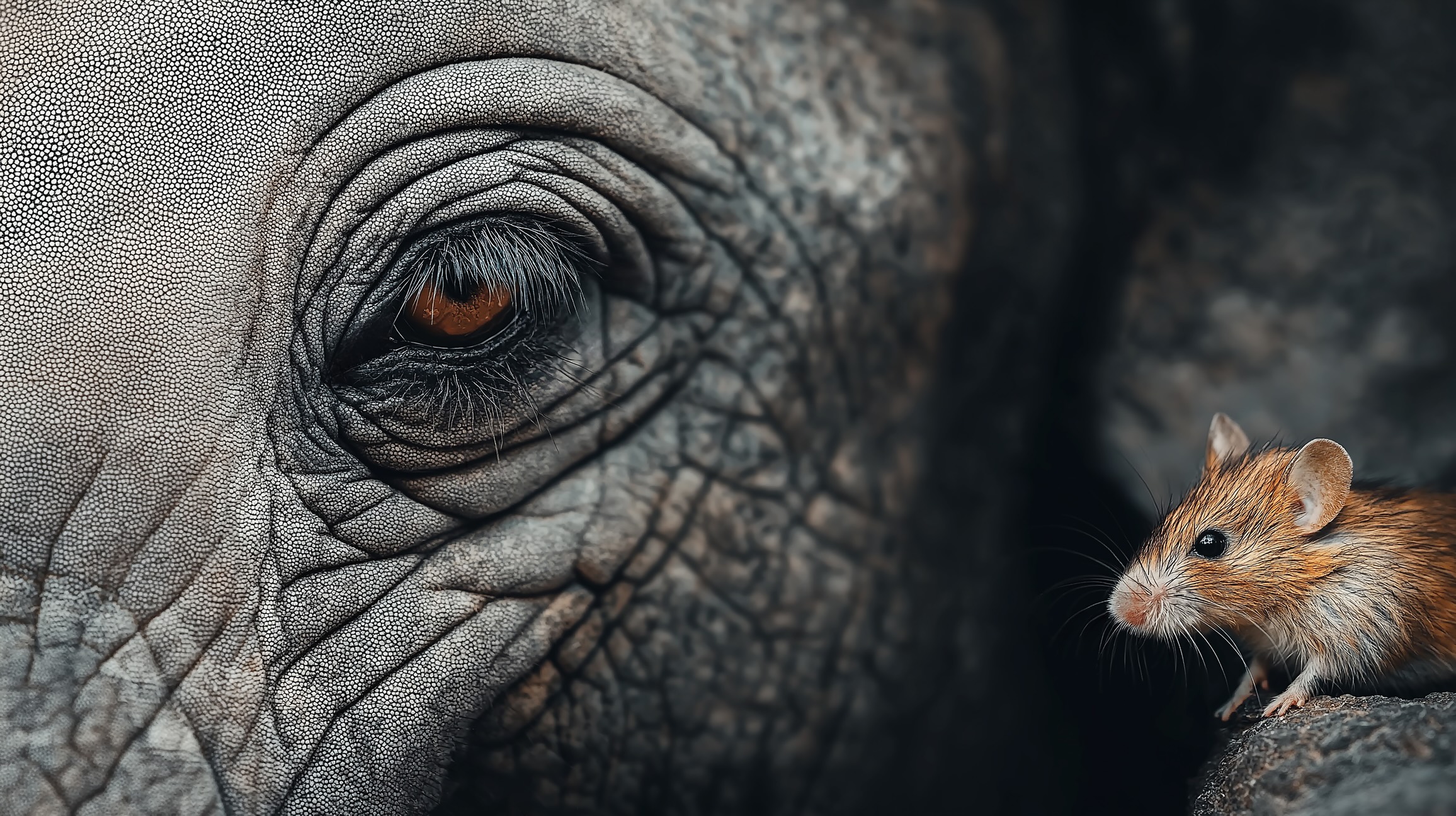 Sustainable Transformation: The Elephant and The Mouse In The Room
Why sustainable transformation requires us to confront uncomfortable choices and question everyday habits.
Let's start with an uncomfortable fact.
According to the Food and Agriculture Organization of the United Nations (FAO), livestock agrifood systems account for approximately 12% of global human-caused greenhouse gas emissions. Producing one kilogram of beef generates on average around ten times the emissions of chicken and roughly twenty times those of tofu.
Yet when we talk about sustainability, what's on our plate receives far less attention than solar panels, electric vehicles and recycling.
Perhaps because changing what we eat is personal. Food is part of our culture, traditions and identity. We associate particular dishes with family celebrations and childhood memories.
I'm not suggesting everyone should become vegetarian or vegan. But I wonder how many of us have seriously considered the environmental consequences of our dietary choices, especially now that the alternatives have improved so much.
Personally, I find the McPlant burger at McDonald's in the Netherlands, my country of origin, just as enjoyable as its meat counterpart. I still wonder why McDonald's Malaysia, where I live, doesn't offer it.
If a more sustainable alternative is equally enjoyable, why wouldn't we choose it?
This brings us to a fundamental question about transformation: how willing are we to change something we enjoy, particularly when nobody is forcing us to?
Food is only one example. There are other realities that everybody knows about, yet few of us want to change our lifestyles or our ways of doing business.
I travel internationally for work, sometimes extensively, to speak, facilitate transformation programmes and meet clients. I enjoy it, and I recognise its environmental cost.
Aviation accounts for approximately 2.5% of global energy-related CO₂ emissions, and its total climate impact is greater once non-CO₂ effects are included.
Face-to-face engagement creates learning, collaboration and human connection that virtual meetings struggle to reproduce. But do we need to fly for every meeting? Could we combine several engagements into one trip, or hold some conversations online?
I ask myself these questions too. Where airlines offer it, I offset my flights, while recognising that offsetting is a fallback rather than a solution. Flying less is what actually reduces emissions.
It's relatively easy to recognise the environmental consequences of our choices. Changing our own behaviour is considerably harder.
Perhaps the most uncomfortable elephant concerns how we define success. Businesses are expected to grow, preferably by double digits every year. Investors expect returns. Governments measure progress through economic expansion. And we live on a planet with finite resources.
I don't believe the answer is simply to abandon growth. The more interesting question is: what kind of growth are we pursuing, and what are we willing to count as success? Can organisations create more value with fewer resources?
Challenging assumptions like these is at the heart of transformation.
The elephants represent difficult systemic and personal choices. The mice are surprisingly ordinary.
I regularly speak at five-star hotels and conference venues that proudly communicate their sustainability commitments. Yet I still find disposable plastic water bottles on every table and bins without waste segregation.
I raise the plastic bottles with the venue every time.
How difficult is it to install a water refill system?
How much does a recycling bin cost?
I'd love to see venues compete on environmental practices as enthusiastically as they compete on service and luxury.
In tropical countries such as Malaysia, air-conditioning is part of everyday life. I've sat in meetings so cold that participants needed jackets while the temperature outside was over 30°C.
On their own, small steps such as raising the thermostat by a degree or two, maintaining equipment properly and switching off cooling in empty rooms seem trivial. Across thousands of buildings and millions of operating hours, they add up.
Disposable cups in the office. Individually wrapped refreshments. Promotional gifts nobody needs. Supplies bought without thought for durability, repairability or packaging.
None of these will solve climate change on its own. But they show how an organisation translates its stated values into everyday practice.
Here is what puzzles me. Many mice cost little or nothing to address. Some even save money from day one through lower energy bills, less waste and lower printing costs. So why do they remain unchanged for years?
The benefits aren't distant. What's missing is ownership.
The events manager assumes procurement decides on water bottles. Procurement assumes facilities handles the bins. Facilities assumes the thermostat is set the way guests want it. Each person sees the problem, and each quietly concludes that it belongs to someone else.
The elephants are hard because the choices are big. The mice survive because the choices are small enough for everyone to assume someone else will make them.
Either way, the result is a gap between what we say matters and what we actually do.
How do leaders close that gap?
Regulations, incentives and standards matter. We cannot rely entirely on voluntary action to address systemic environmental challenges. Rules can establish new behaviours. But lasting commitment grows when people understand their purpose and take ownership of their actions.
An employee may follow an environmental policy because it is mandatory. What happens when nobody is watching? What happens when the sustainable choice takes extra effort, or conflicts with a short-term target?
Those moments reveal the difference between compliance and conviction.
For leaders, the task is to create conditions in which people understand why sustainability matters, see their own role in it and feel able to act. That means leading by example, making consistent decisions, aligning incentives and building a culture where people can question how things have always been done, including who owns the small things.
It also means letting go of the assumption that sustainability is always a cost. Sometimes it is. But reducing waste, energy use and unnecessary travel often saves money and time, and improves wellbeing too.
It's tempting to look at the scale of environmental challenges and conclude that individual actions are insignificant. What difference will one less plastic bottle make? One meat-free meal? One company, when entire industries need to transform?
These are reasonable questions. Individual choices cannot substitute for systemic change, and governments, industries and investors carry responsibilities far beyond personal behaviour.
But systems are shaped by the decisions of the people within them. Each of us has a different degree of influence, and that influence comes with opportunities to act.
We can make a difference if we put our minds to it. Or we can shrug our shoulders and say: "Not my problem."
I believe sustainable transformation starts with recognising our own part in the solution.
Not every choice is easy, and not every sustainable alternative is practical. But we can become more conscious of the choices we make, the practices we accept and the assumptions we rarely question.
So the next time you notice an elephant or a mouse in the room, ask yourself:
What am I willing to change, within my own sphere of influence?
FAO (2023). Pathways towards lower emissions: A global assessment of the greenhouse gas emissions and mitigation options from livestock agrifood systems. FAO publication. Source of the approximately 12% global emissions estimate.
Poore, J. & Nemecek, T. (2018). Reducing food's environmental impacts through producers and consumers.Science, 360, 987–992. Original study. Food emissions comparisons are approximate global averages per kilogram of product, as presented by Our World in Data.
International Energy Agency (IEA). Aviation – Energy System. IEA aviation analysis. Source for aviation's share of global energy-related CO₂ emissions; non-CO₂ climate effects are additional.
Tags: Sustainability, Transformation
 Who Are You Under Pressure - And Is That the Real You?
We often hear: “You see someone’s true colours when they’re under pressure.”
I disagree.
Pressure doesn’t reveal your true self. It reveals your conditioning.
Under stress, cognition narrows.
You default to protective habits and automatic responses.
But that’s not who you are at a deeper level.
Assessments like Hogan rightly point out that derailers emerge under strain. That’s useful. But being predictable under stress doesn’t automatically mean being authentic.
If anything, pressure amplifies the parts of you that haven’t yet been examined.
I’m way more interested in what happens when fear drops and awareness rises. It will give you the capacity to consciously choose a response.
That’s where real transformation happens.
Not “Who are you when triggered?”
But “Who are you when fully conscious?”
To me, that’s much closer to the truth.
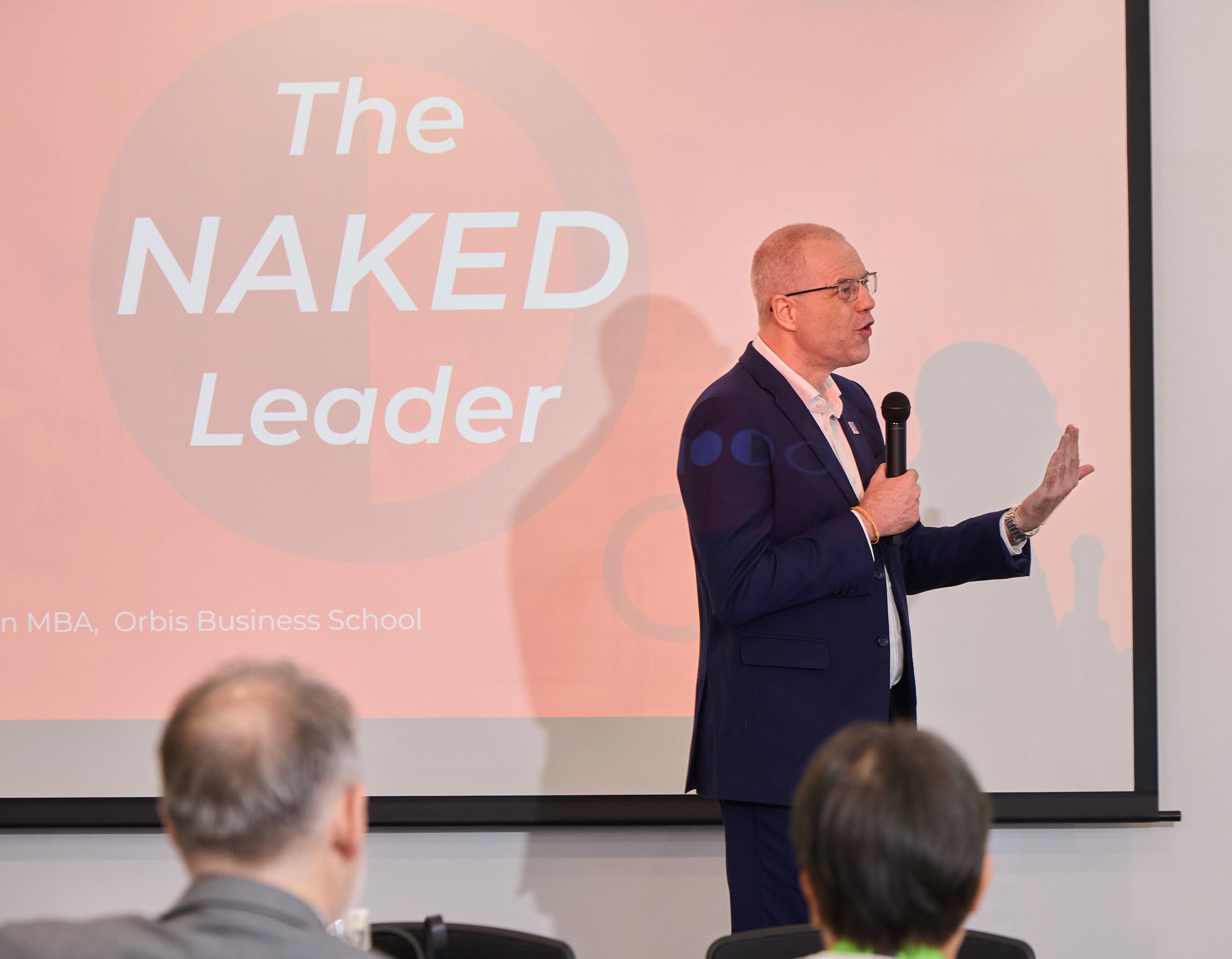
This fundamental question sits at the heart of my book 'The Naked Leader' and the work I do with leaders and entrepreneurs.
It starts with building inner clarity before gaining outer clarity.
Tags: Leadership, Transformation
 Malaysian Association of Professional Speakers Convention
Location: Pullman Bangsar, Kuala Lumpur, Malaysia Date : May 16, 2023 - May 17, 2023 Organizer: MAPS
Governance, the cornerstone of sustainabilityNot My Problem? - Why sustainability is too expensive to ignore Chief Judge Asia ESG Positive Impact AwardsThe Empty Chair: a powerful practice in leadership, coaching and self-reflectionSustainable Transformation: The Elephant and The Mouse In The RoomWho Are You Under Pressure - And Is That the Real You?