Oct19
Why sustainable transformation requires us to confront uncomfortable choices and question everyday habits.
Let's start with an uncomfortable fact.
According to the Food and Agriculture Organization of the United Nations (FAO), livestock agrifood systems account for approximately 12% of global human-caused greenhouse gas emissions. Producing one kilogram of beef generates on average around ten times the emissions of chicken and roughly twenty times those of tofu.
Yet when we talk about sustainability, what's on our plate receives far less attention than solar panels, electric vehicles and recycling.
Perhaps because changing what we eat is personal. Food is part of our culture, traditions and identity. We associate particular dishes with family celebrations and childhood memories.
I'm not suggesting everyone should become vegetarian or vegan. But I wonder how many of us have seriously considered the environmental consequences of our dietary choices, especially now that the alternatives have improved so much.
Personally, I find the McPlant burger at McDonald's in the Netherlands, my country of origin, just as enjoyable as its meat counterpart. I still wonder why McDonald's Malaysia, where I live, doesn't offer it.
If a more sustainable alternative is equally enjoyable, why wouldn't we choose it?
This brings us to a fundamental question about transformation: how willing are we to change something we enjoy, particularly when nobody is forcing us to?
Food is only one example. There are other realities that everybody knows about, yet few of us want to change our lifestyles or our ways of doing business.
I travel internationally for work, sometimes extensively, to speak, facilitate transformation programmes and meet clients. I enjoy it, and I recognise its environmental cost.
Aviation accounts for approximately 2.5% of global energy-related CO₂ emissions, and its total climate impact is greater once non-CO₂ effects are included.
Face-to-face engagement creates learning, collaboration and human connection that virtual meetings struggle to reproduce. But do we need to fly for every meeting? Could we combine several engagements into one trip, or hold some conversations online?
I ask myself these questions too. Where airlines offer it, I offset my flights, while recognising that offsetting is a fallback rather than a solution. Flying less is what actually reduces emissions.
It's relatively easy to recognise the environmental consequences of our choices. Changing our own behaviour is considerably harder.
Perhaps the most uncomfortable elephant concerns how we define success. Businesses are expected to grow, preferably by double digits every year. Investors expect returns. Governments measure progress through economic expansion. And we live on a planet with finite resources.
I don't believe the answer is simply to abandon growth. The more interesting question is: what kind of growth are we pursuing, and what are we willing to count as success? Can organisations create more value with fewer resources?
Challenging assumptions like these is at the heart of transformation.
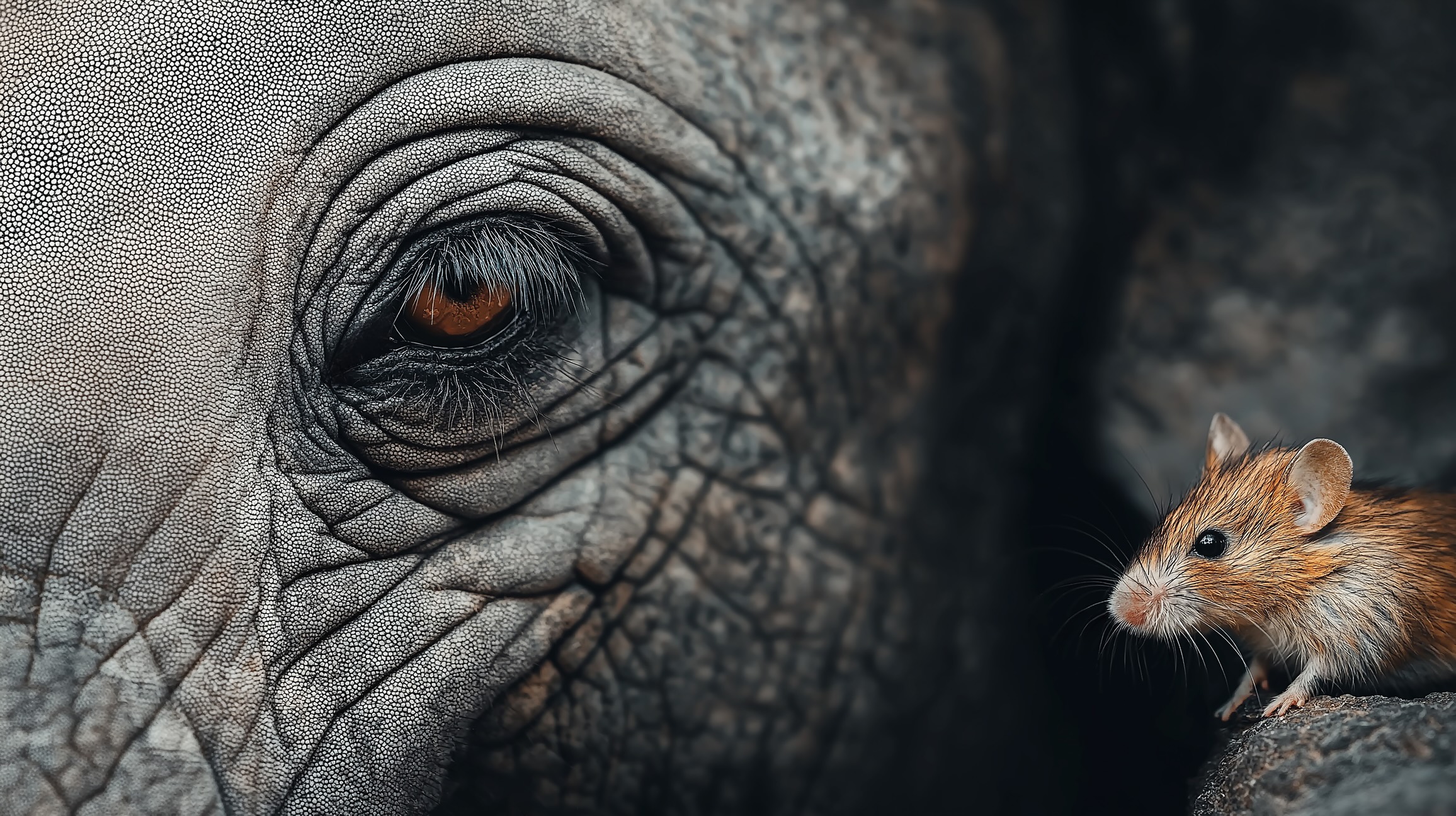
The elephants represent difficult systemic and personal choices. The mice are surprisingly ordinary.
I regularly speak at five-star hotels and conference venues that proudly communicate their sustainability commitments. Yet I still find disposable plastic water bottles on every table and bins without waste segregation.
I raise the plastic bottles with the venue every time.
How difficult is it to install a water refill system?
How much does a recycling bin cost?
I'd love to see venues compete on environmental practices as enthusiastically as they compete on service and luxury.
In tropical countries such as Malaysia, air-conditioning is part of everyday life. I've sat in meetings so cold that participants needed jackets while the temperature outside was over 30°C.
On their own, small steps such as raising the thermostat by a degree or two, maintaining equipment properly and switching off cooling in empty rooms seem trivial. Across thousands of buildings and millions of operating hours, they add up.
Disposable cups in the office. Individually wrapped refreshments. Promotional gifts nobody needs. Supplies bought without thought for durability, repairability or packaging.
None of these will solve climate change on its own. But they show how an organisation translates its stated values into everyday practice.
Here is what puzzles me. Many mice cost little or nothing to address. Some even save money from day one through lower energy bills, less waste and lower printing costs. So why do they remain unchanged for years?
The benefits aren't distant. What's missing is ownership.
The events manager assumes procurement decides on water bottles. Procurement assumes facilities handles the bins. Facilities assumes the thermostat is set the way guests want it. Each person sees the problem, and each quietly concludes that it belongs to someone else.
The elephants are hard because the choices are big. The mice survive because the choices are small enough for everyone to assume someone else will make them.
Either way, the result is a gap between what we say matters and what we actually do.
How do leaders close that gap?
Regulations, incentives and standards matter. We cannot rely entirely on voluntary action to address systemic environmental challenges. Rules can establish new behaviours. But lasting commitment grows when people understand their purpose and take ownership of their actions.
An employee may follow an environmental policy because it is mandatory. What happens when nobody is watching? What happens when the sustainable choice takes extra effort, or conflicts with a short-term target?
Those moments reveal the difference between compliance and conviction.
For leaders, the task is to create conditions in which people understand why sustainability matters, see their own role in it and feel able to act. That means leading by example, making consistent decisions, aligning incentives and building a culture where people can question how things have always been done, including who owns the small things.
It also means letting go of the assumption that sustainability is always a cost. Sometimes it is. But reducing waste, energy use and unnecessary travel often saves money and time, and improves wellbeing too.
It's tempting to look at the scale of environmental challenges and conclude that individual actions are insignificant. What difference will one less plastic bottle make? One meat-free meal? One company, when entire industries need to transform?
These are reasonable questions. Individual choices cannot substitute for systemic change, and governments, industries and investors carry responsibilities far beyond personal behaviour.
But systems are shaped by the decisions of the people within them. Each of us has a different degree of influence, and that influence comes with opportunities to act.
We can make a difference if we put our minds to it. Or we can shrug our shoulders and say: "Not my problem."
I believe sustainable transformation starts with recognising our own part in the solution.
Not every choice is easy, and not every sustainable alternative is practical. But we can become more conscious of the choices we make, the practices we accept and the assumptions we rarely question.
So the next time you notice an elephant or a mouse in the room, ask yourself:
What am I willing to change, within my own sphere of influence?
FAO (2023). Pathways towards lower emissions: A global assessment of the greenhouse gas emissions and mitigation options from livestock agrifood systems. FAO publication. Source of the approximately 12% global emissions estimate.
Poore, J. & Nemecek, T. (2018). Reducing food's environmental impacts through producers and consumers.Science, 360, 987–992. Original study. Food emissions comparisons are approximate global averages per kilogram of product, as presented by Our World in Data.
International Energy Agency (IEA). Aviation – Energy System. IEA aviation analysis. Source for aviation's share of global energy-related CO₂ emissions; non-CO₂ climate effects are additional.
Keywords: Sustainability, Transformation
Sustainable Transformation: The Elephant and The Mouse In The Room The Price of Standing Alone: Strategic Autonomy in a World Where Nobody Can Do It Alone
 The Potter’s Hands: Why Great Leaders Shape Environments, Not People
 The Corix Partners Friday Reading List - October 16, 2026
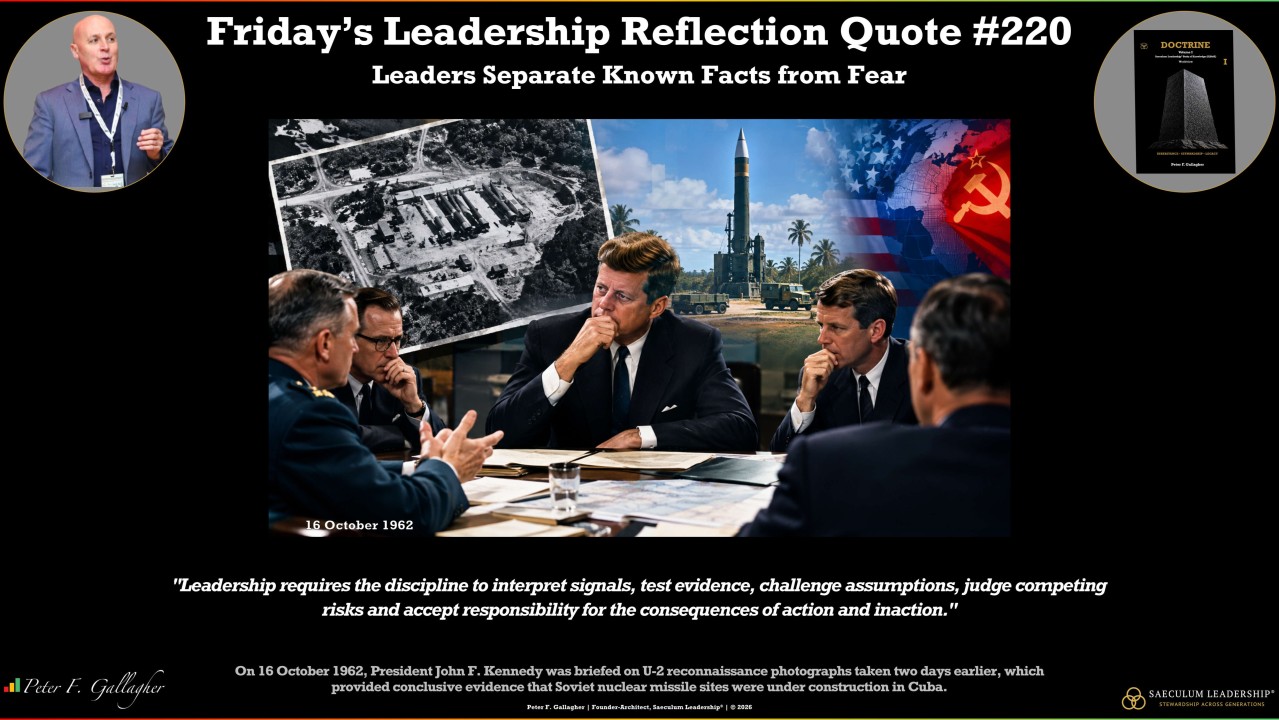 Friday’s Leadership Reflection Quote – Saeculum Leadership Leaders Separate Known Facts from Fear