Oct26
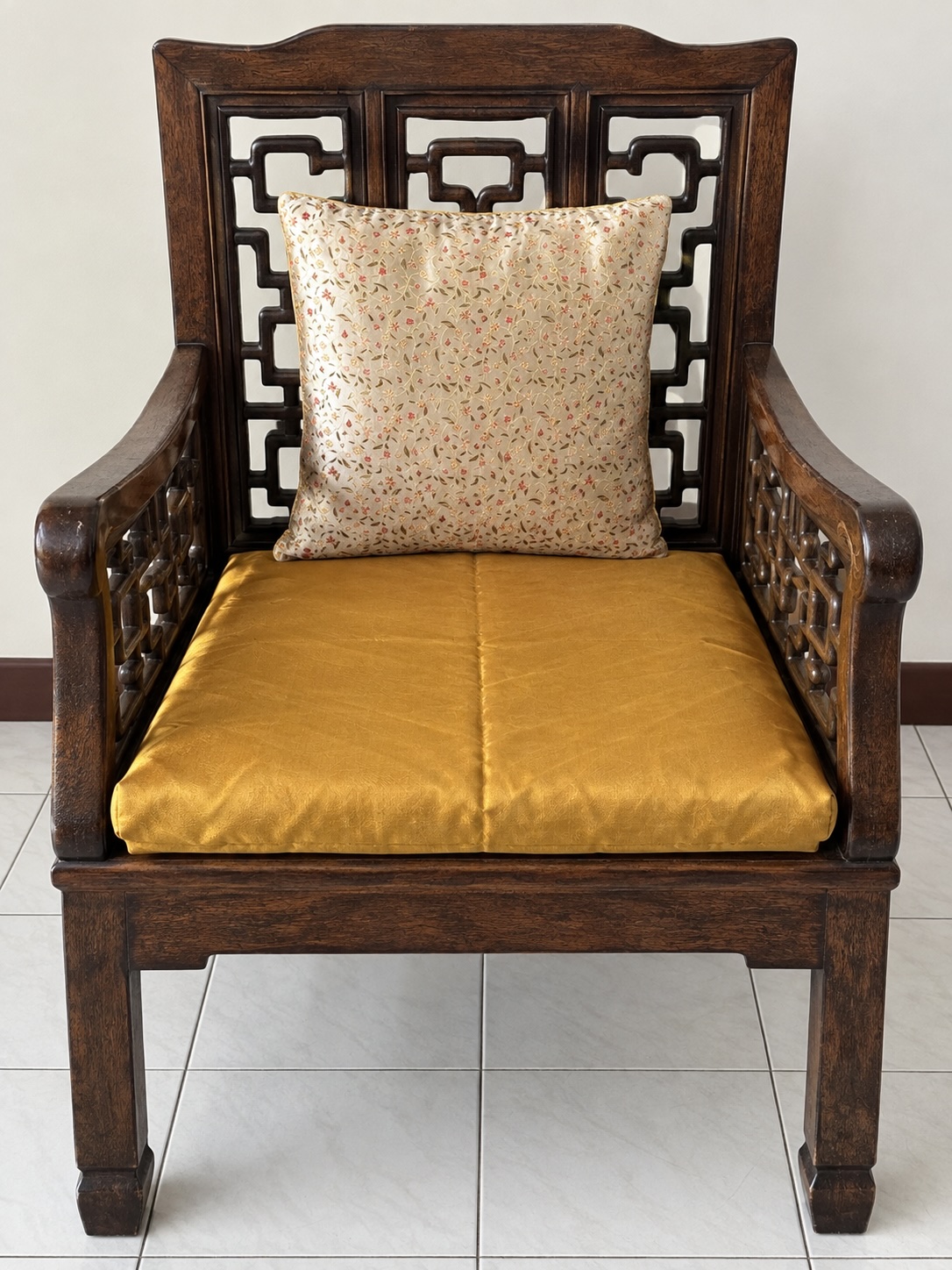
Recently, I returned to my in-laws' house, following the passing of my father-in-law last month. Walking into the house, I was confronted with a simple reality: his chair was empty.
A physical reminder that someone who had been part of our lives was no longer there.
It made me reflect on something I have used for many years, both professionally and personally: the empty chair.
An ordinary chair can be a powerful instrument for leadership, coaching, empathy and personal reflection. It allows us to make space for someone who is not physically present, yet whose perspective, experience or wisdom deserves our attention.
Over the years, I have found several ways to use this practice.
One of the best-known applications of the empty chair comes from Amazon.
Jeff Bezos famously introduced the practice of leaving an empty chair in meetings to represent the customer, reminding everyone that the most important person in the room might not actually be present.
I regularly refer to this principle in my leadership workshops.
Organisations spend considerable time discussing strategy, financial performance, operational efficiency, technology and internal processes, but often overlook the all-important questions:
What would our customers think about this decision? Would they experience the benefits we are discussing?
Are we solving a genuine customer problem, or merely making our internal processes more convenient?
The practice is simple, but its implications can be significant.
And while Amazon used the concept in relation to customers, I use the empty chair in other contexts too.
In my executive coaching practice, I sometimes invite leaders to imagine one of their employees sitting in an empty chair.
Perhaps someone who is struggling with performance. Someone who disagrees with a decision. Or someone whose behaviour the leader finds difficult to understand.
I ask the leader to imagine looking at the situation through that person's eyes.
How would they experience the decision I am making?
What concerns might they have that I haven't considered?
What might they need from me as their leader?
This can be particularly relevant during organisational transformation.
Leaders frequently approach transformation through strategic objectives, milestones, restructuring plans and performance indicators.
Employees may experience the same transformation very differently.
They may worry about their future, their relationships, their competence or their sense of belonging.
Neither perspective necessarily tells the whole story.
The empty chair helps leaders recognise that their interpretation of a situation is only one of several possible interpretations.
Importantly, empathy does not mean you have to agree with that person. It means making the effort to understand their perspective and how your decisions may affect them before acting.
The empty chair can also represent someone who does not yet exist: your older self.
Imagine yourself sitting in that chair, twenty or thirty years from now.
Looking back on your life, your career, your relationships and the choices you made.
What would that older version of yourself say?
Will I be at peace with the choices I made?
Did I spend my time on what truly mattered?
Did I have the courage to act according to my values?
I find this particularly useful when coaching leaders who face important career or personal decisions.
Many decisions are made under pressure from immediate circumstances: financial targets, expectations from others, career opportunities or fear of losing something.
But looking back, much of what seemed urgent at the time may turn out to have been little more than noise and distraction.
Applying this technique can help us make better decisions today.
In my personal meditation practice, I sometimes use the empty chair to connect with another person's experience, their great qualities and their struggles.
When I imagine a good friend sitting in the chair, it comes naturally.
What would your best friend advise you? What would you tell him/her?
But I also use this technique for someone I dislike.
What might this person be experiencing?
What fears, insecurities or past experiences might influence their behaviour?
Can I still recognise their humanity, even when I strongly disagree with their actions?
This does not mean I'm excusing harmful behaviour or accepting unacceptable conduct.
It helps me maintain boundaries while still recognising that they, too, have their own experiences and struggles.
And then there is the empty chair that started this reflection.
The chair of someone who has passed away.
The person who once occupied it continues to influence our lives in many ways.
Their wisdom lives on.
The love and laughter we shared.
The inspiration they gave.
Their influence may be reflected in our values, our behaviour, the decisions we make and the way we treat others.
I strongly believe that leadership extends beyond our physical presence.
What mindset, culture and impact remain in an organisation long after we are no longer there?
Across these different applications, the empty chair is fundamentally a metaphor for awareness.
Becoming aware of the experiences of others, the consequences of our decisions and the assumptions that shape our thinking.
This is closely connected to my philosophy of transformational leadership.
Transformation involves more than changing what we do. It involves a change in being.
Being with yourself and being with the other.
The empty chair is a powerful and practical way to cultivate that awareness.
Who would you place in your empty chair?
Dennis Akkerman, MBA, is a transformation catalyst, keynote speaker and author of three books on leadership and transformation. He has worked with leaders and organisations across more than 30 countries, exploring the relationship between personal, organisational and societal transformation.
Keywords: Leadership, Coaching, Transformation
The Empty Chair: a powerful practice in leadership, coaching and self-reflection Human Oversight Is Not a Person in the Loop
 Holistic Development: Why Performance Starts with the Whole Human
 The Most Dangerous Leader in the Room May Be the One Everyone Depends On
 What is that Analytical AI?