Oct30

A few years ago I sat in a workshop where a team proudly walked me through their contract landscape. A situation I believe lots of people will recognize. Seven systems, each excellent at its own task. Then I asked a simple question: "Which of these tells me what we have actually agreed with this supplier today?" The room went quiet. Everyone had a piece of the answer, and nobody had the answer.
I have worked in contract management and general leadership since the early 2000s, and I have never seen so much creativity as right now. AI review tools, clause analytics, obligation trackers, sourcing and intake platforms, e-signature: each solves a real problem, often brilliantly. Specialised applications are a sign of a maturing field, and I am glad to see them gain traction.
But there is a risk that deserves attention. Every new point solution is easy to justify on its own. Together, they can quietly turn a coherent process into a pile of tools, each with its own data, its own logic and its own version of events. Integrality, the ability to see and steer the whole contract lifecycle, is the first thing to go.
In contract management and supply chain management, value comes from three distinct roles:
In a simple landscape, one platform may cover all three. In a modern one, several tools share them, and that is where it gets complicated. When every system does its own thing in isolation, the roles blur. Two tools both believe they hold the truth about renewal dates. An obligation tracker is fed by a clause extraction nobody validated. A signed contract sits in a repository, while the record still says "in negotiation".
Let me be clear: I am not saying "don't buy separate systems." Best-of-breed tools can be exactly what your organisation needs. My argument is about sequence. Decide how the parts form a whole before you deploy them, not after the first audit or dispute exposes the gaps.
From many implementations, I see the same elements in landscapes that work well:
A clear role for each system. For every tool, you can say in one sentence whether it records, acts or stores, and what it must never do.
Data ownership. Every data element has one owner and one place where it is created. Others consume it, they do not re-enter it.
One source of truth for contract data. People should never have to ask which system to believe. If two systems disagree, there is a known rule for which one wins.
Shared definitions and metadata. What counts as "active"? What is a "renewal date"? What is a "high-risk" clause? If every tool answers differently, reporting becomes an argument instead of a decision aid.
Integration and handovers. Data and documents must move between systems predictably, with clear triggers. Most failures I see are not inside a tool, but in the handover between two of them.
Governance. Someone decides when a new tool may join the landscape, how changes are made, and how data quality is monitored.
Process first. Design the end-to-end process, from need to renewal or exit, and only then place the tools on it. A tool should serve a step in the process, not define it.
An owner of the end-to-end outcome. Each tool usually has a business owner. Who owns the result across all of them? Without that person, nobody feels responsible for the gaps between the systems.
Before the next purchase, put these on the table:
If you cannot answer these questions yet, you are not ready to sign, and that is not a failure, it is the most valuable moment to find out.
Over the years I have learned that contracts rarely go wrong because a single task was done poorly. They go wrong in the spaces between tasks, teams and systems. Point solutions can make each task better. Only deliberate design makes the whole better.
So by all means, welcome the innovation. Just make sure your landscape remains something you can explain on one page, and that someone can answer the simple question I asked in that workshop: what have we actually agreed, today?
Merge all this into that other relevant question: "what do we want to achieve".
Keywords: Legal and IP, Procurement, Supply Chain
Many Tools, One Contract: Keeping the Whole in View Friday’s Leadership Reflection Quote – Saeculum Leadership: Leaders Steward Through Institutions
 The Corix Partners Friday Reading List - October 30, 2026
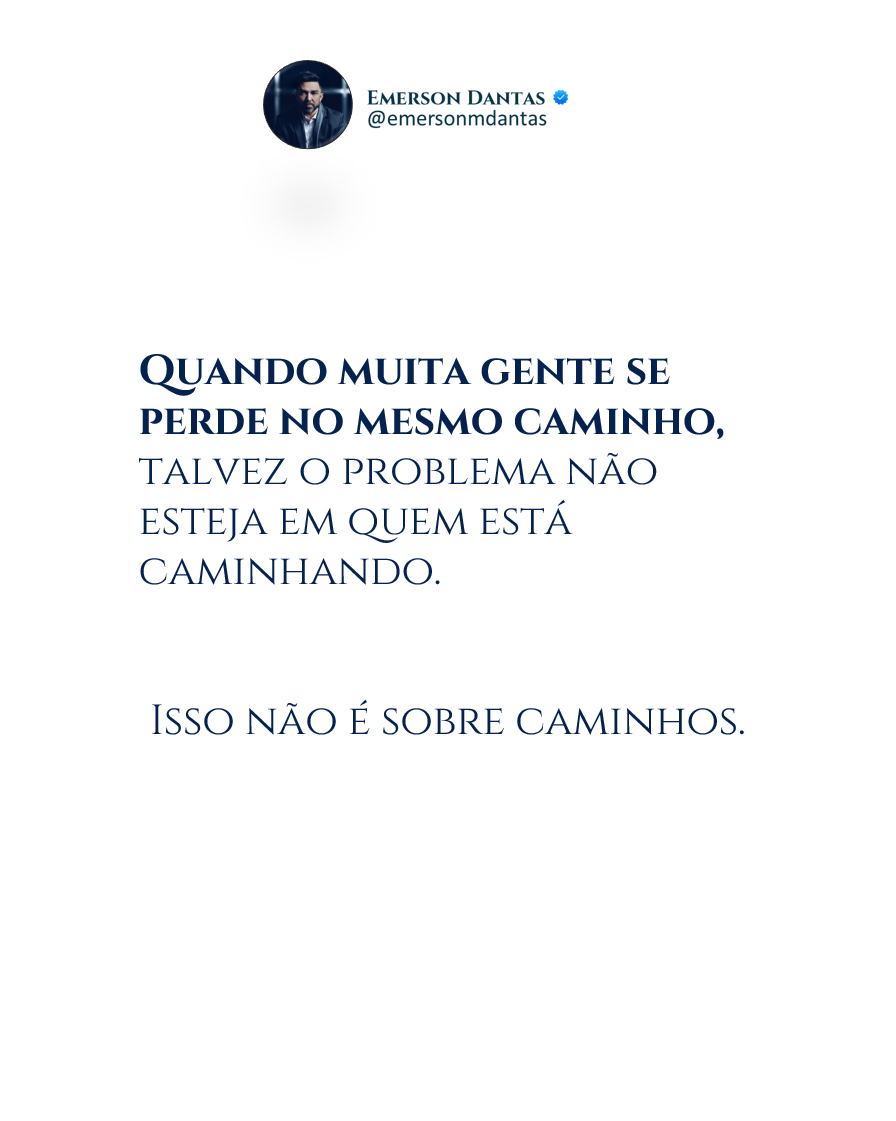 Quando muita gente se perde no caminho, talvez o problema não esteja em quem está caminhando.
 The Empty Chair: a powerful practice in leadership, coaching and self-reflection