


Arjen van Berkum is a contract management strategist, technology evangelist, and keynote speaker who has spent more than two decades at the intersection of business, technology, and commercial relationships. As Chief Strategy Wizard at CATS CM, he leads a globally recognised methodology for post-award contract management that has shaped thinking in procurement and supply chain disciplines across industries.
Arjen holds visiting academic roles and has contributed to executive education and research programmes at institutions in Berlin, Mumbai, Delft and Rotterdam, connecting scholarly rigor with the practical realities of business performance. His position as visiting lecturer at Delft University of Technology reflects a consistent belief that ideas must be tested against both academic frameworks and commercial experience.
What sets Arjen apart is his ability to bridge the buy and sell sides of every commercial relationship. He understands that most friction in business, whether in technology adoption, supply chain design, or economic value delivery, originates from a gap between the party buying and the party delivering. He works to close that gap by reframing how organisations think about contracts, not as legal documents, but as the structural foundation of trust and performance.
Central to his thinking is the conviction that process is an enabler, not a constraint. Well-designed process creates clarity, accelerates decisions, and unlocks value across economic and operational chains. This perspective runs through everything he writes, teaches, and advocates for, from macroeconomic dynamics like stagflation and its impact on contract portfolios, to the practical mechanics of customer success in B2B environments.
Arjen writes and speaks regularly on leadership, the future of work, innovation, and the economics of commercial relationships. His newsletter, Arjen's Take, reaches a growing community of professionals rethinking how contracts, technology, and strategy connect.
Available For: Authoring, Consulting, Influencing, Speaking
Travels From: Delft, Netherlands
| Arjen Van Berkum | Points |
|---|---|
| Academic | 0 |
| Author | 270 |
| Influencer | 349 |
| Speaker | 3 |
| Entrepreneur | 20 |
| Analyst | 0 |
| Total | 642 |
Points based upon Thinkers360 patented algorithm.

Tags: Agentic AI, Procurement, Supply Chain
Tags: Agentic AI, Procurement, Supply Chain
Tags: Agentic AI, Procurement, Supply Chain
Tags: Agentic AI, Procurement, Supply Chain
Tags: Agentic AI, Procurement, Supply Chain
Tags: Agentic AI, Procurement, Supply Chain
Tags: Agentic AI, Procurement, Supply Chain
Tags: Agentic AI, Procurement, Supply Chain
Tags: Agentic AI, Procurement, Supply Chain
Tags: Agentic AI, Procurement, Supply Chain
Tags: Agentic AI, Procurement, Supply Chain
Tags: Agentic AI, Procurement, Supply Chain
Tags: Agentic AI, Procurement, Supply Chain
Tags: Agentic AI, Procurement, Supply Chain
Tags: Agentic AI, Procurement, Supply Chain
Tags: Agentic AI, Procurement, Supply Chain
Tags: Agentic AI, Procurement, Supply Chain
Tags: Agentic AI, Procurement, Supply Chain
Tags: Agentic AI, Procurement, Supply Chain
Tags: Agentic AI, Procurement, Supply Chain
Tags: Agentic AI, Procurement, Supply Chain
Tags: Agentic AI, Procurement, Supply Chain
Tags: Agentic AI, Procurement, Supply Chain
Tags: Agentic AI, Procurement, Supply Chain
Tags: Agentic AI, Procurement, Supply Chain
 The Ruler Problem: Organizational Politics, Silo Structures, and the Governance Design That Organizations Can No Longer Afford
Tags: Agentic AI, Procurement, Supply Chain
 When Oil and Gas Prices Surge: What Contract Management Can Do That Nothing Else Can
Tags: Agentic AI, Procurement, Supply Chain
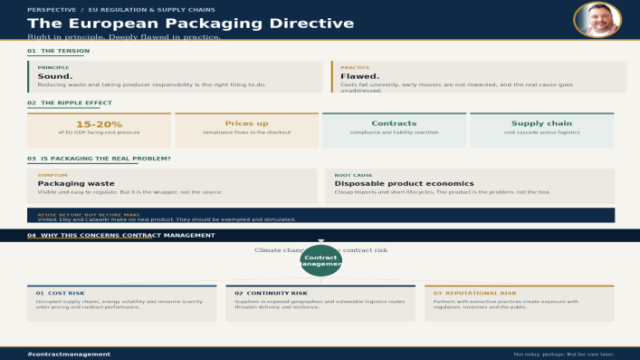 The European Packaging Directive: Right in Principle, Deeply Flawed in Practice
Tags: Climate Change, Supply Chain, Sustainability
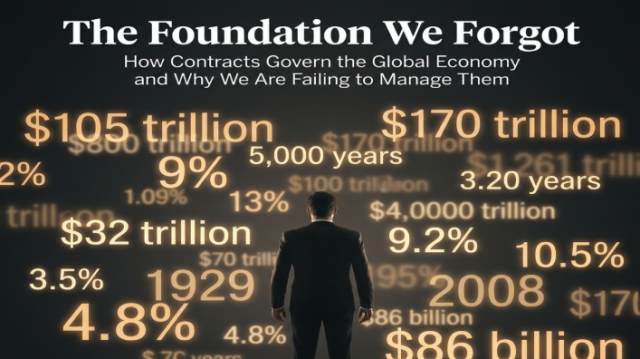 The Foundation We Forgot: How Contracts Govern the Global Economy and Why We Are Failing to Manage Them
Tags: GRC, Legal and IP, Procurement
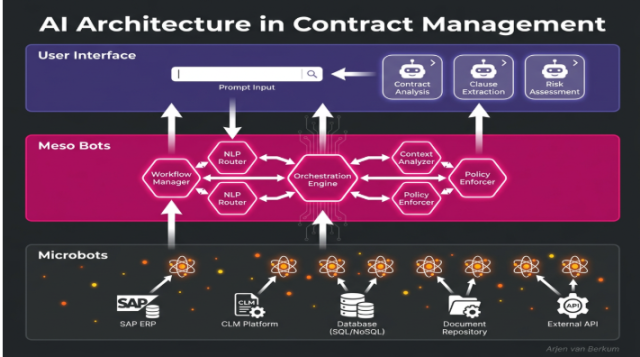 From Integration to Intelligence: The Case for Microbot Architecture in Contract Management
Tags: Agentic AI, AI Orchestration, Architecture
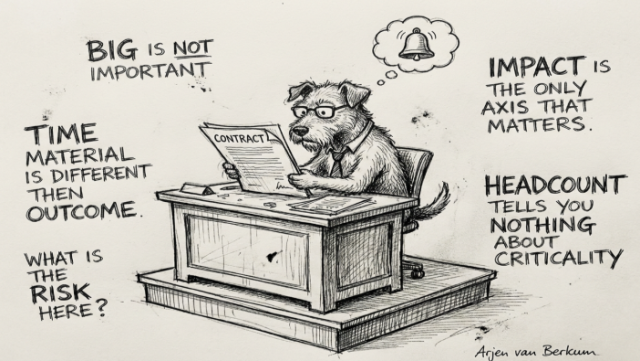 What kind of contract are you actually managing?
Tags: Management, Procurement, Risk Management
 Nobody Believes in Magic.
Tags: Agentic AI, Procurement, Supply Chain
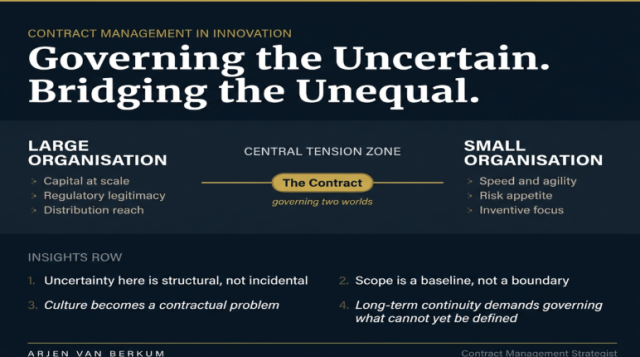 Contract Management and Innovation: Governing the Uncertain, the Essential, and the Unequal Partnership
Tags: Agentic AI, Procurement, Supply Chain
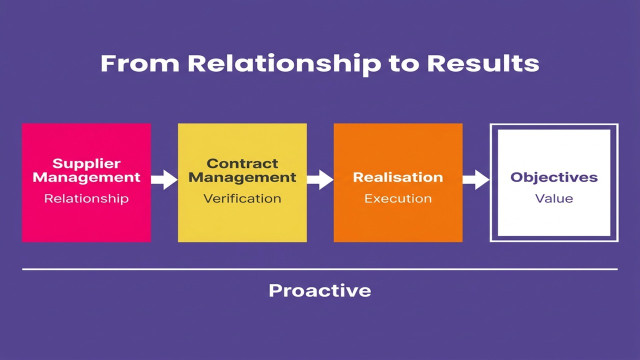 Why Contract Management, Supplier Relationships, and Execution Are Three Different Disciplines (And Why That Matters)
Tags: Agentic AI, Procurement, Supply Chain
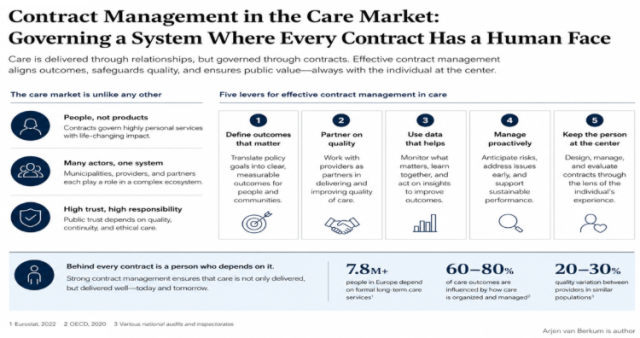 Contract Management in the Care Market: Governing a System Where Every Contract Has a Human Face
Tags: Agentic AI, Procurement, Supply Chain
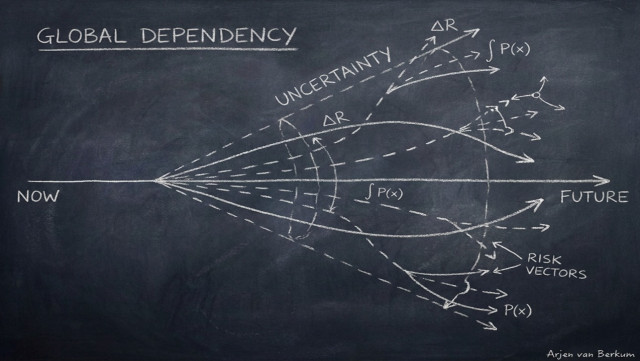 The World Is Not Flat. It Never Was.
Tags: Management, Procurement, Supply Chain
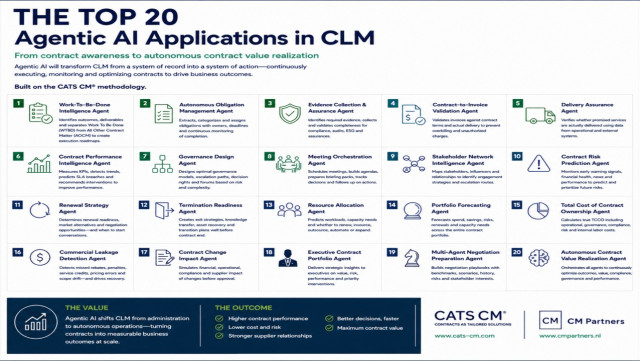 The Top 20 Agentic AI Applications That Will Transform Contract Lifecycle Management
Tags: Economics, Leadership, Management
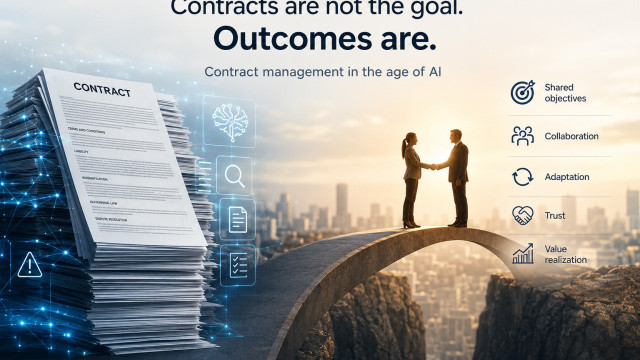 Contract Management in the Age of AI: Rediscovering the Human Skill Behind the Document
Tags: Economics, Leadership, Management
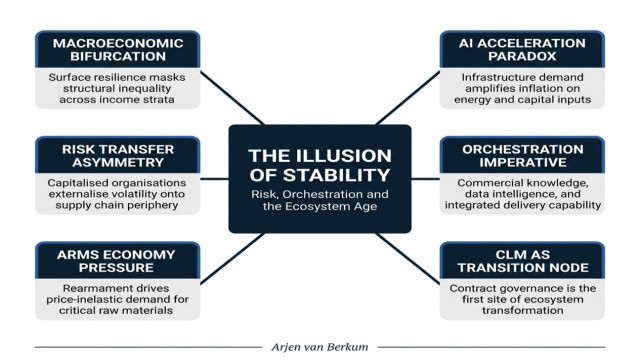 The Illusion of Stability: Risk, Orchestration, and the Coming Test of the Ecosystem Age
Tags: Economics, Leadership, Management
 The two forces that should drive every organization, and why most organizations have lost sight of both
Tags: Business Strategy, Economics, Ecosystems
 Quick wins in contract management
Tags: Leadership, Management, Transformation
 Resilience Is Not a New Idea. It Is an Old Obligation We Keep Ignoring.
Tags: AI, Leadership, Management
 The Contract Was Never Just a Document
Tags: AI, Leadership, Management
 The fundamentals of the contract management business case
Tags: Business Strategy, Economics, Ecosystems
 Risk Appetite: A Practical Guide for Contract Managers in Complex Networks
Tags: AI, Leadership, Management
 Orchestrating Both Sides of the Supply Chain
Tags: Business Strategy, Economics, Ecosystems
 Coffee, Contract Management, and the Business Value of “Small” Spend
Tags: Business Strategy, Economics, Ecosystems
 Contract Management As A Valuation Lever In Private Equity Portfolio Management
Tags: Business Strategy, Economics, Ecosystems
 SLA's are met, emotions rage...
Tags: Business Strategy, Economics, Ecosystems
 Inflation is not going to be 2%...
Tags: Business Strategy, Economics, Ecosystems
 Chief Strategy Wizard
Tags: Management
 Non Executive Director
Tags: Leadership, Management
Tags: AI, Procurement, Supply Chain
 The Physics of Contracts: Natural Laws, Uncertainty, and the Architecture of Obligation
Tags: Economics, Ecosystems, Supply Chain
 A Question Procurement Needs to Ask Itself
Tags: Economics, Ecosystems, Supply Chain




 The Price of Standing Alone: Strategic Autonomy in a World Where Nobody Can Do It Alone
Every few years a new word or sentence enters the boardroom and everyone nods as if the meaning were obvious. Strategic autonomy is this years' sentence. Governments use it when they talk about energy, chips and defence. Executives use it when they talk about cloud platforms, critical suppliers and data. Yet ask ten people what it means and you get ten answers, most of them quietly assuming that autonomy is something you can simply decide to have.
My work puts me in the middle of collaborations between organisations: contracts, suppliers, customers, partners. In all of them the same questions rise sooner or later. Who actually controls this? What happens if the other side changes course? What would it cost us to leave? This article argues two things that seem to contradict each other. You should want strategic autonomy, and you will never fully have it.
Strategic autonomy is hard to pin down, so here is my definition. It is the degree of control you have over a service or a product that you depend on, set against what other actors are able to do to that service or product. Those actors can be states, but they can just as well be a single supplier, a platform owner, a regulator, a competitor or the customer who happens to be your largest source of revenue.
Two things follow. First, autonomy is not binary. It is a spectrum, and every organisation sits somewhere on it for every critical service it uses. Second, it is relative. A hospital, a bank and a small design agency will not want the same degree of it, because the consequences of an interruption differ so widely. Some organisations are simply more sensitive to dependency than others.
The case for autonomy rests on one uncomfortable observation: in a world where everything is connected, monolithic dependency is dangerous. When one cloud provider hosts your applications, your data, your identity management and your backups, you have not built an architecture. You have built a single point of failure with a service level agreement attached.
This is not limited to cloud. It applies to a sole source for a key component, one logistics partner on one trade lane, a software platform whose data model has become the backbone of your processes, or a single country supplying a raw material nobody else can deliver at scale. The pattern is always the same. Efficiency pushes you to consolidate, consolidation creates concentration, and concentration turns a commercial relationship into a continuity risk.
The price of not managing this is rarely a higher invoice. It is paid in continuity. Consider what happens when a dominant supplier nation or platform owner wakes up one morning and changes its policy abruptly and without consultation. In a highly interdependent economy the lights do not go out in one place. They flicker in dozens of places at once, because the same dependency hides behind many different organisations. Those who never asked themselves the question find out the answer at the worst possible moment.
Now the other side. Autonomy is expensive, and the bill is larger than most strategy papers admit.
Building your own version of something means duplicating capacity that the market already provides at scale. It means carrying knowledge, staff, tooling and maintenance that you previously rented, and giving up the economies of scale that made the shared solution cheap.
The collective scenario is more interesting. Imagine banks pooling their funds, or countries pooling theirs, to build an alternative together. Now the numbers start to work. A bloc that combines its resources can create its own payment rail, energy network or data infrastructure and reduce its exposure to a single outside actor. That is real autonomy, and it is achievable.
But notice what has happened. The route to autonomy ran through cooperation. The bloc did not become independent of everyone. It became dependent on a different set of partners, under different terms, which it now has to govern. And the bill has not gone away, it has been shared. Parallel capacity at this scale is a structural cost, and structural costs find their way into prices. Autonomy that is paid for shows up as inflation somewhere in the chain, in higher tariffs, higher margins, higher taxes or lower returns. We should say this out loud rather than pretend that resilience is free.
That is why complete autonomy is a utopia. The more you pursue it, the more it costs, and at some point you are paying a premium to remove a risk smaller than the premium. The sensible question is never “can we be fully autonomous?” but “how much autonomy is worth how much money, for which services, and with whom?”
There is a persistent belief that the strongest party in a relationship can simply impose its will. A dominant supplier, a monopolist, a powerful customer, even a state with military means can set terms, and for a while those terms hold.
But look at what compulsion actually produces. It does not create lasting obedience. What it creates is a conversation about strategic autonomy on the other side of the table. The harder one party pushes, the more motivated the other becomes to find alternatives, to diversify, to build, to wait. Organisations comply when they have to and leave when they can. Even with force or a monopoly you do not obtain genuine obedience. You force the debate about autonomy upon everyone who depends on you.
The party that squeezes hardest during the contract term often finds itself in a very different position at the end of it. The other side has used the years to prepare, so the renewal is no longer a formality but a decision, and the squeezed party now has options. The harder you push, the greater the chance that you are the one left holding the bill when the contract ends.
This leads to a principle that I think is underrated. You must always think from your own interests, because that is your job. But if you fail to include the perspective of the other party, you lose at the tipping point. A strategy that only models your own position is not a strategy, it is a hope.
Both arguments only make sense once we step back from the single relationship and look at the whole system. For me a business ecosystem is defined as the dynamic whole of an organisation’s relationships with other actors and the relationships among those actors, which together, within a physical and digital infrastructure, influence the realisation of the organisation’s objectives.
Note that the relationships among the other actors count too: your supplier has suppliers, and a shock far from you travels along those lines. The physical and digital infrastructure underneath, from cables to platforms, is where concentrated dependencies tend to sit unnoticed.
Specialisation, technological development, growing regulation, rising societal expectations and accelerating change all make ecosystems more complex, and more complexity means that no single organisation can deliver the whole value chain on its own. That is not a temporary condition we can engineer away. It is the nature of the modern economy. Neither a country nor an organisation can do it alone.
Seen this way, strategic autonomy is not about escaping the ecosystem. It is about holding a deliberate position within it: knowing where you want control, where you accept dependency, and where you want to be able to switch.
If autonomy is the degree of control you have over what you depend on, the place to find it is in the agreements that define that dependence. Contracts are where the relationship becomes concrete: scope, service levels, data ownership, exit rights, change mechanisms, liability, term and termination.
No single contract tells you how autonomous you are. A contract with one cloud provider may look perfectly acceptable on its own. It is the sum of all your agreements that reveals the pattern: the same provider appearing under three brands, the same subcontractor in five supply chains, the same jurisdiction behind a dozen services. So manage your agreements, add them up, and look at what the total says. The gaps are your risks. The overlaps are your opportunities, for consolidation where it is safe and for diversification where it is not.
This is why contract management and supplier relationship management belong in the strategic conversation. They turn “we depend on this” from a feeling into a fact. Strategy sets how much autonomy you want, the process secures it in daily execution, and what you learn in execution flows back into strategy again.
Make it visible. Map your dependencies across contracts, suppliers, customers and infrastructure, including the hidden ones: the subcontractors behind your suppliers, the platforms behind your platforms. You cannot weigh what you cannot see.
Run scenarios. Plot what happens if a critical party disappears, changes its terms, raises its prices or becomes unreachable for a week, a month or a year. Actually run them, and look at both continuity and cost.
Decide what to do with each dependency. Sometimes the answer is to accept it and secure it with better terms, exit support and monitoring. Sometimes it is to build a second source. For a few it is to invest, perhaps together with peers, in your own capability. Weigh continuity against cost and be explicit about the trade.
Talk about it honestly. Do so with internal stakeholders, who often see criticality differently than the contract owner, and with external parties, who respond better to a transparent conversation about shared risk than to a sudden demand. Autonomy debated openly builds trust. Autonomy pursued in secret looks like hostility and invites the very behaviour you wanted to avoid.
Strategic autonomy is worth wanting and impossible to complete. Both statements are true at once, and the skill lies in holding them together. Want it, because monolithic dependency in a connected world is a continuity risk you can see coming. Doubt it, because autonomy is costly, its price returns as inflation, and the most ambitious versions can only be built together with others. Respect the other party, because force teaches your partners to leave. And manage your agreements, because that is where autonomy is won or lost, one clause at a time.
We live in a world where nobody can do it alone. So we make agreements. Those agreements are contracts, and a contract must be managed as a document, as a relationship and as an expectation. Strategic autonomy is simply what that management looks like when you add it all up.
Tags: Economics, Ecosystems, Risk Management
 The Age of Continuous Shocks: Why the coming downturn will be decided in your supply chain
A prophecy is not a prediction of a date. It is a description of a direction.
I believe the global economy is in that moment now. Not because one indicator flashes red, but because many indicators are bending in the same direction at the same time, some red, some orange. An economic downturn is on the horizon, and it will not look like 2008 or 2020. It will not be a single event with a clear beginning and a recovery curve. It will be a sequence of shocks arriving from different directions, overlapping before the previous one has been absorbed. The defining feature of the coming years is not the depth of any single crisis, but the continuity of disruption.
For everyone who works in contracts, procurement, sales, supply chain and operations, this is not background noise. It is the job description for the next decade.
Energy is the bloodstream of every supply chain, and it is under pressure. The transition away from fossil fuels is necessary, but it runs in parallel with an old system that is not yet replaced. We are paying twice: for the grid we have and for the grid we are building.
Underneath sits the petrodollar. For half a century oil has been priced and settled predominantly in dollars, creating permanent global demand for the currency. That arrangement is no longer taken for granted. Producers experiment with other settlement currencies, bilateral deals bypass the dollar, and central banks accumulate gold at a pace not seen in decades. I am not predicting a sudden collapse. I am predicting a slow loosening, and a slow loosening is exactly what makes planning difficult. Prices of energy, raw materials and freight are linked to currency, and currency is linked to trust. When trust becomes negotiable, every long-term price in every contract becomes a little less certain.
Many managers still treat interest as a single number. Wake up! The difference between short-term and long-term interest tells a story the headline rate hides. When short-term money is expensive while long-term money reflects doubt about growth, debt and inflation, the market is saying something uncomfortable: it does not believe the present calm will last.
For supply chains the consequences are practical. Short-term interest determines the cost of working capital, and therefore how much inventory you can afford and how long your suppliers can wait for payment. Long-term interest determines whether anyone invests in the factory, the mine, the port or the platform you will depend on in five years. Expensive short-term money and hesitant long-term money produce exactly what we should fear: fragile suppliers, thin buffers and under-investment in capacity.
Artificial intelligence is a genuine technological shift, probably more then the internet is. But a genuine technology and a sound valuation are two different things. Much of the current market confidence rests on the expectation that AI investment will translate into productivity and profit at a speed and scale not yet demonstrated.
If that expectation corrects, the effect will not stay within technology. Pension funds, indices and corporate balance sheets are exposed, and a sharp correction would reduce wealth, investment and appetite for risk in the very sectors that supply the physical world. There is also a quieter effect: the AI build-out competes for electricity, copper, water, engineers and construction capacity. The bubble, if it is one, is not only a financial risk. It is a competitor for the resources your supply chain needs.
Compliance requires data, data requires systems, and systems require people, who are scarce. The cost of regulation is rising faster than most budgets assume, and it falls unevenly: large organisations absorb it, while smaller suppliers, especially in developing regions, struggle with requirements written elsewhere for different circumstances.
This touches a deeper divide. The distance between north and south, between regions with stable institutions, capital and energy security and regions without, is not narrowing as we once hoped. Within countries, welfare is distributed ever more unevenly. When a growing part of the population feels the system works for others, political pressure follows: protectionism, export bans, tariffs and sudden changes in the rules of the game. Inequality is not only a moral question. It is a supply risk, because it breeds instability in the places where we source our goods, materials and people.
There is a threat of war, and there is actual war. The threat changes behaviour: governments stockpile, defence budgets crowd out other spending, critical materials become strategic assets, and companies are asked to choose sides. Actual war changes physics: ports close, shipping lanes become unsafe, insurance becomes unaffordable, and entire categories of supply vanish overnight.
Recent years showed how fast a regional conflict becomes a global procurement problem. The map of what counts as a remote risk has been redrawn, and many of our contracts were drafted on the old map.
Put these forces together and the pattern is clear. Disruption no longer comes from one direction we can monitor. It comes from raw materials, because competition for critical minerals is intensifying. It comes from energy, because price and availability are political. It comes from human resources, because demographics, migration policy and skills mismatches tighten labour markets everywhere. It comes from political pressure through sanctions, tariffs and local-content demands. It comes from war. And it comes from all of these interacting, so that a shortage in one area becomes a price spike in another and a labour problem in a third.
Resilience in that environment is not a project with an end date. It is a permanent management discipline.
In this environment, the professionals who make sure we can deliver become the most valuable people in the organisation. Contract managers, procurement specialists, planners and supplier relationship managers translate a promise made to a customer into a chain of promises made to suppliers, and keep that chain intact when the world interferes. Their value is visible only when something goes wrong, which is why it is so often underestimated until too late.
Retaining this talent is therefore not a question of paying more than the competition. Salary is the easiest lever for a competitor to match. What retains people in turbulent times is a mandate to act, access to decision-makers, tools that help rather than hinder, and a visible connection between their work and the organisation's survival. Professionals treated as administrators of paperwork will leave for those who treat them as guardians of continuity.
The answer to continuous shocks is not a better human resources policy alone. It is a total resource management strategy in which people, materials, energy, capital, data, capacity and supplier relationships are planned as one interdependent system rather than as separate budgets owned by separate departments.
A shortage of skilled labour is also an energy question if your shift patterns follow energy tariffs. A raw material constraint is also a financial question if your working capital cannot carry additional stock. A supplier dependency is also a political question if that supplier sits in a region facing sanctions.
How far ahead should you plan? Further than your budget cycle, with more scenarios than your forecast. Combine a long horizon for structural choices, such as where capacity and key suppliers are located, with short, frequent review cycles for operational decisions. The point is to decide in advance what you will do when each plausible future arrives.
How far should you stock up? Distinguish between what is critical, what is substitutable and what is merely convenient. Hold deliberate buffers for the first, build alternatives for the second and accept volatility for the third. Just-in-time was an optimisation for a stable world; just-in-case everywhere is unaffordable. The skill lies in knowing where a buffer costs less than a stoppage, and that calculation is only possible when finance, operations and procurement look at the same data.
Nowhere is the gap between the old map and the new world more visible than in the force majeure clause. It usually sits near the end of the contract, in standardised language, copied from template to template. It was written for the exceptional event: the earthquake, the flood, the unforeseeable catastrophe. It was not written for a world in which disruption is frequent, interconnected and partly foreseeable.
Does your clause cover energy price spikes, or only supply interruption? Sanctions and export controls? A supplier's own supplier failing? A cyberattack or a war? What happens when an event was foreseeable but its consequences were not? How long may a party rely on the clause before the other can terminate?
Revisit your force majeure language now, while relationships are intact and goodwill is available. A modern clause defines events precisely rather than generically, distinguishes full prevention from partial impairment, requires mitigation and communication so it is not an escape hatch, sets clear time limits and consequences including rights to source elsewhere, and connects to price adjustment, volume flexibility and joint contingency planning. A contract should not only allocate blame after a shock. It should describe how two parties will behave together when one arrives.
If all this is visible, why do so many leaders wait? Not out of laziness. They are, as yet, blissfully unaware of the cumulative effect of continuous shocks.
Each disruption, viewed alone, looks manageable. The last crisis was absorbed and the numbers came back, so experience teaches that shocks are temporary. What experience cannot easily teach is that the interval between shocks is shrinking and that recovery capacity is finite. Every crisis consumes cash, goodwill, attention and supplier trust. By the time the pattern becomes undeniable, the options have narrowed and the cost of acting has risen. And because contract risk sits in the gaps between legal, procurement, finance and operations, what is everyone's responsibility often becomes nobody's priority.
The unit of competition has changed. Organisations no longer compete as isolated entities; they compete as ecosystems of suppliers, partners, customers and technology providers. The strength of the weakest link determines the strength of the whole, and nobody can fix that link alone. We live in a world in which nobody can do it alone, so we make agreements. Those agreements are contracts, and a contract must be managed as a document, as a relationship and as an expectation.
AI will help most those who have done the groundwork. It can scan thousands of contracts for clauses that no longer fit the new risk map, monitor supplier signals, simulate scenarios and surface dependencies no human team could trace. But AI applied to disorganised data, unclear ownership and outdated contracts only accelerates confusion. The advantage goes to organisations that combine intelligent tools with disciplined processes and with people who understand why the contract exists.
My message is not one of fear. Storms are survivable, and some organisations will emerge stronger. They will be the ones that read the barometer early, treated resources as one system, invested in the professionals who keep the promise, and rewrote their contracts before they needed them.
When the next shock arrives, and it will, will your contracts, your people and your ecosystem be ready to carry it together?
Tags: Ecosystems, Leadership, Supply Chain
 Why mission changes everything, leadership lessons from two boardrooms
The past few weeks I had the pleasure of talking to two totally different boards. One and NGO the other a listed company. And I saw something in practice I had almost forgotten.
There is this moment when you discover what an organisation is truly made of. Not during the strategy presentations, not during the all-hands where the CEO speaks from a carefully prepared script, and certainly not in the annual report. You discover it in the room where a real problem lands on the table and everyone has to decide what to do about it, a real world lesson.
I have been privileged, over the course of my career in contract management and organisational strategy, to sit in many rooms filled with executives. Two very recent conversations revealed something again. And yes, they happened in entirely different organisations, but they illustrate something that I now consider one of the most consequential truths in leadership: the presence or absence of a strong mission does not just shape culture at the edges. It determines whether an organisation can actually move and execute on purpose and not because of political games.
The first room was inside a non-governmental organisation. A large one, with serious complexity: they serve people experiencing homelessness, drug dependency, psychiatric crises, and the messy overlap of all three. The challenges they face daily would humble most commercial operators. The funding pressures are relentless. The human stakes are as high as stakes get.
I was there to discuss contract management, supplier governance, and the management of their broader ecosystem of partners, care providers, and service agreements. This is not a small subject for an organisation of that type. The supplier and partner network is often what determines whether the right support reaches the right person at the right time.
What struck me was what happened the moment I introduced the opportunity that thinking in Ecosystem and contractmanagment brings. Before I had finished explaining the concept, the leadership team had already moved. Not into discussion about process ownership or governance diagrams. Into the mission. The question that immediately came back to me was: how many more people can we help if we get this right?
That was it. That was the entire frame. Every conversation that followed was organised around that question. Efficiency gains in contract governance translated directly, in their minds, into hours of frontline capacity. Supplier optimisation meant better care pathways. Ecosystem management meant more coherent service delivery for the most vulnerable people they worked with. There were no walls between the operational improvement and the reason the organisation existed.
The second room was inside a publicly listed company. A large one, commercially successful by most measures, with substantial resources, a well-staffed procurement and legal function, and a clear awareness that contract lifecycle management was something they needed to address. They knew the problem.
What happened the moment I introduced the opportunity was a different kind of movement entirely. The first question was not about value. It was about blame. Why had this not been done before? Whose responsibility had it been? The second wave of conversation was about ownership: who would own this now? Would it sit with legal, with procurement, with finance, with operations? The third wave was about roles: what exactly would everyone's involvement look like, and how would that interact with existing reporting lines?
We spent the better part of the session in those three conversations. The opportunity itself, what the organisation might gain, what problems it might solve, what risks it might reduce, sat largely unexamined. It was present, technically, in the room. But it was not what the room was about.
I want to be careful not to romanticise the NGO or caricature the listed company. Both were led by thoughtful people. Both faced genuine complexity in their own right. The listed company had legitimate governance questions to resolve. None of those conversations were inherently wrong or bad.
The difference was in what came first.
In the organisation with a strong mission, the mission acted as a filter, a guide. Every question passed through it automatically. A new initiative was evaluated by whether it served the purpose. That is not a conscious choice that leadership makes in the moment. It is something that has been built into the culture over time, so deeply that it operates without effort. The mission is not a poster on the wall. It is the operating system.
In the organisation without that clarity of purpose, leadership operated on a different default. The default was self-preservation and positional thinking. Not because the people were bad or small-minded. Because in the absence of a shared north star, the most reliable navigational tool available to any individual in an organisation is their own position within it. Career protection is entirely rational when there is nothing larger to be part of.
This is the quiet disaster that plays out inside thousands of organisations every day, and it is particularly visible in the domain I work in. Contract management, supplier relationship management, and contract lifecycle management are areas where the value at stake is enormous and well-documented. Study after study, from the World Commerce and Contracting organisation to the work we have done at CATS CM over more than two decades, confirms that poor contract management destroys value at scale. Missed obligations, underperforming suppliers, untriggered price adjustments, unmanaged risks. The losses are not marginal.
And yet the adoption of structured contract management remains, across much of the corporate world, painfully slow. Organisations invest in platforms, run projects, assign workstreams, and then arrive, three years later, at something that partially functions, is inconsistently used, and has delivered a fraction of the projected value.
The reason is almost never technical. The technology is good. The methodologies are proven. The reason is almost always what I saw in that second boardroom. Internal politics, blurred ownership, and the managerial instinct to protect position rather than drive purpose. Silos without purpose are a killer of progress.
What the NGO had, and what the listed company lacked, was not a better governance model or a more agile process design. It was coherence between leadership intention and organisational energy.
When a mission is strong enough and genuine enough, it creates a kind of gravitational pull. Decisions that align with it are easy. Decisions that do not align with it are uncomfortable. People at every level of the organisation have an intuitive sense of what the organisation is for, and that sense guides behaviour in the thousands of small moments that no governance framework could ever reach.
This is a structural advantage. Not in the way that a competitive moat or a technology edge is a structural advantage. But in the sense that the organisation can apply its full energy to the problem in front of it, rather than spending a significant portion of that energy managing the internal friction generated by positional politics.
For contract management and supplier relationship management specifically, this matters enormously. Effective contract management is not a project. It is a capability that has to be embedded across functions, sustained over time, and continuously improved. It requires legal to work with procurement. It requires procurement to work with operations. It requires senior leadership to hold the standard and protect the process from the short-term pressures that always arrive and always seem more urgent.
None of that works when every function is, at some level, defending its territory. None of that works when the driving question in leadership meetings is who owns what and who gets blamed when it goes wrong.
The obvious answer is: build a stronger mission. And that is not wrong. Organisations that invest seriously in clarity of purpose, that translate that purpose into something operational and specific rather than leaving it as inspirational language, genuinely do perform differently. The research supports this, and my experience in both rooms confirms it.
But mission is not something that can be installed quickly. It is built through decisions made consistently over time, especially the decisions that are costly. The moment a leader chooses the mission over their political comfort, or the moment a team accepts a harder path because it serves the purpose better, is a brick in the foundation of a culture that can actually move.
What can be done more immediately is a version of what the NGO did instinctively: insisting that every major initiative be framed first in terms of value and purpose, before it is framed in terms of ownership and process. This sounds simple. In practice, it requires a leader who is willing to redirect conversations actively and repeatedly, until the habit forms.
It also requires an honest acknowledgement of what career management does to organisations. This is not a comfortable conversation. Most organisations are full of intelligent, qualified people who have learned, rationally, that protecting their position is more reliably rewarded than driving change. That is a systems problem, not a character problem. But it is a systems problem that leadership created and that only leadership can resolve.
The NGO did not have more resources, actually they don't have the MBA graduates as norm in leadership, or more sophisticated processes, or a less complex problem than the listed company. In many respects, it had far less of all. What it had was a reason to exist that was clear enough, and compelling enough, to organise everything around.
That clarity made it faster, more decisive, and more open to change. Not because the people were different. Because the context they operated in was different. The mission gave them permission to move.
Most organisations in the commercial world are not lacking in intelligence, technology, or methodology when it comes to contract management and supplier governance. They are lacking in the one thing that makes all of those assets actually work: a shared understanding of what they are all for, held at every level from the boardroom to the people who sign the contracts and manage the suppliers.
Until that gap is closed, the value will keep sitting in the room, technically present, largely unexamined.
Tags: Ecosystems, Leadership, Supply Chain
 Changing horizons, a business perspective
Humans are in essence evolutionary products. Our bodies, brains, and social instincts formed in environments that changed slowly for thousands of years. For most of human history, life was predictable. People did the same job for decades. They lived with the same people, in the same place, following the same routines. Technology changed so rarely that one generation used the same tools as the previous. A lifetime could pass without a fundamental shift in how a community worked, produced, or traded. We programmed ourselves to cope with predictable. All because tomorrow resembles today. Planning meant extending the past forward. The future echoed the past. That time is over.
Today things go freakish fast. We live in a continuous new. Every person connects to every other person. Information crosses the planet in seconds. Knowledge exchanges at a flash, and people learn at equal speeds . New products, services, tools, and ideas arrive daily. The gap between a change and its adoption changed from years to weeks to days, this changes expectations. People expect constant improvement, rapid response, steady novelty. The horizon of this, the point where people look to judge what comes next, moved far from where it sat for millennia. This is permanent. Business built for predictability now face a world that rejects predictability. Transformation from optional to continuous necessity.
Consider how deeply we adapted to a stable world. Survival depended on reading local, repeatable patterns. Weather cycles, animal migrations, crop seasons, social hierarchies: these recurred, so recognition and prediction are vital skills. The mind evolved to detect regularities and rely on them. Elders possessed knowledge because knowledge endured. Tradition existed because tradition worked. Change arrived as exception, as disruption: famine, war, displacement. When change came, communities restored stability as fast as possible. Stability was safety. Predictability was competence. We built entire systems of coping around it and routines minimized decisions. Specialization rewarded repetition. Contracts assumed continuity. Careers assumed one skill served a lifetime. These adaptations served humans well for thousands of generations. Now they hinder us. The world stopped providing the stability that instincts still expect. Many organizations still run on the old logic. They optimize for continuity in a world of discontinuity. This mismatch is at the root of the transformation need.
Speed today has no historical precedent. A message sent in Tokyo reaches Nairobi in a heartbeat. Knowledge, once locked in books and libraries, now flows through open channels, forums, tools, and networks. A breakthrough in one field reaches practitioners in every other field within days. Techniques spread by imitation faster than ever. One company launches a new method; competitors study and adopt it within weeks. Customers discover new options overnight. Trends emerge, peak, and fade within months. A product announced today faces comparable rivals before the quarter ends.
This speed changes what counts as knowledge. Static knowledge rots. A skill learned at 20 fades by 25. A playbook refined over decades loses value in a season. The capacity to learn matters more than the facts. Organizations that understand this invest in learning speed. They shorten feedback loops. They test ideas in weeks, not years. They treat every day as day one. They accept that the new never stops arriving, so they never stop adapting.
This reality hits the economy. Markets reward transformation. Capital flows to companies that prove they can change. Investors price companies on expected future cash flows, and those expectations rest on adaptability, not past performance. A company that delivers continuous innovation attracts investment, talent, partners. A company that protects legacy products watches valuation erode. New sectors grow to scale in months. Old sectors shrink fast. Skills become obsolete as technology shifts. Entire job categories expire and others appear. The economy reallocates labor and capital continuously,with no pause for adjustment.
Productivity gains come mainly from adopting new tools and methods quickly. Slow adopters fall behind permanently. Demand shifts continuously too; customer priorities change with every new option. Products that satisfied yesterday don't satisfy today. Markets fragment into niches, each demanding adaptation. Growth comes from finding new needs, not defending the old. Competition arrives from unexpected directions. A company in one industry loses share to a platform born in another. The economic logic of the past, protect what you have, inverts. The logic now: create what comes next, continuously. Companies that wait for proof before adapting wait too long. The economy accepts only those who move with it
Supply chains were designed for stability. They assumed fixed suppliers, known routes, predictable demand, stable prices. Companies optimized them for cost and efficiency, confident the configuration that worked this year worked next year. Those assumptions are dead. Demand shifts fast, sometimes overnight. A product goes viral and sells out in days. Customers expect restock within the week. A component runs short. A shipping lane clogs. A policy changes. A climate event closes a factory. A platform changes its algorithm and order patterns flip. Any of these arrives without warning, and together they arrive constantly.
A rigid supply chain breaks under this pressure. Fixed single sources become single points of failure. Long term contracts lock companies into terms that no longer fit. Inventory built for predictable demand misprices what customers want now. The flexible supply chain bends instead. Companies maintain multiple sources for critical inputs. They monitor supplier health continuously. They share demand signals in real time. They redesign agreements so partners adapt together. They treat the supply chain as an information system as much as a physical one. Visibility becomes as valuable as inventory. Response speed becomes as important as production cost. The chain moves at the speed of its slowest link, so every partner must keep pace. Companies that build flexible networks absorb shocks. Companies that rely on fixed chains break.
Business models were once stable structures. A company decided what it sold, to whom, at what price, through which channels, and defended that model for years. That defense no longer works. Customer preferences shift continuously. Channels change. New competitors appear from nowhere, often from adjacent industries. A platform updates its rules and a company loses access to customers overnight. A new channel opens and old ones shrink. Pricing and products adapt continuously. The product itself changes meaning. Customers buy outcomes, experiences, subscriptions, service, not static goods.
Work changes. Teams form around urgent problems and dissolve when problems change. Skills outweigh tenure. The half life of expertise shortens, so continuous learning is the job. Organizations structure work around change, not stability. Decision cycles shrink. A choice that once took a quarter now takes a day. Hierarchies built for slow approval fail. Authority moves to where information sits, to the people who hear customers or suppliers first. Fast organizations beat slow organizations, regardless of size. Experimentation becomes standard running small tests continuously. They launch minimum viable products and refine them in public. They treat failure as data, not disgrace. The first version rarely wins but continuous improvement does. As expectations change constantly, transformation stops being a project undertaken every few years. It becomes the permanent mode of operations. The company that treats transformation as routine outruns the company that treats it as crisis.
This demands a specific kind of leadership. The old leader focused inward on the company: assets, employees, plans, budgets. The new leader focuses outward on the ecosystem: customers, suppliers, competitors, regulators, platforms, technologies, movements. That attention stays on continuously. The ecosystem changes every day, so awareness refreshes every day. A leader who watches only the company misses shifts until they arrive as crisis. Those watching the ecosystem spot them early, when response still costs little.
Ecosystem awareness means seeing connections. No company acts alone. Every company depends on networks. A supplier's new product changes the company's offering. A customer's new expectation changes the company's requirements. A competitor's move changes the company's options. A regulator's rule changes the company's constraints. A change anywhere ripples everywhere. The leader who sees the whole network anticipates ripples before they arrive the other leader reacts late and stays behind
Leadership here is active and daily, not quarterly reading signals constantly. Asking questions constantly. Testing assumptions constantly. Having direct connections to customers, direct visibility into suppliers, direct exposure to new ideas. Demanding evidence that today's methods still serve today's reality. Challenging legacy processes, legacy products, legacy assumptions. Refusing comfort in precedent. Past success proves nothing about future conditions. Leaders model adaptation themselves. Organizations copy what leaders actually do. A leader who experiments, learns, changes sets the standard. A leader who protects old ways teaches stagnation. Leadership stays on because the world stays on. The horizon moves continuously, and steering moves with it.
Business demands a flexible ecosystem of suppliers and clients. A fixed set of partners fits a stable world. In a fast world, fixed relationships become liabilities. Needs change, so sourcing must change. A company needs suppliers who scale up and down, shift specifications, adopt new technologies, deliver faster. It needs alternatives so it can reroute when one partner stalls. It needs partners who share data, share forecasts, co design new solutions, invest in the same speed. A supplier that cannot change with the company blocks it. A supplier that changes with it accelerates it
The customer relationship transforms the same way. Customers no longer stay from inertia. Expectations change, and they leave when a company falls behind. Companies need diverse customers: early adopters who accept iteration, steady customers who fund operations, emerging segments who open new markets. They need customers who co create, give feedback, test new offerings, pull innovation through the network. Active customers telegraph change early. Feedback shortens design cycles. Real usage data replaces guesses
Ecosystem replaces chain in the mental model. A chain means fixed links in a line. An ecosystem means many actors, many connections, constant interaction. No relationship stays static. Every relationship needs maintenance, communication, mutual adaptation. Companies design incentives that align partners with speed and flexibility. They share risk. They share learning. A flexible ecosystem absorbs shocks. One supplier fails, another steps in. One market closes, another opens. One technology dies, another grows. The company embedded in a rich, flexible ecosystem bends with change instead of snapping against it
Gone are the days when things that worked in the past will also work today and tomorrow. That belief rested on a stable world. The world now changes continuously, so the logic inverts. Past success offers no guarantee. It sometimes blinds. The methods, products, structures that built yesterday's company can block today's transformation. Companies hold models loosely, test them continuously, revise them without nostalgia
We live in the age of a continuous new. New technologies, new customer needs, new competitors, new ways of working arrive every day. The new does not pause for anyone to catch up. It does not announce itself politely. It arrives while people finish yesterday's work. The only rational posture is continuous adaptation
And in that new, we are never alone. Not as individuals. Not as organizations. Every person depends on networks. Every company depends on networks. Success and failure occur inside those networks. No individual learns alone. Knowledge flows through connection. No organization transforms alone. Transformation flows through ecosystems. The company that thrives builds dense connections, shares knowledge openly, moves with partners, treats every supplier and every customer as part of its capacity to change
The horizon of expectations has changed. It moved out of the past and keeps moving. Business transformation is no longer a response to disruption. It is the permanent way of operating. Companies that accept this build the reflexes, relationships, leadership to thrive in the continuous new. Companies that resist it wait for a stability that will never return. The choice is direct. Transform continuously, in a dance with the ecosystem, or watch the horizon move past you
Tags: Digital Disruption, Ecosystems, Supply Chain
 The Contractual Foundation of Enterprise Value: Why Contract Management Is a Shareholder Value Strategy
Enterprise value is not an something abstract. It is a financial structure built from measurable components, and each of those components is influenced, directly or indirectly, by the way an organization manages its contracts (yup they are indeed). This article develops a line of thought that contract management is not an operational back office function but a strategic discipline that shapes corporate valuation, reduces risk premia applied by capital providers, and strengthens the narrative that publicly listed companies and private firms alike present to financiers, acquirers, and capital markets. The argument proceeds from the mechanics of valuation to the signals that private equity and venture capital already read, and closes with the proposition that large listed companies will inevitably follow the same trajectory.
Corporate valuation rests on a combination of earnings, growth expectations, and risk assessment. The most widely used proxy for operational earnings is EBITDA, (earnings before interest, taxes, depreciation, and amortization). EBITDA captures the cash generating capacity of the core business before capital structure and accounting conventions distort the picture. When analysts and investors apply a multiple to EBITDA, that multiple reflects expectations about future sales growth, organizational soundness, competitive positioning, and the quality of commitments the company has secured on the buying side. Each of these elements is a contractual matter.
Future sales are not forecasts drawn from hope or loose expectations or nice make believe stories. They are anchored in committed revenue, framework agreements, master service agreements, and multi year supply contracts. The strength and visibility of those commitments determine how much weight a valuation model assigns to forward revenue. Organizational soundness, the second factor, is partly a function of how well the company governs its supplier relationships, manages performance obligations, and controls the risk of disruption in its delivery chain. A company that can demonstrate structured oversight of its contractual ecosystem presents a lower operational risk profile, which supports a higher multiple. On the buying side, the commitments a company has made, its purchase obligations, volume guarantees, penalty clauses, and termination exposures, define the contingent liabilities that sit beneath the income statement. These commitments are not footnotes. They are balance sheet realities that sophisticated evaluators factor into their assessment of cash flow stability and downside risk.
Contract management is the discipline that governs all of these inputs across the total enterprise. It is the structured process through which an organization creates, executes, monitors, and closes its contractual commitments. When contract management is performed with rigor, the organization produces cleaner earnings visibility, stronger supplier governance, and a defensible position on obligation exposure. When it is neglected, the same components degrade. Revenue forecasts lose their anchor, supplier risk accumulates silently, and contingent liabilities remain unquantified until they materialize as financial shocks. The connection between contract management and enterprise value is therefore not theoretical. It is structural.
The phrase "in control" carries specific weight in corporate finance. It is not a general assertion of competence; it is more. It is a demonstrable state that financiers, acquirers, and regulators expect to see evidence of before they commit capital. When a company prepares for a merger or acquisition, attracts banking facilities, or issues debt instruments, the due diligence process examines whether the organization understands and controls its commercial ecosystem. That ecosystem is composed of contracts: supplier agreements, customer commitments, partnership arrangements, intellectual property licenses, non disclosure obligations, service level agreements, and the web of mutual expectations that bind the company to its external parties.
A due diligence team that finds a well maintained contract portfolio, with clear ownership, tracked obligations, documented performance history, and a process for managing renewals and exits, concludes that the organization is in control. A due diligence team that finds scattered documents, untracked commitments, unmanaged renewals, and no central view of obligation exposure concludes the opposite. The difference between these two findings translates directly into valuation adjustments. Acquirers apply discounts for unquantified risk. Banks price uncertainty into their cost of capital. Debt investors demand higher coupons when they cannot see the full picture of contingent obligations. In every case, the absence of contract management discipline imposes a financial penalty that may not appear on any single line item but is embedded in the multiple, the rate, or the covenant package.
Being in control of the ecosystem means something more specific than having contracts filed in a repository. It means that the organization can answer, at any moment, what it has committed to, what has been committed to it, what performance is expected, what exposure exists if those expectations are not met, and what the financial impact of termination or breach would be. This level of visibility requires a process, not a software tool. Tools support the process, but the process itself is a management discipline, and it is the discipline that financiers evaluate. Contract management, understood in this way, is the operational expression of being in control.
Private equity firms and venture capital investors have developed a more refined understanding of contractual ecosystems than most other capital providers. Their business model depends on acquiring companies, improving their performance, and exiting at a higher valuation, which means they have a direct financial incentive to identify value drivers that others overlook. Over the past decade, leading private equity firms have begun to assess contract portfolios, obligation exposure, and supplier risk as integral parts of their due diligence and post acquisition portfolio management.
The rationale is straightforward. A private equity firm that acquires a company with a fragmented contract landscape inherits hidden risk: untracked renewal dates that may trigger automatic price escalations, supplier agreements with unfavorable termination terms that complicate cost reduction programs, and customer contracts with performance clauses that may not survive operational restructuring. These risks are not visible in the financial statements alone. They live in the contracts, and they become visible only when someone reads, structures, and analyzes the contractual portfolio. Private equity firms that invest in contract management capability, either within their portfolio companies or through specialized partners, capture value that less disciplined buyers leave on the table. They reduce the risk discount applied at acquisition, they identify cost optimization opportunities embedded in supplier terms, and they present a cleaner, more defensible narrative at exit.
Venture capital firms, particularly those investing in later stage companies approaching profitability, apply a similar logic. A scaling company that can demonstrate disciplined contract management presents a lower operational risk profile to subsequent investors. Its revenue base is anchored in visible commitments rather than transactional churn. Its supplier dependencies are documented and managed. Its exposure to contractual disputes is minimized. Each of these factors supports a higher valuation at the next funding round. The venture capital community has not yet institutionalized contract management assessment to the same degree as private equity, but the trajectory is clear. Capital providers at every stage are learning that the contractual ecosystem is a value driver, not an administrative footnote.
What private equity and venture capital firms recognize today, large listed companies will recognize tomorrow. This is not a mere expectation of me. It is the pattern that capital markets follow. Sophisticated private investors identify value drivers early, build them into their acquisition and portfolio management processes, and demonstrate through their returns that these drivers matter. Public market investors, analysts, and corporate boards observe those returns, absorb the lesson, and gradually adjust their own evaluation frameworks. The lag between private market recognition and public market adoption has shortened consistently over the past two decades, driven by the increasing availability of information, the professionalization of investor relations, and the growing demand for transparency in non financial reporting.
The implication for contract management is direct. It is only a question of time before large listed companies understand that being in control of their ecosystem through structured contract management is a shareholder value strategy. The components of that strategy are already visible. Contract management improves EBITDA by reducing the cost of supplier disputes, capturing savings committed in negotiation, and preventing the revenue leakage that follows from unmanaged performance obligations. It reduces the risk discount applied by investors by providing visibility into contingent liabilities and demonstrating that the organization governs its commercial relationships with discipline. It strengthens the narrative that companies present to capital markets by transforming a fragmented set of commercial arrangements into a coherent, defensible portfolio of managed commitments.
Companies that reach this understanding first will enjoy a structural advantage. They will present cleaner financials, stronger governance narratives, and lower risk profiles to investors who are increasingly demanding transparency on operational and commercial risk. They will be better positioned for acquisitions, better positioned for debt issuance, and better positioned for the kind of strategic transactions that depend on demonstrating control. Companies that delay this understanding will continue to treat contract management as administration, and they will continue to pay for that treatment in the form of higher risk premia, lower multiples, and weaker positioning in capital markets.
The case is straightforward. Contract management is so much more than what people think it is. It is not filing. It is not repository management. It is not the administrative tail of procurement or legal. It is a strategic discipline that shapes the financial architecture of the enterprise, influences the components of valuation, and determines whether an organization can credibly claim to be in control of its commercial ecosystem. Private equity and venture capital firms have already recognized this. Public markets will follow. The organizations that act on this understanding now, by investing in contract management capability, process, and discipline, will build a foundation for shareholder value that their competitors will spend years trying to replicate.
At CATS CM, we have practiced and taught post award contract management as a structured discipline since two thousand and two. The methodology is sector agnostic because the process of managing contracts is uniform: the focus differs by sector, but the process does not. Whether the context is public transport, financial services, technology, or healthcare, the contractual ecosystem follows the same logic, and its management produces the same financial effects. The opportunity for organizations is to stop thinking of contract management as a cost center and start treating it as what the financial evidence shows it to be: a lever for shareholder value creation, a reducer of risk discounts in valuation, and a cornerstone of the governance narrative that capital providers increasingly demand.
The question for boards and executive teams is no longer whether contract management matters. The evidence from private markets has answered that. The question is whether the organization will move before its competitors do, or after.
Tags: Economics, Ecosystems, Mergers and Acquisitions
 The steel around you was planned in a different century
Think about the steel around you. The frame of the building you sit in. The car parked outside. The train you took this morning. The washing machine at home. The bridge you crossed without noticing. All of it started as rock pulled out of the ground somewhere far away, and it travelled a long road before it became the thing you see. That was designed long ago and we don´t think or talk about it enough.
Most of the iron ore in the world comes from two places. Australia and Brazil (yes Sweden also has some). They dig it up and they ship it out in enormous volumes over very long distances. That ore travels to a lot of places and a lot of it travels to China. Iron is the step before steel. You take ore, you melt it together with coal and a few other things in a blast furnace, and you get liquid iron. Then you take that iron and you turn it into steel in another furnace, most often a basic oxygen furnace, where you blow oxygen through the iron to burn out the excess carbon.
From there the steel gets cast, rolled, and shaped into different products. Like the sheets that end up in car bodies and cans and white goods. Long products, like the beams and rebars that hold up buildings. Speciality steels, the higher grade stuff that goes into tools and machines. And then those products go into construction (which alone consums about half), into automotive, into machinery, into infrastructure.
So the chain is simple on paper. Ore in Australia and Brazil. Iron and steel in China and some other places. Products everywhere. Use everywhere.
Now ask yourself a funny question. Who decided this?
The answer is, nobody decided it (at least not recently). This layout grew up in a world that does not exist anymore. It grew up when shipping was cheap, when energy was cheap, when coal was just the way you made steel, when nobody priced carbon, and when the main goal was to make more steel, faster, cheaper, somewhere with scale. It grew up in the post-war decades and it was refined during the globalization years.
That world is gone. But that is sometimes hard to understand.
We now live in a different reality. Energy is not cheap everywhere. Carbon has a price, and in Europe that price is becoming a wall at the border through the carbon border adjustment. The climate conversation is no longer a side note, it is a constraint on how things get made. The geopolitics of raw materials has hardened. People have seen what happens when a single source breaks, whether through a pandemic, a war, or a closed strait. And the demand for steel is changing, because the things we build are changing, lighter, more electric, more circular.
So here is the real question. If you were designing the steel supply chain today, from scratch, would you design the one we have?
The answer is no way! You would not put so much of your iron making in one country. You would not build everything on coal and cheap shipping. You would not run a chain where the ore travels ten thousand miles before it becomes anything. You would think about where the energy is clean and cheap. You would think about where the scrap is, because scrap steel can be melted in an electric arc furnace and that changes the whole map. You would put capacity closer to the markets that need it. You would think about resilience, not only cost.
But here is the hard part. You cannot just redraw the map. These chains are not lines on paper. They are relationships. They are agreements. They are factories that took a decade to build and contracts that run for ten or fifteen years. They are ships on long term charters. They are power contracts. They are offtake agreements that lock in volumes. The chain is not only metal, it is paper, and that paper is what holds the metal in place.
This is where most people lose interest, because it sounds like administration. And we do not like admin as leaders. It is however the part that decides whether the change actually happens.
When you want to move from a coal based blast furnace in one country to a hydrogen based direct reduction plant next to clean energy in another country, you are not building a factory. You are building a new set of agreements. Who supplies the hydrogen and for how long and at what price. Who takes the green steel and commits to it before it is even produced, because nobody builds that plant on speculation. Who carries the risk if energy prices jump. Who owns the carbon savings and who reports them.
Those are contracting questions. They are procurement questions. They are contract management questions.
I would not call that simple and small questions. They are the reason the transition moves slowly, not because the technology is impossible, but because the agreements are hard. The technology for green steel exists. What does not exist yet, at scale, is the web of commitments around it.
This is something I see every day in my work. The hard part of any supply chain change is not the idea. It is the rethinking of who does what, who carries what risk, who gets paid for what, and over what time frame. Those decisions live in contracts and they live in the way contracts are managed after they are signed.
Procurement is where the chain gets chosen. It is the function that decides who we buy from, where, and on what terms. Contract management is what keeps that choice working for the life of the agreement, and what makes sure the agreement still makes sense when the world around it changes. Most chains were procured for a world that no longer exists, and the contracts that hold them together were written for that same world. So when the world shifts, the contracts need to shift with it, or the chain breaks.
Let me try to explain.
If you want a greener steel chain, procurement has to stop buying on price alone and start buying on carbon, on origin, on energy source, on resilience. It means qualifying suppliers in regions you never bought from before. It means signing long offtake agreements for green steel so the producer can finance the plant. It means contracting for scrap, because in a circular steel chain scrap becomes a raw material that you compete for.
Contract management then has to govern those agreements for a decade or more, in a market that is moving. The hydrogen price moves. The carbon price moves. Regulation moves. A contract that looked right in year one can be wrong in year five. So the contracts need review points, flexibility, clear mechanisms for change, and someone whose job it is to watch them. That is not a legal exercise, it is a management discipline, and leadership is very lousy at this.
Here is where it gets bigger. Rethinking a supply chain like steel means rethinking who does what in the whole ecosystem.
In the old chain the roles were clear. The miner mines. The steelmaker makes steel. The processor processes. The buyer buys. Everyone stays in their box and the chain runs in one direction.
In the new chain the boxes break. A steelmaker may become a major energy buyer, contracting hydrogen or clean power on a scale that used to belong to utilities. A miner may start processing ore closer to the mine, because shipping processed material is cheaper and cleaner than shipping raw rock. A big buyer, an automaker, a construction group, may contract directly with a green steel consortium and effectively become a co-investor in capacity. A scrap handler may move from the margins to the center of the chain, because the flow of scrap now decides how much new iron we need at all. A logistics player may become a partner in carbon accounting, because where and how things move is now part of the environmental footprint.
The roles stop being fixed and start being negotiated. And what negotiates them, what fixes them in place long enough to build something, is the contract.
This is why I keep saying that contract management is not a back office function. It is one of the few disciplines that sits across the whole ecosystem and can see the whole picture. Procurement picks the partners. Contract management governs the relationships over time. Together they are the mechanism through which a new supply chain actually gets built. Not the strategy slide, not the press release, the actual operating reality.
And this is a whole new business case. Not a cost reduction exercise. Not a tweak. A redesign of who does what, where, and why, in a chain that touches energy, transport, construction, manufacturing, and public policy at the same time. And redesign requires guts and a longer term vision, which in both politics and business is lacking at the moment.
The companies that see this first have a real advantage if they can survive shareholder pressure and bla bla on strategic autonomy. They are not the ones with the cheapest steel. They are the ones with the chain that still works in ten years. They signed the right agreements early, with the right partners, in the right places, with the flexibility to move when the world moves again. They treated contracts as the architecture/infrastructure of the chain, not as paperwork at the end.
The companies that do not see it will keep running a chain built for a century that is over. They will keep buying the same ore from the same places, melting it the same way, and shipping it the same distance, until one of the assumptions breaks and the whole thing gets expensive fast.
Steel is just the example. The same shape shows up in cement, in chemicals, in aluminium, in the minerals that go into batteries and chips. Long chains designed in a different age, held together by agreements written for that age, now asked to perform in a new one.
The lesson is simple. When the reality changes, the chain has to change. And the chain changes through its contracts, through its procurement decisions, and through the way those agreements are managed over time. That is the work. It is unglamorous, it is slow, and it is exactly where the future of these industries gets decided.
The steel around you was planned in a different century. The question is whether the steel around you in twenty years gets planned in this one.
Tags: Ecosystems, Leadership, Supply Chain
 The Ecosystem Is Yours to Command
Tags: Business Continuity, Entrepreneurship, Leadership
 The AI Business Case Is Already Here. The Real Question Is Where It Still Makes Sense.
Procurement, supply chain and contract management have moved past the question of whether artificial intelligence belongs in the function. The use cases are already live, and they are significant. I see organisations drawing up contracts with AI-assisted drafting tools that pull from clause libraries and precedents in seconds. I see price analytics engines scanning thousands of supplier quotes, market indices and commodity curves to surface anomalies a human team would take weeks to catch. I see repository-driven portfolio overviews that finally give contract managers a single, searchable view of thousands of agreements, with obligations, renewals and risks tagged and tracked automatically.
And there is more. Supplier risk scoring that reads news, filings and shipment data in real time. Demand forecasting that adjusts sourcing plans as conditions change. Automated extraction of terms from PDFs and scans, turning a paper archive into structured data. Clause comparison across negotiated versions. Renewal calendars that actually work. Audit trails built as work happens rather than reconstructed after the fact. None of this is hypothetical. It is running in real organisations today, and the results are real.
So the conversation has shifted. It is no longer about proof of concept. It is about where to put the next investment, how far to scale, and which process to reinvent next. That is a healthy place to be. But it is also the moment where a less obvious question starts to matter more than the one everyone is asking.
AI is not an unlimited resource. That is a sentence worth sitting with, because the prevailing narrative suggests the opposite. We talk about AI as if it were cloud computing in 2012, a seemingly unending elastic pool you tap into and pay for by the sip. The reality is messier. Every inference has a footprint. Training and running large models consumes water for cooling, energy for compute, and physical hardware that itself depends on scarce materials and concentrated supply chains. The compute layer is not infinite, and the cost curve that looked linear a year ago is bending in directions finance teams did not model.
For a procurement or contract management leader, this changes the framing. You are not just choosing an architecture. You are choosing where to spend a finite and increasingly expensive resource. The question is not "what can we AI?" but "where does AI earn its keep?" Because in many cases it does, clearly. In others, the value is marginal and the cost is not. A model that drafts a high-stakes contract clause saves hours of expert time and reduces error. A model that summarises a routine internal memo saves two minutes and introduces risk. Both are "AI in the workflow." Only one of them justifies its own existence.
This is the shift I see coming in business case thinking. The first wave of AI adoption was driven by possibility and fear of missing out. The next wave will be driven by economics and constraint. Organisations will need to think clearly about where AI brings the most value, and accept that it does not need to be deployed on everything. There is a lot of value on the table. There is not enough value, or enough resource, to put it everywhere.
A lot of the current debate is about architecture: which models, which orchestration layer, which agent framework, build versus buy, on-prem versus cloud. These are important decisions. But they are downstream of the decision that matters more, which is where in your operation AI actually earns a return. You can build the most elegant agentic architecture in the world and still spend six figures a month automating work that did not need automating.
The value lens is different. It starts from the portfolio of problems you have, ranks them by the cost of the problem and the realistic gain from AI, and only then asks which architecture fits. It treats AI investment the way any serious capital investment is treated: with a hypothesis, a cost, a risk, and a measure. The technology choice follows the business case, not the other way around.
This is where it gets interesting for our field. Procurement, supply chain and contract management are full of high-volume, high-stakes, data-heavy work. That is exactly where AI pays off. But they are also full of judgement, relationship, context and precedent. That is exactly where AI pays off only if it is scoped carefully. The business case is not uniform across the function. It is lumpy. The skill is finding the lumps.
This is going to create a role I believe most organisations do not yet have and most are not yet hiring for: the business AI architect.
Note the first word. This is not a technologist role, and that is the point. The business AI architect is not the person who tunes models or builds the agent pipeline. It is the person who looks at the entire portfolio of possible AI initiatives and decides, with evidence, which ones deserve resource and in what order. They understand the portfolio. They understand prioritisation. They understand the business. And, critically, they get finance. They can read a cost model, stress-test a business case, and tell the difference between a saving and a saving that disappears once you account for compute, licence, integration, change management and risk.
This person sits between the technical teams and the executive sponsor and does the one thing both sides struggle to do alone: connect the technology to the economics of the business. They are not anti-AI. They are pro-value. Their job is to make sure the organisation does not blunder into a programme that looks impressive in a demo and weak on a profit and loss statement.
Combine that with the growing burden of security, privacy and dependency, and you can see why this role is more than a prioritisation exercise. Every agent you deploy is a new surface area. It reads data, it writes data, it calls other systems, it makes decisions at speed. Security teams know this. Privacy teams know this. But the dependency angle is newer and it matters especially in our field. If your contract intelligence depends on a model provider, on a cloud, on an integration, on a data pipeline, then your contract intelligence has dependencies. Dependencies have failure modes. Failure modes have business consequences. The business AI architect is the person who maps those dependencies before they map themselves, at the worst moment, in a live incident.
So where, when, at what cost, and under what conditions. These four questions are the ones being overlooked in the current hype. The hype answers the first one loudly, with "everywhere," and skips the rest. A mature organisation answers all four, in order, before it commits.
This is why my advice to leaders right now is to resist the pull of the AI programme as a starting point. Do not begin by standing up an AI initiative. Begin by getting clear on where you are going.
Start with a clear vision of your target operating model for the future. What does the function look like in three years? What work is human, what work is machine, what work is a careful mix? What capabilities do you need, what do you already have, and what will you retire? Then look at your risk of the future: the exposure you will carry as you digitise judgement and depend on external intelligence. Then look at your dependencies of the future: the providers, platforms, data flows and skills you will rely on, and what happens when one of them wobbles.
Only then do you start your AI programme. By that point, AI is not a leap of faith. It is a means of getting to a target you have already defined. The programme has a shape because the strategy has a shape. Investment follows intent.
I know this sounds slower than the alternative. The alternative is faster, until it isn't. The organisations that blunder into AI usually do so by starting with the tool and working backwards to a justification. They end up with a portfolio of experiments, none of which quite connect, all of which cost money, few of which have a clear line to a business outcome. Six months in, they have demos and no model. The slower path, the one that starts with the operating model, produces a programme that compounds.
I want to land this on my home turf, because contract management is where I see the temptation most clearly.
Contract management is a field that has lived for years with the consequences of automating before fixing. We have all seen the contract repositories that digitised the chaos rather than ending it: thousands of contracts scanned in, metadata that nobody trusts, clauses nobody can find, obligations nobody tracks. The system was modern. The process underneath was not. Automation scaled the problem instead of solving it.
AI makes that mistake more expensive, and faster. If you deploy AI on top of a broken contract process, you get a faster broken process. You get drafts built on inconsistent templates. You get risk alerts based on metadata that was wrong to begin with. You get summaries of contracts that no one ever managed properly. The AI does not know your process is broken. It just learns it, scales it, and charges you for the privilege.
So the order of operations is the same as it has always been in this field, and it is the order the broader AI debate is rediscovering. Fix your process first. Fix your strategy first. Then automate. Not the other way around.
Fix the process: the lifecycle, the ownership, the handovers, the data, the definitions. Make the work legible before you make it intelligent. Fix the strategy: what you are managing contracts for, what value you expect, what risks you will not accept. Then, and only then, bring in the AI, scoped to the places where it earns its keep, governed by someone who understands the portfolio and the economics, and deployed against a target operating model you have already designed.
The use cases are real. The value is real. I am not an AI sceptic. I am a business case believer, and right now the business case for AI in procurement, supply chain and contract management is strong in specific places and weak in others. The leaders who will win are not the ones who adopt the most. They are the ones who adopt with the clearest idea of where the value is, what it costs, and what they are willing to depend on to get it.
That requires a new discipline and, I would argue, a new role. It requires starting with the future you want, not the tool you have. And it requires the humility, even in a hyped market, to say that not everything needs AI, and that the things that do need it need to be earned.
AI is eating resources. Let it eat the right ones.
Tags: AI, Economics, Leadership
 When the Strait Narrows: How AI-Driven Scenario Modelling Is Rewriting the Rules of Supply Chain Risk and Contract Management
Every procurement and contract management professional has experienced it: a disruption happens somewhere in the world, and within days the phone starts ringing. Suppliers cannot deliver. Lead times double. Prices spike. Clauses that once seemed irrelevant suddenly become the most important sentences in your portfolio.
The Strait of Hormuz is one of the most illustrative examples of this phenomenon. Roughly 20 percent of the world's oil and an enormous share of liquefied natural gas passes through this narrow body of water between Iran and Oman. When geopolitical tension rises in the region, energy markets react within hours. Within weeks, freight rates change, production costs shift, and the assumptions built into multiyear contracts begin to erode. Any organisation that depends on energy-intensive manufacturing, petrochemical inputs, or global freight is exposed, whether they know it or not.
The uncomfortable truth is that most organisations discover their exposure only after the disruption has already materialised. The question this article addresses is why that keeps happening, and how the intelligent use of AI in scenario modelling can fundamentally change that pattern. More importantly, it will become clear that artificial intelligence alone cannot solve the problem. A superior AI in supply chain risk requires a superior contract management process to sit underneath it. Without that foundation, the intelligence has nowhere to land.
Scenario modelling is not about predicting the future. It is about preparing for a range of plausible futures by mapping out cause-and-effect chains across a system. In supply chain terms, this means understanding how a specific event in one part of the world propagates through supplier networks, logistics routes, commodity markets, regulatory environments, and contractual obligations.
Traditional scenario modelling was largely manual, slow, and narrow. Analysts would build spreadsheet models based on historical data, expert judgment, and a limited number of variables. These models were useful but had significant limitations. They could not process real-time data at scale. They could not simultaneously evaluate hundreds of interdependencies. And they required weeks of work to update when circumstances changed.
AI changes this equation substantially. Modern AI systems can ingest vast quantities of structured and unstructured data simultaneously: shipping manifests, geopolitical news feeds, commodity price indices, port congestion reports, supplier financial data, weather patterns, and more. They can identify non-obvious correlations between variables that human analysts would never connect. And they can run thousands of scenario variations in minutes rather than weeks.
This is not a theoretical capability. It is being deployed now by leading organisations in energy, aerospace, automotive, and defence. The gap between those who are using it and those who are not is growing rapidly.
The Hormuz situation is an excellent training case for AI-driven supply chain scenario modelling, and understanding why reveals something important about how this technology works.
A well-designed AI model for supply chain risk is not trained in the traditional machine learning sense of simply feeding it historical data and hoping it generalises. The most effective approach combines historical pattern recognition with structured causal modelling. The Hormuz situation illustrates why both dimensions matter.
Historically, the strait has seen several periods of heightened tension: the tanker wars of the 1980s, the 2019 attacks on oil tankers, and recurring threats of closure in recent years. Each of these events generated a specific pattern of consequences: immediate freight rate increases on certain routes, substitution flows through alternative corridors such as the Cape of Good Hope, reactive inventory building by downstream buyers, and delayed effects in energy-intensive production sectors. An AI system trained on these patterns learns the typical propagation speed and magnitude of Hormuz-related disruptions.
But historical patterns alone are insufficient. The current situation has characteristics that differ from prior episodes, including different geopolitical actors, different energy market structures, different LNG contract configurations, and different inventory levels across the supply chain. This is where causal modelling comes in.
A sophisticated AI system models the causal logic of the supply chain ecosystem: if throughput at Hormuz falls by 30 percent for 60 days, what does that do to spot LNG prices in Europe? What does that do to energy costs for aluminium smelters in the Netherlands? What does that do to the delivery timelines of suppliers who depend on those smelters? What clauses in those supplier contracts are triggered?
This causal chain approach allows the AI to generate scenario variants that go beyond historical precedent. It can model outcomes the world has never seen before, based on a coherent logic of how the system works. That is qualitatively different from extrapolating from the past.
The practical implication for procurement and contract management teams is significant. With this kind of AI in place, an organisation does not need to wait for a disruption to discover its exposure. It can run a Hormuz stress test on its entire supplier portfolio today, identify which contracts carry the most risk under various disruption scenarios, and take pre-emptive action.
Here is where many organisations hit a wall. The AI produces valuable output. The scenario models identify real risks. But when the procurement team looks at their contract portfolio to understand what they can actually do, they find a collection of documents that was never designed to be machine-readable, never structured for systematic risk analysis, and never maintained with the kind of discipline that would make rapid action possible.
This is the critical connection between AI-driven supply chain intelligence and contract management. The two are not separate domains. They are fundamentally interdependent.
Consider what a contract management process needs to deliver in order to be useful to an AI-driven supply chain risk system. First, contracts need to be structured and tagged in a way that allows the AI to extract relevant clauses systematically: force majeure provisions, price adjustment mechanisms, delivery obligation tolerances, termination rights, and escalation procedures. Second, contract data needs to be current and accurate. An AI scenario model is only as good as the underlying data about what your obligations and rights actually are. Third, the contract management process needs to support rapid decision-making. When a scenario model identifies that a specific supplier contract will become a liability within 90 days if disruption continues, the organisation needs to be able to act on that insight before the window closes.
None of this is possible with a passive, document-centric approach to contract management. It requires an active, structured, and data-disciplined process. It requires people who understand contracts not just as legal documents but as operational instruments in a dynamic business environment.
There is a principle that becomes increasingly important as AI becomes more central to business operations: the quality of your AI is bounded by the quality of your underlying processes and data. In the supply chain risk domain, this principle is particularly acute.
An organisation can invest heavily in the most sophisticated AI scenario modelling platform available. It can build excellent data pipelines from commodity markets and geopolitical intelligence sources. It can run precise scenario analyses of Hormuz disruptions and their second and third-order effects. But if the contract management data that feeds into that analysis is incomplete, outdated, inconsistently structured, or simply unavailable in machine-readable form, the AI's output will be systematically misleading.
Worse, it will be misleadingly precise. The model will produce confident-looking outputs based on flawed contract data. Decision-makers who trust those outputs will make well-informed-seeming decisions based on a distorted picture of their actual risk exposure. This is arguably more dangerous than having no AI at all.
The implication is counterintuitive but important: organisations that want to benefit from AI in supply chain risk management need to invest in contract management capability first. Not because contract management is more important than AI, but because it is the enabling condition for AI to work correctly.
This means building contract management processes that are structured, consistent, and continuously maintained. It means developing competencies in contract data management, not just contract drafting and negotiation. It means treating contracts as live operational instruments rather than static legal archives. And it means aligning the contract management function closely with procurement, supply chain, finance, and risk management, so that insights flow both ways.
One final dimension deserves attention. Supply chain scenario modelling is not just about bilateral relationships between a buyer and its direct suppliers. It is about ecosystems. The Hormuz situation affects not only your tier-one suppliers but also their suppliers, the logistics providers they use, the energy sources they depend on, and the financial conditions under which they operate.
AI is particularly powerful in modelling these multi-tier ecosystem effects, which are largely invisible to traditional supply chain analysis. But capturing these effects requires data that extends beyond direct contractual relationships. It requires visibility into supplier networks, sub-supplier dependencies, and shared infrastructure vulnerabilities.
This is where the future of contract management is heading. Forward-looking organisations are already moving toward supply chain transparency frameworks that require suppliers to share structured data about their own supply chains as a condition of doing business. The contractual obligation to provide this data, and the governance framework that enforces it, is a contract management responsibility.
The organisations that will benefit most from AI-driven supply chain scenario modelling in the next decade are those that are building this capability now, systematically, with contract management as the structural backbone.
The Strait of Hormuz is more than a geographical bottleneck. It is a test case for organisational intelligence. An organisation that can model its exposure to a Hormuz disruption, understand the contractual implications in near real time, and act decisively before the disruption fully materialises has a profound competitive and operational advantage over one that reacts after the fact.
AI makes that kind of intelligence possible. But only if it is built on a foundation of disciplined, structured, and continuously maintained contract management. The lesson is clear: do not wait for the strait to narrow (again or still) before you build that foundation.
Tags: AI, Ecosystems, Supply Chain
 Why Organizations Must Reimagine Their Role In The Ecosystem Age
The "We and Them" Era Is Over
There is a particular kind of meeting that most procurement, business leaders and contract management professionals have sat through at least once. The supplier is on one side of the table. The buyer is on the other. Someone pulls out a risk matrix. Someone else points at a clause transferring intellectual property. A third person raises the subject of margin.
And in that room, without anyone naming it explicitly, the underlying assumption is clear: this is a zero-sum game. What you gain, I lose. What I protect, you cannot have.
This model of thinking served a purpose. In a world of linear supply chains, where value moved in one direction and relationships were transactional by design, it was a rational response to a rational environment. But that world is dissolving. The complexity of modern commercial relationships, the interdependencies of global supply networks, the speed at which conditions change: all of it demands a different posture. And the thinking that came with the old world must dissolve alongside it.
We are living and working inside ecosystems now. Networks of organisations, people, technologies, and dependencies that are deeply entangled and constantly shifting. In that context, the adversarial posture of classical procurement and contract management is not just philosophically outdated. It is strategically dangerous.
Let me pose a question that rarely gets asked in commercial negotiations: why does it matter what margin your supplier makes, as long as your own business case is met?
This sounds simple. It is not. Decades of procurement culture have trained buyers to see a supplier's profit as something that belongs, in some abstract sense, partly to them and actually is evil and should not be allowed. Squeezing margin became a performance indicator. Getting the lowest price became a proxy for value. Demanding transparency on cost structures became standard practice, as if another organisation's financial sustainability were your business.
It is not. Or rather, it should not be. And in the future it will never be again.
When you make your own business case, when the value you receive meets or exceeds the value you expected, you have succeeded. What happens on the other side of that transaction is, in a healthy commercial relationship, the supplier's business. Their margin funds their innovation. Their margin pays their people. Their margin gives them the resilience to serve you well next year, not just this quarter.
The obsession with supplier margin is one of the many symptoms of a procurement culture that still believes in winners and losers. But ecosystems do not produce sustainable winners through zero-sum games. They produce sustainable outcomes through mutual viability.
General terms and conditions are supposed to create clarity. They are supposed to provide a framework within which two parties can operate with confidence. That is their legitimate purpose. What they have become, in many cases, is a mechanism for transferring risk and extracting concessions. And some of the clauses that have become normalised deserve serious scrutiny.
Take the demand that a supplier transfer intellectual property to the buyer as a standard contractual condition. This might make commercial sense in specific circumstances, such as bespoke software development or proprietary product design. But applying it as a blanket requirement to, for example, a training organisation is something else entirely. A training provider's methodology, its curriculum, its approach to learning: these are not incidental outputs of the contract. They are the entire basis of the value being delivered. Demanding their transfer is not protecting your investment. It is attempting to take ownership of someone else's business.
This kind of clause persists not because it is commercially sound, but because it has become a default. Nobody questions the standard terms. The legal team drafted them years ago. The procurement team applies them. The supplier either accepts or loses the deal. And sometimes you just dont get what you want.
That is not contract management. That is a power dynamic dressed up in legal language. And it corrodes trust, reduces the quality of the relationship, and ultimately undermines the value both parties came to the table to create. If you want your contracts to function as infrastructure for collaboration, they need to reflect the reality of a partnership, not the fantasy of total control.
Every year, organisations produce stakeholder maps. Customers, shareholders, employees, regulators, partners. The usual cast of characters. And every year, the discussion about stakeholder value circles the same gravitational centres: financial return, customer satisfaction, employee engagement.
What remains almost entirely absent from most of these conversations is the recognition that the largest stakeholders of all are not in the room. They never are. They are society. They are the planet. They are the generations that will inherit the consequences of decisions being made today in procurement departments, in contract negotiations, in supply chain strategies.
This is not a call for naive idealism. It is a call for realism. The combined procurement spend of global corporations is measured in the tens of trillions of dollars annually. The contracts that govern that spend shape labour conditions, environmental practices, innovation investment, and community impact across every region of the world. The decisions made inside those contracts are not neutral. They accumulate into outcomes that touch everyone.
And yet the frameworks most procurement and contract management professionals use every day were designed to optimise for a much narrower set of interests. The model that has dominated since the first Industrial Revolution is the model of more. More efficiency. More output. More return. More growth. The god of more has been worshipped consistently and enthusiastically, and it has delivered extraordinary things.
It has also delivered a planet under stress, inequality embedded in supply chains, and organisations so focused on short-term extraction that they are eroding the very foundations on which their long-term existence depends.
It is time to consider a different orientation. Not the abandonment of profit, not the rejection of growth, but a shift in the underlying question from "how do we get more?" to "how do we find the right balance?"
And when I say balance, I mean something specific. Our resources are finite. Our time is finite. The attention of our organisations, the capacity of our ecosystems, the patience of the communities we operate within: all of it is bounded. Pretending otherwise has been productive in the short term and corrosive in the long term.
Profit matters. Revenue matters. Growth matters. But profit is not only a line on a financial statement. It is also the experience of doing business with you. Supplier experience: how your counterparts feel about working within the terms you set, the culture you project, the behaviours you reward and penalise. Customer experience: the quality of interaction, not just the quality of the product. Employee experience: the degree to which people inside your organisation feel that what they do connects to something meaningful.
These forms of experience are not soft metrics. They are drivers of performance, retention, innovation, and reputation. Organisations that treat them as secondary to financial output are making a huge error. They are measuring the shadow and ignoring the object that casts it.
When you take experience seriously, and when you take the wider ecosystem seriously, the horizon of your strategic thinking necessarily extends. You stop asking only what you can extract this year and start asking what kind of position you want to occupy in five years, in ten years, in the markets and communities you depend on. You start asking what kind of partner you are, not just what kind of buyer or seller you are.
This requires attention to relationships in a way that classical procurement culture has systematically undervalued. Relationships require investment. They require reciprocity. They require a willingness to hold multiple time horizons simultaneously: the short-term realisation of objectives alongside the long-term continuity of the partnerships that make those objectives achievable.
It also requires holding a balance between reputation and revenue. Between the drive to innovate and disrupt, and the responsibility to manage ongoing operations with stability and integrity. These tensions are real and they are permanent. They cannot be resolved by pretending only one side exists. They can only be navigated by organisations mature enough to hold both.
Here is where procurement and contract management become genuinely strategic rather than merely operational.
In the age of artificial intelligence and ecosystems, success depends on infrastructure. Not physical infrastructure, though that matters too. The infrastructure of agreements: the contracts that define how you collaborate, what you commit to, what you expect, and how you will resolve the inevitable moments of friction and ambiguity.
If those contracts are adversarial by default, if they are built on the assumption that the other party cannot be trusted, if they transfer risk rather than distribute it intelligently, they will fail as infrastructure. They will create friction at exactly the moments when you need fluidity. They will produce disputes when you need decisions. They will slow adaptation when speed is essential.
Managing contracts well in this context means more than compliance and administration. At the tactical level, it means having a clear vision of how you intend to collaborate: what governance looks like, how performance is measured, how relationships are maintained when things go wrong. At the strategic level, it means knowing where you are going and what role you want to play in the ecosystem around you. Which partnerships are central to your identity and your future? Where do you want to lead, and where are you content to follow?
Answering these questions requires breaking some classical organisational structures. The separation between procurement, legal, operations, and strategy that characterises most large organisations is a structural impediment to the kind of integrated thinking that ecosystem management demands. Organisations will need to delayer, to create genuinely cross-functional capability, and to develop leaders who can think across the boundaries that internal hierarchies have historically enforced.
The shift from the god of more to the god of balance is not a future event. It is underway. Organisations that recognise it and position themselves deliberately within the transition will become its creators. Organisations that observe it cautiously and wait for consensus will become its followers. And organisations that assume the old model will reassert itself are already falling behind without knowing it yet.
Complacency is, right now, the most significant competitive risk in procurement and contract management. Not technology. Not regulation. Not market disruption. Complacency: the assumption that what worked in the last cycle will work in the next one.
The change required is not incremental. It asks you to reconsider the purpose of the contracts you manage, the relationships you build, and the stakeholder map you draw. It asks you to see profit more broadly, to see your obligations more honestly, and to see your position in the ecosystem not as a buyer or a seller, but as a participant in something larger than your annual targets.
You are not alone in this transition. The ecosystem you operate in is shifting alongside you. The question is not whether you will be part of the new model. You already are. The question is what role you choose to play in shaping it.
Follower. Creator. Or the one to whom it simply happens.
The choice is still yours. For now.
Tags: Economics, Ecosystems, Procurement
 The End of Elephants: Why the Age of the SME Has Finally Arrived
For decades, there was an unspoken rule in corporate procurement. It was never written into policy documents, rarely spoken aloud in boardrooms, but it governed billions in spending decisions year after year: big companies work with big companies. Elephants, as the saying goes, prefer the company of other elephants.
The logic seemed sound. A large organisation signing a multi-year contract with a major vendor could sleep at night. There were account managers, escalation paths, enterprise service agreements, and the comforting reassurance that if something went wrong, there was a legal department on the other end of the phone large enough to fix it. Continuity was the god, and size was its temple.
That era is ending. Not gradually. Not politely. It is ending with the velocity and disruption that AI has brought to every sector it touches. The assumptions that held the elephant economy together are collapsing one by one, and the beneficiaries are not the Accentures or the IBMs. The winners of the next decade will be smaller, faster, smarter, and built for ecosystems rather than for empires.
The preference for scale was rationale for a long time.
Large organisations genuinely needed large suppliers because the complexity of global operations required massive delivery capacity. A multinational rolling out an ERP system across 40 countries needed a partner with 40 country offices. A bank modernising its core infrastructure needed a vendor with deep pockets and long warranties.
Beyond delivery capacity, there was the question of accountability. In the traditional procurement mindset, supplier risk was mitigated by supplier size. If your vendor had 80,000 employees and a publicly traded balance sheet, they were not going anywhere. Smaller suppliers, meanwhile, were viewed as fragile, founder-dependent, and inherently risky for anything mission-critical.
Contracting reinforced this further. Negotiating and managing complex agreements required legal firepower on both sides. The transaction cost of due diligence, contract negotiation, and ongoing supplier management was so high that it only made economic sense at significant contract values. Small suppliers simply could not absorb the overhead, and large buyers did not want to spread that overhead across hundreds of small contracts.
The result was a self-reinforcing system. The larger the buying organisation, the more it concentrated spend with fewer, larger suppliers. The larger those suppliers grew, the more they locked in clients through proprietary systems, long-term agreements, and switching costs designed to feel like partnership.
What has changed? The honest answer is: almost everything that made size an advantage.
Consider software development. Not long ago, building enterprise-grade software required armies of developers. A credible technology vendor needed hundreds of engineers just to maintain competitive velocity. Today, AI-assisted development has fundamentally altered that equation. A team of ten highly skilled engineers, working with modern AI coding tools, can produce what previously required a team of one hundred. GitHub's own research has shown productivity gains of 55 percent or more among developers using AI pair programming tools. The headcount moat that protected large technology vendors has been largely removed.
Time to market has followed the same trajectory. The cycle from idea to deployable product, which once took eighteen to twenty-four months for complex solutions, is now measured in weeks for agile teams with modern tooling. In contract management specifically, an area I have spent over two decades working in, we are seeing automation compress what was once a six to nine month implementation into a matter of weeks. The argument that a large vendor is more reliable because it has more resources to throw at a problem becomes far less compelling when a smaller team can simply move faster.
Legal and contracting barriers are dissolving at a similar pace. Contract review, once requiring billable hours from expensive law firms or large in-house legal teams, is being transformed by AI-driven contract analysis platforms. Tools that can review, flag risks, suggest amendments, and benchmark clauses against market standards are now accessible to small organisations at a fraction of historical cost.
The same holds for contract management itself. Automated milestone tracking, obligation monitoring, performance scoring, and renewal management are now within reach for buyers of any size. The argument for consolidating with a small number of large suppliers to reduce management complexity is weakening because that complexity can increasingly be handled by intelligent systems rather than armies of contract managers.
Here is what procurement leaders and strategy advisors have systematically underestimated: small and medium-sized enterprises are not the second tier of the economy. They are its engine.
SMEs represent 90 percent of all businesses globally, according to World Bank data. In the European Union, they account for 99 percent of all enterprises and deliver approximately 65 percent of private sector employment. In advanced economies, SMEs generate roughly 55 percent of GDP. These are not niche contributors. They are the majority of economic activity, staffed by the majority of the workforce, producing the majority of value.
More importantly, they are producing the majority of innovation. The EU Innovation Scoreboard consistently finds that SMEs, when measured by innovation output per employee, outperform large enterprises by significant margins. In the United States, the Small Business Administration reports that small businesses generate 16 times more patents per employee than large companies. The assumption that scale breeds innovation is empirically wrong. Scale breeds process, governance, and committee structures that slow innovation down.
The irony is that the very overhead that made large companies seem safe has become their competitive liability. In an environment where speed of decision is more valuable than depth of process, the 12-layer approval chain that a Fortune 500 requires to sign a new supplier is not due diligence. It is drag.
There is a counterargument worth taking seriously. Some large organisations are aware of this challenge and are working to respond. They are creating internal venture labs, partnering with accelerators, spinning off agile subsidiaries, and restructuring operating models to push decision-making downward. The emerging narrative in corporate strategy is that large organisations can become as fast-moving as startups while retaining the financial resources and distribution advantages that scale provides.
This is possible, and it is happening. But the more interesting consequence of this transition is what it does to procurement criteria. An organisation that has genuinely embraced speed as a strategic value can no longer apply old school procurement criteria built for a slow world. If the internal culture is now sprint-based, iterative, and experimental, then the external supplier base needs to match that rhythm.
A startup-paced internal team working through a 26-week RFP process with a tier-one consulting firm is not moving fast. It is simply moving slow in a new outfit. The procurement orthodoxy of preferring large suppliers for continuity will increasingly conflict with the operational reality of organisations that need partners who can co-create, pivot, and ship at the same pace as their internal teams. And lets' now even talk about the "supplier rationalization argument"....
This is where SMEs win by default. They do not have the governance layers that slow down decision-making. Their founders are often directly involved in delivery. Their incentive structure aligns with client outcomes rather than margin protection on a large contract. And their hunger for the work means they bring a level of attention and creativity that a large account team managing fifty clients simultaneously simply cannot replicate.
What is emerging is not just a change in procurement preference. It is a structural rearrangement of the economy itself.
The cost of starting a company has dropped by orders of magnitude. In 2010, launching a software-based business required significant capital investment in infrastructure, development resources, and go-to-market machinery. Today, a credible, scalable product can be built by a small team with AI tools, launched on cloud infrastructure with near-zero fixed cost, and marketed through digital channels without a traditional sales force. The barriers to entry that protected large incumbents have been dramatically lowered.
The consequence is that we will see more companies, not fewer. Smaller companies, more specialised, more focused on specific problems and specific customer segments. Each one more responsive to the experience of the people it serves. Customer experience, supplier experience, and staff experience will become the real competitive differentiators in a world where technical capability is no longer scarce. The organisations that obsess over how it feels to work with them, buy from them, and work for them will attract the best clients, the best partners, and the best talent.
The elephants, meanwhile, face a different trajectory. Their overhead structures were built for a world where scale was an advantage. Their governance processes were designed for risk management in an environment where speed was less important than stability. Their supplier relationships were structured for continuity in a world where change was incremental. Every one of those design choices is now a liability.
This is not a forecast for a distant future. It is a description of a transition already underway. AI is removing the cost, time, and complexity barriers that kept small suppliers out of large contracts. Procurement functions that cling to size as a proxy for quality are already making worse decisions than those that have shifted to evaluating speed, fit, and outcome orientation.
The ecosystems that will define competitive advantage in the next decade will not be built around the largest players. They will be built around the most capable networks of smaller, highly specialised organisations, connected by intelligent contracting, automated performance management, and a shared commitment to customer outcomes.
The age of elephants working with elephants is ending. In its place, something faster, more creative, and more human is taking shape. The SME is not the underdog in this story. It is the main character.
* * *
The author is engaged with CATS CM and has been working in contract management best practices since 2002. He writes and speaks on the intersection of AI, contracting, and the future of business ecosystems.
Tags: AI, Economics, Ecosystems
 You cannot automate a broken process
Why agentic AI is the final exam for every process you never bothered to fix
Organisations everywhere are racing to deploy AI. The pitch decks are beautiful. The business cases look solid. The enthusiasm is real. The strategy houses make slide decks like crazy. Yet… Somewhere between the boardroom presentation and actual production, something breaks.
Spoiler: it was already broken before AI arrived.
The fundamental problem is not AI. The fundamental problem is that people assume AI is a cure. It is not. AI is an amplifier. When you amplify broken, you get broken faster. You get broken at scale. You get broken automatically, around the clock, without anyone pressing a button. And it will cost you a crazy amount of money.
REPEAT: AI does not fix broken processes. AI executes them at speed.
There is a persistent myth in enterprise transformation. The myth says: once we automate this, things will get better. Efficiency will rise. Errors will drop. People will be freed up for higher value work. Well, dream on.
This myth survived mainframes, ERP rollouts, and RPA deployments. Now it survives AI. Each wave makes the same promise. Each wave exposes the same underlying problem. The process was never clean. The data was never structured. The definitions were never agreed upon. And internal politics are a killer on top of that.
AI is the latest in a long story of technological promises. It is also the hardest test so far, because agentic AI does not just execute a defined task. It reasons, it decides, it acts. Give it a broken starting point and it reasons its way into a very confident wrong answer. Give it ambiguous inputs and it makes a choice, any choice, and presents it as fact.
That is not an AI problem. That is your problem dressed up in a language model.
And here is the uncomfortable truth: most organisations are not ready. Not because the technology is immature. Because the organisation is immature. The processes, the governance, the shared understanding of what things actually mean inside the enterprise. That is where the gap sits. Process minded organizing is more then just having a process; it is living it.
Most organisations lose the plot here. They think about systems as technology stacks. A CRM, an ERP, a procurement platform, a contract management system. Those are tools. They are not systems in the meaningful sense.
A system, in the real sense, is a set of interacting elements working toward a purpose. Your organisation is a system. Your supply chain is a system. Your customer relationship is a system. Every one of those systems sits inside a larger ecosystem, with its own rules, pressures, and feedback loops.
Systemic thinking means you start by understanding how things actually connect before you change anything. Not how they are supposed to connect on paper. How they actually connect in practice. Who talks to whom. Where information actually flows. Where it gets stuck. Where decisions actually happen versus where the process map says they happen.
The difference between the map and the territory is where most transformation projects die. Teams design for the map. They deploy into the territory. They discover the gap too late, too expensively, with a consultant standing nearby saying it can be fixed in phase two.
Systemic thinking closes that gap before the project starts. It is not theoretical. It is operational discipline. Without it, you are building on sand.
Your organisation does not operate in isolation. It is part of supplier ecosystems. Regulatory ecosystems. Customer relationship ecosystems. Industry ecosystems. Every one of those external systems imposes requirements, constraints, and expectations on how your internal processes need to work.
When you design your processes, and then your technology stack on top of those processes, you need to design with the ecosystem in mind. Not just your internal needs. The entire connected web of obligations and interactions.
This matters enormously for AI. An agentic AI making procurement decisions without understanding supplier relationship constraints is a liability. An AI managing contracts without knowing the regulatory context is a compliance risk. An AI supporting customer interactions without awareness of the full relationship history is, frankly, an embarrassment.
External systems are not just constraints. They are information sources. They define what good looks like. They define what legal looks like. They define what the customer actually expects. Your AI needs to be designed with those definitions in mind from day one, not as an afterthought in the final sprint.
The ecosystem is not background noise. The ecosystem is the context in which your AI either adds value or causes damage.
Here is the part that kills more AI projects than any technology failure ever does. Organisations do not speak a common language.
The word "value" means seventeen different things across seventeen different departments. Finance calculates value. Procurement negotiates value. Sales promises value. Operations delivers value. Legal protects value. None of them is wrong. None of them is the same.
Risk is even worse. Risk is a container word. People throw everything into it. Financial risk, reputational risk, delivery risk, compliance risk, relationship risk. When someone says "we need to manage risk", what do they actually mean? Reduce probability of loss? Protect contractual position? Ensure regulatory compliance? All of the above?
Now imagine feeding that ambiguity into an AI model. The model processes the word "risk" based on patterns in its training data. But your "risk" is enterprise-specific. Your "risk" sits inside your specific industry context, your specific contractual framework, your specific organisational culture.
Without a uniform language model, meaning a shared, agreed, documented definition of every key term in your enterprise context, AI does not know what it is actually talking about. And neither do you, although you have been pretending otherwise for years.
This is not a technology problem. This is a governance problem. It requires humans to sit in a room and agree on what things mean. It requires that agreement to be written down, maintained, updated, and used. Every team. Every process. Every AI deployment.
That work is unglamorous. That work is absolutely essential.
Every process has implicit rules. Someone decides. Someone approves. Someone escalates. Someone is accountable when things go wrong. These rules of engagement exist in every organisation. The question is whether they are explicit or whether they live only in the heads of experienced people.
When those rules live only in heads, they die when people leave. They vary when different people apply them. They create inconsistency, dispute, and friction. That is a serious problem in any process. It is a catastrophic problem in an AI-driven process.
Agentic AI needs clear rules of engagement. Not vague guidelines. Not general principles. Clear, documented, tested rules that define what the AI does, what the AI does not do, when it escalates, who it escalates to, and what happens when an edge case appears.
If your rules of engagement are unclear for humans, they are unworkable for AI. Full stop.
Writing those rules forces a conversation that most organisations have never had. It forces agreement on authority. On accountability. On what good looks like. That conversation is uncomfortable. It is also the conversation that separates AI that works from AI that causes expensive problems at impressive speed.
This is the part that frustrates every vendor in the room. It is still the truth.
Technology is a tool. Tools serve purposes. Purposes exist inside processes. Processes exist inside systems. Systems exist inside ecosystems. That is the sequence. The only logical sequence.
What happens in practice? A vendor demonstrates an impressive platform. The demo looks clean. The use case looks familiar. Leadership gets excited. The purchase happens. Then the implementation team arrives and discovers that the process the tool was designed for does not resemble the process the organisation actually runs.
Now a choice appears. Change the process to fit the tool. Or configure the tool to match the process. Most organisations choose the first because it is faster. They call it standardisation. It is not standardisation. It is cutting corners while calling them corners.
The right sequence: understand your systems first. Document your processes. Define your language. Specify your rules. Then select and configure technology that fits that foundation. This takes longer upfront. It saves enormous time and money downstream. It is the only foundation on which agentic AI actually delivers what the business case promised.
Here is the punchline. It is not funny, even with a smile.
Your business case for agentic AI looks fantastic. The ROI calculation is impressive. The efficiency gains are real on paper. The competitive argument is sound. The board approves. The budget is allocated. The project starts.
Then the rubber meets the road.
The AI encounters a process that nobody documented properly. It hits a term nobody defined consistently. It faces a decision nobody specified. It acts on data that means three different things in three different systems. It escalates to a workflow that exists in a diagram but not in reality.
The output is wrong. Or inconsistent. Or legally exposed. Or embarrassingly poor quality at a speed that is genuinely impressive.
The problem is not the AI. The problem was always the foundation.
No systemic thinking means no coherent process. No coherent process means no clean inputs. No clean inputs means no reliable AI. No reliable AI means your business case is worthless the moment it is tested in real conditions. That is not a future risk. That is the current reality of most enterprise AI projects today.
The projects that succeed share one characteristic: someone did the hard foundational work first. Someone mapped the systems. Someone agreed on the language. Someone documented the rules. Someone ensured the technology served the process, not the other way around.
The organisations that skip that work are not deploying AI. They are deploying expensive confusion at scale.
Fix the foundation. Define the language. Document the rules. Deploy the AI.
In that order. Every time.
Arjen van Berkum
Tags: Agentic AI, Digital Transformation, Economics
 The borders have moved, and leadership has not yet caught up
This is a story about a potential Greek tragedy waiting to unfold. I analyses some causes, adresses some elements but in the end it is a call to action for leaders.
For decades, the working assumption inside most organizations was simple and comfortable. You managed what was inside the walls of the shop. You set the targets, you built teams to execute, you monitor performance against internal metrics. As long as the internal machinery ran well, you could make a credible argument that you were doing a great job. That assumption is now genuinely dangerous, not because the world became more complicated overnight, but because leadership in many organizations still operates as if those walls are intact and sovereign and therefore not an issue. Dream on!
The borders of organizational responsibility have expanded, shifted, and in some cases dissolved altogether. The pace at which this has happened has far outrun the capacity of traditional leadership information models to keep up, yet this is not yet part of the average leadership MBA. What happens at the edge of your supply chain, at the boundary between your organization and the world it operates in, matters just as much as what happens in your boardroom. I might argue that matters considerably more because you are freaky dependent on others.
The supply chain conversation has for too long been treated as a logistics and procurement problem, something appropriately handed to operational staff and monitored through a spreadsheet dashboard with a convenient traffic light system. Senior leadership glanced at delivery lead times and unit costs, occasionally panicked when a key supplier went under, and considered that sufficient oversight. That era is over. What sits beyond the organizational boundary is no longer a set of transactional relationships that can be managed at comfortable arm's length. It is a web of interconnected risks, each one capable of transmitting shock waves into the core of your business in ways that cannot be absorbed by a revised procurement policy or a hastily scheduled supplier review meeting. The complexity is not the problem. The problem is that most leadership structures were never designed to see it. So stop treating procurement as a cost savings center.
Consider what that actually means. ESG risk alone has fundamentally rewritten what leadership must understand about its supply base. Regulations such as the Corporate Sustainability Due Diligence Directive in Europe are not aspirational guidelines for organizations that care about optics. They carry legal weight, and they require organizations to demonstrate that they know what is happening not just with their direct suppliers but several tiers deep into those suppliers' own supply chains. If a company three steps removed from your organization is using labor practices that violate basic standards, or sourcing materials through channels that create environmental liability, the reputational and legal exposure can land at your door regardless of how many layers of contract separate you. The contract you signed with your immediate supplier does not insulate you from that liability. In many jurisdictions and under many emerging regulatory frameworks, it actually defines the extent of your responsibility.
Geopolitical risk has become similarly impossible to quarantine in a separate analysis function. The tensions between major trading blocs, the fragility of certain raw material supply lines, the imposition of tariffs and export controls with minimal notice, these are not abstract macroeconomic concerns for economists to debate at industry events. They are realities that determine whether your production capacity holds next quarter and at what cost structure. When a critical component becomes suddenly unavailable because of a diplomatic deterioration between countries that had no geopolitical relevance to your business model three years ago, the question leadership will face is why no one was tracking that exposure. The honest answer, in most organizations, is that nobody was structurally responsible for it, because the governance model was built for a more predictable world.
Client default risk is another dimension that tends to get parked in the finance function and treated as a credit management problem, largely disconnected from the commercial relationship management function. But client default is rarely an isolated financial event. It is usually the downstream effect of a chain of deteriorating conditions, sector stress, regulatory pressure on the client's own business model, shifts in their customer base, contractual obligations they can no longer fulfil, and leadership changes that affect strategic direction. When you look at client default through the combined view of contract management and account health over time, you start seeing the warning signals earlier. The problem is that those signals are typically scattered across separate functions that do not share a common information architecture or reporting rhythm, which means by the time any coherent pattern is visible to anyone with the authority to act, the situation is already genuinely difficult to recover from.
Regulatory pressure deserves particular attention because its velocity has increased to a degree that most compliance functions were not designed to handle. Governments and supranational bodies are legislating at pace, and the intersection of those regulations with existing commercial contracts is becoming a specialist discipline in its own right. Standard contract terms that were entirely adequate two years ago may now create compliance exposure that neither party anticipated when they signed. Leadership cannot be expected to read and synthesize every regulatory development across every jurisdiction in which they operate, but they absolutely can and should be expected to have a governance structure that surfaces the contractual and commercial implications of those developments before they materialize as a problem rather than after the damage is already visible.
This is precisely where the information challenge for leadership lives, and where almost all organizations are genuinely failing. The answer is not to add more reports to an already overloaded inbox, more dashboards, more data without interpretation. The answer is aggregation, standardizing, crossfunctional and coherence. Leadership needs to understand the total picture of organizational exposure and performance across the entire commercial relationship lifecycle, on both sides of the equation. And that requires something that most organizations have still not properly built or invested in seriously: a connected information architecture that draws from delivery performance, contract management, relationship health, sector dynamics, and portfolio strategy into a single coherent view that enables decisions to be made with appropriate context and appropriate speed. The absence of that architecture is not a technical problem. It is a governance problem, and ultimately a leadership problem.
Contracts sit at the foundation it is worth being clear about that. They are the legal and operational recordings of every commercial commitment the organization has made or received. They define what is owed, when, under what conditions and with what consequences when those conditions are not met. Ignoring them therefore treating them as administrative (usually pdf in an inbox) artifacts after signature, is one of the most expensive habits organizations maintain yet fail to see. Contracts alone are not sufficient for leadership-level insight, and they were never meant to be. They need to be read in combination with the relational, financial, and strategic layers that surround them. A contract with a financially stressed client in a sector under regulatory pressure in a geopolitically unstable region carries a fundamentally different risk profile than a contract with identical commercial terms in a stable context. Leadership needs to see that difference structurally, not infer it from instinct.
On the sales side of the business the chain runs from delivery through contract management to account management, through sector management and into product and portfolio management. It describes a continuum of commercial stewardship and continuity. Each function holds a piece of the picture. Delivery knows what is actually happening operationally. Contract management knows the legal and financial commitments and whether they are being honoured. Account management understands the relationship health and the client's evolving intent. Sector management reads the market dynamics that affect the client base as a whole. Product and portfolio management shapes what the organization offers and where it is positioned strategically. When these functions share information and operate within a common information architecture, leadership gets a coherent view of commercial performance and risk that allows them to act rather than react.
On the buying side, the structure is remarkably similar. The chain runs from delivery through contract management through supplier management through category management and into product and portfolio management on the procurement side. The same continuum, the same logic, the same fundamental need for aggregation and coherence at the top. It is about Supplier health, contractual compliance, category dynamics, and portfolio positioning. They all feed into the same question that leadership must be able to answer clearly: do we know what our obligations and exposures are across our supply base, and are we managing them with the same intelligence and discipline we apply to our customer base?
The symmetry here is striking yet largely unacknowledged in the way most organizations are structured. The governance architecture that would make a sales operation genuinely world-class is structurally identical to the architecture that would make a procurement and supply operation genuinely world-class. The information flows required, the governance mechanisms needed, the skill profiles demanded, the quality of leadership attention both sides need to perform at a peak level. All of it mirrors the other.
This all makes it worth asking a question that I will leave with you. The answer says more about organizational culture and inherited assumptions than any strategy document ever will. Why is it that in most organizations, the sales side is substantially better resourced, better governed, better led, and better remunerated than the buying side? If the architecture is the same, if the risks are comparable in magnitude, if the organizational need for genuine competence on both sides is equivalent, where exactly does that persistent imbalance come from? And what does your answer reveal about what your organization actually values?
In the age of AI and Ecosystems ignoring this will lead to the end of your organization, so better act now.
Tags: Agentic AI, Business Strategy, Ecosystems
 Ecosytem is Not a Buzzword, It Is a Mirror.
Open any business publication from the last five years and the word "ecosystem" appears on almost every page. Consultancy organizations go crazy on it. Strategy decks are full of it. Keynote speakers build entire narratives around it. Advisors charge premium rates to map it. But, when you ask executives what their ecosystem actually looks like, who the key players are, what the agreements look like that hold it together, and how performance across that network is being managed, the answers become uncomfortable.
That gap, between the word and the reality, is exactly what makes "ecosystem" so interesting right now.
An ecosystem, stemming from biology, describes a community of organisms that depend on each other and on their shared environment to survive and thrive. Nothing operates in isolation. Everything is connected. When one element changes, the rest of the system responds.
In business, the term describes the same. Your organisation is not standalone. It is a node in a network of suppliers, partners, contractors, technology providers, distributors, regulators, and customers. These relationships are not optional extras bolted onto your core business; they are the business. Remove any significant node and the whole network underperforms or collapses. This is also why I am so surprised that this is not enterprise risk number one.
The reason this matters a bit more now than it did ten years ago is not because the concept is new. It is because the consequences of mismanaging that network are now visible freaky fast and scale that organisations can no longer absorb this quietly.
Here is where things get strange. The language around ecosystems carries a tone of discovery, as if we are collectively realising for the first time that businesses depend on other businesses. But this has been true since the industrial revolution.
From the moment organisations began to specialise, they began to depend. Ford needed steel suppliers. Steel suppliers needed coal. Coal operations needed rail. Rail needed legal agreements. Every step in the chain was governed by some form of contract. Division of labour, the organising principle of the industrial age, is by definition a statement that we cannot and should not do everything ourselves.
So why, in 2026, are we treating this as a revelation?
The honest answer is that for most of the last century, the complexity was manageable. Supply chains were long, but they were relatively stable. Partners were few and known. Agreements were renegotiated slowly. The consequences of poor contract management were real but absorbed over time. There was always another quarter, another fiscal year, another renegotiation window.
That window has closed.The age of complacency is gone. Welcome to the age of AI and Ecosystems.
Against that backdrop, consider the role of contract management. Every agreement in an ecosystem, every partnership, every outsourcing arrangement, every procurement deal, every service level commitment, is formalised in a contract. The contract is the document that translates strategy into objectives into obligations. It is where "we will work together" becomes "here is what we will deliver, by when, under these conditions, with these consequences."
Contract management is, in that sense, the operational layer of every ecosystem. It is the mechanism through which intentions become accountable commitments and where commitments drives realization of the objectives.
Yet, for decades, organisations treated it as an administrative afterthought. How bizarre.
Contracts were filed after signature. Obligations were tracked informally, if at all. Performance data was scattered across departments. Renewals were missed or handled reactively. The people responsible for managing contracts were often buried in legal or procurement functions with insufficient authority, insufficient tooling, and insufficient recognition of the strategic role they played or they even sat in the dungeons, tucked away as a low end function.
Research consistently shows that poor contract management costs organisations between five and nine percent of contract value annually. For large enterprises with complex supplier networks, that number translates into hundreds of millions of euros sitting on the table, not because the contracts are bad, but because nobody is actively managing them. Yet still executives don’t seem to get it.
The undervaluation of contract management did not happen by accident. It was the result of a set of assumptions that made sense in a simpler operating environment and became liabilities as that environment changed.
The first assumption was that legal teams owned contract risk. As long as the contract was well-drafted, the job was done. This confused the quality of the document with the quality of the execution. A well-drafted contract that nobody monitors is a well-drafted statement of intent.
The second assumption was that procurement owned commercial performance. Procurement teams focused rightly on securing good terms before signature. But the handoff after signature was rarely clean, and the responsibility for tracking whether those terms were being honoured fell into no clear ownership.
The third assumption was that ERP systems and finance reporting would catch the gaps. They did not. ERP systems track transactions. They do not track obligations. Finance reports revenue and cost. They do not report on whether a supplier delivered to specification, whether a milestone was met, or whether a risk clause was triggered.
The result of these three assumptions operating together was a function that was fragmented, underresourced, and invisible to leadership. Contract management sat (and still usually sits) in the gap between legal, procurement, and operations, with pieces of the function living in all three and being fully owned by none. Contracts, touched by everyone, but owned by nobody.
The shift happening now comes from two directions at once.
The first is capital. Venture capital is flowing into the contract management technology space at a rate that would have been unimaginable a decade ago. Investors are betting that organisations will pay serious money for platforms that bring visibility, compliance, and performance tracking to their contract portfolios. That bet is already paying off. The market is growing fast, and the incumbents in adjacent spaces, legal tech, procurement platforms, ERP providers, are all moving aggressively to capture this territory.
Where capital flows, attention follows. Contract management is no longer a niche concern for specialist practitioners. It is now a recognised business priority with budget, board-level visibility, and a growing talent market to match. And being the wizard in this field I should know.
The second driver is shock. The past six years delivered a sequence of systemic disruptions that would have seemed implausible as a single scenario. A global pandemic, followed by supply chain collapse, followed by geopolitical fragmentation, followed by inflationary spikes, followed by an AI transformation that is rewriting the assumptions behind entire job categories and business models.
What organisations are now accepting is that this is not a sequence of isolated shocks. It is a new operating environment. Instability is the baseline. The question is no longer how to recover from disruption. The question is how to build organisations that perform during disruption, and that means knowing exactly who your partners are, what they are committed to delivering, and whether they are delivering it.
Contract management is central to that capability.
There is a ritual that happens in organisations after a major deal is signed. The teams gather, champagne is poured, and the contract is filed away. Everyone celebrates the close. That celebration is a lie, it is fun, it is important but it is step 1.
The signature does not deliver the outcome. The signature creates the legal framework within which the outcome is supposed to be delivered. What happens after the signature, the active management of obligations, milestones, performance indicators, risk triggers, and relationship dynamics, that is where value is created or destroyed. That’s where objectives are realized.
Organisations that understand this shift their definition of success. A signed contract is a starting line, not a finish line. The work begins the moment the ink dries, and the document transcends the PDF stage.
The enthusiasm around AI and agentic workforces is genuine and warranted. Intelligent agents are already taking on research tasks, compliance checks, contract analysis, obligation extraction, and performance monitoring at a speed no human team can match. This is not science fiction. It is production software that organisations are deploying today. Out of the box. Ready to go.
But here is the problem. You cannot automate a process that does not exist, or worse, automate a bad process and you simply produce bad outcomes faster.
Most organisations that are now turning their attention to contract management find the same thing when they look honestly at their current state. The processes are mediocre at best. Ownership is unclear. Responsibilities overlap or fall into gaps. There are no standard task definitions, no consistent role assignments, no agreed handoffs between legal, commercial, procurement, finance, and operations.
Before you deploy a single agent, you need to answer a set of foundational questions. What are the processes that govern the contract lifecycle in your organisation? Who owns each stage? What are the discrete tasks within each stage? Which roles are responsible for which tasks? Which decisions require human judgment and which are rules-based and therefore automatable?
This is business architecture work. It is less glamorous than deploying AI. It takes longer. It requires organisations to look honestly at current-state processes that are often poorly documented, inconsistently applied, and politically sensitive to change.
But without this foundation, any investment in automation produces shallow gains. You speed up the broken parts. You scale the inconsistencies. You embed the gaps into your digital infrastructure.
The approach that actually works starts with process and people.
Map the contract lifecycle end to end. Define the tasks. Create a uniform language. Assign ownership. Identify where the work is manual and why. Separate the tasks that require judgment, relationship management, commercial intuition, and contextual knowledge from the tasks that are procedural, data-dependent, and repeatable.
Then build the capability model. Train the people responsible for contract management in the methodology and the skills their role requires. Create clarity on accountability. Give the function the organisational standing it deserves given the strategic importance of what it manages.
Then, and only then, introduce automation and agentic tools into the parts of the process where they add genuine value without creating new risks.
This sequence is not a quick fix. It is a multi-year programme in most large organisations, not a three-month deployment. But the organisations that commit to it build something that no amount of technology spending alone can buy. They build a contract management capability that is resilient, scalable, and genuinely aligned with the ecosystem they operate in.
The ecosystem is not a metaphor for ambition; it is a description of reality. Your organisation is interdependent with dozens or hundreds of other organisations. The agreements that define those interdependencies are contracts. The capability that manages those agreements is contract management.
The shocks will continue. The complexity will increase. The partners in your ecosystem will face their own pressures and those pressures will arrive at your door through the contracts you share.
The organisations that survive this environment are not the ones that sign the best contracts. They are the ones that manage them best, across every stage of the lifecycle, with clear processes, capable people, and the right tools supporting them.
Start with the process. Start with the people. The rest follows.
____________________________________________________________
Arjen van Berkum is a key contributor to CATS CM and is globally regarded as one of the top voices and wizards in post-award contract management. He works with organisations to build the processes, capabilities, and structures that make contract management a strategic asset.
Tags: Economics, Ecosystems, Future of Work
 The Blended Workforce: Why Agentic AI Is Not Just Another Tool
By Arjen van Berkum
Rethinking the Paradigm
There is an almost standard pattern in how organisations respond to technological discontinuity. A new technology emerges, early adopters integrate it into existing workflows, leadership issues a press release declaring commitment to innovation, and then the organisation waits to see what happens next. This pattern has repeated itself with the internet, with cloud computing, with mobile platforms. It is repeating itself now with artificial intelligence, and for most organisations it will produce the same outcome it always has: late adoption, competitive disadvantage, and a scramble to catch up.
The difference this time is that the gap between those who understand the shift and those who do not will be catastrophic. Agentic AI is not another tool to be absorbed into an existing workflow or process. It is a fundamental reorientation of how work is structured, how information is gathered and processed, how decisions are made, and ultimately how leadership functions. To treat it as anything less is to misread the nature of the transformation entirely and will lead to abysmal failliure.
The Architecture of the Blended Workforce
The concept of the blended workforce is already out there, but its implications are rarely examined with the attention they demand. A blended workforce is not simply a team that uses AI-powered software, although I see that a lot…. It is a structural reorganisation of labour in which human cognitive capacity and machine processing capacity are allocated according to comparative advantage of each. Humans will increasingly own the domains of oversight, ethical judgement, relationship management, and strategic direction. These tasks are not easy to automate, the real question is however should they be... The difficulty is precisely what drives human value. The responsibility, the ambiguity, the relational complexity and the moral weight of consequential decisions are features of human work, not inefficiencies to be optimized away. But it does require reskilling.
What shifts is everything adjacent to those domains. The gathering of intelligence, the processing of data, the execution of micro-tasks, the monitoring of systems, the aggregation of signals from disparate sources and the generation of actionable summaries all move into the domain of the machine. And critically, not into a single monolithic AI system, but into swarms of micro-bots, each performing a discrete, well-defined task, orchestrated together to produce composite outputs of significant intelligence and value. This is the architectural reality that most organisations have not yet internalised.
Micro-Tasks, Orchestration and the End of the API
The implications for systems architects are profound and underappreciated. Traditionally, enterprise technology design has been dominated by the logic of the platform: identify functional requirements, select a platform, integrate it with adjacent systems through defined APIs, and manage the resulting complexity. This logic is being superseded. Agentic AI systems do not route information through predefined endpoints. They navigate, interrogate, and synthesise information across systems dynamically, without explicit integration logic for every possible connection. The micro-bot does not need a pre-built integration. It needs a task, a set of rules, access to relevant environments, and the capacity to reason about how to fulfil its objective.
For architects, this represents a conceptual shift. The question is no longer simply what the landscape looks like and how the systems connect. The question becomes: what are the micro-tasks that constitute our total operational activity, and which of those are candidates for agentic automation? Answering this requires decomposing complex processes into their atomic constituent actions, assessing which require human judgement and which do not, and designing orchestration logic that governs how agents collaborate, sequence activities, and escalate when necessary. The end of the API as the primary integration mechanism is not science fiction. It is, in emerging form, already here. It is also the end of the architects that are technology lovers, however it is the rise of the process owner.
The Platform of Platforms Era and Contract Management
We are living in the age of the platform of platforms. The most sophisticated enterprise adopters have already moved past the question of which individual system to use. They are building meta-architectures, layers of orchestration that sit above existing systems and coordinate activity across them through intelligent agents rather than rigid integration code. The speed differential between organisations operating with this architecture and those still locked in the traditional model is already visible and will become decisive.
Contract management illustrates the stakes clearly. The post-award management of contracts, the discipline concerned with ensuring that what was agreed is actually realised, has historically suffered from fragmentation and information deficit. It is now shifting towards “did we realize what we wanted to realize”. From buying or selling to meeting objectives. A typical senior contracts manager operates in an environment where information about performance, supplier behaviour, risk, change events and compliance is scattered across CLM platforms, ERP systems, supplier portals, communication tools, financial systems, and spreadsheets. Synthesising this into a coherent picture requires significant manual effort, is invariably out of date, and is rarely available at the speed required for proactive decision-making. A swarm of micro-bots continuously processing information across that ecosystem produces instead a living, real-time intelligence picture. It surfaces anomalies, flags risk concentrations, identifies emerging disputes before they escalate, and monitors performance against commitments without waiting for a quarterly review. The conversation about who is to blame, a retrospective exercise in attributing fault after value has already been lost, becomes unnecessary because the conditions that give rise to it are detected and addressed earlier (finally we can go really pro-active). And critically, the backend systems do not need to change. The legacy ERP, the incumbent CLM, the procurement platform acquired five years ago can remain. Agentic AI acts as an intelligent intermediary, funnelling information from existing systems rather than replacing them.
The Employee Experience
There is a dimension of this transformation that is easily underestimated: the experience of the individual employee. Consider the administrative friction embedded in the daily working life of a contracts professional. Document retrieval, status updates, approval workflows, data entry across multiple systems, version control, stakeholder notifications: the cumulative burden is extraordinary. The PDF that must be printed, completed by hand, scanned, and emailed back is not merely an inconvenience. It is a symbol of how far the current architecture of work is from what it could be. Agentic AI replaces this friction with an interaction model in which the employee communicates intent and the machine executes, leaving human cognitive energy for the judgements, relationships, and strategic thinking that genuinely require it. Employees gain clarity: not a vague sense of what they probably need to do, but a precise, contextualised understanding of where their attention adds the most value. This will require significant reskilling of the current workforce.
The Risks That Demand Honest Accounting
It would be not very cool to present this vision without confronting the risks, and those risks are very substantial. The most fundamental is process quality. Agentic systems execute against the logic of the processes they are built on. Poorly designed, incomplete, or internally contradictory processes are not corrected by AI; they are amplified and propagated rapidly at scale. Organisations that deploy agents without first achieving process clarity will not merely fail to realise benefits. They will generate new categories of operational risk. And lets be honest, who has its processes really in order?
Data integrity is of fundamental importance. Corrupt, outdated, incomplete or biased data produces corrupted, outdated, incomplete and biased outputs. A senior leader relying on an AI-generated risk dashboard built on poor data is making decisions based on a sophisticated confabulation. The third risk concerns cost sustainability. The economics of AI appear compelling today, but the trajectory is not guaranteed. Emerging tokenisation of inference capacity, combined with the already significant environmental costs of large-scale AI computation in terms of both energy and water consumption, introduces real uncertainty about long-term cost structures and ethical costs. Organisations committing to agentic architectures must model scenarios in which AI compute costs are substantially higher than they are today, and build business cases that are robust under those assumptions.
The Skills That Actually Matter
There is a widespread assumption that the critical future skill in an AI-intensive environment is the ability to prompt effectively. This is insufficient. Prompting is a technique. What is needed is understanding. The professionals who will thrive in blended workforces are those who understand the journeys (and thus processes) that key stakeholders undertake: the customer journey, the supplier journey, the employee journey. They understand where those journeys encounter friction, where they are vulnerable to disruption, where system shocks originate, and where dependencies create fragility. They understand how to design audit mechanisms, checks and balances, and governance structures for systems in which much of the execution is automated and how to embed human oversight as a genuine control point rather than a formality.
Regulatory pressure will grow. Legislation governing AI in consequential decision-making is a matter of when, not whether. It will require organisations to reproduce the reasoning behind AI-assisted decisions, demonstrate that human oversight was substantive, and retain the evidence required for audit. The data storage implications alone are substantial and largely unplanned for. The future professional in contract management or procurement is not a prompt engineer. They are a systems thinker who understands human and machine behaviour equally well, can design for resilience, and can distinguish between a process that looks efficient and one that is genuinely robust.
Augmented Intelligence and the Imperative to Act
The framing that best captures what is at stake is the distinction between Artificial Intelligence and Augmented Intelligence. Artificial Intelligence, as a concept, positions the machine as the primary agent and the human as an observer. Augmented Intelligence inverts this: the human remains the primary agent, the bearer of purpose, judgement and accountability, and the machine extends the scope and quality of what that human can achieve. This distinction is not just semantic. It shapes how agents are designed, how people are prepared, and how success is measured. An organisation building for Augmented Intelligence measures not how many tasks have been automated but how much better its people are able to do what only people can do.
The final question is whether senior leadership will engage with this agenda with the urgency it requires or whether they will wait. Waiting is a choice with consequences. The organisations already building agentic architectures, already decomposing their processes into micro-tasks, already thinking in platform-of-platforms terms, are acquiring capabilities that compound over time. A press release announcing that the organisation will do AI is not a strategy. A proof-of-concept that never scales is not a transformation. What is required is the mindset of the startup applied to the resources of the enterprise: dream big, start small, act fast, and learn from both the failures and the successes. The blended workforce is not a future state. It is an something that is starting to spring to life now, and the window in which early action creates durable advantage is here....
Arjen van Berkum is the contract management wizard and entrepreneur, speaker, teacher and conceptually creates work for CATS CM, specializing in post-award contract management best practices, organisational design, and the integration of intelligent systems into complex commercial environments.
Tags: HR, Business Strategy, Agentic AI
 From firefighting to something that actually works
Location: https://www.linkedin.com/events/webinar3-fromfirefightingtosust7460972033565192192/ Date : July 17, 2026 - July 17, 2026 Organizer: Arjen van Berkum
 Proces and People Management require the same attention
Location: https://www.linkedin.com/events/webinar2-processandpeoplemanage7460970938654744576/ Date : July 03, 2026 - July 03, 2026 Organizer: Arjen van Berkum
 Heroism is why contractmanagement doesnt break down
Location: https://www.linkedin.com/events/webinar1-heroismiswhycontractma7460969073456144384/ Date : June 19, 2026 - June 19, 2026 Organizer: Arjen van Berkum
The Price of Standing Alone: Strategic Autonomy in a World Where Nobody Can Do It AloneThe Age of Continuous Shocks: Why the coming downturn will be decided in your supply chainWhy mission changes everything, leadership lessons from two boardrooms