You've reached your limit for this session. Upgradefor2questions per session /5monthly and deeper insights.
Upgrade for more features
Unlock investment topics functionality via joining any of our paid plans.
Upgrade for more features
Unlock access to Thinkers360 AI to fast-track your search for analysts and influencers.
This feature is available for Enterprise Lite and Enterprise Members Only.
Upgrade for more features
Upgrade to create your own analyst relations newsroom and interact with over 10K B2B analysts and influencers on Thinkers360.
Upgrade for more features
Unlock all social handles for all members via joining any of our paid plans.
Upgrade for more features
Gain a competitive edge with full Company Rankings. Available onEnterpriseandEnterprise Lite.
Unlock Full Rankings
You have been temporarily restricted. Please be more thoughtful when adding content for your portfolio. Your portfolio and digital media kit and should be reflective of the professional image you wish to convey. Accounts may be temporarily restricted if we receive reports of spamming or if the system detects excessive entries.
Publish your original ideas on the Thinkers360 platform!
This feature is available for Pro and Pro-Plus Members Only.
Upgrade for more features
Speaker Bureau functionality whereby individuals can be featured speakers within our Speaker Bureau service and enterprises can find and work with speakers.
This feature is available for Pro, Pro-Plus, Premium and Enterprise Members Only.
Upgrade for more features
Highlight your featured products and services within our company directory for enhanced visibility to active B2B buyers worldwide.
This feature is available for Pro, Pro Plus, Premium and Enterprise Members Only.
Upgrade for more features
You’ve reached your limit for this feature.
Upgrade for more features
Publish on the Web’s #1 Thought Leadership Blog.Join the elite. Ranked the top thought leadership blog by Feedspot (2021–2025), Thinkers360 offers you more than just a platform - it offers authority. Share your insights with our community and tap into a combined network of over 100M followers through our peer-to-peer marketplace.
Upgrade to Publish & Scale Your Reach
You’ve reached your daily limit for entering quotes. Please only add personally-authored content which is reflective of your digital media kit and thought leadership portfolio.
For full access to the Thinkers360 content library, please join ourContent Planor become a contributor by posting your own personally-authored content into the system viaAdd PublicationorImport Publication.
Unlock your personalized dashboard including metrics for your member blogs and press releases as well as all the features and benefits of our member plans!
Upgrade for more features
ExploreFeatures & BenefitsPage
Jul16

"AI won't redefine procurement on its own. The leaders who know how to harness it will."
Procurement has never been a stranger to transformation. Over the last two decades, procurement professionals have adapted to ERP systems, e-procurement platforms, strategic sourcing, supplier risk management, and digital supply chains. Each technological leap promised greater efficiency and better decision-making. Artificial Intelligence, however, is fundamentally different. It is not simply another tool to automate existing processes but it has the potential to redefine how procurement professionals think, make decisions, collaborate with suppliers, and create business value.
Today, AI can analyze thousands of supplier contracts within minutes, identify supply chain risks before they escalate, generate sourcing strategies, summarize negotiations, and even support category planning. Agentic AI is taking this a step further by executing procurement workflows with minimal human intervention. Yet despite these advancements, many organizations are struggling to move beyond isolated AI pilots.
This raises an important question: if AI technology is becoming more capable every day, why are so many procurement transformations falling short?
In my view, the answer lies not in the technology itself, but in leadership. Throughout my research and observations of AI adoption in procurement, I have become convinced that leadership style is one of the strongest predictors of whether AI becomes a competitive advantage or another underutilized enterprise tool.
Most Chief Procurement Officers today recognize AI as a strategic priority. Organizations are investing significantly in generative AI, predictive analytics, and autonomous procurement solutions. However, despite this enthusiasm, relatively few organizations consider themselves mature in AI adoption. Many have implemented AI-powered contract analysis or spend classification tools, yet struggle to integrate AI into everyday decision-making or broader procurement strategy.
This paradox is fascinating. The technology exists, budgets are increasing, and procurement professionals are eager to innovate, yet adoption remains inconsistent.
From my perspective, this is because organizations often approach AI as a technology project rather than a leadership initiative. They spend months evaluating software vendors but far less time preparing their people for change. AI implementation plans frequently include technical roadmaps, integration timelines, and ROI calculations, but rarely address how leaders should build trust, encourage experimentation, or redefine roles.
Procurement transformation has never been driven by software alone. It has always been driven by people who are willing to embrace new ways of working.
Imagine two procurement organizations implementing the same AI-powered sourcing platform.
In the first organization, the Chief Procurement Officer introduces AI by explaining that it will eliminate repetitive administrative work, giving procurement professionals more time to focus on supplier innovation, negotiation, and strategic planning. Employees receive training, managers encourage experimentation, and teams openly discuss both successful and unsuccessful AI use cases.
In the second organization, employees receive an email announcing that AI is being introduced to improve productivity. Little context is provided. Almost immediately, rumors begin circulating that automation is intended to reduce headcount. Employees become hesitant to use the new system, avoid relying on AI recommendations, and quietly return to familiar manual processes.
The technology is identical.
The outcomes are entirely different.
The difference is leadership.
This example illustrates something I believe procurement leaders often underestimate: employees do not adopt AI simply because it exists. They adopt it when they understand why it exists, how it benefits their work, and where their expertise continues to matter.
Unlike previous procurement technologies, AI does not simply automate transactions, it influences decision-making. That makes adoption far more personal.
Procurement professionals have spent years building expertise in supplier evaluation, contract negotiations, market intelligence, and stakeholder management. When AI suddenly begins generating supplier recommendations or drafting negotiation strategies within seconds, it naturally raises questions.
Will experience still matter?
Can AI really understand supplier relationships?
What becomes my role?
These questions are rarely discussed during implementation, yet they often determine whether employees embrace or resist AI.
One of my strongest beliefs is that AI should never be positioned as a replacement for procurement expertise. Instead, it should amplify it.
Consider a category manager preparing for a complex sourcing event. Traditionally, they might spend several days collecting market intelligence, analyzing spend data, reviewing supplier performance, and preparing reports for stakeholders. AI can now perform much of this analytical work within minutes. However, the category manager still decides how to interpret the insights, balance competing stakeholder priorities, negotiate with suppliers, and align sourcing decisions with long-term business objectives.
AI accelerates preparation.
Humans provide judgment.
That distinction is critical because procurement has always been about more than processing information. It is about making informed decisions in uncertain environments.
Procurement has historically been governed by compliance, policies, and structured processes. These disciplines remain essential. However, AI introduces something procurement has not traditionally encouraged-experimentation.
Generative AI evolves rapidly. New capabilities appear almost monthly. Organizations that expect employees to discover innovative applications without allowing room for experimentation are likely to struggle.
Imagine a procurement analyst who discovers that an AI assistant can reduce supplier market research from four hours to twenty minutes. In an organization where every deviation from established procedures requires multiple approvals, the analyst may simply ignore the opportunity. Experimentation feels risky.
Now imagine another organization where managers encourage employees to explore AI responsibly, share lessons learned, and continuously improve workflows. Innovation becomes part of the culture rather than an exception.
The difference is not technological maturity.
It is leadership maturity.
In my opinion, procurement leaders need to become comfortable saying, "Let's test this," instead of always asking, "Where is the policy?" Responsible experimentation is becoming a leadership capability in itself.
One misconception I often encounter is that employees resist AI because they dislike technology. In reality, most procurement professionals are remarkably open to innovation. What they resist is uncertainty.
Can AI recommendations be trusted?
Who is accountable if AI makes the wrong recommendation?
What happens if confidential supplier information is shared with public AI tools?
These concerns are legitimate.
Ignoring them only increases resistance.
This is why leadership communication matters so much. Leaders who openly discuss both the strengths and limitations of AI build credibility. They acknowledge that AI can summarize contracts remarkably well, but may still hallucinate legal clauses. They recognize that predictive analytics can identify supplier risks, but cannot replace the trust built through years of supplier relationships.
Balanced communication creates confidence.
Overpromising creates skepticism.
The next phase of procurement AI is already beginning.
Instead of merely generating recommendations, Agentic AI systems will increasingly execute procurement tasks independently. They will monitor supplier performance, initiate sourcing events, evaluate quotations, recommend suppliers, and automate purchasing decisions within predefined parameters.
This changes the leadership conversation entirely.
The question is no longer whether AI can support procurement.
The question is how much autonomy leaders should give it.
If an AI agent selects a supplier that later fails ESG compliance requirements, who is accountable? If AI negotiates routine purchases, where should human oversight begin? How do organizations ensure transparency in decisions made by autonomous systems?
These are governance questions, not technical ones.
As I continue exploring the future of AI in procurement, I believe leadership will increasingly shift from supervising people alone to governing collaboration between humans and intelligent systems. Tomorrow's procurement leaders will need to understand technology, but even more importantly, they will need to understand ethics, accountability, and organizational trust.
One narrative surrounding AI continues to dominate headlines: AI will replace procurement professionals.
I disagree.
History shows that technology rarely eliminates professions-it changes them.
When spreadsheets became mainstream, accountants were not replaced. Their work became more analytical. When procurement adopted e-sourcing platforms, category managers were not eliminated. They became more strategic.
AI is following the same pattern.
Routine activities such as spend analysis, contract summarization, purchase order processing, and supplier research will increasingly be automated. This creates an opportunity for procurement professionals to spend more time strengthening supplier relationships, driving innovation, managing risks, supporting sustainability initiatives, and influencing executive decision-making.
Ironically, as AI becomes more intelligent, uniquely human capabilities become even more valuable.
Empathy.
Negotiation.
Ethical judgment.
Strategic thinking.
Relationship building.
These are not skills AI replaces. They are the qualities that distinguish exceptional procurement leaders.
As someone deeply interested in the intersection of procurement, artificial intelligence, and leadership, my focus has never been on promoting AI for the sake of technology. My goal has always been to understand how AI can improve procurement practices in meaningful ways.
I believe procurement professionals should see AI as an opportunity to elevate the profession rather than fear its arrival. However, this requires leaders who are willing to invest as much in people as they invest in technology. AI literacy, continuous learning, responsible governance, and a culture that encourages curiosity will ultimately determine whether organizations unlock AI's full potential.
The procurement organizations that succeed will not necessarily be those with the largest AI budgets. They will be those whose leaders create environments where people feel confident working alongside intelligent systems, questioning their recommendations when necessary, and using AI to make better-not merely faster decisions.
Overall, artificial Intelligence is reshaping procurement at an unprecedented pace, but technology alone will not determine the future of the profession. Leadership will.
Organizations that approach AI purely as an automation initiative may achieve incremental efficiency gains. Those that view AI as a catalyst for developing people, strengthening decision-making, and redefining procurement's strategic role will create lasting competitive advantage.
In my view, the future of procurement is not about humans competing with machines. It is about leaders creating environments where human expertise and artificial intelligence complement each other. AI can process information at extraordinary speed, but leadership provides context, ethics, vision, and trust.
Technology may transform procurement.
Great leadership determines whether that transformation succeeds.
Keywords: AI, Leadership, Procurement
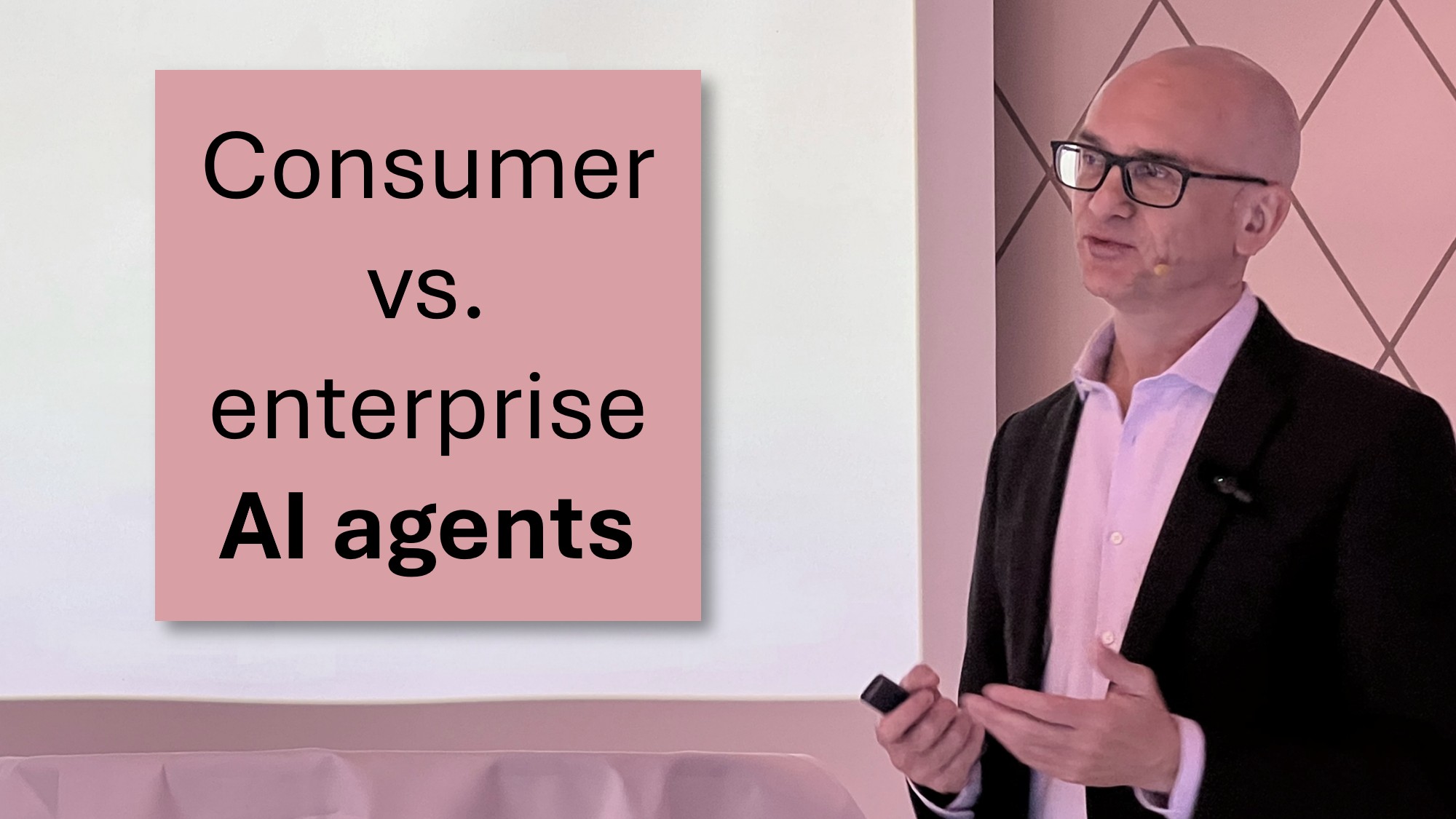 Consumer vs. enterprise AI agents
 Best Supply Chain AI Tools in 2026: SCM SENSEI AI and Ask Lora Compared
 Making Silos Permeable
 The Corix Partners Friday Reading List - October 2, 2026
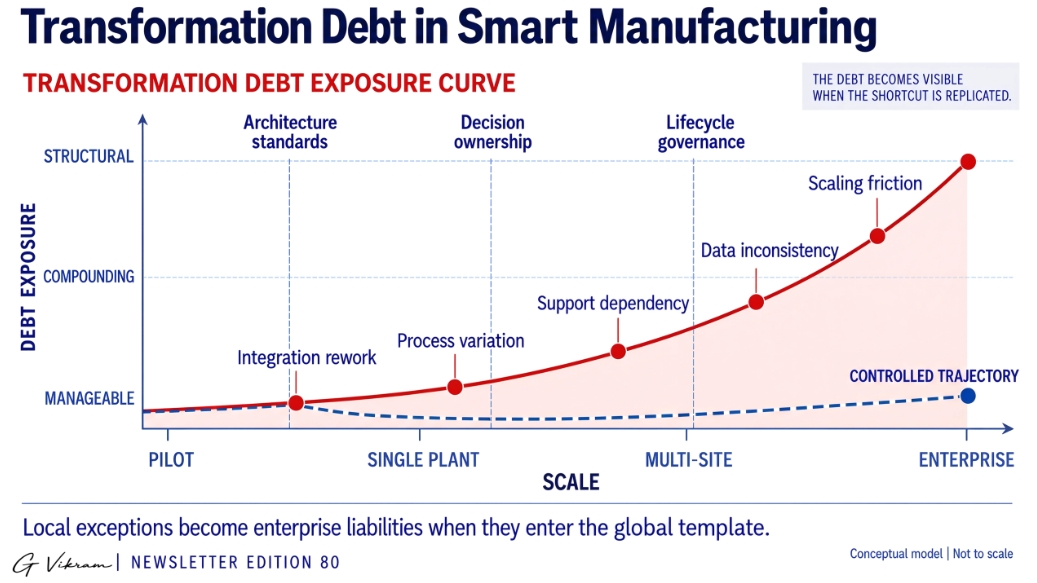 The most dangerous debt in a smart factory isn’t financial.