Aug05
You can't extract a strong performer and drop them into the CEO seat expecting success.
Yet that is exactly what happens in many privately held companies.
A founder decides it is time to retire. The executive team identifies the most capable senior leader. Everyone agrees this person is the logical successor. A transition date is established, congratulations are exchanged, and the organization assumes leadership continuity is taken care of.
Oh hell,no.
Selecting the next CEO is not the same as preparing someone to become CEO.
That distinction is where many (most?) succession efforts fail.
Too often, succession planning is treated as a stand-alone event. It becomes a list of names in a binder, a conversation during an annual leadership meeting, or a decision made when retirement is suddenly on the horizon.
Talent strategy, meanwhile, operates on a completely separate track. Leadership development focuses on improving current job performance. Training budgets are allocated. Managers attend workshops. Employees complete personality assessments and leadership courses.
The problem is that none of those activities are hardly preparing someone for the responsibilities of leading the entire enterprise.
The CEO role requires a fundamentally different perspective.
Successful CEOs must think beyond their own department. They balance competing priorities across the business. They communicate with customers, lenders, attorneys, advisors, and community leaders. They make decisions with incomplete information. They navigate ambiguity while keeping employees focused and confident.
Those capabilities are developed intentionally over time.
They don’t appear simply because someone excelled as a functional leader.
I saw this firsthand with one client.
The owners had selected an internal successor for the CEO position. On paper, it looked like an excellent choice. The individual was respected, experienced, and deeply knowledgeable about one part of the business – the engineering division.
But the company had done almost nothing to prepare this person for the CEO role.
In fact, it was the chosen successor who reached out to me.
The first words out of this future CEO's mouth were, "Please help! We have no succession plan."
Think about that for a moment.
The person expected to lead the organization recognized that selecting them had not actually prepared them to succeed.
They understood the gap before anyone else did.
Fortunately, there was still enough time to address it. We created development experiences, broadened exposure to the business, strengthened executive-level decision-making skills, and worked intentionally to build confidence before the leadership transition occurred.
The story had a positive ending.
Many companies are not so fortunate.
Usually, by the time they recognize their successor is unprepared, the founder has already stepped away, key relationships are shifting, employees are looking for reassurance, and the new CEO is learning the job under the brightest possible spotlight.
That is an unfair position for both the successor and the organization.
Succession planning and talent strategy should never operate independently.
Every development conversation should answer a larger question: What future leadership role are we preparing this person to fill?
Every stretch assignment should build capabilities needed at the next level.
Every cross-functional project should expand enterprise thinking.
Every coaching conversation should strengthen judgment, discernment and decision making.
When talent strategy and succession planning work together, leadership transitions become far less risky because future leaders have been developing toward their next role for years—not months.
*The goal of succession planning is not to identify the next CEO.*
The goal is to ensure that when the day arrives, becoming CEO feels like the next logical step in a journey the organization has been intentionally preparing them to take all along.
Keywords: Entrepreneurship, HR, Leadership
 Consumer vs. enterprise AI agents
 Best Supply Chain AI Tools in 2026: SCM SENSEI AI and Ask Lora Compared
 Making Silos Permeable
 The Corix Partners Friday Reading List - October 2, 2026
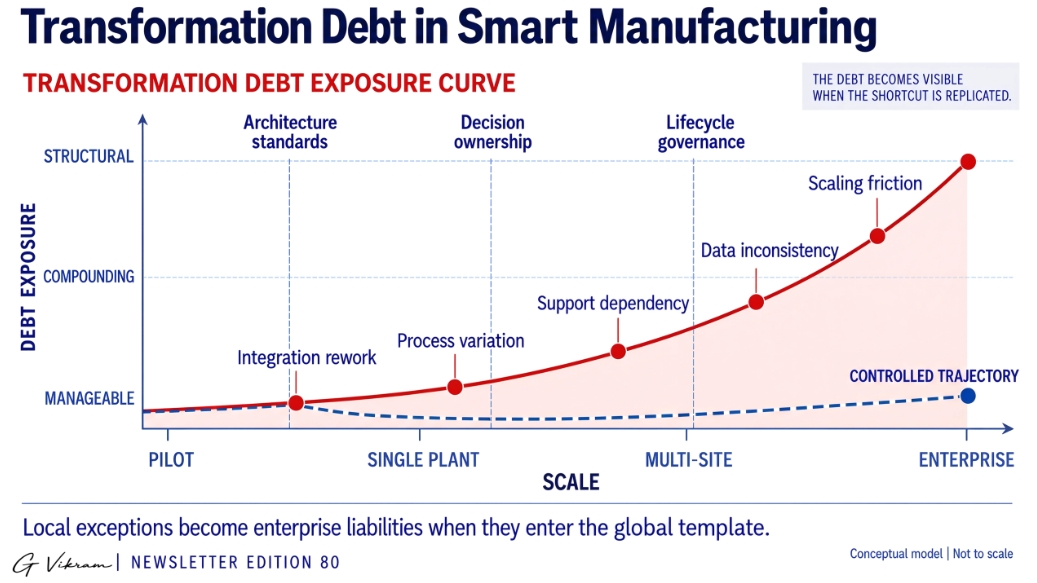 The most dangerous debt in a smart factory isn’t financial.