Jul16

Open any business publication from the last five years and the word "ecosystem" appears on almost every page. Consultancy organizations go crazy on it. Strategy decks are full of it. Keynote speakers build entire narratives around it. Advisors charge premium rates to map it. But, when you ask executives what their ecosystem actually looks like, who the key players are, what the agreements look like that hold it together, and how performance across that network is being managed, the answers become uncomfortable.
That gap, between the word and the reality, is exactly what makes "ecosystem" so interesting right now.
An ecosystem, stemming from biology, describes a community of organisms that depend on each other and on their shared environment to survive and thrive. Nothing operates in isolation. Everything is connected. When one element changes, the rest of the system responds.
In business, the term describes the same. Your organisation is not standalone. It is a node in a network of suppliers, partners, contractors, technology providers, distributors, regulators, and customers. These relationships are not optional extras bolted onto your core business; they are the business. Remove any significant node and the whole network underperforms or collapses. This is also why I am so surprised that this is not enterprise risk number one.
The reason this matters a bit more now than it did ten years ago is not because the concept is new. It is because the consequences of mismanaging that network are now visible freaky fast and scale that organisations can no longer absorb this quietly.
Here is where things get strange. The language around ecosystems carries a tone of discovery, as if we are collectively realising for the first time that businesses depend on other businesses. But this has been true since the industrial revolution.
From the moment organisations began to specialise, they began to depend. Ford needed steel suppliers. Steel suppliers needed coal. Coal operations needed rail. Rail needed legal agreements. Every step in the chain was governed by some form of contract. Division of labour, the organising principle of the industrial age, is by definition a statement that we cannot and should not do everything ourselves.
So why, in 2026, are we treating this as a revelation?
The honest answer is that for most of the last century, the complexity was manageable. Supply chains were long, but they were relatively stable. Partners were few and known. Agreements were renegotiated slowly. The consequences of poor contract management were real but absorbed over time. There was always another quarter, another fiscal year, another renegotiation window.
That window has closed.The age of complacency is gone. Welcome to the age of AI and Ecosystems.
Against that backdrop, consider the role of contract management. Every agreement in an ecosystem, every partnership, every outsourcing arrangement, every procurement deal, every service level commitment, is formalised in a contract. The contract is the document that translates strategy into objectives into obligations. It is where "we will work together" becomes "here is what we will deliver, by when, under these conditions, with these consequences."
Contract management is, in that sense, the operational layer of every ecosystem. It is the mechanism through which intentions become accountable commitments and where commitments drives realization of the objectives.
Yet, for decades, organisations treated it as an administrative afterthought. How bizarre.
Contracts were filed after signature. Obligations were tracked informally, if at all. Performance data was scattered across departments. Renewals were missed or handled reactively. The people responsible for managing contracts were often buried in legal or procurement functions with insufficient authority, insufficient tooling, and insufficient recognition of the strategic role they played or they even sat in the dungeons, tucked away as a low end function.
Research consistently shows that poor contract management costs organisations between five and nine percent of contract value annually. For large enterprises with complex supplier networks, that number translates into hundreds of millions of euros sitting on the table, not because the contracts are bad, but because nobody is actively managing them. Yet still executives don’t seem to get it.
The undervaluation of contract management did not happen by accident. It was the result of a set of assumptions that made sense in a simpler operating environment and became liabilities as that environment changed.
The first assumption was that legal teams owned contract risk. As long as the contract was well-drafted, the job was done. This confused the quality of the document with the quality of the execution. A well-drafted contract that nobody monitors is a well-drafted statement of intent.
The second assumption was that procurement owned commercial performance. Procurement teams focused rightly on securing good terms before signature. But the handoff after signature was rarely clean, and the responsibility for tracking whether those terms were being honoured fell into no clear ownership.
The third assumption was that ERP systems and finance reporting would catch the gaps. They did not. ERP systems track transactions. They do not track obligations. Finance reports revenue and cost. They do not report on whether a supplier delivered to specification, whether a milestone was met, or whether a risk clause was triggered.
The result of these three assumptions operating together was a function that was fragmented, underresourced, and invisible to leadership. Contract management sat (and still usually sits) in the gap between legal, procurement, and operations, with pieces of the function living in all three and being fully owned by none. Contracts, touched by everyone, but owned by nobody.
The shift happening now comes from two directions at once.
The first is capital. Venture capital is flowing into the contract management technology space at a rate that would have been unimaginable a decade ago. Investors are betting that organisations will pay serious money for platforms that bring visibility, compliance, and performance tracking to their contract portfolios. That bet is already paying off. The market is growing fast, and the incumbents in adjacent spaces, legal tech, procurement platforms, ERP providers, are all moving aggressively to capture this territory.
Where capital flows, attention follows. Contract management is no longer a niche concern for specialist practitioners. It is now a recognised business priority with budget, board-level visibility, and a growing talent market to match. And being the wizard in this field I should know.
The second driver is shock. The past six years delivered a sequence of systemic disruptions that would have seemed implausible as a single scenario. A global pandemic, followed by supply chain collapse, followed by geopolitical fragmentation, followed by inflationary spikes, followed by an AI transformation that is rewriting the assumptions behind entire job categories and business models.
What organisations are now accepting is that this is not a sequence of isolated shocks. It is a new operating environment. Instability is the baseline. The question is no longer how to recover from disruption. The question is how to build organisations that perform during disruption, and that means knowing exactly who your partners are, what they are committed to delivering, and whether they are delivering it.
Contract management is central to that capability.
There is a ritual that happens in organisations after a major deal is signed. The teams gather, champagne is poured, and the contract is filed away. Everyone celebrates the close. That celebration is a lie, it is fun, it is important but it is step 1.
The signature does not deliver the outcome. The signature creates the legal framework within which the outcome is supposed to be delivered. What happens after the signature, the active management of obligations, milestones, performance indicators, risk triggers, and relationship dynamics, that is where value is created or destroyed. That’s where objectives are realized.
Organisations that understand this shift their definition of success. A signed contract is a starting line, not a finish line. The work begins the moment the ink dries, and the document transcends the PDF stage.
The enthusiasm around AI and agentic workforces is genuine and warranted. Intelligent agents are already taking on research tasks, compliance checks, contract analysis, obligation extraction, and performance monitoring at a speed no human team can match. This is not science fiction. It is production software that organisations are deploying today. Out of the box. Ready to go.
But here is the problem. You cannot automate a process that does not exist, or worse, automate a bad process and you simply produce bad outcomes faster.
Most organisations that are now turning their attention to contract management find the same thing when they look honestly at their current state. The processes are mediocre at best. Ownership is unclear. Responsibilities overlap or fall into gaps. There are no standard task definitions, no consistent role assignments, no agreed handoffs between legal, commercial, procurement, finance, and operations.
Before you deploy a single agent, you need to answer a set of foundational questions. What are the processes that govern the contract lifecycle in your organisation? Who owns each stage? What are the discrete tasks within each stage? Which roles are responsible for which tasks? Which decisions require human judgment and which are rules-based and therefore automatable?
This is business architecture work. It is less glamorous than deploying AI. It takes longer. It requires organisations to look honestly at current-state processes that are often poorly documented, inconsistently applied, and politically sensitive to change.
But without this foundation, any investment in automation produces shallow gains. You speed up the broken parts. You scale the inconsistencies. You embed the gaps into your digital infrastructure.
The approach that actually works starts with process and people.
Map the contract lifecycle end to end. Define the tasks. Create a uniform language. Assign ownership. Identify where the work is manual and why. Separate the tasks that require judgment, relationship management, commercial intuition, and contextual knowledge from the tasks that are procedural, data-dependent, and repeatable.
Then build the capability model. Train the people responsible for contract management in the methodology and the skills their role requires. Create clarity on accountability. Give the function the organisational standing it deserves given the strategic importance of what it manages.
Then, and only then, introduce automation and agentic tools into the parts of the process where they add genuine value without creating new risks.
This sequence is not a quick fix. It is a multi-year programme in most large organisations, not a three-month deployment. But the organisations that commit to it build something that no amount of technology spending alone can buy. They build a contract management capability that is resilient, scalable, and genuinely aligned with the ecosystem they operate in.
The ecosystem is not a metaphor for ambition; it is a description of reality. Your organisation is interdependent with dozens or hundreds of other organisations. The agreements that define those interdependencies are contracts. The capability that manages those agreements is contract management.
The shocks will continue. The complexity will increase. The partners in your ecosystem will face their own pressures and those pressures will arrive at your door through the contracts you share.
The organisations that survive this environment are not the ones that sign the best contracts. They are the ones that manage them best, across every stage of the lifecycle, with clear processes, capable people, and the right tools supporting them.
Start with the process. Start with the people. The rest follows.
____________________________________________________________
Arjen van Berkum is a key contributor to CATS CM and is globally regarded as one of the top voices and wizards in post-award contract management. He works with organisations to build the processes, capabilities, and structures that make contract management a strategic asset.
Keywords: Economics, Ecosystems, Future of Work
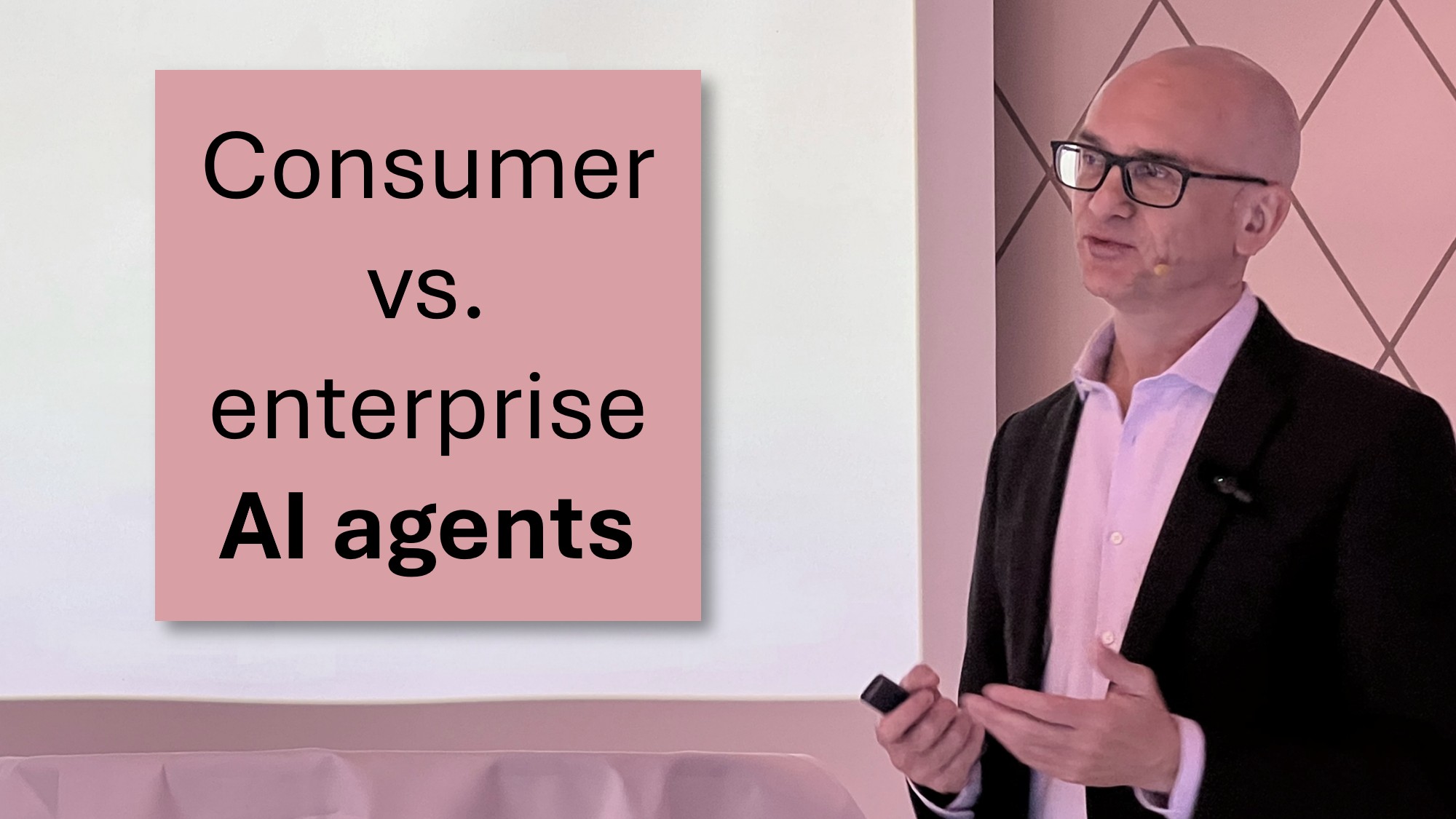 Consumer vs. enterprise AI agents
 Best Supply Chain AI Tools in 2026: SCM SENSEI AI and Ask Lora Compared
 Making Silos Permeable
 The Corix Partners Friday Reading List - October 2, 2026
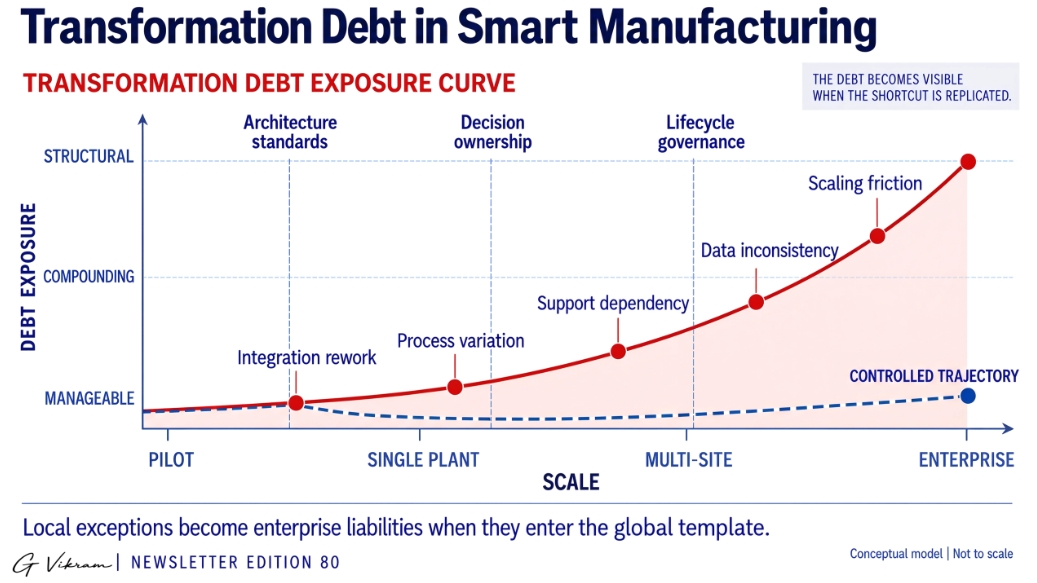 The most dangerous debt in a smart factory isn’t financial.