Jul15
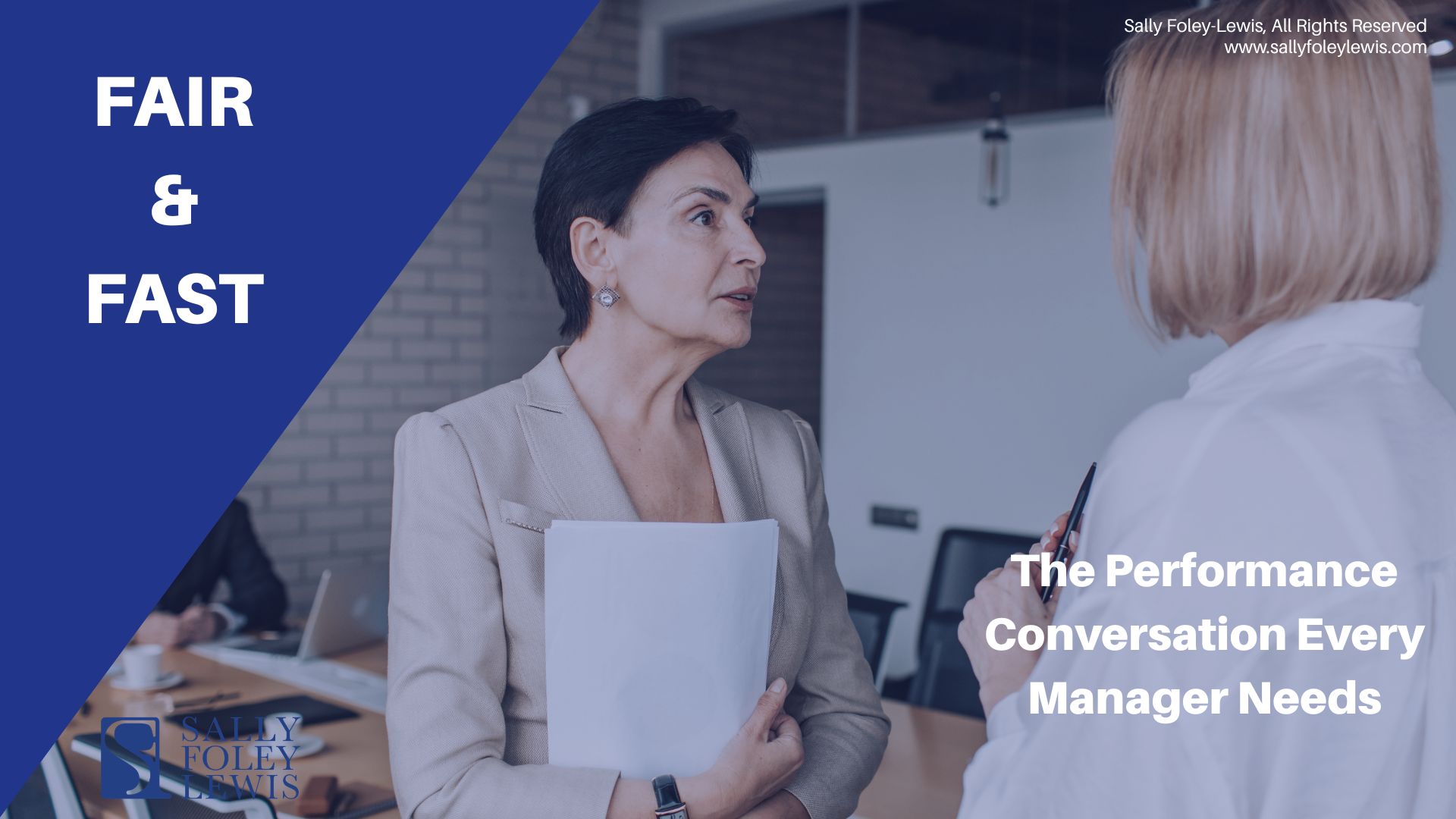
Walk into any busy burger restaurant at lunchtime and you'll notice something interesting. The rush isn't won by the team that works the hardest. It's won by the team that works from the same recipe.
The grill cook knows exactly when a patty is done. The person assembling burgers knows precisely how each burger should be built. The cashier understands how orders are entered. The shift manager knows what to check, when to step in, and how success is measured. Nobody is relying on memory or hoping everyone has interpreted "make it right" the same way. Expectations are visible, roles are clear, and everyone is working from the same playbook.
Now imagine the opposite.
One team member thinks a burger should have three pickles, another adds six. Fries leave the fryer whenever someone remembers. Nobody knows who should refill ingredients, and every customer complaint turns into a debate about who was responsible. The manager spends more time sorting out misunderstandings than serving customers. Even good people begin looking average because they were never working from the same agreement.
Organisations are no different.
Many performance conversations become difficult not because people aren't capable or committed, but because managers and employees neglected, avoided, forgot to agree on what success actually looked like. Many times, a shared understanding is assumed without confirmation. When expectations are assumed instead of discussed and documented, performance reviews can easily slide right into arguments about memory [they said:they said] rather than discussions about evidence.
High-performing burger restaurants know that consistency starts long before the lunch rush. High-performing leaders know exactly the same thing. The fairest and fastest performance conversations begin before the work even starts. It begins with a clear accountability agreement that everyone helped create.
I’ll repeat that: a clear accountability agreement that everyone helped create!
Many managers believe performance conversations are difficult because people become defensive. In reality, most conversations become difficult because expectations were never completely clear in the first place.
Instead of discussing evidence, people debate memories.
"I thought you meant..."
"I didn't realise..."
"That's not what we agreed."
Those conversations consume time, create frustration and often damage trust.
Research consistently shows that people perform better when goals are specific, challenging and accompanied by regular feedback. Edwin Locke and Gary Latham's Goal Setting Theory remains one of the strongest evidence-based models in organisational psychology and demonstrates that clarity is one of the biggest drivers of improved performance. (1)
The solution isn't tougher conversations. It's better agreements, early!
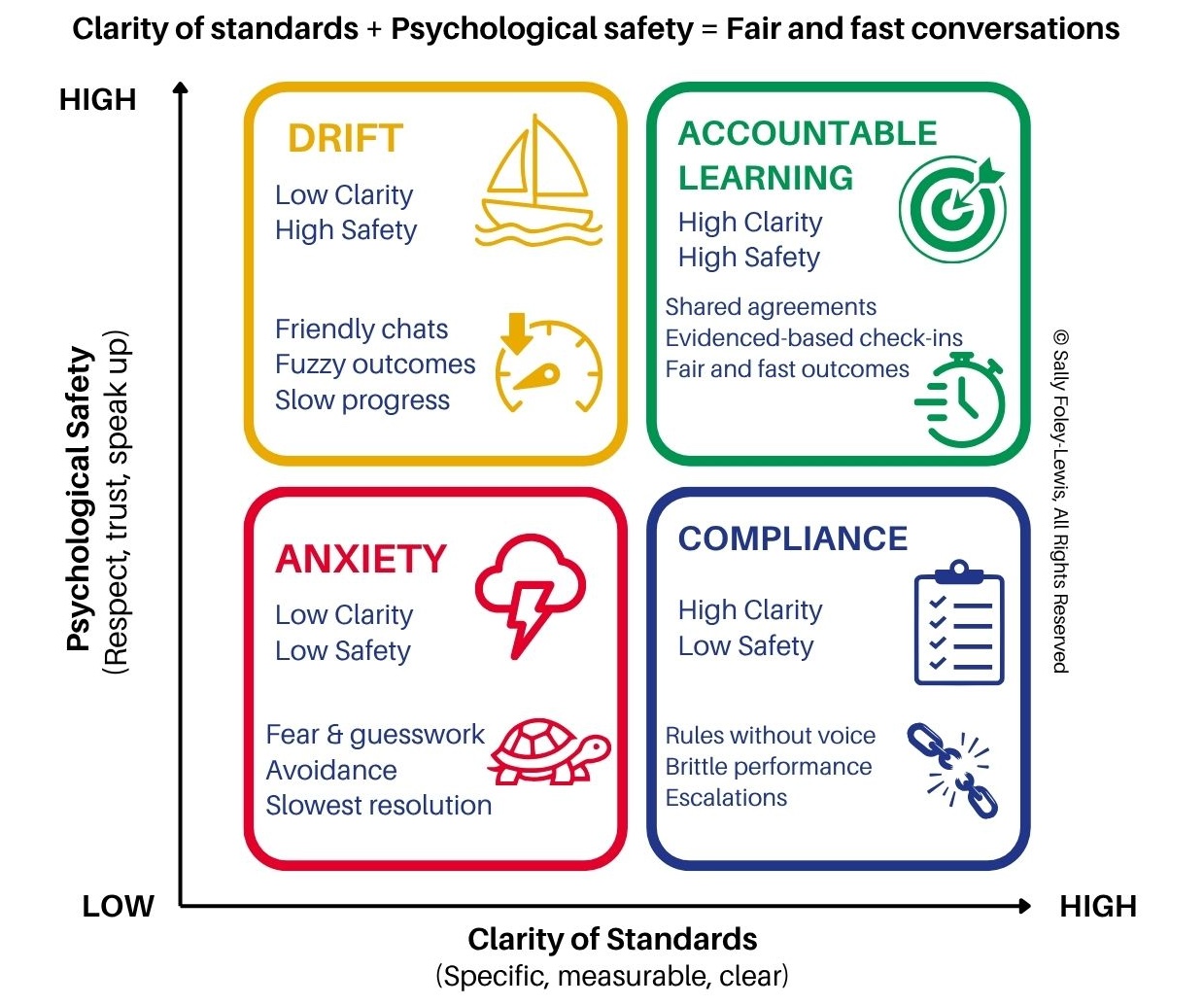
Imagine performance management on two dimensions: clarity of standard and psychological safety. This gives us four different workplaces:
Low clarity + High safety.
People enjoy working together.
Everyone is supportive.
Unfortunately, nobody is completely sure what success looks like.
Progress is slow because expectations are fuzzy.
Low clarity + Low safety.
People spend more energy protecting themselves than improving performance.
Mistakes are hidden.
Questions go unasked.
Resolution becomes painfully slow.
High clarity + Low safety.
Rules exist.
Checklists exist.
People comply because they have to, not because they feel ownership.
Performance becomes brittle and innovation disappears.
High clarity + High psychological safety.
This is where high-performing teams operate.
Expectations are explicit.
Evidence is agreed in advance.
People can raise problems early because speaking up is encouraged.
Accountability becomes something people participate in—not something done to them.
Harvard professor Amy Edmondson has repeatedly emphasised that psychological safety is not about lowering standards. It is about making it safe to discuss mistakes while maintaining high accountability. (2)
The NeuroLeadership Institute similarly describes high-performing organisations as combining both psychological safety and accountability rather than choosing between them. (3)
If you've followed the Burger Framework™, you'll recognise that accountability agreements require every ingredient.
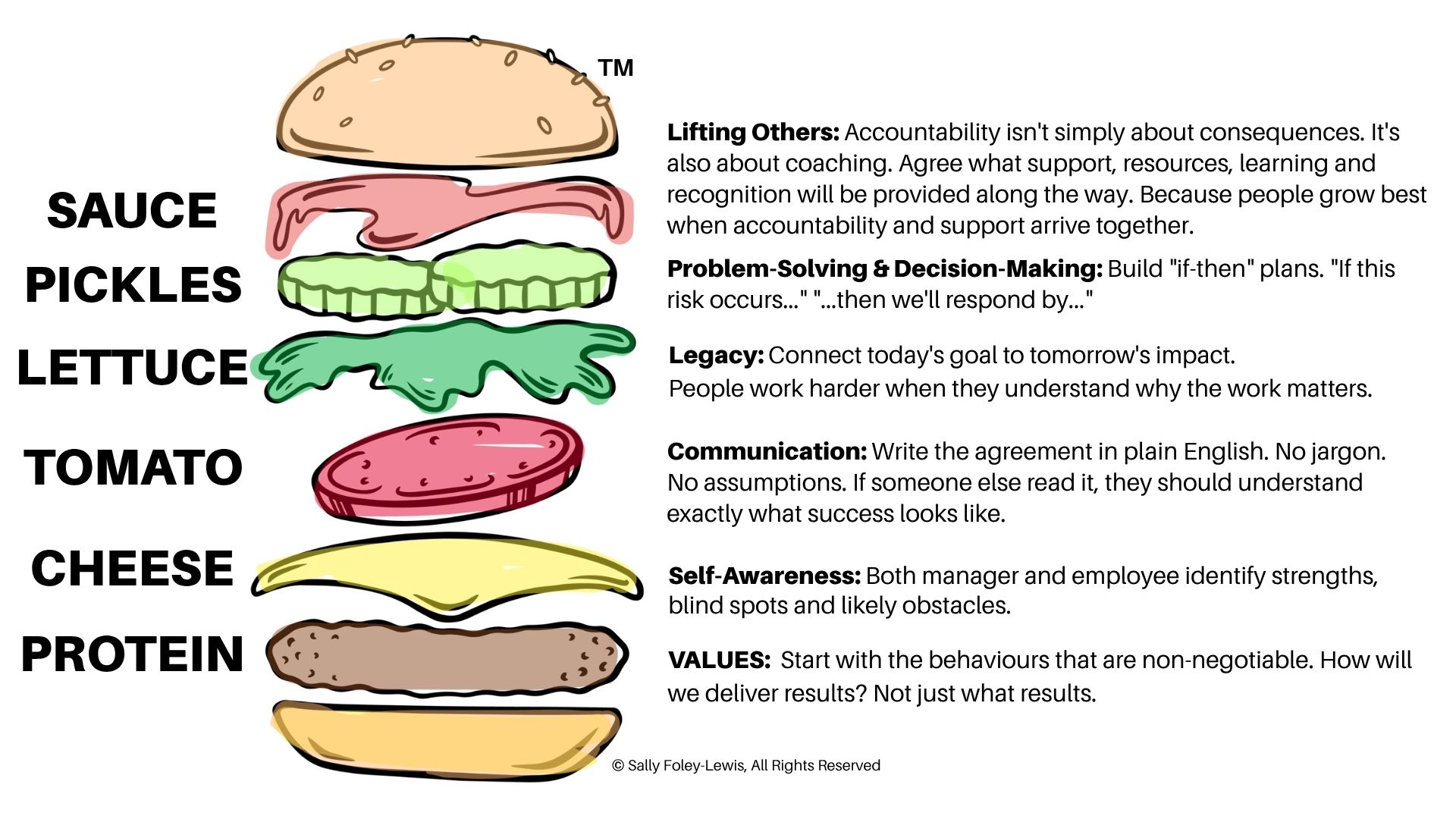
Research on implementation intentions by Peter Gollwitzer and Paschal Sheeran shows that these simple if-then plans significantly improve goal achievement because they reduce the gap between intention and action. (4)
Five Guys provides an excellent example of accountability through visible agreements.
Stores receive regular mystery-shopper assessments against clearly defined service standards. Everyone understands the expectations. Everyone knows how performance is measured.
Managers don't spend performance discussions debating opinions. They review the scorecard, celebrate what worked and coach the few areas needing improvement.
The standards are visible. The evidence is objective. The conversations become shorter, fairer and more productive. (5 & 6 & 7)
Before discussing performance, create a one-page Accountability Agreement containing:
Focus outcome
Agreed evidence
Check-in rhythm
If-then plans
Support required
Recognition and consequences
Then place that agreement at the top of every regular short check-in / one-to-one.
Finish every meeting with two questions:
Are we on track?
What help do you need?
This makes in simple, fair, and fast.
When accountability agreements exist, performance conversations stop being arguments about the past and become collaborative discussions about the future.
I'd love to know your thoughts.
Keywords: Leadership, Management
 Consumer vs. enterprise AI agents
 Best Supply Chain AI Tools in 2026: SCM SENSEI AI and Ask Lora Compared
 Making Silos Permeable
 The Corix Partners Friday Reading List - October 2, 2026
 The most dangerous debt in a smart factory isn’t financial.