Aug02
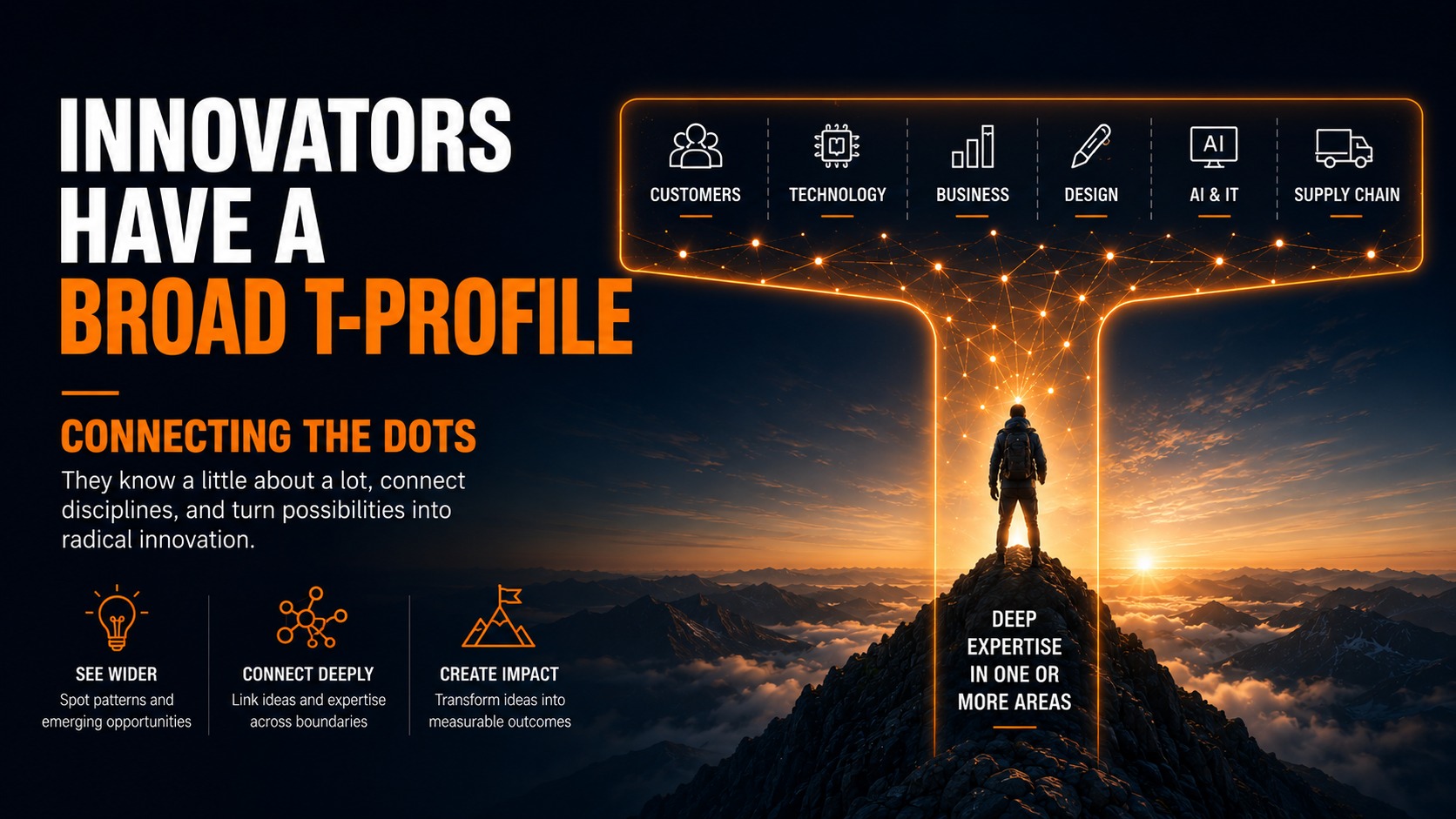
Innovators are curious about customers, technology, business, design, artificial intelligence, supply chains and the world around them. They do not need to be the greatest expert in every discipline. But they understand enough to ask questions, recognise patterns and make unexpected connections.
That is the power of a broad T-profile.
The vertical part of the T represents your depth: the field in which you have real knowledge, experience and credibility.
The horizontal part represents your breadth: your curiosity about other disciplines, industries, technologies, cultures and perspectives.
Many organisations develop narrow specialists. They know more and more about less and less. Their expertise is valuable, but it can also become a tunnel. When people remain inside their own discipline, they often improve what already exists rather than imagine something radically new.
Innovators leave the tunnel.
They speak with customers. They explore emerging technologies. They understand how the business makes money. They learn from designers, engineers, marketeers, data scientists and operational experts.
Then they connect the dots.
A customer frustration is connected to a new technology.
A business challenge is connected to an idea from another industry.
A supply-chain problem is connected to artificial intelligence.
A familiar product is connected to a completely different service model.
At first, these dots may seem unrelated. Creativity is the ability to discover the relationship between them.
Most breakthrough innovations are not created from one entirely new ingredient. They emerge from combining existing insights, technologies and possibilities in a new way.
The smartphone connected telecommunications, computing, photography, music, navigation and the internet.
Streaming connected entertainment, digital distribution, subscriptions and personalised data.
Sharing platforms connected unused capacity, mobile technology, trust systems and changing customer behaviour.
The separate dots already existed. The innovation came from connecting them.
This is why diverse innovation teams are so powerful. Radical ideas rarely appear when everyone has the same education, experience and worldview. They emerge when people from different disciplines meet, challenge each other and build on one another’s perspectives.
But diversity alone is not enough.
People must also be willing to look beyond their own expertise. They need to be curious rather than protective. Open-minded rather than certain. Comfortable enough with ambiguity to explore an idea before immediately explaining why it will not work.
Broad T-profile innovators:
They do not say, “That is not my area.”
They ask, “What can this teach us?”
In a world of rapidly changing technologies and customer expectations, deep expertise remains essential. But expertise without breadth can become a limitation.
The innovators who create the future combine a strong foundation with a broad perspective.
They know a lot about something.
They know a little about many things.
And, most importantly, they know how to connect the dots.
Because the most radical innovations are often waiting in the space between disciplines, that's where innovation happens.
How broad is your T-profile?
Keywords: Creativity, Design Thinking, Innovation
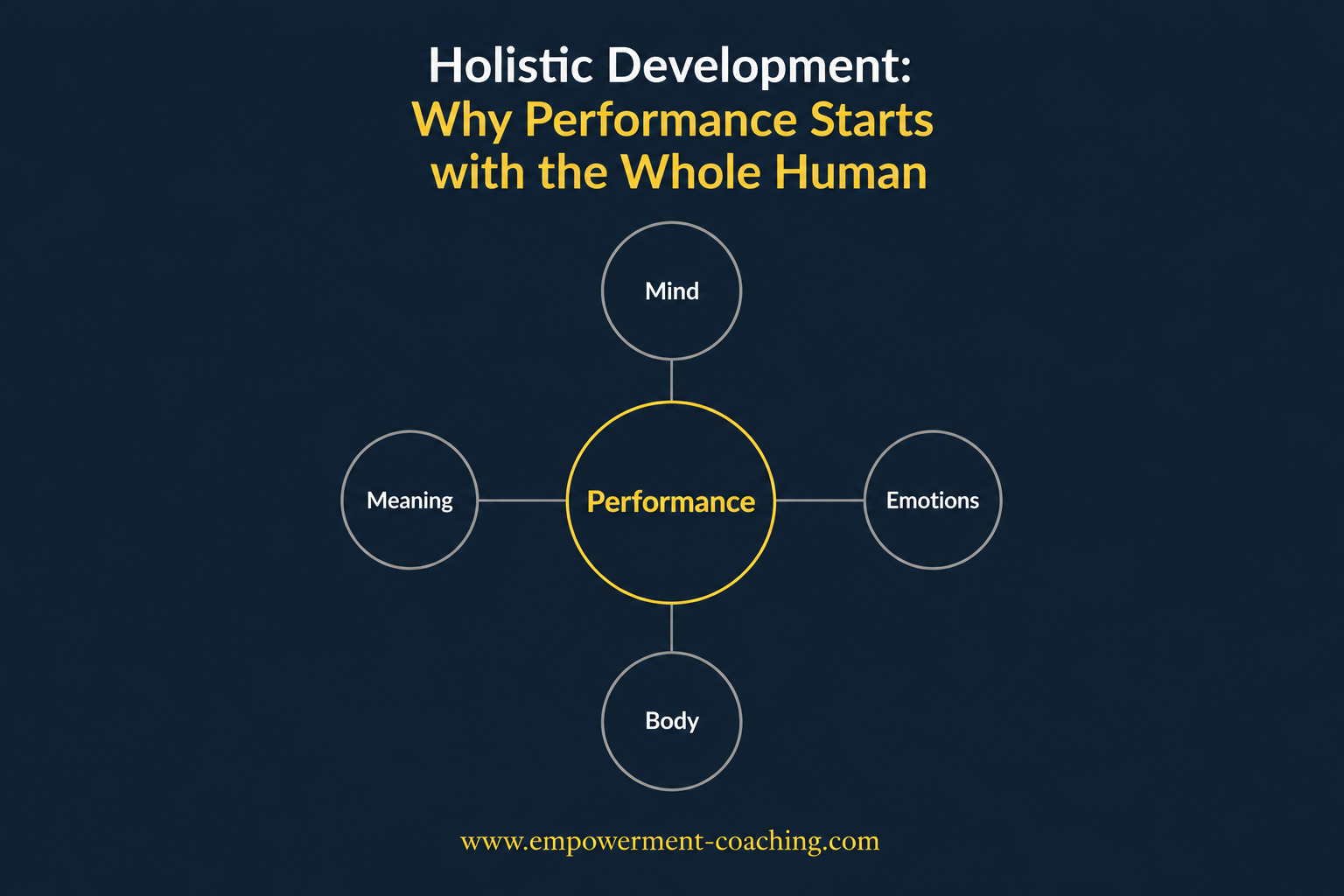 Holistic Development: Why Performance Starts with the Whole Human
 The Most Dangerous Leader in the Room May Be the One Everyone Depends On
 What is that Analytical AI?
 Friday’s Leadership Reflection Quote – Saeculum Leadership Leaders Intervene Before Options Narrow
 The Corix Partners Friday Reading List - October 23, 2026