Jul14
Most organizations conduct post-project meetings for one reason: to improve the next project.
They review what went well, what went wrong, and what could be done differently next time. Sometimes they're called after-action reviews. Sometimes they're project debriefs or lessons learned sessions.
Whatever the name, they are intended to improve organizational performance.
But they can accomplish something even more valuable.
They can accelerate leadership development.
One of the biggest challenges in succession planning is helping emerging leaders gain judgment. Technical skills can be taught. Business knowledge can be acquired. But judgment—the ability to make sound decisions in complex situations—develops through experience and reflection.
Reflection is the part many organizations skip.
A leader finishes a major initiative, launches a new product, navigates a difficult customer issue, or manages an unexpected crisis. The team celebrates the success (or quietly moves past the failure), and everyone immediately moves on to the next priority.
The opportunity to learn is lost.
An effective after-action review forces leaders to slow down and think critically about what actually happened.
These discussions build something every future executive needs: discernment.
Discernment is more than making decisions. It is recognizing patterns, weighing competing priorities, understanding unintended consequences, and applying lessons from one situation to another.
Those capabilities rarely develop by simply accumulating years of experience. They develop when people intentionally examine their experiences.
The value extends beyond the individual leader.
When teams openly discuss decisions, successes, and mistakes without assigning blame, they create a culture of continuous learning. Leaders begin to understand how other departments think, why certain decisions were made, and how one function's choices affect another.
That broader perspective is exactly what many succession candidates lack.
Most rising leaders spend years becoming experts in one functional area. Few have opportunities to understand the enterprise as a whole.
After-action reviews help close that gap by exposing leaders to different viewpoints and encouraging enterprise thinking.
They also reveal leadership potential in ways traditional performance reviews cannot.
The next time your organization completes a significant initiative, resist the urge to simply declare victory and move on.
Bring the team together.
Discuss not only what happened, but why it happened.
Encourage honest conversation.
Capture lessons that can be shared across the organization.
Most importantly, involve your emerging leaders in the discussion.
Every project creates two outcomes. One is the business result. The other is leadership capability.
Organizations that intentionally capture both are not just improving their operations—they are building stronger leaders, creating deeper leadership benches, and making succession planning a continuous process instead of an emergency response when a key leader announces their departure.
Keywords: Entrepreneurship, HR, Leadership
 Consumer vs. enterprise AI agents
 Best Supply Chain AI Tools in 2026: SCM SENSEI AI and Ask Lora Compared
 Making Silos Permeable
 The Corix Partners Friday Reading List - October 2, 2026
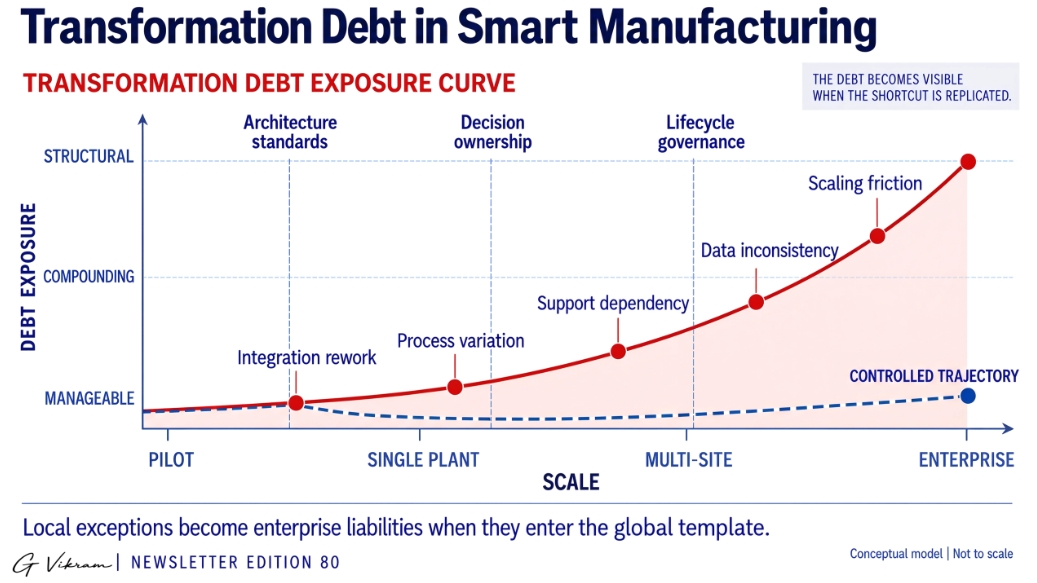 The most dangerous debt in a smart factory isn’t financial.