Jan21

The phrase “Future of Work” has been doing the rounds for well over a decade now.
It appears in strategy decks, keynote titles, government reports, HR initiatives, and glossy thought leadership pieces.
And yet, despite all that attention, most organisations are still struggling with the same core questions:
The uncomfortable truth is this.
We haven’t failed to understand the future of work.
We’ve framed it incorrectly from the start.
The original mistake: treating work like a destination
For years, the future of work has been presented as something we’re heading toward.
A point on a timeline.
A destination marked by automation, remote work, AI, flexibility, or new job titles.
This framing creates two problems immediately.
First, it implies there is a before and an after, when in reality work has been mutating continuously.
Second, it encourages leaders to wait, benchmark, or copy, rather than actively redesign how work happens inside their organisation.
The result?
Endless commentary.
Minimal structural change.
Jobs were the wrong unit of analysis
Here’s the reframing most organisations still resist.
The future of work is not about jobs.
Jobs are a legacy container.
They were useful when work was stable, linear, and slow to change. But today, work no longer behaves that way.
What actually exists now is a shifting mix of:
And these elements move constantly between humans, machines, and AI.
If you keep planning around job titles, you’re already behind.
Why workforce conversations feel stuck
This is why so many future of work initiatives stall.
Organisations are trying to modernise work without changing the mental model they use to understand it.
They ask:
Instead of asking:
These are fundamentally different questions.
And they lead to very different outcomes.
HUMAND™: a more useful way to think about work
This is where my HUMAND™ framework comes in.
HUMAND stands for Human + Machine + AI, and it’s not a theory about replacement.
It’s a way of deconstructing work into its components, then deliberately deciding where each element belongs.
Not by default.
Not by hype.
Not by fear.
But by design.
When organisations apply this lens, something interesting happens.
Work becomes clearer.
People feel less threatened.
Technology becomes an enabler, not a dictator.
And leadership conversations move from anxiety to architecture.
The real risk leaders underestimate
The biggest risk in the future of work isn’t job loss.
It’s decision erosion.
When organisations automate without foresight, they slowly remove human judgement from places where it still matters deeply.
This creates efficiency in the short term and fragility in the long term.
Leaders then find themselves accountable for outcomes they no longer fully control or understand.
That’s not a workforce problem.
That’s a governance problem.
Why the future of work is really a leadership issue
Every future of work conversation eventually lands in the same place.
Leadership.
Not because leaders need to know more about technology.
But because they need to decide:
These decisions shape culture, trust, and resilience far more than any tool rollout ever will.
Work hasn’t disappeared. It’s been redistributed
One of the most persistent myths is that work is vanishing.
It isn’t.
It’s being redistributed across systems, platforms, algorithms, and people.
Some of it becomes invisible.
Some of it accelerates.
Some of it becomes emotionally heavier.
The organisations that struggle are the ones pretending nothing fundamental has changed.
The ones that adapt are those willing to redesign work from the inside out.
A quieter, more useful conclusion
The future of work isn’t something to predict.
It’s something to continuously recompose.
Organisations that thrive aren’t waiting for clarity.
They’re building the capability to respond well without it.
That’s not a trend.
That’s leadership.
Choose Forward
—
Morris Misel
By Morris Misel
Keywords: Business Strategy, Future of Work, Leadership
 You are not your diagnosis
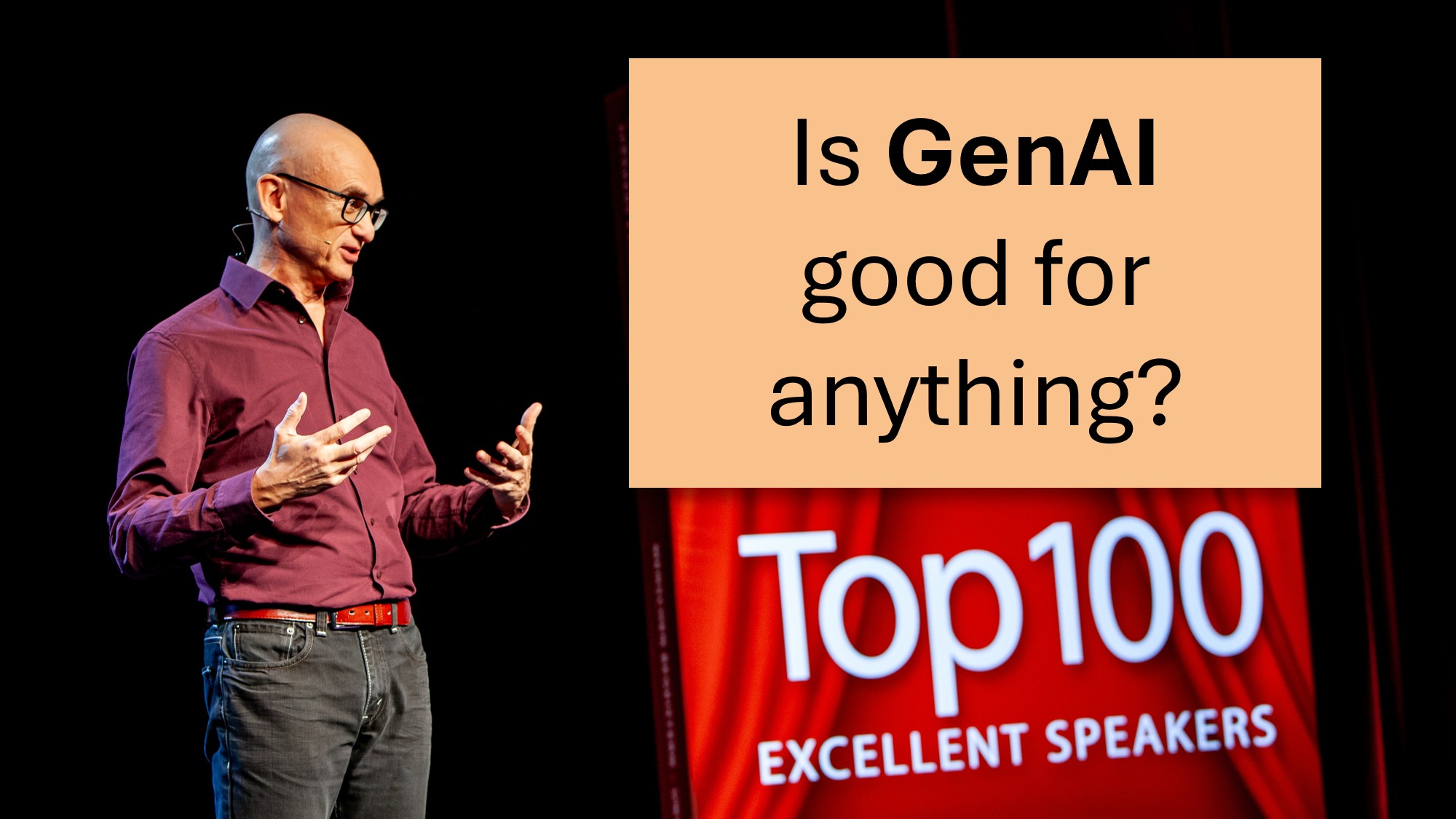 Is GenAI good for anything?
 “I didn’t write an award acceptance speech because I didn’t expect to win.”
 AI Is Exposing the Data Problems Humans Used to Hide
 "The AI may in fact be conscious." Really?