Mar03

One of the most mystifying characteristics of the contemporary workplace is how little career advancement actually happens.
A survey by the Pew Research Center found that 63% of people who left their jobs in 2021 cited a lack of advancement as a reason for quitting. And existing research suggests that 80–90% of roles are filled from outside a company. Am I the only one who sees the cause-and-effect here?
What really makes me angry is the fact that lateral moves are rarer than promotions. Only about 1% of U.S. employees move laterally to different business units or operations in a given year. [https://hbr.org/2024/05/hrs-new-role]
The costs of this inefficiency are astronomical, but few business leaders realize it.
Related article. https://www.thinkers360.com/tl/blog/members/breaking-the-external-hire-death-spiral-before-it-breaks-you
Turnover, unstaffed positions, disengaged employees, and stalled succession pipelines don’t show up on a P&L. There is no “lost institutional knowledge” line item. No column for “leadership bench weakness.” No accounting code for “we had no ready successor when we needed one.”
Because the costs are invisible, the inertia persists.
Lateral Moves: The Leadership Accelerator We Ignore
When companies (and employees) think about advancement, they usually think “up.”
Succession planning doesn’t work if everyone’s career only goes “up.” If that were the case, then leaving for a new company in order to advance one’s career would make sense. But that is NOT the case. We just don’t look at advancement through the right lens.
What we need in senior leaders is breadth of knowledge – and most companies have not figured that out yet. Some individuals have figured it out on their own and taken career advancement into their own hands.
See this short synopsis of the career trajectory of Seth Kaufman, Chief Commercial Officer of Philip Morris International, as an example: https://view.mail.fortune.com/?vawpToken=BQEOJ3UFFNGUTF3P3A2PPW3FBE.130019&utm_source=sfmc&utm_medium=email&utm_campaign=NL_fortune-next-to-lead_2026-3-2_100713&sfmc_id=16104469
Most high-potential leaders in mid-sized and privately held companies have deep expertise in one lane — operations, finance, sales, HR. They know their function cold. They deliver results.
Yes, that depth is valuable, but only to a point. Depth of knowledge/skill does not prepare someone for enterprise leadership.
Breadth does. Lateral moves do.
Lateral movement forces perspective.
It exposes leaders to competing priorities. It builds understanding and collaboration
across departments. It strengthens enterprise thinking.
And enterprise thinking is the foundation of executive readiness.
The Succession Planning Link
Succession plans fail for one predictable reason: the “ready now” candidate isn’t actually ready.
Not because they lack skill. Not because they lack loyalty.
Because their skill is like having blinders on – it limits their understanding of the organization.
If a future COO has never carried P&L responsibility across multiple business units, how will they make enterprise trade-offs? If a potential CEO has never led through a downturn in a different division, how will they respond to volatility? If a future executive has never had to influence peers outside their authority lane, how will they align a senior team?
Lateral assignments are rehearsal spaces.
They allow organizations to test leaders in new contexts before the stakes are existential. They surface capability gaps early, when development is still possible. They also reveal hidden strengths — leaders who thrive outside their comfort zone.
Without lateral movement and exposure to various parts of the business, succession becomes a gamble. With it, succession becomes intentional.
Why We Don’t Do It
If lateral moves are so powerful, why are they so rare?
Because they feel inefficient.
Moving a strong performer out of their current role creates short-term disruption. It requires backfilling. It slows productivity temporarily. Managers resist losing top talent to other departments.
But that thinking is narrow.
The real inefficiency is external hiring for senior roles because no one inside is prepared. The real disruption is executive turnover during a transition. The real productivity loss is disengagement when ambitious employees see no internal path.
Lateral movement is a short-term inconvenience that prevents long-term instability.
Making It Practical
Lateral development does not require complex rotational programs or Fortune 500 infrastructure.
Start small:
[This last one ↑ is my favorite, no-cost leadership building technique. Simply have your “second string leaders” sit – as observers – in your senior-level meetings. They literally learn through osmosis.]
Then measure growth not just by output, but by enterprise judgment.
The goal isn’t to create generalists who know a little about everything. It’s to create leaders who understand how everything connects.
In a marketplace where external hiring dominates and employees leave for lack of growth, lateral movement is no longer optional. It is strategic.
If succession planning is business continuity insurance, lateral moves are the premium you pay in advance.
You can wait until a key leader announces their departure and hope someone is ready.
Or you can start building breadth now — before you need it.
The inertia may feel comfortable.
But comfort rarely builds the next generation of leadership.
Keywords: Leadership, HR, Entrepreneurship
 What is that Analytical AI?
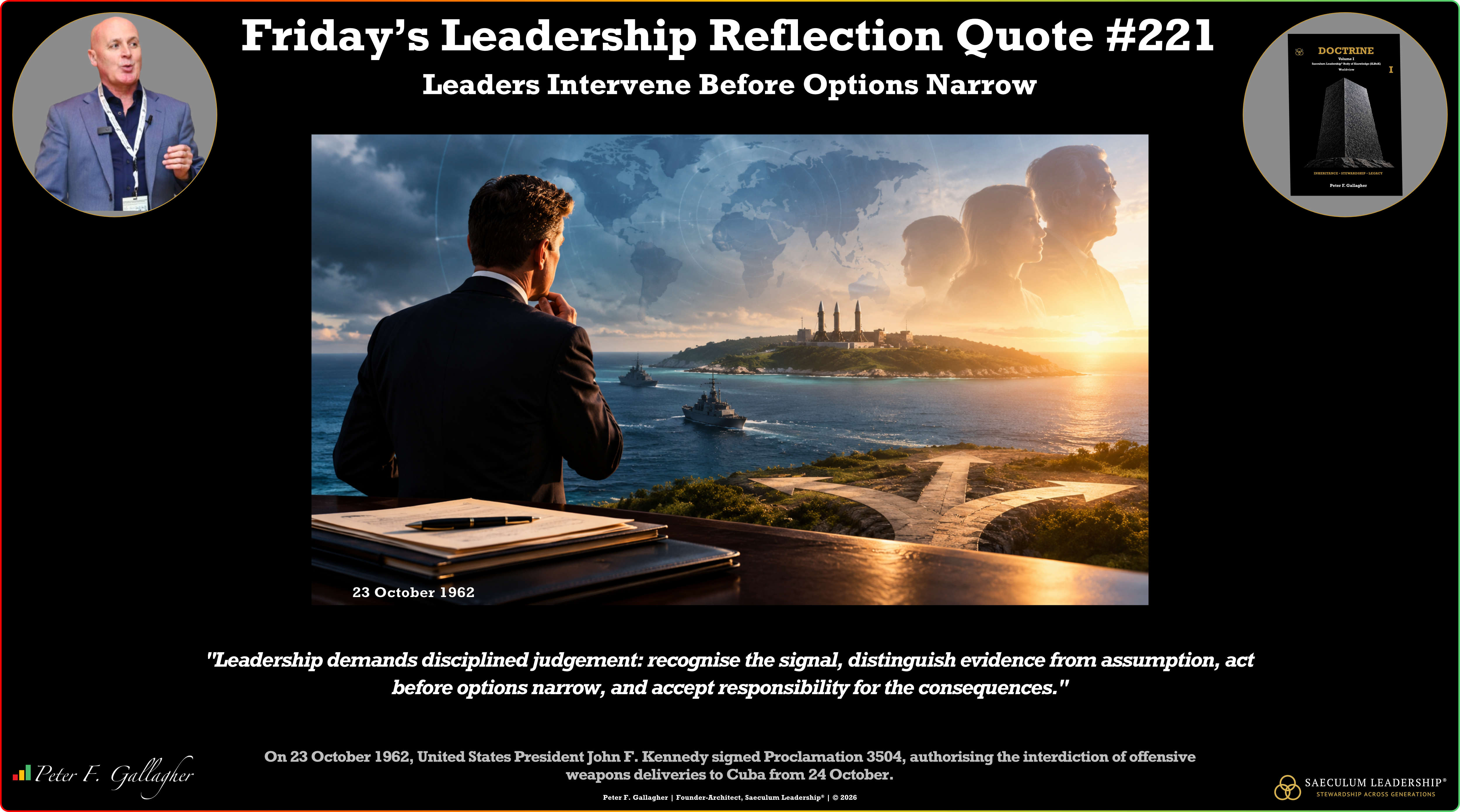 Friday’s Leadership Reflection Quote – Saeculum Leadership Leaders Intervene Before Options Narrow
 The Corix Partners Friday Reading List - October 23, 2026
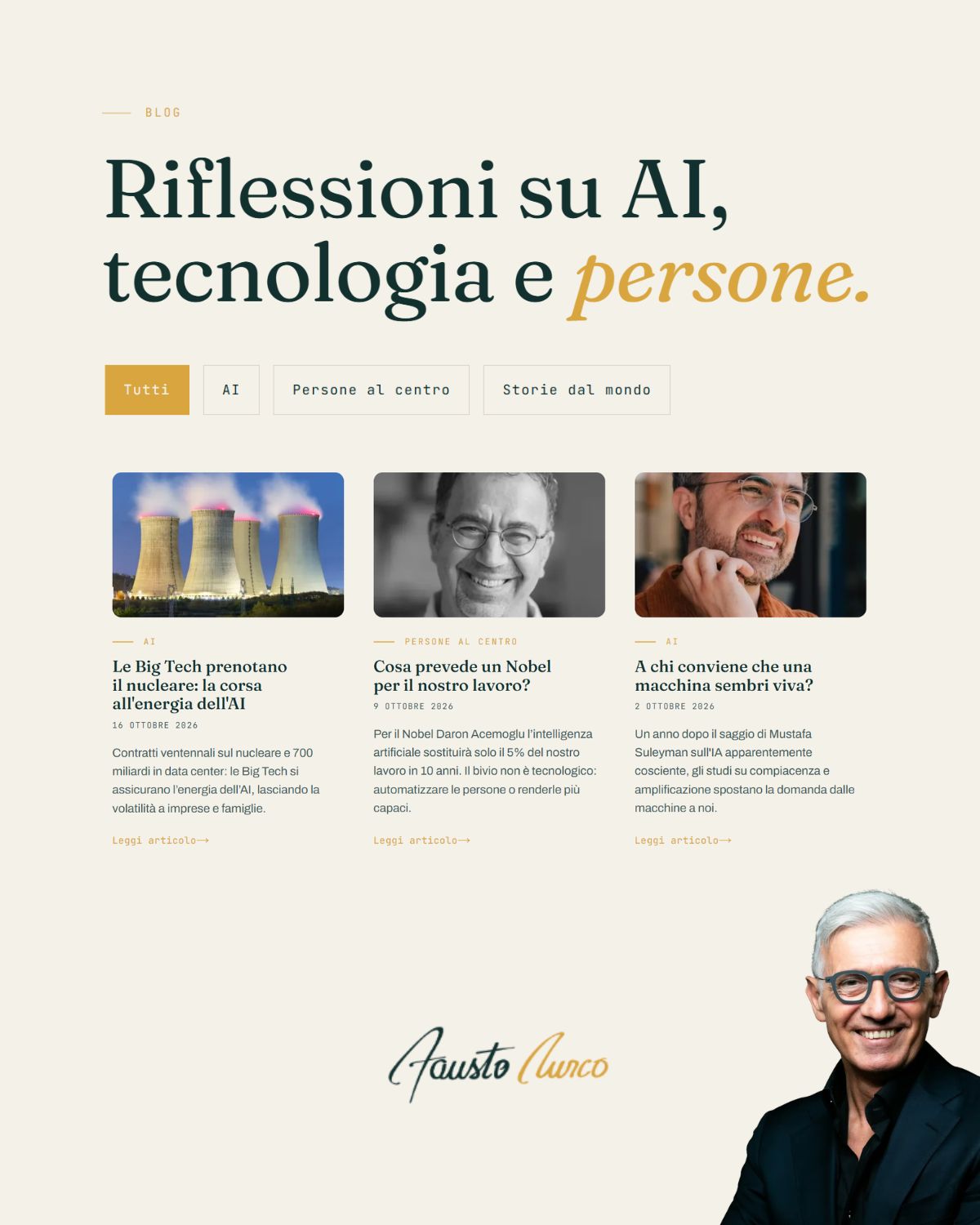 RIFLESSIONE SU AI, TECNOLOGIA E PERSONE
 2027 Predictions for Cybersecurity: The Agent Is the New Insider