Jun06
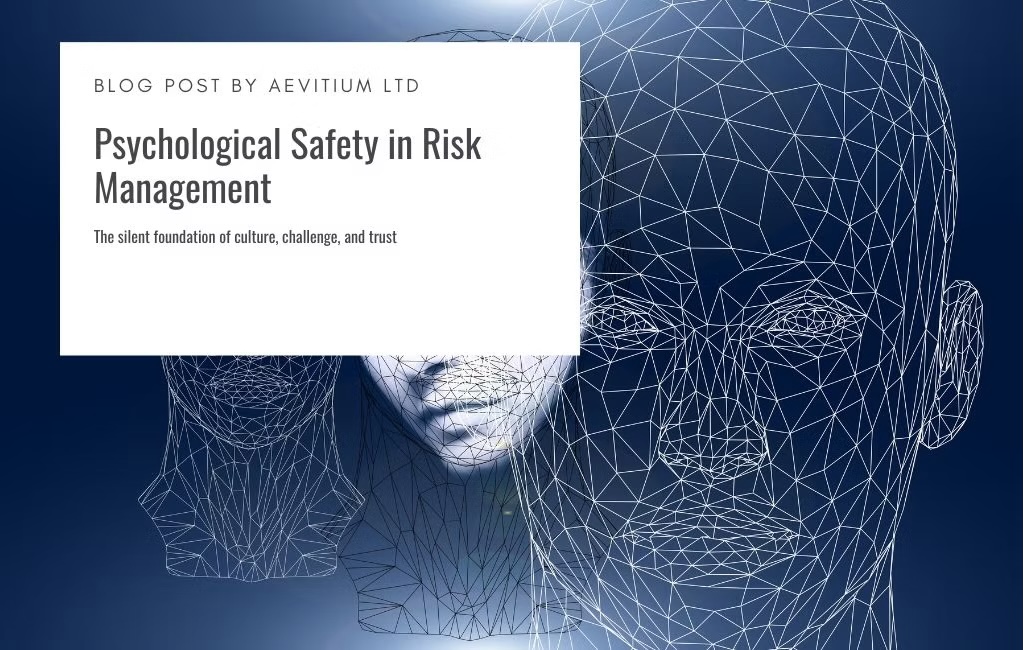
Psychological safety is often discussed as a leadership or workplace culture topic. Organisations frequently associate it with employee engagement, wellbeing, or team performance.
Its influence extends much further.
Psychological safety shapes how information moves through organisations, how decisions are challenged, and how emerging risks become visible. It influences whether concerns are raised early, whether assumptions are questioned, and whether leaders receive an accurate picture of the realities surrounding strategic and operational decisions.
For boards, executives, and risk leaders, psychological safety should be viewed not only as a cultural aspiration but as a governance capability.
Most organisations generate more information than leaders can realistically process.
Concerns emerge within frontline teams. Operational pressures create workarounds. Weak signals appear long before incidents become visible. Alternative viewpoints develop around strategic initiatives, transformation programmes, and emerging risks.
The challenge is rarely whether information exists.
The challenge is whether information travels.
As information moves through management layers, it can become delayed, softened, selectively escalated, or filtered altogether. Individuals may hesitate to raise concerns because they fear negative consequences, believe their input will not influence outcomes, or assume others have already raised the issue.
When this occurs, decision-makers can develop a false sense of certainty. Governance structures remain active. Reporting continues. Yet the quality of information supporting decisions gradually deteriorates.
This is where psychological safety becomes critical.
Many organisations unintentionally reward alignment more than challenge.
Meetings that conclude quickly may be interpreted as efficient. A lack of disagreement may be viewed as evidence of strong alignment. Teams that avoid difficult conversations can appear collaborative on the surface.
The reality is often more complex.
Constructive challenge helps organisations test assumptions, identify blind spots, and understand uncertainty more completely. It improves decision quality by ensuring leaders are exposed to a broader range of perspectives before significant decisions are made.
Psychological safety creates the conditions that make this possible.
When individuals feel able to challenge respectfully, raise concerns, and admit uncertainty, organisations gain access to information that would otherwise remain hidden. Decisions become more robust because they are informed by a fuller understanding of risks, opportunities, and operational realities.
The objective is not conflict. The objective is better decisions.
One of the most valuable ways to understand psychological safety is through the concept of signal flow.
Risk management depends on the ability to identify, interpret, and act upon signals that indicate changing conditions, emerging threats, or weaknesses in existing assumptions. These signals often originate closest to day-to-day operations.
Their value depends on whether they reach decision-makers before they develop into larger problems.
Strong psychological safety supports this process. It encourages early escalation, open discussion, and constructive challenge. Weak psychological safety can result in information becoming progressively filtered as it moves through the organisation.
The consequences extend beyond risk management.
Signal flow influences strategy execution, transformation initiatives, operational resilience, innovation, and organisational learning. In each case, leaders depend on timely, accurate information to make effective decisions.
A recent LinkedIn poll conducted among risk, governance, and compliance professionals provides an interesting perspective. Among respondents, 51% identified "raising concerns early" as the area where psychological safety creates the greatest value in risk management. A further 26% selected "challenging decisions."
Together, these responses accounted for more than three-quarters of all votes.
The findings suggest that practitioners primarily associate psychological safety with information visibility and decision quality rather than collaboration or team cohesion alone.
This reinforces an important point: psychological safety creates value by improving the flow of information that organisations rely upon to govern effectively.
Boards rarely receive direct evidence that psychological safety is weakening.
Instead, the signs often emerge through organisational patterns:
Escalations arriving later than expected
Repeated leadership surprises
Recurring audit findings
Limited challenge during critical decisions
Similar issues resurfacing despite remediation efforts
Directors should therefore ask questions that focus on information quality rather than employee sentiment alone:
Where might important information be filtered before reaching the board?
How effectively does challenge operate across the organisation?
Which issues are consistently escalated late?
Where are concerns most likely to remain unspoken?
How effectively are lessons converted into organisational learning?
These questions provide a more practical view of whether psychological safety is supporting effective governance.
Psychological safety is often viewed through a cultural lens.
Its implications are far broader.
The ability to raise concerns, challenge assumptions, share information, and learn from experience influences how organisations adapt under pressure. It shapes how quickly emerging risks become visible and how effectively leaders respond to changing conditions.
In this sense, psychological safety sits at the intersection of governance, decision-making, organisational learning, and resilience.
The organisations best positioned to navigate uncertainty are often not those with the most controls or the most reporting. They are the organisations that create environments where information flows openly, challenge improves decisions, and learning remains continuous.
Psychological safety may begin with culture.
Its impact extends across the entire governance system.
Read the full article: https://www.aevitium.com/post/psychological-safety-in-risk-management
By Julien Haye
Keywords: Culture, Leadership, Risk Management
 Consumer vs. enterprise AI agents
 Best Supply Chain AI Tools in 2026: SCM SENSEI AI and Ask Lora Compared
 Making Silos Permeable
 The Corix Partners Friday Reading List - October 2, 2026
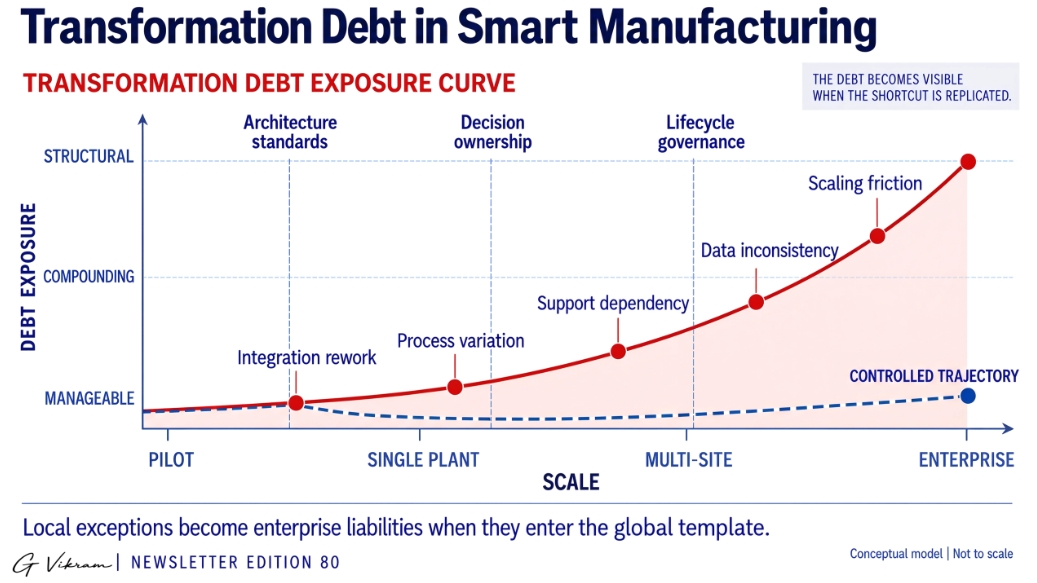 The most dangerous debt in a smart factory isn’t financial.