May01
It started somewhere between the third cup of coffee and an honest disagreement with someone I respect professionally — even when I do not always agree with how they operate.
We were talking about a deal. Late stage. Price alternatives had been tabled. The customer was engaged. The momentum was real. All that was needed was an internal approval and a follow-up email — a day's work at most.
Then the approval did not come.
Days passed. The customer followed up. We followed up internally. More days. Then came the explanation that stopped me cold.
"The delay itself will tell us how serious they are."
The senior professional across from me said it with the calm confidence of someone who had used this move before. And it had probably worked before. In a market with limited competition, where the customer has few alternatives, a deliberate pause can masquerade as leverage.
He was not wrong about the outcome. He was wrong about the ethics.
And that is where the coffee conversation got interesting.
Let me steelman the other side, because intellectual honesty requires it.
In enterprise sales, qualification never really ends. Even at closing stage, signals matter. A customer who chases you is a customer who wants the deal. A customer who goes quiet under pressure may have alternatives you do not know about, or internal champions who are weaker than they appeared.
From that lens, a delayed response is not manipulation — it is a diagnostic. It reveals temperature. It surfaces urgency. And in markets where you hold a structural advantage, using that advantage is not unethical. It is commercial strategy.
Experienced practitioners have closed deals this way for decades. There is a logic to it that cannot simply be dismissed.
Here is where I push back.
There is a difference between reading the temperature of a deal and deliberately engineering a cold room to measure it.
By the time a customer is reviewing price alternatives, the qualification is done. Discovery is complete. The need is established. The relationship has been built — sometimes over years. Introducing artificial friction at that stage is not a diagnostic tool. It is a trust tax imposed on a relationship the customer did not agree to pay.
And here is what troubles me more than the tactic itself.
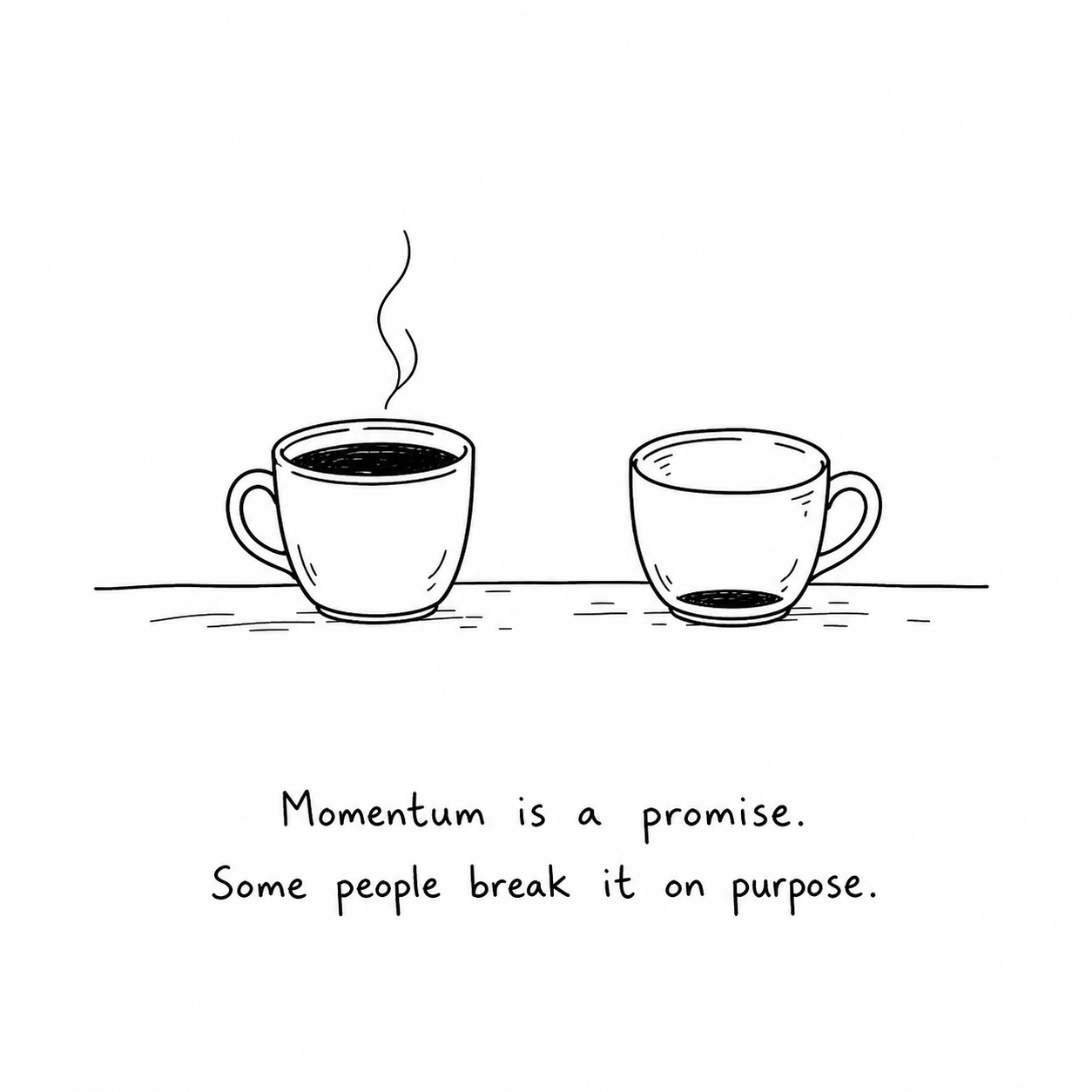
Momentum in a deal is not just a commercial variable. It is a signal of something more human — that both sides are moving toward something together. When you deliberately slow that down to test the other person's seriousness, you are treating the relationship as a mechanism, not a partnership.
The customer is not a circuit you test with a probe. They are an organisation with internal deadlines, stakeholders waiting for answers, and a champion inside who is being asked uncomfortable questions by their own team.
When you delay, you do not just test their temperature. You raise their internal cost of choosing you.
There is a specific context that makes this tactic even more uncomfortable — when the seller holds a structural advantage.
In competitive markets, relationship quality is often the differentiator. The seller who is trustworthy, responsive, and transparent earns deals that the product alone could not win.
In near-monopoly conditions, that discipline disappears. The advantage becomes an excuse. And tactics that would never survive a competitive environment get dressed up as strategy.
This is where I think the real conversation lives.
Not whether the tactic works — it might.
But what does it cost, invisibly, over time?
The customer who felt managed at closing will remember that feeling at renewal. The internal champion who had to defend the delay to their own organisation will think twice before sponsoring the next project. The relationship that could have compounded into a long-term account calcifies into a transactional one.
Monopoly buys you the deal. It does not buy you what comes after.
We did not resolve it. We were not supposed to.
My colleague had data on his side — patterns from years in the field, deals that proved the tactic worked. I had a different kind of data — the slower, quieter evidence of what relationships look like five years after a deal closes.
What I came away with was not a verdict. It was a question I keep returning to.
If the only reason a tactic works is because the customer cannot easily go elsewhere — is that a strategy, or is it a symptom of something the market has not yet corrected?
Sales attracts criticism for a reason. And a lot of that criticism is fair — because tactics like this one blur the line between strategy and manipulation in ways that are easy to rationalise and hard to defend out loud.
The senior professional I spoke with is not a bad person. He is a product of a system that rewarded certain behaviours for a long time.
But systems change. Markets open. Customers develop memory.
The question worth sitting with — whether you are early in your sales career or twenty years in — is not whether a tactic works today.
It is whether the person you are becoming through the choices you make is someone you will still respect when the market conditions change.
I do not have a clean answer.
Do you?
By Sajeed Ahmed
Keywords: Coaching, Leadership, Sales
 "The AI may in fact be conscious." Really?
 When AI Makes the Workaround Scalable
 The Age of Continuous Shocks: Why the coming downturn will be decided in your supply chain
 Friday’s Leader Reflection Quote – Saeculum Leadership Leaders Accept Decisions Create Responsibilities
 The Corix Partners Friday Reading List - October 9, 2026