May15
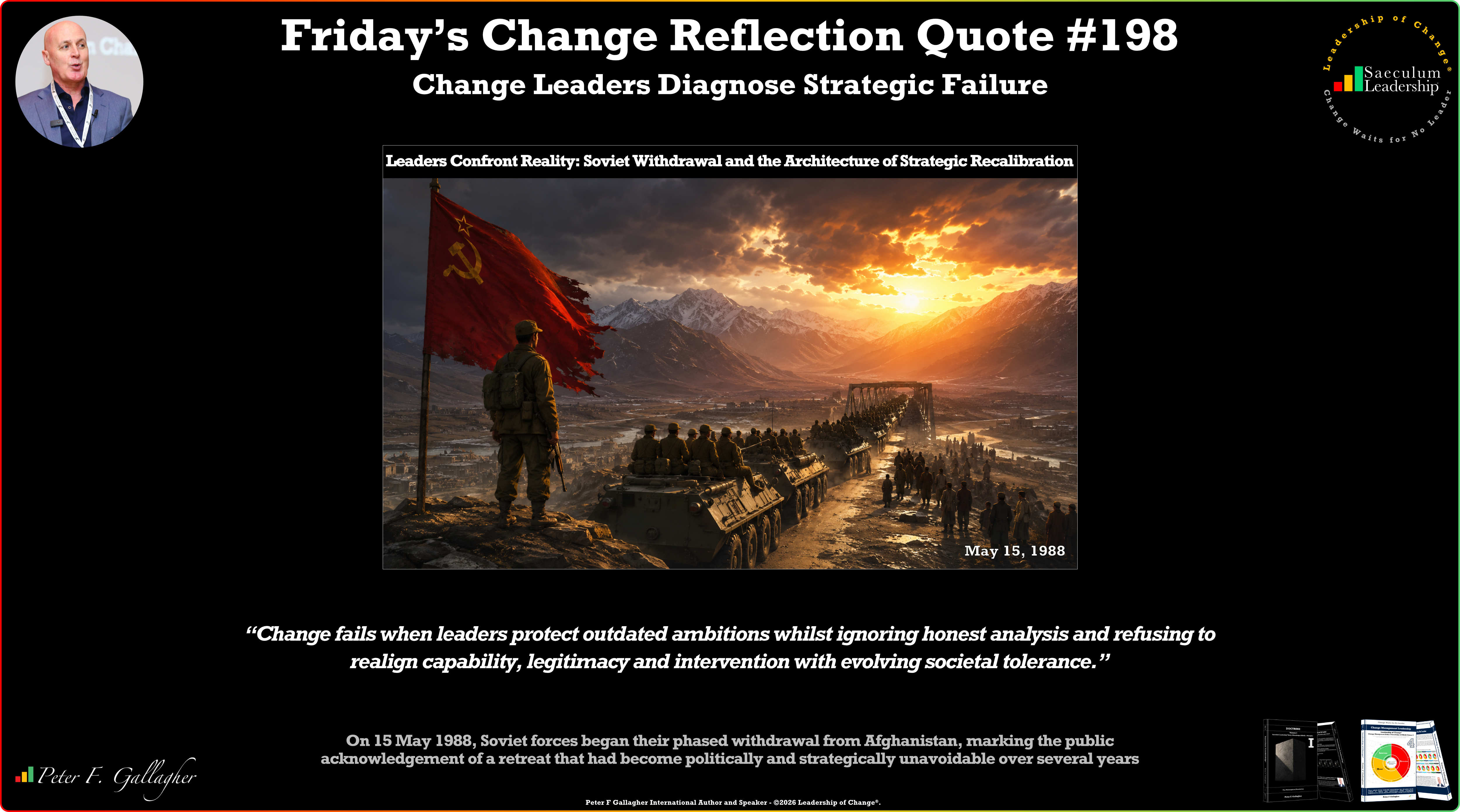
On 15 May 1988, Soviet forces began their phased withdrawal from Afghanistan, marking the public acknowledgement of a retreat that had become politically and strategically unavoidable over several years. The withdrawal was conducted under the Geneva Accords, signed on 14 April 1988, in which the Soviet Union pledged to remove its entire military contingent within nine months, completing the process by 15 February 1989. The operation was overseen by Colonel-General Boris Gromov, who crossed the Friendship Bridge as the last senior Soviet military commander to leave Afghan soil.
The Soviet intervention had begun in December 1979, when Moscow deployed forces to support a communist government in Kabul that was losing ground to internal rebellion and an increasingly organised mujahideen resistance. What Soviet leadership initially conceived as a short-term stabilising mission evolved into a grinding, decade-long conflict fought across difficult mountain terrain against decentralised guerrilla forces that proved impossible to defeat by conventional means. The United States, Pakistan, Saudi Arabia and others supplied the mujahideen with funding, weapons and intelligence, prolonging the conflict and steadily increasing Soviet losses.
By the mid-1980s, the human and economic costs were severe. Estimates from U.S. intelligence sources placed Soviet military deaths at between 10,000 and 15,000, with tens of thousands more wounded. The financial burden ran into tens of billions of dollars, further straining a Soviet economy already under significant structural pressure. Meanwhile, the war had grown deeply unpopular at home, eroding public confidence in the Communist Party and weakening the ideological narrative that had sustained Soviet foreign policy for decades.
Mikhail Gorbachev, who became General Secretary in March 1985, concluded relatively early in his tenure that the Afghan campaign was strategically unwinnable and economically unsustainable. His decision to pursue withdrawal was directly connected to his broader reform agenda, which included glasnost and perestroika, recognising that the Soviet state required fundamental transformation to survive. Afghanistan had become a symbol of institutional overreach, where leadership continued pursuing a failing course long after the evidence had turned against it.
The withdrawal itself was professionally executed, with just under 100,000 troops departing in two organised phases whilst sustaining relatively limited casualties during the operation. The strategic and institutional significance of 15 May 1988 extends well beyond military history. It marked the moment a superpower publicly acknowledged the limits of force, the costs of prolonged institutional overcommitment, and the necessity of accepting reality over ideology. The decision sent shockwaves through the Soviet system that contributed materially to the systemic pressures that culminated in collapse three years later, reshaping the entire architecture of the post-Cold War world order and fundamentally altering the trajectory of global geopolitics for the decades that followed. This moment became a defining Saeculum Leadership® Signal, rshowing that the true turning point lay not in the act of withdrawal but in the leadership decision to reinterpret the evidence and accept what it signified. When leaders interpret such signals with clarity, disruption becomes the first disciplined step towards a new era.
Change Leadership Lessons: History records the withdrawal. Change leadership explains why recognising failure before collapse matters. Historical events explain what happened. Leadership explains why institutions either adapt or decline. Leaders of change must recognise when purpose, capability and societal tolerance have fatally diverged before institutional damage becomes permanent. They must honestly diagnose strategic failure before committing to a credible and constructive course correction. Change leaders understand that how a failing initiative is concluded determines whether organisational confidence is preserved or destroyed. They must resist the pull of sunk costs, because escalating commitment to a failing course destroys the trust needed to lead future change. Leaders of change who withdraw from one failing strategy whilst simultaneously launching reform must possess exceptional capability to manage compounding institutional instability. Change Leaders Diagnose Strategic Failure.
“Change fails when leaders protect outdated ambitions whilst ignoring honest analysis and refusing to realign capability, legitimacy and intervention with evolving societal tolerance.”
Application - Change Leadership Responsibility 3 - Intervene to Ensure Sustainable Change: These lessons extend far beyond the mountains of Afghanistan and define the leadership responsibility to intervene before organisational overcommitment becomes permanent strategic failure. Sustainable change demands the courage to act decisively when accumulated sunk costs and outdated ambitions have begun to replace honest analysis as the basis for continued commitment.
Change leaders must identify the precise moments when organisational narrative starts to serve institutional pride rather than operational reality. Within organisations, this emerges when leaders allow ideology, momentum or political pressure to suppress honest internal challenge, assuming strategic validity where neither evidence nor societal tolerance any longer supports it.
Unchallenged institutional direction compounds failure by progressively disconnecting leaders from the ground-level reality their decisions directly affect. When admitting failure appears more dangerous than continuing, the conditions for catastrophic and compounding failure are quietly assembled, long before any visible crisis fully emerges.
Effective leadership intervention requires disciplined self-awareness, a commitment to honest diagnosis, and the structural willingness to hear the most cautious and dissenting voice available. Leaders of change are responsible for building environments where capability, legitimacy and intervention are continuously realigned with evolving operational reality and societal tolerance, and where no institutional pressure, however deeply embedded, is permitted to replace clear, deliberate and collectively owned decision-making. This is the leadership standard Afghanistan demands of every leader who studies it.
Final Thoughts: The Soviet withdrawal from Afghanistan marked more than a military retreat; it revealed the generational cost of sustaining national ambition long after legitimacy, capability and societal tolerance had irreversibly diverged. AI now accelerates how leaders detect strategic overcommitment, model divergence between ambition and reality, and identify the precise intervention point, whilst simultaneously exposing the fragility of institutions that rationalise continuation over honest diagnosis. Leaders of change must therefore move beyond protecting outdated ambitions and deliberately build cultures where honest analysis is valued, intervention is timely, and capability is continuously realigned with evolving operational reality and societal tolerance.
Further Reading: Change Management Leadership® - Leadership of Change® Volume 4 and Saeculum Leadership®: Doctrine – Volume I.
For further insights please visit our websites: https://www.a2b.consulting https://www.peterfgallagher.com Amazon.com: Peter F Gallagher: Books, Biography, Blog, Audiobooks, Kindle
Saeculum Leadership® Body of Knowledge (SLBoK): Volumes 1-10.A-E & I-5
~ Leadership of Change® Volume 1 - Change Management Fables
~ Leadership of Change® Volume 2 - Change Management Pocket Guide
~ Leadership of Change® Volume 3 - Change Management Handbook
~ Leadership of Change® Volume 4 - Change Management Leadership
~ Leadership of Change® Volume 5 - Change Management Adoption
~ Leadership of Change® Volume 6 - Change Management Behaviour
~ Leadership of Change® Volume 7 - Change Management Sponsorship
~ Leadership of Change® Volume 8 - Change Management Charade
~ Leadership of Change® Volume 9 - Change Management Insanity
~ Leadership of Change® Volume 10 - Change Management Dilenttante
~ Leadership of Change® Volume A - Change Management Gamification - Leadership
~ Leadership of Change® Volume B - Change Management Gamification - Adoption
Keywords: Leadership, Change Management, Business Strategy
 Consumer vs. enterprise AI agents
 Best Supply Chain AI Tools in 2026: SCM SENSEI AI and Ask Lora Compared
 Making Silos Permeable
 The Corix Partners Friday Reading List - October 2, 2026
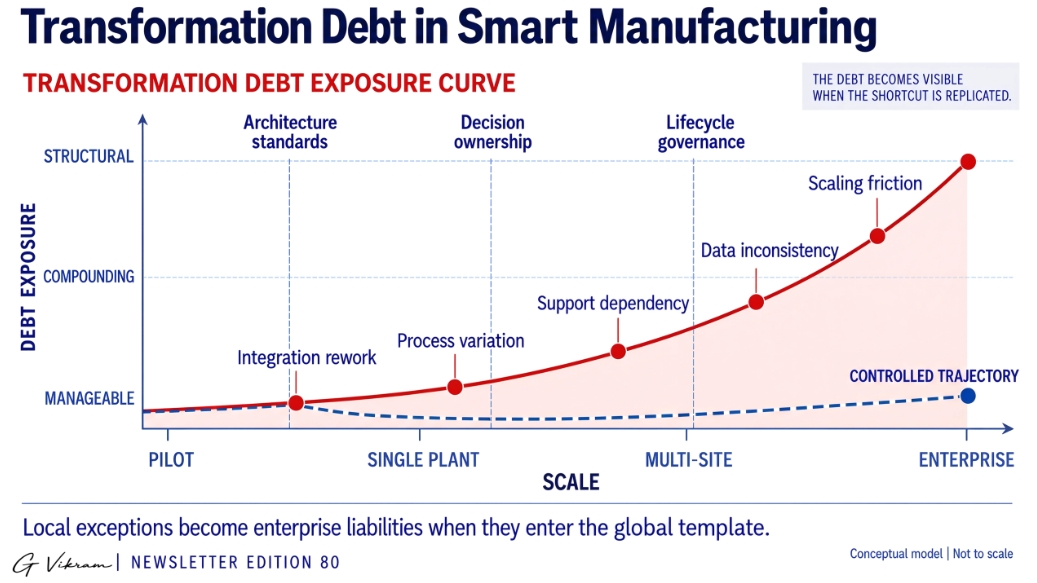 The most dangerous debt in a smart factory isn’t financial.