Mar27
One of the most common challenges that companies face is that they operate with multiple tools in their marketing stack, each fulfilling a specific task, often with significant overlap. According to Salesforce, the average company uses eight marketing tools in 2026. Beyond the challenges of managing these tools, their presence often creates fragmented processes, which can ultimately be counterproductive.
Consequently, another major challenge emerges: messy data. When data is sourced from different systems with different data structures, unification becomes difficult. This often leads to data quality issues and inconsistencies which result in trust issues. Marketers have cited this as a major pain point.
Data integration proves to be another common challenge among MarTech teams. Connecting systems isn’t just about APIs, true integration means structuring and harmonising data. When data is presented, it must mean the same thing to everyone. For example, “revenue” can mean very different things across platforms. In one system, it may represent the purchase value, before goods are delivered, while in another, revenue is only recognised upon receipt of the goods. Aligning data definitions is critical to successful data unification and should never be underestimated.
Underpinning successful integration is strong governance and defined ownership. Without clarity, even the best solutions fail. Governance sometimes comes as an after-thought, only after there is confusion and loss.
As companies grow, so does their reliance on data. While scalability is a positive sign of growth, it comes at a cost. Larger data volumes increase infrastructure and processing requirements, driving up the investment required to support them.
While technology plays a critical role; people and processes are just as important. Many organisations struggle to find the right resources and programs to upskill existing teams. Success in modern marketing requires greater cross-functional collaboration and more well-rounded teams. Whether in marketing, IT, analytics, or operations, teams need a basic understanding of each other’s roles to perform effectively. When teams lack a basic understanding of each other’s roles, silos form, and productivity suffers.
Beyond skills, change management is often underestimated. Resistance happens when the organization is fearful of change because it is perceived to bring obsoletion, misalignment and loss. In fact, according to WTW 2023, only 43% of employees believe their organization is effective at managing change. This mistrust is perpetuated in MarTech, with some employees citing poor usability, malfunctions and overuse as concerns.
MarTech projects don’t fail because of the technology, it fails because of a lack of clarity and team dynamics. The mission must be clear and defined for all stakeholders, so that each team knows what they’re working toward. It’s also important to assess the current state of marketing. What is the current marketing stack? What are the gaps between the strategy and execution? These questions form the basis of a meaningful audit which helps to define a realistic way forward.
Stakeholder engagement across Marketing, Operations, IT, Finance and Human Resources are critical as success is hardly achieved in isolation. Equally important is the perspective of the customer, which guides decision-making and prioritisation. Some organisations use the Balanced Scorecard framework to translate their goals into a comprehensive set of performance measures which guides their path forward. Having a holistic perspective ensures alignment and improves the speed and quality of the end result. Failure to have clear protocols for resolution, escalation and decision-making, MarTech teams experience frustration or stagnation.
Data unification and consistency is every marketer’s kryptonite. It’s not enough to simply integrate data sources, there must be alignment and clarity around each entity, whether it’s a customer, product, or transaction. Stakeholders must agree on the business definitions- that job is not just IT’s responsibility, and failure to capture the perspective of the business is one of the most common reasons for delay and poor results.
The business needs to qualify each metric: what is considered an “active customer”? How is revenue attributed? What constitutes a conversion? Without this alignment, there are conflicting sources of truth, leading to poor decisions, inefficient targeting and poorcustomer experiences. A single, trusted view requires more than technology, it requires governance. This includes naming conventions, data validation rules, ownership and processes for ongoing monitoring and reconciliation.
It’s also important to recognise that data unification is not a one-time activity, rather it evolves as the business grows and new data sources are introduced. The goal isn’t perfection, but it is agility. The organization must build flexibility and continuous improvement into its workflow.
Finally, on the topic of cost controls and budget, the reality is that you must plan for them. SaaS expenses can escalate quickly, especially as new components and services are added. While platforms may promote every new capability, the reality is that not every service is necessary. Each addition should be evaluated as a business case. The costs that should naturally scale are processing, core platform upgrades, and human resources, as functions mature, specialise, and see broader adoption across the organisation.
MarTech enables organisations to deliver personalized communication and experiences at scale, however it is not a magic wand. These outcomes don’t happen by default, it takes deliberate effort and continuous improvement. Treating your MarTech stack like a quick fix can lead to expensive decisions and disappointing results. Therefore Marketing’s digital transformation must be approached with a clear understanding of the goal, stakeholder engagement, structure and a discipline to overcome the challenges that will arise. The path may not always be straightforward, however it is possible, and rewarding.
By Rhesa Lessey
Keywords: Digital Transformation, Marketing, Retail
 FROM THE AISLE Field Notes on AI Implementation
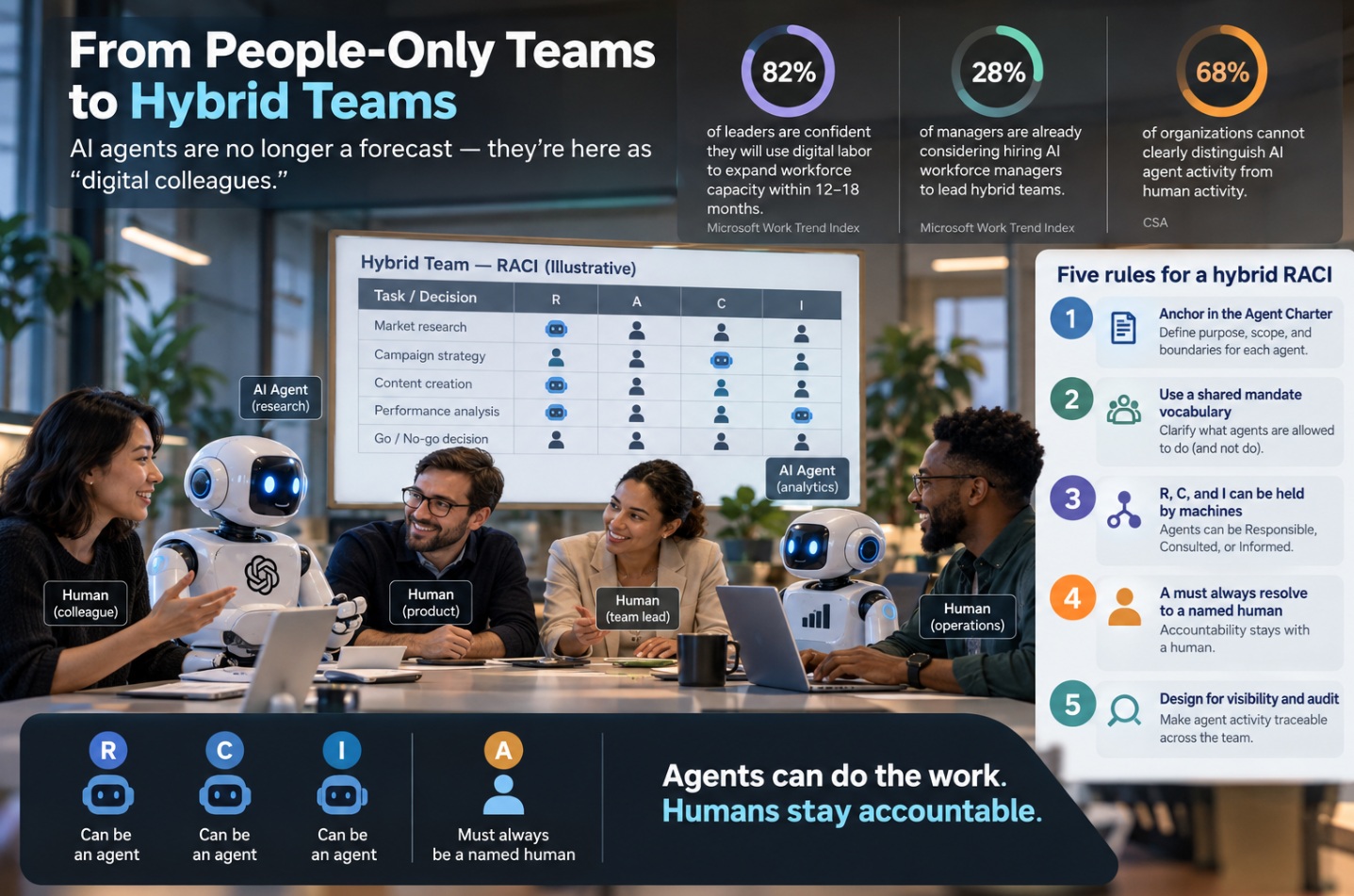 The Hybrid Team: Rethinking RACI When Some of Your Team Members Are Machines
 Two Clocks, One Truck: The Army's Need for Speed Meets New Defense Sourcing Rules
 Sustainable Transformation: The Elephant and The Mouse In The Room
 The Price of Standing Alone: Strategic Autonomy in a World Where Nobody Can Do It Alone