



Top 25 Thought Leaders in CRM | Customer Journeys | Marketing Technology | Leadership
| Rhesa Lessey | Points |
|---|---|
| Academic | 155 |
| Author | 6 |
| Influencer | 29 |
| Speaker | 17 |
| Entrepreneur | 6 |
| Total | 213 |
Points based upon Thinkers360 patented algorithm.

Tags: Analytics, Marketing
Tags: Management, Marketing, Social
Tags: Design Thinking, Marketing, Social
Tags: Analytics, Marketing, Social
Tags: Design Thinking, Marketing, Social
Tags: Analytics, Marketing
Tags: Leadership, Marketing, Public Relations
Tags: Analytics, Marketing
Credential ID 5868766B50924886890628882B55FE45
Tags: Analytics, Customer Loyalty, Marketing
Tags: Future of Work, Marketing, Public Relations
 Social Media Marketing: Social CRM
Tags: CRM, Digital Disruption, Marketing
Tags: CRM, Digital Transformation, Marketing
Tags: Leadership, Management, Marketing
Tags: Emerging Technology, Leadership, Marketing
Tags: Analytics, Leadership, Marketing
 Tech Future In Focus
Tags: AI Ethics, AI Governance, Leadership

Tags: Business Strategy, Marketing
Tags: Business Strategy, Marketing
Tags: Business Strategy, Marketing, Retail

Tags: Business Strategy, Marketing
 Customer Success Collective
Tags: Business Strategy, CRM, Marketing
 AI Accelerator Institute
Tags: Business Strategy, CRM, Marketing
Tags: CRM, Leadership, Marketing
Tags: AI, AI Ethics, Marketing
Tags: CRM, Marketing
Tags: Leadership, Personal Branding, Social
Tags: Leadership, Marketing, Social






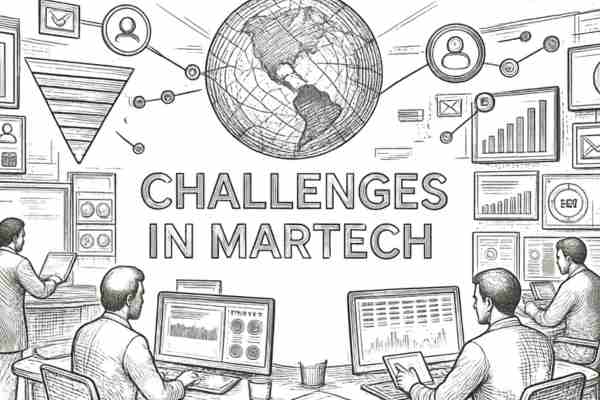 What are some of the challenges in MarTech?
One of the most common challenges that companies face is that they operate with multiple tools in their marketing stack, each fulfilling a specific task, often with significant overlap. According to Salesforce, the average company uses eight marketing tools in 2026. Beyond the challenges of managing these tools, their presence often creates fragmented processes, which can ultimately be counterproductive.
Consequently, another major challenge emerges: messy data. When data is sourced from different systems with different data structures, unification becomes difficult. This often leads to data quality issues and inconsistencies which result in trust issues. Marketers have cited this as a major pain point.
Data integration proves to be another common challenge among MarTech teams. Connecting systems isn’t just about APIs, true integration means structuring and harmonising data. When data is presented, it must mean the same thing to everyone. For example, “revenue” can mean very different things across platforms. In one system, it may represent the purchase value, before goods are delivered, while in another, revenue is only recognised upon receipt of the goods. Aligning data definitions is critical to successful data unification and should never be underestimated.
Underpinning successful integration is strong governance and defined ownership. Without clarity, even the best solutions fail. Governance sometimes comes as an after-thought, only after there is confusion and loss.
As companies grow, so does their reliance on data. While scalability is a positive sign of growth, it comes at a cost. Larger data volumes increase infrastructure and processing requirements, driving up the investment required to support them.
While technology plays a critical role; people and processes are just as important. Many organisations struggle to find the right resources and programs to upskill existing teams. Success in modern marketing requires greater cross-functional collaboration and more well-rounded teams. Whether in marketing, IT, analytics, or operations, teams need a basic understanding of each other’s roles to perform effectively. When teams lack a basic understanding of each other’s roles, silos form, and productivity suffers.
Beyond skills, change management is often underestimated. Resistance happens when the organization is fearful of change because it is perceived to bring obsoletion, misalignment and loss. In fact, according to WTW 2023, only 43% of employees believe their organization is effective at managing change. This mistrust is perpetuated in MarTech, with some employees citing poor usability, malfunctions and overuse as concerns.
MarTech projects don’t fail because of the technology, it fails because of a lack of clarity and team dynamics. The mission must be clear and defined for all stakeholders, so that each team knows what they’re working toward. It’s also important to assess the current state of marketing. What is the current marketing stack? What are the gaps between the strategy and execution? These questions form the basis of a meaningful audit which helps to define a realistic way forward.
Stakeholder engagement across Marketing, Operations, IT, Finance and Human Resources are critical as success is hardly achieved in isolation. Equally important is the perspective of the customer, which guides decision-making and prioritisation. Some organisations use the Balanced Scorecard framework to translate their goals into a comprehensive set of performance measures which guides their path forward. Having a holistic perspective ensures alignment and improves the speed and quality of the end result. Failure to have clear protocols for resolution, escalation and decision-making, MarTech teams experience frustration or stagnation.
Data unification and consistency is every marketer’s kryptonite. It’s not enough to simply integrate data sources, there must be alignment and clarity around each entity, whether it’s a customer, product, or transaction. Stakeholders must agree on the business definitions- that job is not just IT’s responsibility, and failure to capture the perspective of the business is one of the most common reasons for delay and poor results.
The business needs to qualify each metric: what is considered an “active customer”? How is revenue attributed? What constitutes a conversion? Without this alignment, there are conflicting sources of truth, leading to poor decisions, inefficient targeting and poorcustomer experiences. A single, trusted view requires more than technology, it requires governance. This includes naming conventions, data validation rules, ownership and processes for ongoing monitoring and reconciliation.
It’s also important to recognise that data unification is not a one-time activity, rather it evolves as the business grows and new data sources are introduced. The goal isn’t perfection, but it is agility. The organization must build flexibility and continuous improvement into its workflow.
Finally, on the topic of cost controls and budget, the reality is that you must plan for them. SaaS expenses can escalate quickly, especially as new components and services are added. While platforms may promote every new capability, the reality is that not every service is necessary. Each addition should be evaluated as a business case. The costs that should naturally scale are processing, core platform upgrades, and human resources, as functions mature, specialise, and see broader adoption across the organisation.
MarTech enables organisations to deliver personalized communication and experiences at scale, however it is not a magic wand. These outcomes don’t happen by default, it takes deliberate effort and continuous improvement. Treating your MarTech stack like a quick fix can lead to expensive decisions and disappointing results. Therefore Marketing’s digital transformation must be approached with a clear understanding of the goal, stakeholder engagement, structure and a discipline to overcome the challenges that will arise. The path may not always be straightforward, however it is possible, and rewarding.
Tags: Digital Transformation, Marketing, Retail
 The Role of Memory in Modern-day Business
How many times have you had to repeat your issue to a customer service representative? It’s frustrating and it’s revealing. When customers are forced to repeat themselves, it signals gaps in your CRM strategy, and it’s likely costing you in both reputation and revenue.
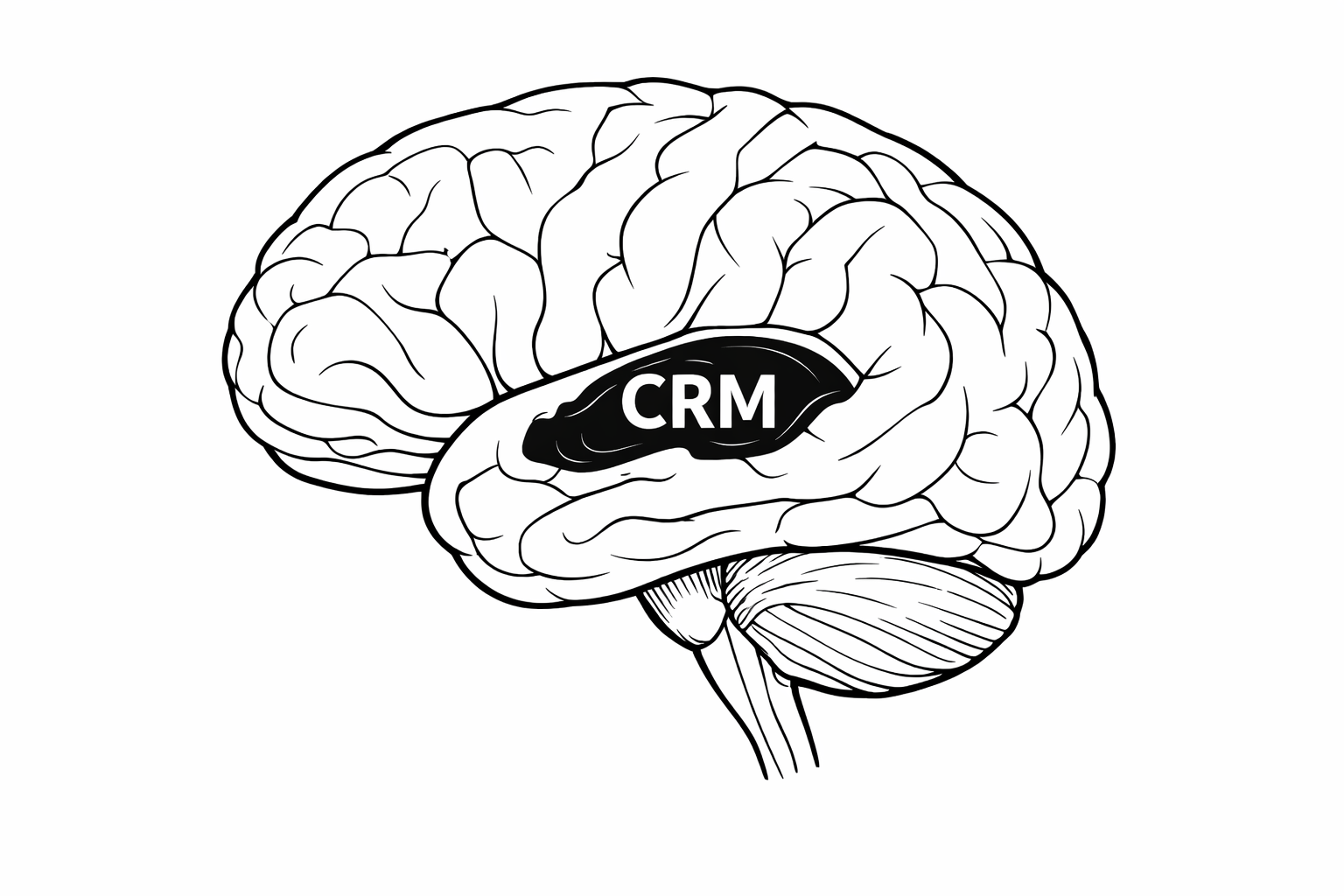
A Customer Relationship Management (CRM) system should function like the hippocampus, the part of the brain responsible for memory and learning. It should maintain a complete view of the customer, allowing every interaction to be informed, consistent, and service-driven.
The challenge is that this level of continuity isn’t always straightforward, especially for large, long-established organisations with deep roots and vast amounts of data. This data is often siloed across platforms, making it difficult to access and connect with context. Customers expect organisations to remember as people do, and this expectation is exacerbated in the age of AI.
So what do customers actually want you to remember, and what does “memory” mean in a business context?
Beyond order details and past purchases, customer expectations run much deeper. Customers anticipate that organisations will use insights to create value. This is where memory comes into play - recalling information in isolation offers little benefit. What customers want is something more meaningful. They expect organisations to recognise patterns and offer value through proactive replenishment, relevant reminders, or an understanding of natural buying cycles.
Failure to create these experiences results in a disjointed customer journey. Over time, disappointment sets in, trust erodes, and churn rates increase. In more advanced cases, market share diminishes as customers migrate to organisations that feel more customer-centric.
It is therefore critical for businesses to remember. Good memory is reflected across the entire customer journey. It shows up in how an organisation communicates, the channels it chooses, the products it offers, and how well it respects customer preferences. At its best, it feels like a good friend checking in at the end of the day.
Customers want organisations to remember what helps them move forward in the most frictionless way possible. Preferences, past interactions, appointments, order history, and relevant moments, like birthdays, should not be repeated. However, at the same time, they expect restraint and intermittent privacy check-ups. Customers want their data to be used with intention, not intrusion or surveillance and the difference lies in respect and consent. In modern CRM systems, memory creates relevance, but discretion is what sustains the relationship.
The organisation must collect data, but there must be governance to guide this collection, retention and deletion. The most effective CRM strategies are supported by governance and infrastructure that protects customers. Boundaries must also be honoured so connection feels genuine rather than calculated.
In a landscape where CRM tools are more accessible than ever, it is the experience they create that truly differentiates organisations. In a world saturated with messaging and automation, the businesses that stand out are not the loudest, but the most attentive. Customers don’t want to be known in every detail, rather they want to be understood in the moments that matter. CRM, when designed as a memory system, enables that understanding by carrying context forward while respecting privacy. Ultimately, memory is not just a technical capability; it is a signal of care. And in modern customer relationships, care is what keeps people coming back.
Tags: Business Strategy, CRM, Leadership
Tech Future In Focus MarTech Biggest Challenges in 2026AI Accelerator InstituteWhat are some of the challenges in MarTech?The Role of Memory in Modern-day Business