Jan23
In a business environment increasingly marked by volatility, uncertainty, and complexity, many organisations find themselves weighed down by sprawling strategic plans, generic mission statements, and endless frameworks. Amid this noise, Richard Rumelt —renowned strategist and author—offers a sharp, focused alternative. His framework doesn’t aim to impress with breadth; it demands clarity with depth. At the core of Rumelt’s approach are three deceptively simple yet profoundly powerful questions:
Together, these questions serve as a compass for leaders seeking to align their efforts, clarify priorities, and drive real impact.
An effective strategy begins not with vision, but with diagnosis. The essential first step is to define the central issue the organisation faces. This is not always obvious. Many leadership teams default to aspirational goals—“grow revenue by 20%,” “expand internationally,” or “become the market leader”—without first identifying the specific obstacle that stands in the way.
Rumelt insists that strategy is not goal-setting; it is problem-solving. That means distinguishing symptoms from root causes and resisting the urge to address every issue simultaneously. A disciplined diagnosis requires analytical rigour: What trends are shaping the environment? What internal constraints or blind spots exist? What is truly at stake?
Failing to confront the real challenge leads to misdirected resources and strategic drift. By contrast, identifying the “crux”—the most critical, addressable issue—sharpens focus and drives alignment.
Once the core challenge is understood, the next task is to ask: Where can we exert leverage? Strategy, at its essence, is about the application of power to create a favourable position. That power must come from something real and differentiating.
This could be technological superiority, cost leadership, proprietary data, customer loyalty, or even organisational agility. But whatever it is, it must translate into an ability to do something competitors cannot easily replicate. Simply having a list of strengths is insufficient. The strategic question is: Which of these strengths can help us shift the odds in our favor given the challenge we face?
Without identifying a source of advantage, strategy risks becoming an exercise in wishful thinking. But when the advantage is clearly defined and tightly aligned with the problem, strategy becomes a competitive force multiplier.
If you're looking to clarify your unique edge or refine your competitive positioning, consulting services like Visualise Solutions offer valuable guidance grounded in real-world experience
The final piece of the puzzle is execution—but not in the form of a bloated action plan. Rumelt emphasises coherence: a sequence of mutually reinforcing actions that channel energy toward solving the core problem.
This is where many strategies falter. Organisations often deploy scattered initiatives with little connection to one another or to the diagnosed challenge. Coherence ensures that resources are not just allocated but concentrated. It also helps avoid one of the most common strategic pitfalls: contradiction between initiatives.
A coherent set of actions builds momentum, produces early wins, and signals intent both internally and externally. It turns insight into movement.
These three questions form a strategic loop. They don’t offer shortcuts or easy answers—but that’s the point. Strategy isn’t about filling out templates or following trends; it’s about disciplined thinking, difficult trade-offs, and courageous decisions. By continuously revisiting these questions, leaders stay grounded in reality, focused on what matters, and adaptive in execution.
In a world where complexity is often met with more complexity, Rumelt’s framework offers refreshing clarity. It reminds us that great strategy is not about doing more—it’s about doing the right things, for the right reasons, at the right time.
Want to ensure your strategy aligns with real-world needs and long-term value? Visualise Solutions helps organisations navigate uncertainty, uncover hidden opportunities, and align execution with purpose. Let’s make sure you’re building the right thing—before you build it right.
By Andrew Constable MBA, XPP, BSMP
Keywords: Business Strategy, Innovation, Leadership
 The Empty Chair: a powerful practice in leadership, coaching and self-reflection
 Human Oversight Is Not a Person in the Loop
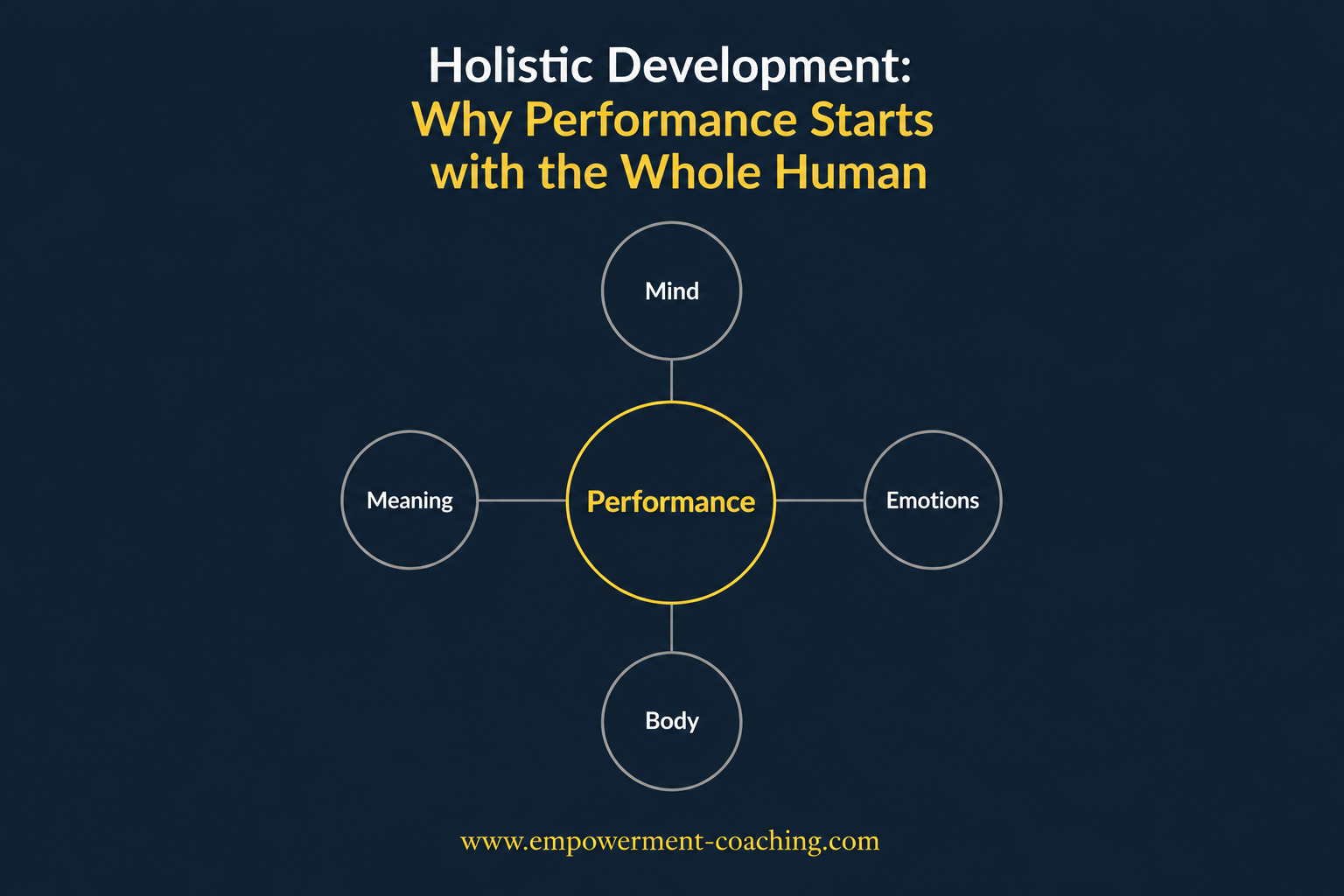 Holistic Development: Why Performance Starts with the Whole Human
 The Most Dangerous Leader in the Room May Be the One Everyone Depends On
 What is that Analytical AI?