Jan23

Wait! Before you have a meltdown, hear me out.
Succession planning is often handed to HR by default. That seems logical, no?
HR manages talent systems, performance reviews, leadership development programs, and training budgets. If succession planning is about people, surely HR should own it.
And that assumption is exactly why so many succession plans fail.
This isn’t a knock on HR.
In fact, the truth is more uncomfortable: succession planning is one of the most important business activities an organization can undertake — and HR, by design, does not control the levers required to do it well.
HR excels at processes. They define competencies, manage assessments, track readiness ratings, and ensure fairness and consistency. All of that matters — but none of it creates a successor.
Succession planning is not about identifying “high potentials.” It’s about preparing leaders for roles that do not yet exist, under conditions that cannot be fully predicted.
That work requires exposure to real decision-making authority. It requires future-leaders to sit in uncomfortable rooms, own outcomes they’ve never owned before, and wrestle with tradeoffs that don’t have clean answers. HR cannot grant that exposure. They cannot assign enterprise-level risk. They cannot decide who gets to run a business unit, lead a turnaround, manage a major client loss, or navigate an acquisition.
Only senior leadership can do that.
When HR is asked to “do succession planning,” they are often left managing a list of names without the power to change the experiences behind those names. The result is a false sense of preparedness: tidy charts, color-coded boxes, and leaders who look ready on paper — but have never been tested where it counts.
From a business perspective, succession planning is fundamentally about risk.
Those are not HR questions. They are enterprise-risk questions.
Succession planning intersects directly with strategy, capital structure, growth plans, and ownership timelines. It requires clarity on where the business is going — and what kinds of leaders that future will demand.
HR is rarely in a position to define strategy or challenge it. They are downstream from those decisions, not the architects of them.
When succession planning lives solely in HR, it becomes disconnected from the business plan. Leaders are developed for yesterday’s organization, not tomorrow’s. Roles are treated as static, when in reality they are evolving faster than most development programs can keep up.
The biggest reason HR cannot do succession planning alone is authority.
HR can recommend.
They can advise.
They can facilitate conversations.
But they cannot own succession outcomes.
They do not decide when a leader is truly ready — because readiness is proven through results, not assessments. They do not control when someone is stretched, rotated, or given a broader mandate. They do not determine who sits at the executive table or whose voice carries weight in critical decisions.
Succession planning requires leaders to give up control before they are forced to. That is a deeply human, emotional challenge — especially for founders, long-tenured executives, or owner-operators. HR cannot solve that tension. Only senior leadership can confront it.
None of this means HR is irrelevant. Quite the opposite.
HR plays a critical supporting role: designing development pathways, spotting patterns of risk, surfacing uncomfortable truths, and creating the infrastructure that makes succession visible and discussable. HR is often the first to see where leadership depth is thin or where institutional knowledge is dangerously concentrated.
But HR cannot carry the weight of succession planning on their own — and it’s unfair to ask them to.
Succession planning only works when it is owned at the top, driven by the business, and supported by HR expertise. When leaders treat it as an HR initiative, they outsource responsibility for the future of the company — and then act surprised when that future arrives unprepared.
Succession planning is not a people problem that HR needs to fix.
It’s a leadership problem that executives must own.
And until that distinction is made clear, succession planning will continue to exist on paper — while real risk quietly builds underneath it.
Keywords: Entrepreneurship, HR, Leadership
 The Empty Chair: a powerful practice in leadership, coaching and self-reflection
 Human Oversight Is Not a Person in the Loop
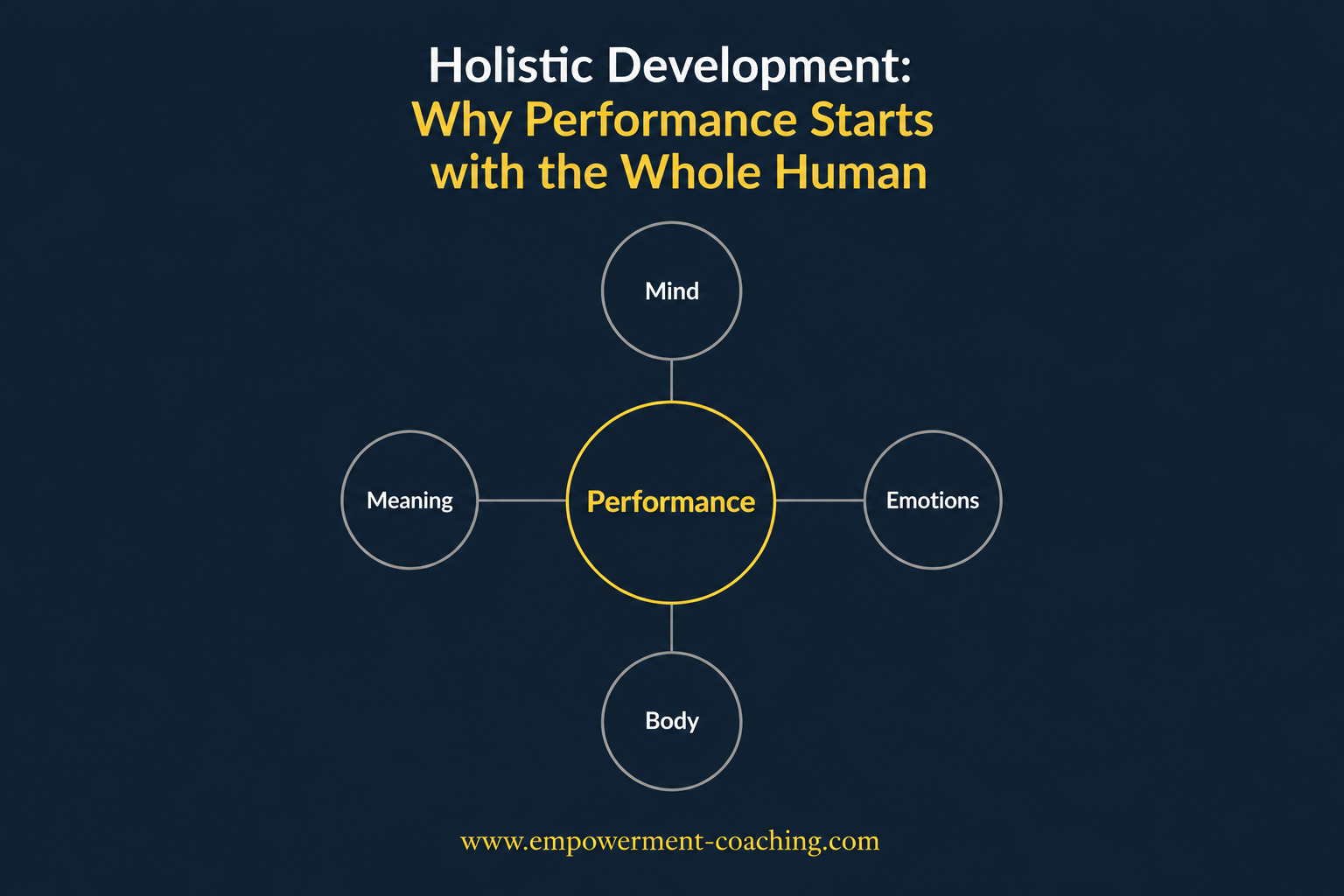 Holistic Development: Why Performance Starts with the Whole Human
 The Most Dangerous Leader in the Room May Be the One Everyone Depends On
 What is that Analytical AI?