Jan07

Stop Prompting, Start Automating: Why "Task-Based" AI is Costing You 20% Efficiency
75% of knowledge workers are now using AI at work (2024 Microsoft/LinkedIn Work Trend Index). But here is the hard truth: if you look at the bottom line of most PMOs, the needle hasn’t moved as much as promised.
Why? Because we’re treating AI like a collection of "fidget spinners"—using GenAI to draft an email here or summarize a meeting there. This fragmented, "piecemeal" approach is why we’re missing the real prize.
To unlock a true 20% efficiency gain, we must move beyond task-based AI and embrace End-to-End Workflow Automation.
The Trap of "Piecemeal" AI
Most organizations are stuck in the "Assisted Task" phase. According to IDC, while the average AI return is 3.7x for every $1 spent, leaders with a systematic strategy see returns as high as 10x!
The laggards are those who use AI to write a report, but then manually enter data into a PPM tool, manually trigger approvals, and manually update dashboards. These "islands of automation" still require heavy human bridging. The writing is faster, but the workflow friction remains.
The Strategy: Design for Obsolescence
My recommendation for 2026: Pick one end-to-end workflow and automate every single touchpoint. Gartner predicts that 20% of organizations will soon use AI to flatten structures by automating scheduling and reporting. The goal isn't just to "help" the human; it’s to make human intervention obsolete in that specific stream.
Imagine "Project Intake to Prioritization":
Intake: AI scans business cases and extracts metadata.
Alignment: AI scores the project against Strategic Goals.
Resources: System checks real-time capacity and suggests a start date.
Approval: System routes for signatures and updates the roadmap instantly.
By automating the entire chain, you eliminate the "wait time" and "context switching" that consume the majority of a project's lifecycle.
From Adoption to Integration
True portfolio governance isn't about how many CoPilot licenses you have; it’s about how many manual handoffs you’ve eliminated.
Stop looking for "better prompts" and start building "connected pipelines."
The future of work isn't humans doing tasks faster—it’s humans managing the systems that do the work for them.
By Jen Skrabak, PfMP, PMP, MBA
Keywords: Digital Transformation, Project Management
 AI Is Exposing the Data Problems Humans Used to Hide
 "The AI may in fact be conscious." Really?
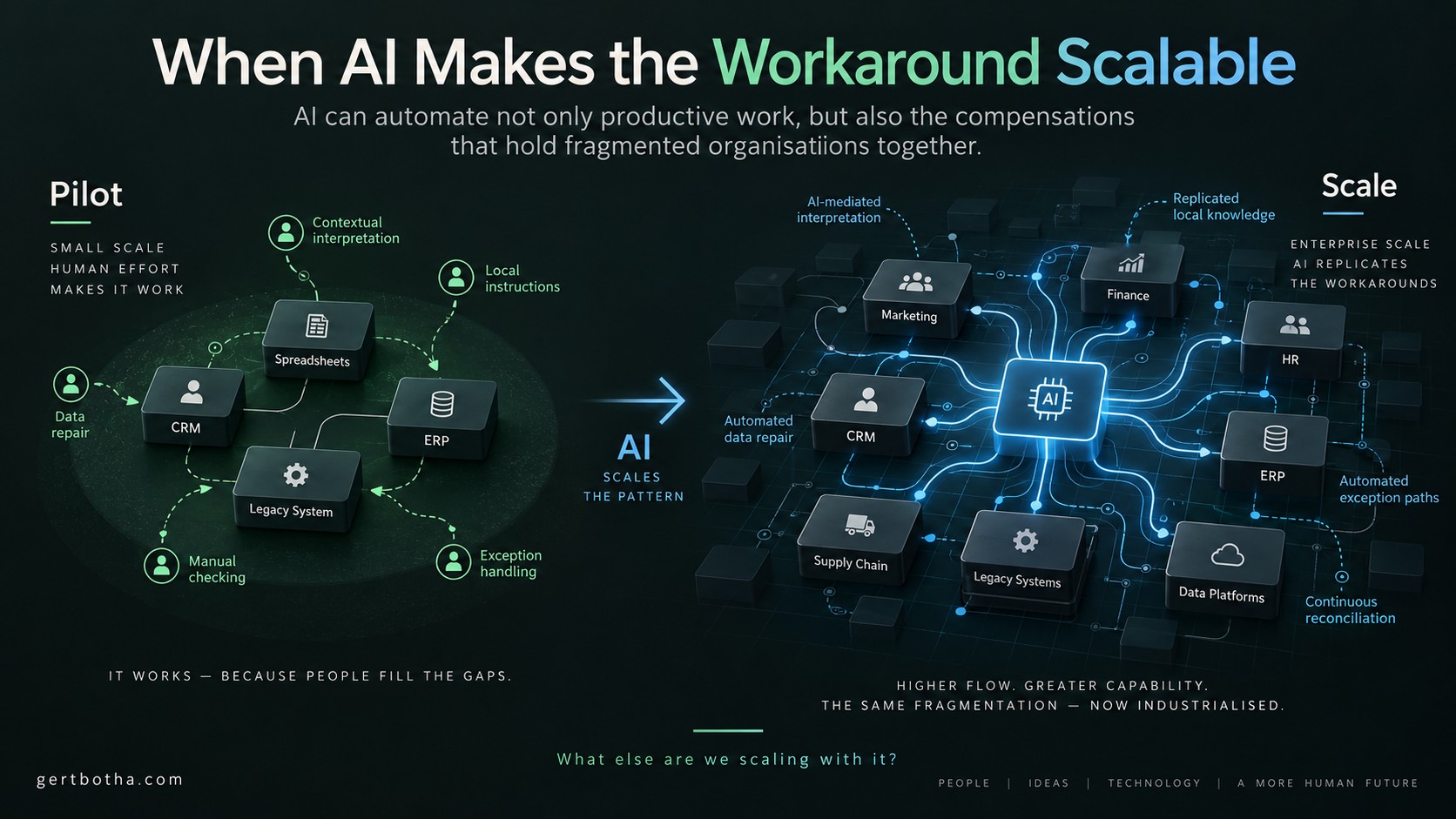 When AI Makes the Workaround Scalable
 The Age of Continuous Shocks: Why the coming downturn will be decided in your supply chain
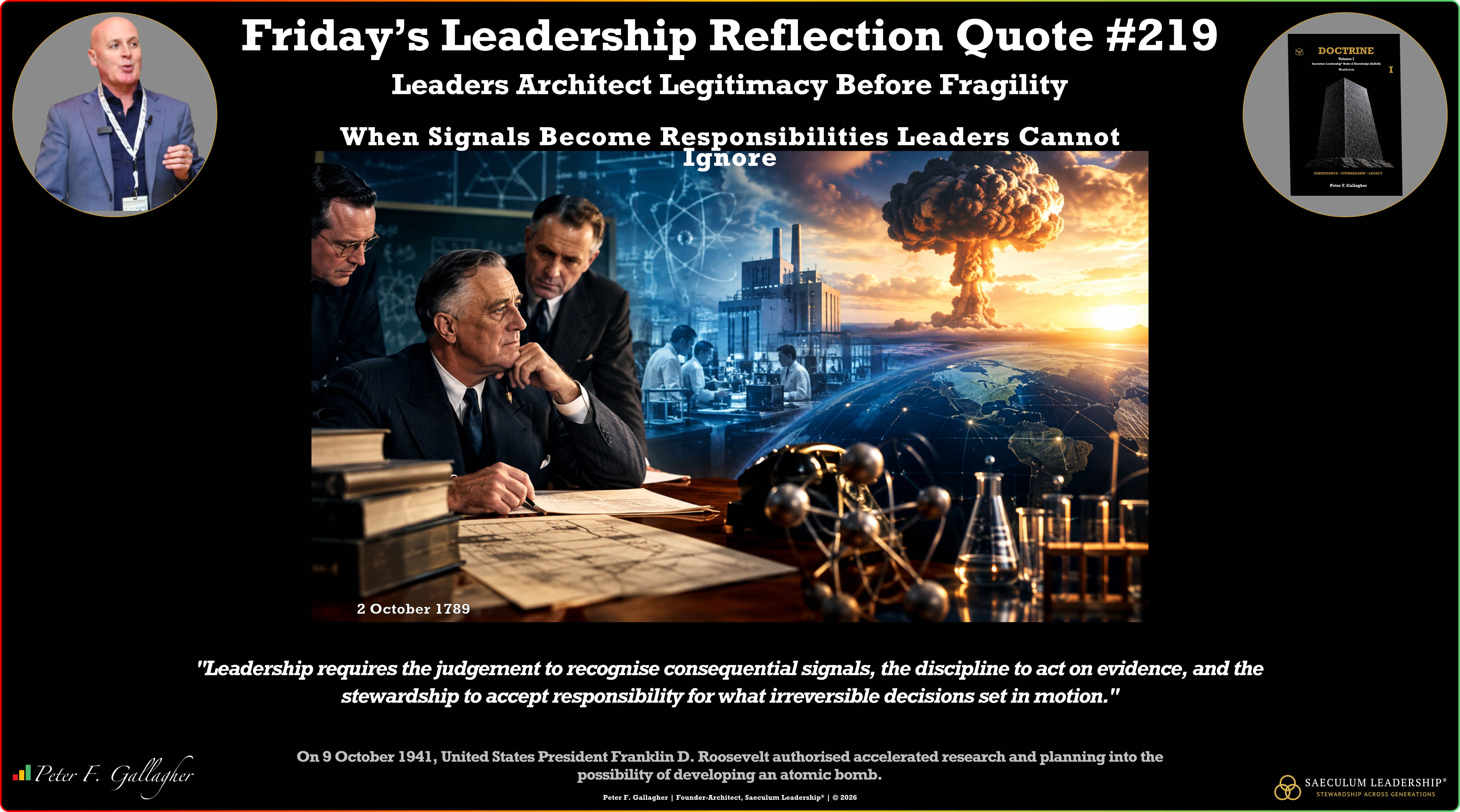 Friday’s Leader Reflection Quote – Saeculum Leadership Leaders Accept Decisions Create Responsibilities