


Jen Skrabak, PfMP, PMP, MBA is an award-winning Fortune 500 Executive, Author, and Keynote Speaker that has lead change and transformation for the largest and most successful organizations in the world, including Oracle, UnitedHealth/Optum, Amgen, Teradata, and Elevance.
Ms. Skrabak currently serves as the Chief Strategy Officer at Strategy+PM LLC, a boutique consulting company that provides thought leadership, training, and workshop facilitation in strategy, portfolio management, program management, change management, and business analysis.
Ms. Skrabak's contributions to the field of project management have been widely recognized. She is a recipient of PMI's Distinguished Contribution Award and has held prominent positions such as Chair/Lead Author for the Governance of Portfolios, Programs, and Projects: A Practice Guide and Chair/Lead Author of The Standard for Portfolio Management. Her insights have also been featured in leading project management publications, and she is a frequent speaker at global conferences, including "7 Superpowers for 2030," "Strategize Your Career (and Life)", and a series of sold-out global workshops on Strategy and Portfolio Management.
Recently, the LinkedIn community recognized Ms. Skrabak as a “Top Voice” 4x: Portfolio + Program + Change Management + Business Analysis.
Available For: Advising, Authoring, Consulting, Influencing, Speaking
Travels From: Los Angeles, CA
Speaking Topics: Leadership, Strategy, Portfolio Management
| Jen Skrabak, PfMP, PMP, MBA | Points |
|---|---|
| Academic | 0 |
| Author | 266 |
| Influencer | 83 |
| Speaker | 0 |
| Entrepreneur | 10 |
| Total | 359 |
Points based upon Thinkers360 patent-pending algorithm.

Tags: Business Strategy, Change Management, Project Management
Tags: Business Strategy, Change Management, Project Management
Tags: AI Governance, Business Strategy, Project Management
 Beyond the Gantt: Timelines Executives Actually Want to See
Tags: Business Strategy, Leadership, Project Management
 Part 3: Building and Launching Your AI-Powered Product
Tags: Business Strategy, Leadership, Project Management
 The Seven Keys to Portfolio Success: The C-A-P-T-A-I-N Framework
Tags: Business Strategy, Management, Project Management
 Leveraging AI's 7 Patterns for Product Innovation (Part 2)
Tags: AI, Digital Transformation, Project Management
 Building Winning Products in the Age of #AI
Tags: AI, Leadership, Project Management
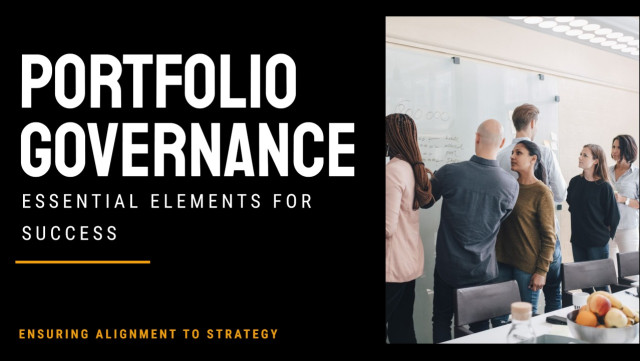 Portfolio Governance—Ensuring Alignment to Strategy (Part 3: Critical Success Factors)
Tags: Business Strategy, Leadership, Project Management
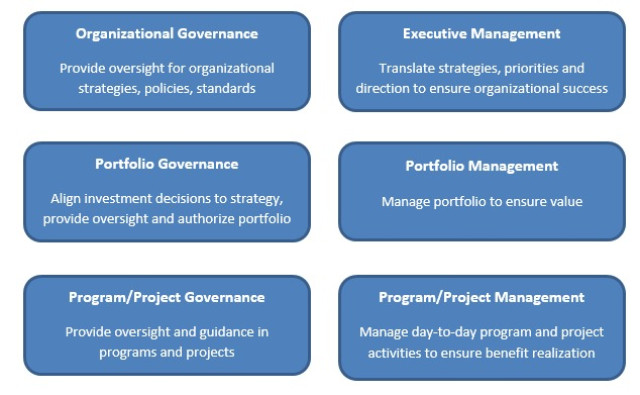 Portfolio Governance—Ensuring Alignment to Strategy (Part 2: Definitions)
Tags: Business Strategy, Leadership, Project Management
 Portfolio Governance—Ensuring Alignment to Strategy (Part 1)
Tags: Business Strategy, Leadership, Project Management
 Are you the CEO of your Portfolio?
Tags: Business Strategy, Leadership, Project Management
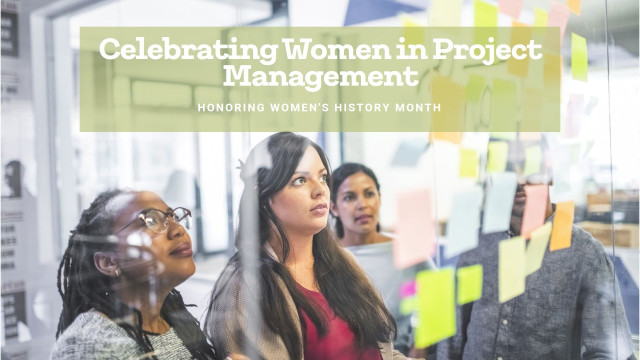 Celebrating Women in Project Management: Strategies for Success and Inclusion
Tags: Business Strategy, Leadership, Project Management
 Demystifying Portfolio Managers: What They Do and What They Don't
Tags: Business Strategy, Leadership, Project Management
 Demystifying Portfolio Managers: What They Do and What They Don't
Tags: Project Management
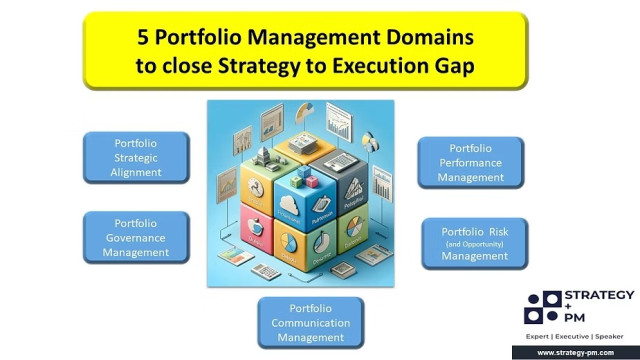 Why do Projects (Still) Fail?
Tags: Business Strategy, Leadership, Project Management
 What is Strategy?
Tags: Change Management, Leadership
 7 Ways to Align Portfolio Management with Strategy
Tags: Change Management, Leadership
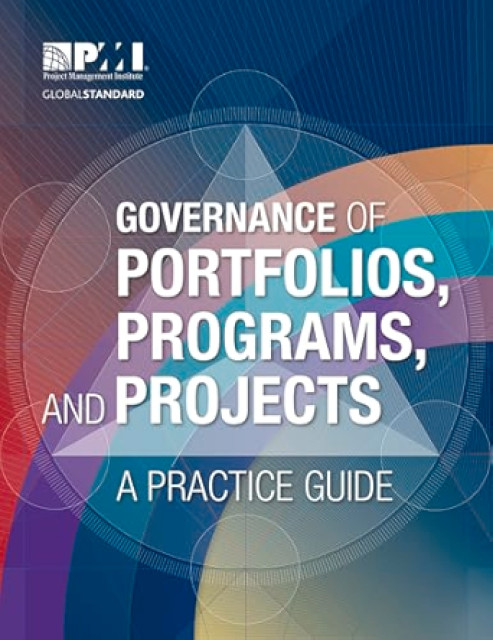 Governance of Portfolios, Programs, and Projects: A Practice Guide
Tags: AI Governance, Business Strategy, Leadership
Tags: Business Strategy, Leadership, Project Management
Tags: Business Strategy, Leadership, Project Management
 The Standard for Portfolio Management - Third Edition
Tags: Business Strategy, Project Management, Risk Management
Navigating Complexity: A Practice Guide
Tags: Business Strategy, Change Management, Culture
 NSA SoCal
Tags: Leadership, Management
Tags: AI, Entrepreneurship, Innovation
Date : January 01, 2026
 Stop Prompting, Start Automating: Why "Task-Based" AI is Costing You 20% Efficiency
Stop Prompting, Start Automating: Why "Task-Based" AI is Costing You 20% Efficiency
75% of knowledge workers are now using AI at work (2024 Microsoft/LinkedIn Work Trend Index). But here is the hard truth: if you look at the bottom line of most PMOs, the needle hasn’t moved as much as promised.
Why? Because we’re treating AI like a collection of "fidget spinners"—using GenAI to draft an email here or summarize a meeting there. This fragmented, "piecemeal" approach is why we’re missing the real prize.
To unlock a true 20% efficiency gain, we must move beyond task-based AI and embrace End-to-End Workflow Automation.
The Trap of "Piecemeal" AI
Most organizations are stuck in the "Assisted Task" phase. According to IDC, while the average AI return is 3.7x for every $1 spent, leaders with a systematic strategy see returns as high as 10x!
The laggards are those who use AI to write a report, but then manually enter data into a PPM tool, manually trigger approvals, and manually update dashboards. These "islands of automation" still require heavy human bridging. The writing is faster, but the workflow friction remains.
The Strategy: Design for Obsolescence
My recommendation for 2026: Pick one end-to-end workflow and automate every single touchpoint. Gartner predicts that 20% of organizations will soon use AI to flatten structures by automating scheduling and reporting. The goal isn't just to "help" the human; it’s to make human intervention obsolete in that specific stream.
Imagine "Project Intake to Prioritization":
Intake: AI scans business cases and extracts metadata.
Alignment: AI scores the project against Strategic Goals.
Resources: System checks real-time capacity and suggests a start date.
Approval: System routes for signatures and updates the roadmap instantly.
By automating the entire chain, you eliminate the "wait time" and "context switching" that consume the majority of a project's lifecycle.
From Adoption to Integration
True portfolio governance isn't about how many CoPilot licenses you have; it’s about how many manual handoffs you’ve eliminated.
Stop looking for "better prompts" and start building "connected pipelines."
The future of work isn't humans doing tasks faster—it’s humans managing the systems that do the work for them.
Tags: Digital Transformation, Project Management
 Year-End Portfolio Shutdown: T.R.I.A.G.E. Your Way to a Fresh 2026
As 2025 comes to a close, it's time to focus on the crucial phase of Portfolio Governance: the year-end Portfolio Shutdown. The objective is to achieve a CLEAN SLATE and complete STRATEGIC ALIGNMENT for 2026, taking proactive measures rather than just reporting.
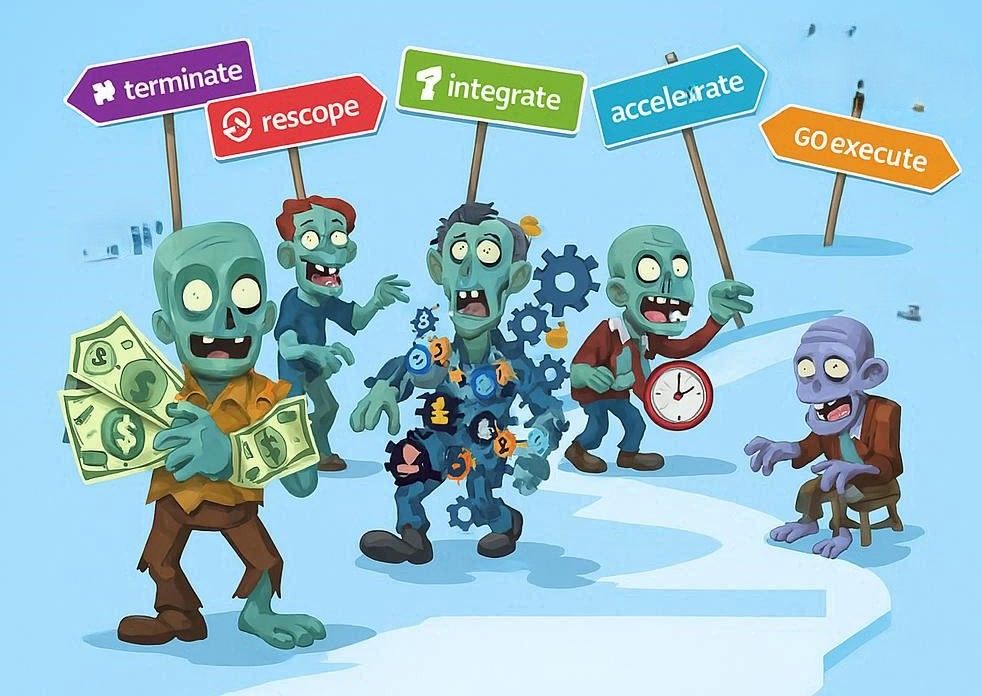
As leaders, we all have portfolios of work that we're responsible for, here's your reminder to clean up the project zombies!
1. T.R.I.A.G.E. the Project Zombies
Every portfolio manager encounters stalled, failing, or strategically irrelevant initiatives—known as PROJECT ZOMBIES. These projects drain time, budget, and morale. Stopping a project is not a failure; it’s a sign of SUPERIOR PORTFOLIO MANAGEMENT. Here’s the T.R.I.A.G.E. framework to apply to every questionable project for a fresh start in 2026:
➡️ Terminate: Stop the project entirely and salvage remaining value.
➡️ Re-scope: Reduce the scope for minimum viable benefit.
➡️ Integrate: Merge the project with another initiative.
➡️ Accelerate: Add resources to quickly finish a critical project.
➡️ Go/Execute: Commit to finishing it now if strategically sound.
2. Calculate the Real Value (True ROI)
Avoid relying solely on initial business cases, as project landscapes evolve. Before year-end, determine the ACTUAL REALIZED VALUE for projects nearing completion.
✅ Financial Reality: Did you achieve the actual realized ROI or NPV? ✅ Alignment Check: Did the project deliver the strategic, long-term benefits promised (e.g., market share, risk reduction)?
This zero-based review ensures your metrics reflect PROVABLE REALITY, setting you up to select the highest-value initiatives for the new year.
3. Liberate Talent
A project isn’t truly finished until its resources are officially released. Failing to formally close out projects leads to "GHOST LABOR," where valuable resources remain tied up, draining capacity before 2026 even begins.
The Governance Check: Close out 2025 by ensuring every in-flight or completed project has FINAL SIGN-OFFS, budgets are reconciled, and documentation is archived. This is the crucial step of good PORTFOLIO GOVERNANCE. Then, actively RE-ALLOCATE the talent you've freed up for 2026!
Three Takeaways
The 2025 shutdown is your launchpad for 2026. Focus your energy on three critical actions: 1) T.R.I.A.G.E. the Zombies, 2) Calculate True ROI, and 3) Liberate Talent.
What is the biggest, most recurring 'project zombie' that is currently draining resources in your portfolio?
Tags: Project Management