Mar13
FCRQ189 Leadership Learning!
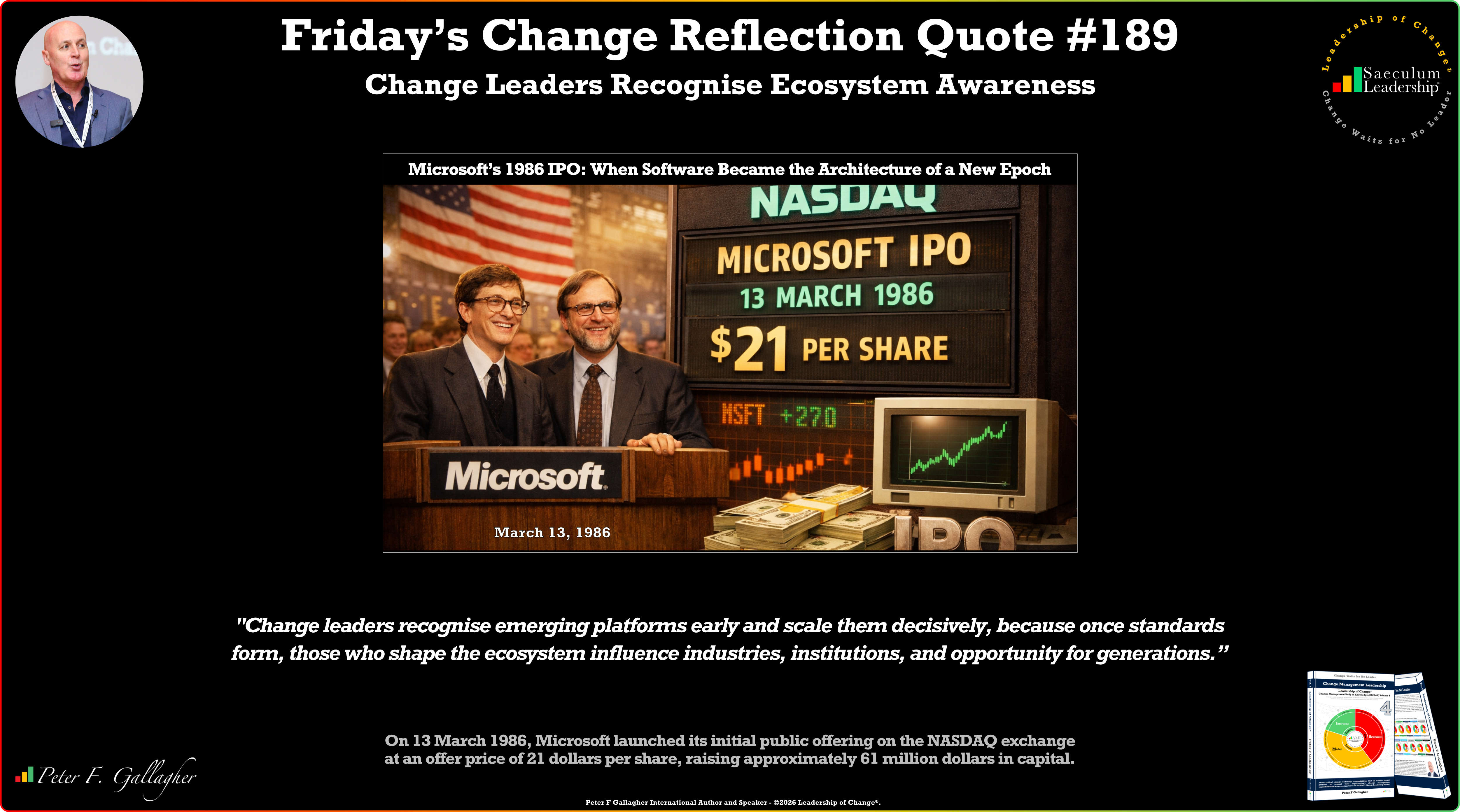
On 13 March 1986, Microsoft launched its initial public offering on the NASDAQ exchange at an offer price of 21 dollars per share. The offering raised approximately 61 million dollars and instantly transformed the young software company into one of the most closely watched technology firms in the United States. Founded in 1975 by Bill Gates and Paul Allen, Microsoft had spent the previous decade building a strong reputation in the emerging personal computing industry, most notably through its operating system software. The timing of the public offering was significant. During the early 1980s the global computing industry was transitioning from large mainframe systems used primarily by governments and corporations toward personal computers that could be used in offices and homes. Microsoft had positioned itself strategically within this transformation through its operating system for the IBM personal computer. The agreement to provide the operating system that became known as MS DOS allowed Microsoft to establish a rapidly expanding presence across the global computer market. By the mid 1980s personal computers were no longer experimental devices for hobbyists or engineers. Businesses were beginning to recognise their value for productivity, communication, and data management. Microsoft’s public listing occurred during a period when investors were increasingly aware that software would become a foundational component of the emerging digital economy. The strong performance of the offering immediately created several millionaires within the company and significantly increased the personal wealth of its founders. The historical importance of this event extends beyond a successful share offering. Microsoft’s IPO symbolised a decisive shift in the technology industry toward software platforms as central drivers of long term value creation. Rather than hardware manufacturers controlling the future of computing, software companies were beginning to shape how people interacted with machines and information. Over the following decades Microsoft would play a central role in defining personal computing through products such as Windows and Office, establishing dominant global standards for productivity software and operating systems. This moment therefore represents far more than a financial milestone. It marked the emergence of software as a strategic layer of the modern economy and demonstrated how a technology company built on intellectual capital could influence global business, communication, and knowledge work for generations. Seen in a longer historical perspective, the offering illustrates how periods of technological transition often elevate organisations that recognise structural shifts earlier than their competitors. When industries evolve from experimental innovation toward mass adoption, capital markets frequently accelerate the expansion of firms that have already positioned themselves at the centre of the emerging ecosystem. Microsoft’s public offering represents a defining Saeculum signal: the moment software became the organising logic of the modern economy. Saeculum Leadership™ teaches that epochal transitions occur when a new structural layer becomes the foundation upon which future industries, institutions, and behaviours are built. The 1986 IPO marks the beginning of the software Saeculum—an era in which digital platforms would shape global productivity, communication, and economic architecture for generations.
Change Leadership Lessons: The Microsoft public offering illustrates a deeper leadership insight about how industries evolve when technological ecosystems begin to form. Leaders of change recognise technological inflection points early and position their organisations where emerging platforms will shape the structure of future industries. They understand that influence grows when organisations build systems that allow partners, developers, and users to participate in shared value creation. Change leaders scale capability quickly when opportunity appears because delay allows competitors to capture emerging standards and secure strategic advantage. They ensure investment, technology development, and organisational focus align around the most important structural shifts within an industry. Leaders of change understand that when a platform becomes the accepted standard it can influence economic behaviour for decades. Change Leaders Recognise Ecosystem Awareness.
“Change leaders recognise emerging platforms early and scale them decisively, because once standards form, those who shape the ecosystem influence industries, institutions, and opportunity for generations.”
Application. Change Leadership Responsibility 1 - Articulate a Change Vision: Sustained organisational transformation seldom emerges from perfect clarity. It usually begins when leaders interpret early signals within complex environments and convert those insights into a coherent direction for future progress. A credible change vision does more than communicate aspiration. It explains the underlying logic that connects emerging developments, organisational capability, and long-term opportunity. When leaders interpret complex information carefully they begin to recognise relationships across technology, markets, institutions, and behaviour that indicate the direction of future change. Articulating this understanding is a central leadership responsibility. Stakeholders rarely commit sustained effort unless they understand why a particular direction is credible and why early investment of time, capital, and energy is justified. Leaders therefore translate emerging patterns into clear explanation so that uncertainty is understood as a natural phase of discovery rather than evidence of confusion. Effective articulation also strengthens organisational discipline. When people understand the structural forces shaping the future they are less likely to abandon initiatives simply because progress is gradual or outcomes are not immediately visible. A well-constructed change vision provides both direction and coherence. It enables organisations to learn, adjust, and refine their understanding as evidence accumulates while maintaining strategic consistency. When leaders recognise emerging ecosystem relationships and communicate their significance clearly, organisations gain the confidence to progress deliberately through complexity toward sustainable long-term advancement.
Final Thoughts: The Microsoft public offering demonstrated that organisations able to recognise emerging ecosystems early can shape the architecture of entire industries. In an era increasingly defined by artificial intelligence platforms and rapidly evolving digital infrastructures, leaders of change must interpret technological signals earlier and with greater discipline than ever before. Leadership responsibility therefore lies not only in managing present performance but in recognising the ecosystems that will define future economic and organisational reality.
Further Reading: Change Management Leadership - Leadership of Change® Volume 4.
Peter F. Gallagher, a 20‑book author, consults, speaks, and writes on Saeculum Leadership™ and Leadership of Change®. He works exclusively with boards, CEOs, and senior leadership teams to prepare and align them to effectively and proactively lead their organisations through transformation in a rapidly evolving epoch.
For further reading please visit our websites: https://www.a2b.consulting https://www.peterfgallagher.com Amazon.com: Peter F Gallagher: Books, Biography, Blog, Audiobooks, Kindle
Leadership of Change® Body of Knowledge Volumes: Change Management Body of Knowledge (CMBoK) Books: Volumes 1-10.A-E & I-5
~ Leadership of Change® Volume 1 - Change Management Fables
~ Leadership of Change® Volume 2 - Change Management Pocket Guide
~ Leadership of Change® Volume 3 - Change Management Handbook
~ Leadership of Change® Volume 4 - Change Management Leadership
~ Leadership of Change® Volume 5 - Change Management Adoption
~ Leadership of Change® Volume 6 - Change Management Behaviour
~ Leadership of Change® Volume 7 - Change Management Sponsorship
~ Leadership of Change® Volume 8 - Change Management Charade
~ Leadership of Change® Volume 9 - Change Management Insanity
~ Leadership of Change® Volume 10 - Change Management Dilenttante
~ Leadership of Change® Volume A - Change Management Gamification - Leadership
~ Leadership of Change® Volume B - Change Management Gamification - Adoption
Keywords: Business Strategy, Change Management, Leadership
 You are not your diagnosis
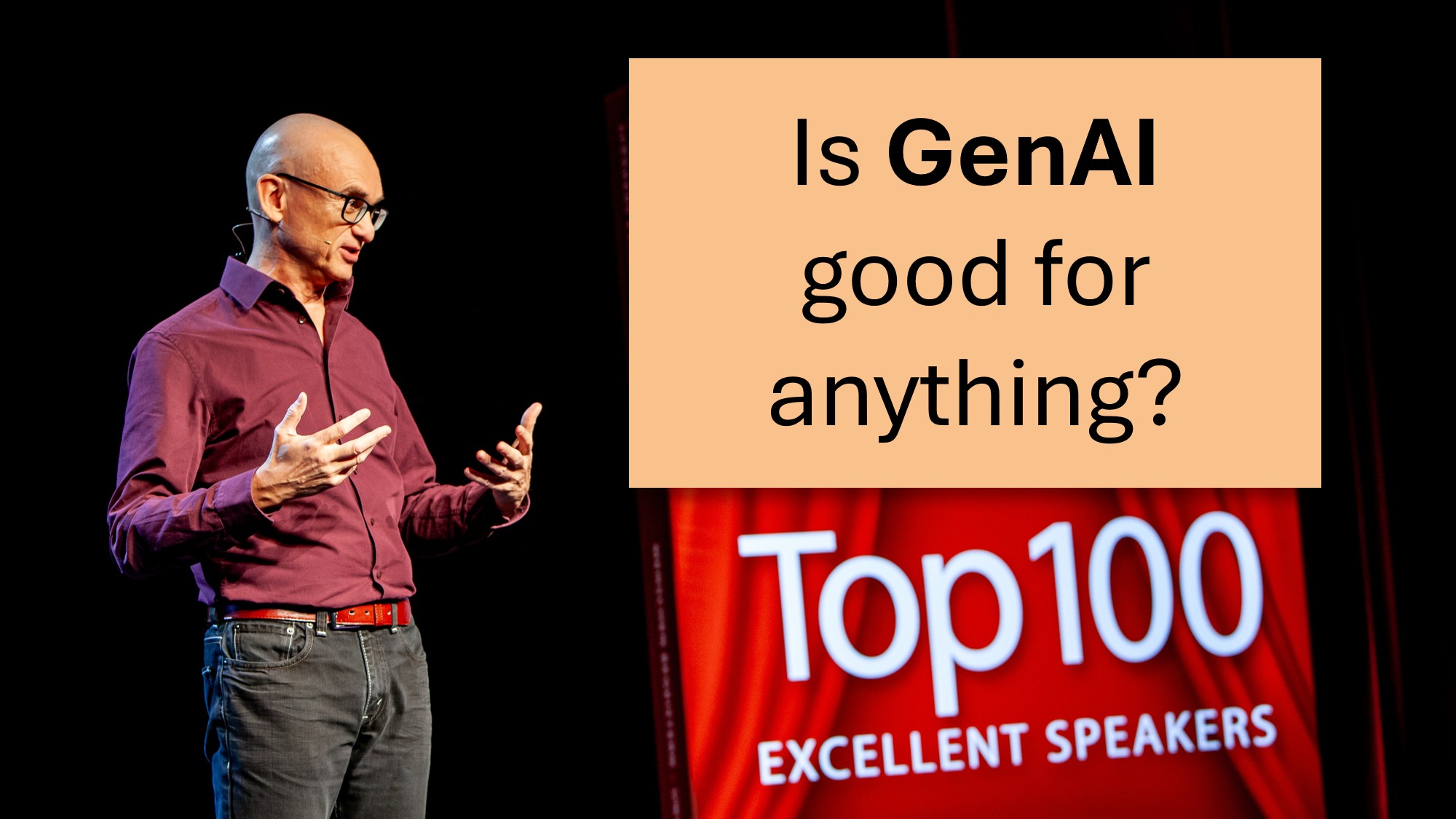 Is GenAI good for anything?
 “I didn’t write an award acceptance speech because I didn’t expect to win.”
 AI Is Exposing the Data Problems Humans Used to Hide
 "The AI may in fact be conscious." Really?