
Mar27
FCRQ191 Leadership Learning!
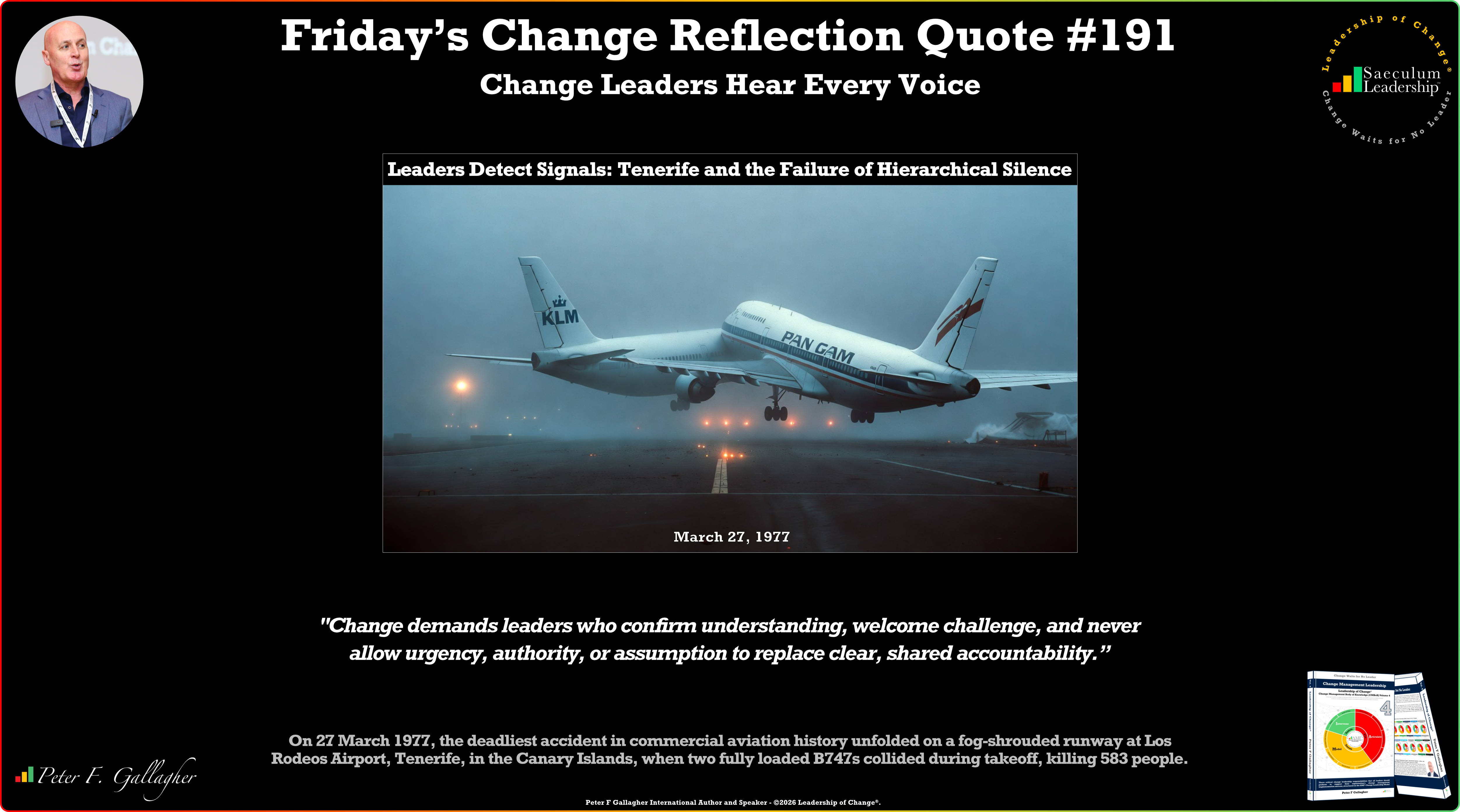
On 27 March 1977, the deadliest accident in commercial aviation history unfolded on a fog-shrouded runway at Los Rodeos Airport, Tenerife, in the Canary Islands. Two fully loaded Boeing 747 jumbo jets, KLM Flight 4805 and Pan Am Flight 1736, collided during takeoff, killing 583 people and injuring a further 61. It remains, to this day, the single most catastrophic event in civilian aviation history. Neither aircraft was scheduled to be at Tenerife that afternoon. Both had been diverted from their intended destination, Gran Canaria Airport, following a terrorist bomb explosion in its terminal earlier that morning, planted by the Canary Islands Independence Movement. The diversion sent numerous large aircraft to Los Rodeos, a small, single-runway airport situated at over 2,000 feet above sea level, an elevation that made it notoriously susceptible to sudden and dense fog. The airport was not equipped to safely accommodate such a volume of wide-bodied jets, lacked ground radar, had inadequate taxiway signage and offered virtually no margin for error. KLM Flight 4805 had departed Amsterdam carrying 234 passengers and 14 crew members. Its captain, Jacob Veldhuyzen van Zanten, was one of KLM's most experienced and celebrated aviators, widely regarded as a master of the Boeing 747 and the airline’s chief flight instructor. Pan Am Flight 1736, commanded by Captain Victor Grubbs, had originated in Los Angeles and carried 380 passengers and 16 crew, predominantly American retirees embarking on a Mediterranean cruise. The sequence of events that led to the collision involved a chain of compounding factors rather than a single catastrophic failure. Dense fog had reduced runway visibility to below 100 metres. The overcrowded airport required aircraft to use the active runway as a taxiway. Time pressure was bearing heavily on the KLM crew, as newly introduced Dutch duty time regulations meant that a further delay could ground the entire crew and strand hundreds of passengers. Captain van Zanten made the decision to refuel at Tenerife, adding 35 minutes to the delay and significantly increasing the aircraft's takeoff weight. When clearance to proceed finally arrived, a fatal combination of non-standard radio phraseology, simultaneous transmissions that created a masking interference squeal in the KLM cockpit, poor runway markings and dense fog conspired to place both aircraft on the same stretch of tarmac, simultaneously, in near-zero visibility. The KLM aircraft was travelling at approximately 260 kilometres per hour when it struck the upper fuselage of the Pan Am jet. Both aircraft were engulfed in catastrophic fires. All 248 people aboard the KLM aircraft perished instantly. Of the Pan Am's 396 occupants, 335 died. Just 61 people survived, all from the front section of the Pan Am aircraft. In the years that followed, the disaster prompted sweeping reforms across global aviation. Standardised radio phraseology was mandated by the International Civil Aviation Organisation. The word "takeoff" was formally restricted in air traffic control communications to the moment of actual clearance only. Crew Resource Management training was developed and implemented internationally, fundamentally reshaping how authority, communication and decision-making operate within flight crews. Scenario-based emergency training became a cornerstone of pilot development worldwide. The Tenerife disaster endures not merely as an aviation tragedy but as one of the most studied case studies in human factors, organisational behaviour and safety systems design in the world. It stands as a profound and sobering demonstration of how systemic pressures, hierarchical cultures, communication failures and time-driven decision-making can converge with devastating consequences. Its legacy is measured not only in the reforms it generated but in the lives those reforms have since saved. The Tenerife disaster represents a classic Saeculum Leadership™ late‑cycle systemic failure, where institutional norms, hierarchical habits and operational urgency converged to expose structural weaknesses that had silently accumulated over decades. Its aftermath — the global redesign of aviation communication, authority gradients and safety doctrine — stands as a defining Signal, a Knowledge Architecture inflection point in which a single crisis reshaped the operating logic of an entire industry for generations.
Change Leadership Lessons: The Tenerife disaster exposes how failure emerges when leadership, communication and system design fall out of alignment. It underlines that silence is the most dangerous passenger on any journey of change. Leaders of change must build environments where every voice, regardless of rank, can raise concern without fear. They must recognise when institutional urgency is distorting judgement and slow the process to verify before proceeding. Change leaders must confirm shared understanding at every critical step, never assuming clarity exists simply because it has not been challenged. They must ensure that hierarchy enables accountability rather than silencing the cautious voices that complexity and risk most require. Leaders of change who honestly examine failure and redesign their systems in response build the most resilient and enduring organisations. Change Leaders Hear Every Voice.
“Change demands leaders who confirm understanding, welcome challenge, and never allow urgency, authority, or assumption to replace clear, shared accountability.”
Application - Change Leadership Responsibility 3 - Intervene to Ensure Sustainable Change: These lessons extend far beyond the runway at Tenerife and define the leadership responsibility to intervene before systemic pressure becomes irreversible failure. Change leaders must identify the precise moments when authority begins to silence rather than serve the people it is responsible for leading. Sustainable change demands the courage to slow decisions down when urgency threatens to override sound judgement and verified understanding. Within organisations, this manifests when leaders allow hierarchical culture to suppress honest challenge, assuming competence and clarity where neither has been confirmed. Unchallenged authority compounds risk by disconnecting leaders from the ground-level reality their decisions directly affect. When positional power crowds out psychological safety, the conditions for catastrophic failure are quietly assembled, long before any visible crisis emerges. Effective leadership intervention requires disciplined self-awareness, a commitment to shared accountability, and the structural willingness to hear the most cautious voice in the room. Leaders of change are responsible for building environments where challenge is welcomed, communication is verified, and no institutional pressure, however real, is permitted to replace clear, deliberate and collectively owned decision-making. This is the standard Tenerife demands of every leader who studies it.
Final Thoughts: The Tenerife disaster demonstrates that organisations willing to confront systemic failure can redefine the safety architecture of entire industries. In an era shaped by artificial intelligence, accelerating digital transformation and complex human technology interdependencies, change leaders must identify communication breakdowns and hierarchical blind spots with far greater precision and discipline. Leadership responsibility now lies in building psychological safety, shared accountability and the courage to intervene before failure becomes irreversible.
Further Reading: Change Management Leadership - Leadership of Change® Volume 4.
Peter F. Gallagher, a 20‑book author, consults, speaks, and writes on Saeculum Leadership™ and Leadership of Change®. He works exclusively with boards, CEOs, and senior leadership teams to prepare and align them to effectively and proactively lead their organisations through transformation in a rapidly evolving epoch.
For further reading please visit our websites: https://www.a2b.consulting https://www.peterfgallagher.com Amazon.com: Peter F Gallagher: Books, Biography, Blog, Audiobooks, Kindle
Leadership of Change® Body of Knowledge Volumes: Change Management Body of Knowledge (CMBoK) Books: Volumes 1-10.A-E & I-5
~ Leadership of Change® Volume 1 - Change Management Fables
~ Leadership of Change® Volume 2 - Change Management Pocket Guide
~ Leadership of Change® Volume 3 - Change Management Handbook
~ Leadership of Change® Volume 4 - Change Management Leadership
~ Leadership of Change® Volume 5 - Change Management Adoption
~ Leadership of Change® Volume 6 - Change Management Behaviour
~ Leadership of Change® Volume 7 - Change Management Sponsorship
~ Leadership of Change® Volume 8 - Change Management Charade
~ Leadership of Change® Volume 9 - Change Management Insanity
~ Leadership of Change® Volume 10 - Change Management Dilenttante
~ Leadership of Change® Volume A - Change Management Gamification - Leadership
~ Leadership of Change® Volume B - Change Management Gamification - Adoption
Keywords: Leadership, Change Management, Business Strategy
 FROM THE AISLE Field Notes on AI Implementation
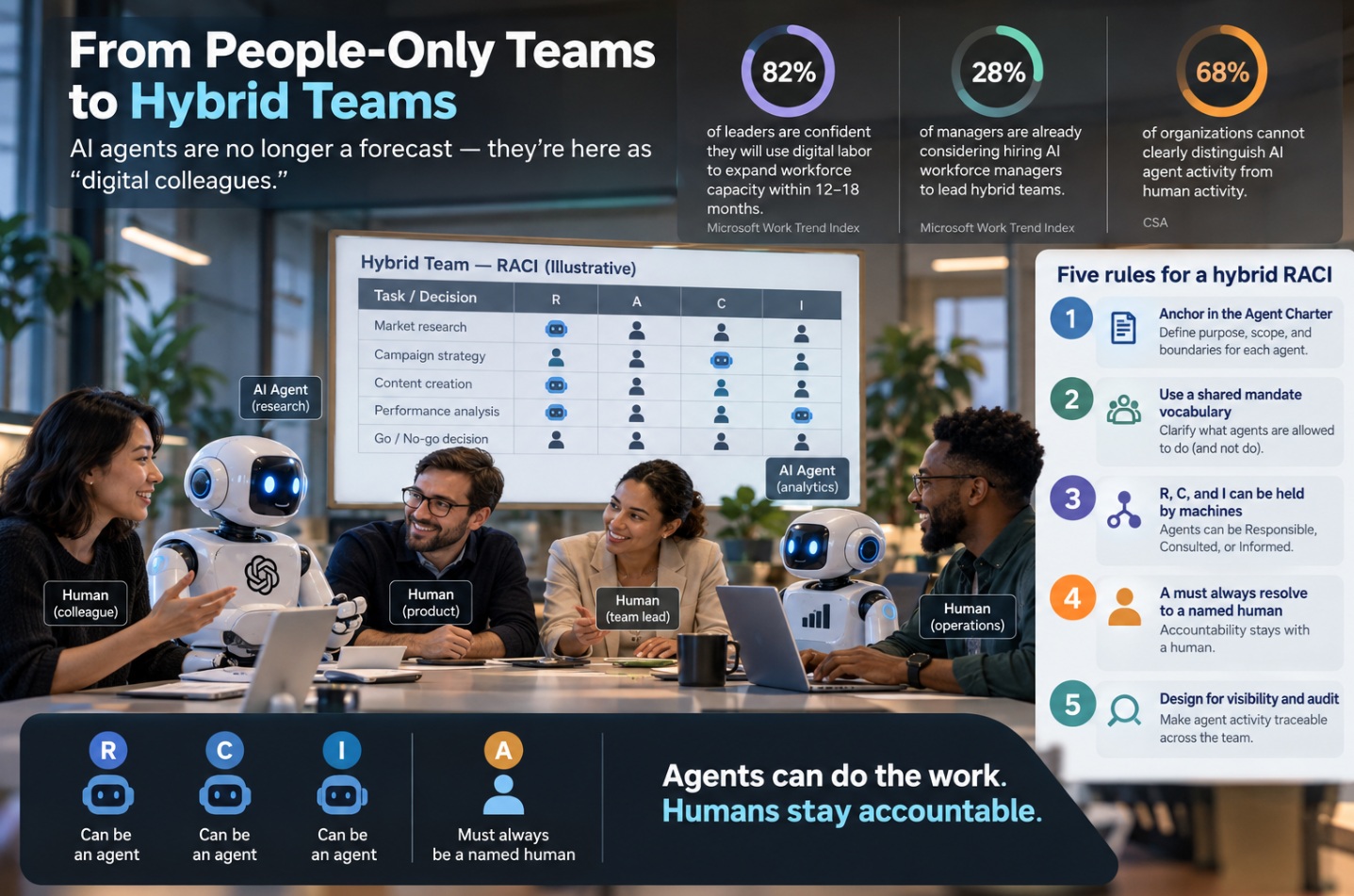 The Hybrid Team: Rethinking RACI When Some of Your Team Members Are Machines
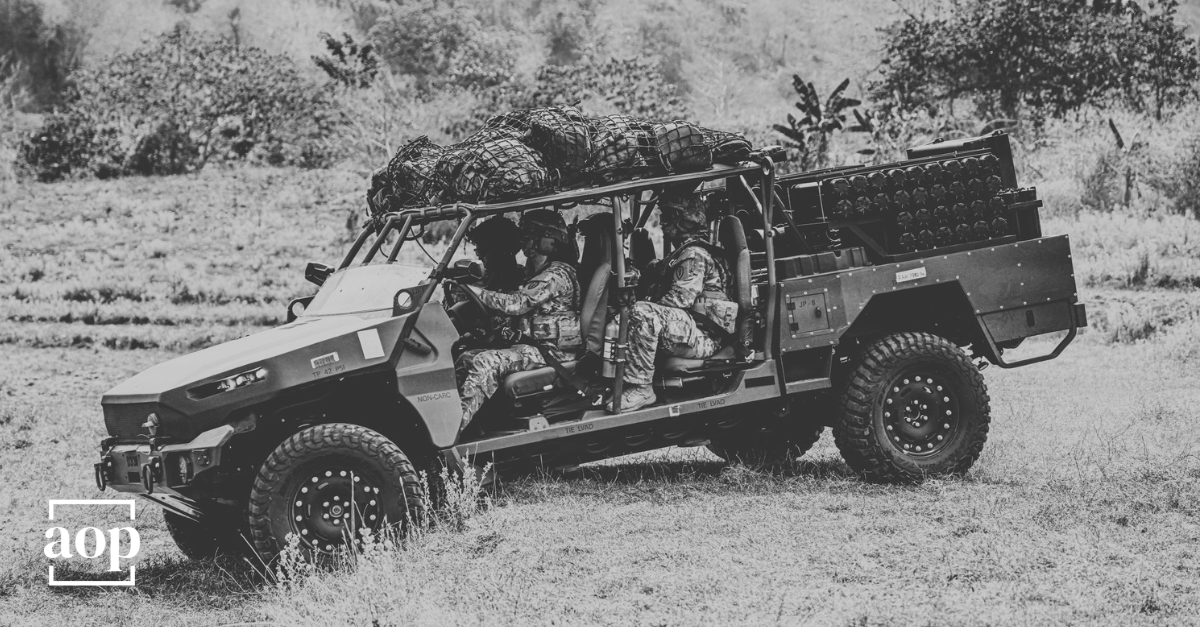 Two Clocks, One Truck: The Army's Need for Speed Meets New Defense Sourcing Rules
 Sustainable Transformation: The Elephant and The Mouse In The Room
 The Price of Standing Alone: Strategic Autonomy in a World Where Nobody Can Do It Alone