Jan15

Government today stands at a defining crossroads.
Across the U.S. and around the world, public institutions are being asked to do more—often with fewer resources, rising expectations, and growing complexity. Governments must respond to crises while preparing for long-term risks; modernize legacy systems while maintaining continuity of service; and rebuild public trust while delivering tangible, measurable results.
These pressures are not theoretical. They are being felt daily by government leaders responsible for cybersecurity and infrastructure resilience, benefits delivery and emergency response, workforce modernization, financial stewardship, and digital transformation. No single reform, technology, or organizational change is sufficient on its own.
That is why the IBM Center for The Business of Government is releasing a new Special Report, Five Pillars of Effective Government, I co-authored with my colleagues Daniel Chenok and Margaret Graves
This report does not argue for one “silver bullet” solution.
Instead, it offers a practical, integrated framework—rooted in more than two decades of research and real-world experience—designed to help government leaders strengthen institutional capacity, improve performance, and deliver public value in a rapidly changing environment.
Recent years have revealed both the extraordinary potential of government and its persistent vulnerabilities.
The COVID-19 pandemic demonstrated how quickly government can mobilize innovation—accelerating vaccine development, expanding telework, and deploying emergency assistance at unprecedented scale. At the same time, it exposed deep structural weaknesses: fragmented coordination, outdated systems, workforce constraints, and gaps in data and accountability.
Layered onto this experience are longer-term pressures: geopolitical instability, technological disruption, fiscal constraints, and historically low levels of public trust. Citizens increasingly expect government services to be fast, seamless, and responsive—comparable to the best digital experiences in the private sector.
The central insight of the Five Pillars framework is this:
effective government is not the product of isolated reforms. It emerges when multiple, interdependent capabilities are strengthened together, guided by strategic intent and evidence-based practice.
The report identifies five core pillars where focused leadership and investment can have the greatest impact:
Individually, each pillar addresses a foundational dimension of good governance. Together, they form a coherent framework for delivering results, building resilience, and earning public trust.
Pillar 1: Partnerships Are Now Essential, Not Optional. The complexity of modern public problems means that no agency—and no sector—can succeed alone.
Whether responding to natural disasters, strengthening supply chains, modernizing digital services, or advancing public health, effective solutions increasingly depend on collaboration across agencies, across levels of government, and across sectors.
The report highlights how well-designed partnerships can:
Critically, partnerships succeed not through contracts alone, but through trust, shared data, mutual accountability, and clear governance structures. When those conditions are present, collaboration becomes a force multiplier for public value.
Sound stewardship of public resources is fundamental to government legitimacy.
Yet agencies face growing fiscal pressures, aging systems, rising fraud risks, and administrative complexity. Improving financial and operational effectiveness is not simply about cost-cutting—it is about designing operations that deliver value, resilience, and accountability.
The report outlines practical strategies to:
When government operates effectively and transparently, it reinforces public confidence that resources are being used wisely—and that institutions are capable of learning and improving.
Technology is transforming how government works—but technology alone does not deliver results.
From artificial intelligence and cloud computing to digital identity and automation, emerging tools offer extraordinary opportunities to improve service delivery, cybersecurity, and operational efficiency. At the same time, poorly implemented technology can exacerbate vulnerabilities, compromise infrastructure, frustrate users, and undermine trust.
This pillar emphasizes a clear principle: technology succeeds only when it is human-centered, mission-driven, and innovatively deployed.
The report shows how technology can:
Effective leaders pair technological innovation with organizational change, workforce readiness, and governance frameworks that keep people at the center.
In an era of complexity, data has become the currency of good decision-making.
Government generates vast amounts of information, but value emerges only when data is governed well, shared responsibly, and used intentionally to drive outcomes.
This pillar demonstrates how data can:
Data-driven government is not about dashboards for their own sake. It is about equipping leaders with insight—so they can make better choices, faster, and with greater confidence.
Every public service ultimately depends on people.
Yet government faces a workforce inflection point: rising retirements, skills gaps, slow hiring processes, and the disruptive effects of sustained crises. Strengthening the government workforce is not a peripheral issue, it is central to effective governance.
The report outlines a forward-looking agenda to:
Technology and data can amplify human potential—but only if the workforce is empowered, supported, and trusted to lead change.
A defining insight of the Five Pillars framework is that these capabilities are deeply interconnected.
Technology investments fail without skilled people. Data cannot drive decisions without aligned incentives. Partnerships falter without shared governance and accountability. Operational reforms stall without leadership and workforce engagement.
When pursued together, the five pillars help government become:
This integration is what transforms isolated reforms into sustainable performance.
The challenges facing government are real—and growing. But so are the opportunities.
The Five Pillars of Effective Government offers a hopeful message grounded in evidence and practice: with the right strategies, investments, and leadership, government can deliver exceptional value to the public.
This report is intended to be used:
Effective government does not happen by accident. It is built—intentionally, collaboratively, and continuously.
We invite public leaders, practitioners, and partners to engage with the framework, apply its insights, and join a broader conversation about how we strengthen the capacity of government to serve—today and in the years ahead.
Keywords: GovTech
 You are not your diagnosis
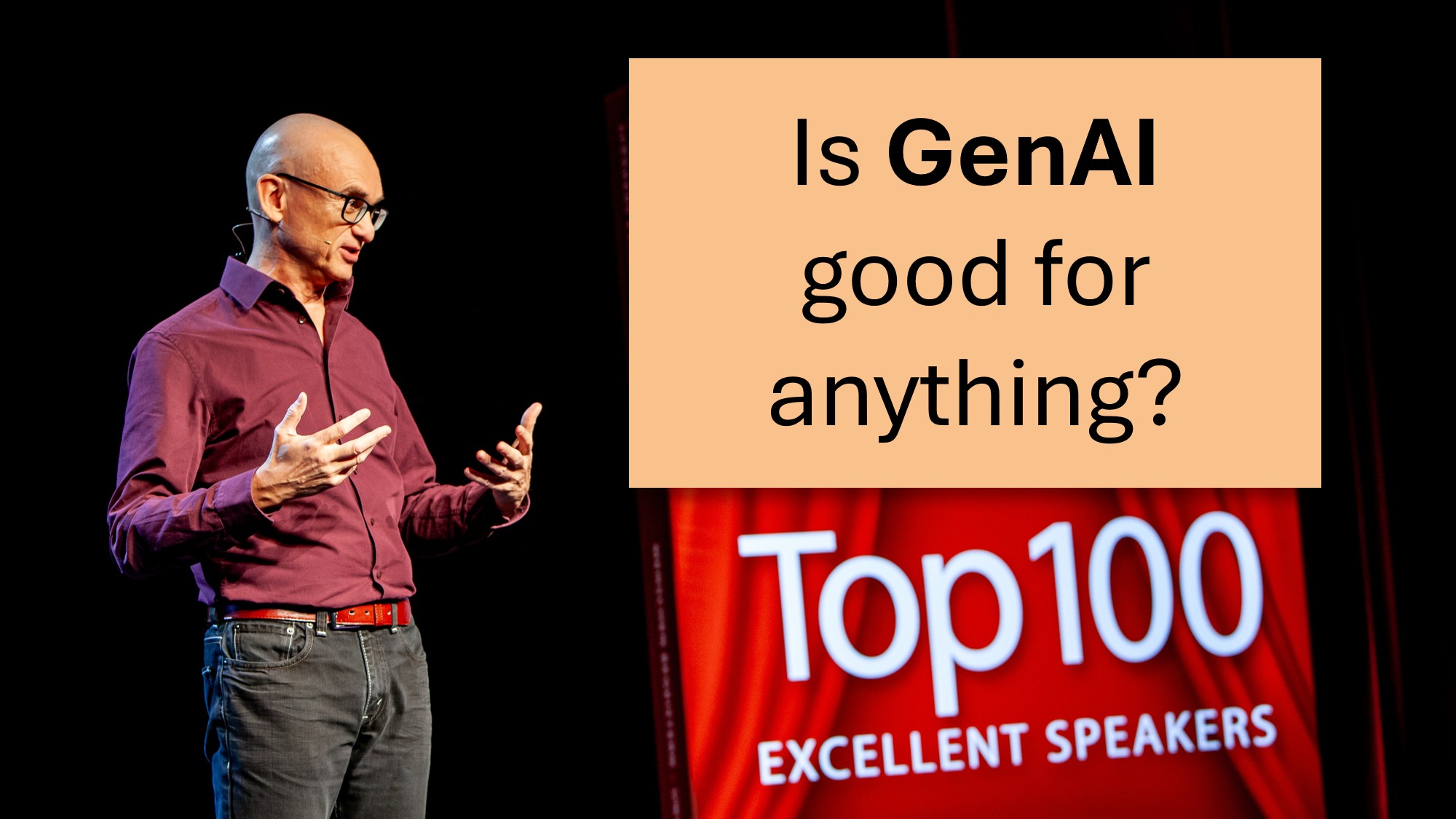 Is GenAI good for anything?
 “I didn’t write an award acceptance speech because I didn’t expect to win.”
 AI Is Exposing the Data Problems Humans Used to Hide
 "The AI may in fact be conscious." Really?