Thinkers360
Interested in getting your own thought leader profile? Get Started Today.

Michael J Keegan

Leadership Fellow and Host, The Business of Government Hour at IBM Center for The Business of Government

Washington D.C. Metro Area, United States

Leadership Fellow at The IBM Center for The Business of Government & Host, Business of Government Hour

Available For: Speaking
Travels From: Washington, District of Columbia, United States

Michael J Keegan Points
Academic 0
Author 1100
Influencer 13
Speaker 0
Entrepreneur 0
Total 1113

Points based upon Thinkers360 patent-pending algorithm.

Thought Leader Profile

Portfolio Mix

Company Information

Company Type: Company
Minimum Project Size: N/A
Average Hourly Rate: N/A
Number of Employees: 1-10
Company Founded Date: 1998
Media Experience: 15 years

Areas of Expertise

Agile 30.63
AI 30.54
Analytics 31.02
Big Data 30.09
Blockchain 30.05
Change Management
Coaching 30.24
COVID19 30.27
Creativity 31.30
Cryptocurrency 30.13
Culture 30.17
Cybersecurity
Design Thinking 30.36
Digital Transformation 30.05
Digital Twins 32.71
Emerging Technology 30.09
FinTech 30.04
Future of Work 30.06
GovTech 100
Health and Safety 30.78
Healthcare 41.47
HealthTech 30.02
Innovation 36.22
International Relations 30.34
IT Leadership 31.46
IT Operations 31.69
IT Strategy 43.82
Leadership 32.68
Management 30.68
National Security 32.44
Procurement 30.13
Risk Management 30.15
Security 30.79
Supply Chain 30.58

Industry Experience

Federal & Public Sector
Healthcare
Insurance
Media

Publications & Experience

210 Article/Blogs
Advancing Multi-Sector Partnerships: Improving Outcomes and Productivity
IBM
February 12, 2026
Pillar 1: Partnerships Are Now Essential, Not Optional No single organization can solve the hardest problems alone Whether delivering vaccines, planning for climate risks, strengthening supply chains, or modernizing digital services, success increasingly depends on partnerships—across agencies, across levels of government, and across sectors.

This is the first blog in a series highlighting key insights from the IBM Center's Special Report, Five Pillars of Effective Government.

See publication

Tags: GovTech, Innovation, Leadership

Weekly Roundup: February 2-6, 2026
Business Of Government
February 06, 2026
Air Force Adopts GenAI.mil Platform. The Department of the Air Force formally adopted the Pentagon's GenAI.mil as the enterprise generative AI platform for the U.S. Air Force and U.S. Space Force.

See publication

Tags: GovTech, Innovation, Leadership

Weekly Roundup: January 19-23, 2026
Business Of Government
January 23, 2026
GSA issued an RFI seeking feedback on how to improve federal IT procurement through value-added resellers (VARs). The agency's initial analysis indicated significant variance in value-added services and markup percentages. GSA wants to confirm that markups applied to OEM pricing result in fair and reasonable pricing, with responses due February 9.

See publication

Tags: GovTech, Innovation, Leadership

Weekly Roundup: January 12-16, 2026
Business Of Government
January 16, 2026
Defense Department explores data mesh architecture to meet 2027 zero trust deadline. Data mesh overcomes silos by providing unified distributed layer that simplifies and standardizes data operations. The approach addresses challenges of ingesting data from disparate sources while maintaining security across interconnected cloud, edge, and hybrid architectures.

See publication

Tags: GovTech, Innovation, Leadership

Beyond the Crisis: Leadership Lessons from Dave Lebryk
Businessof Government
December 12, 2025
I recently welcomed Dave back to The Business of Government Hour where he reflected on the lessons learned, the challenges overcome, and the principles that guided his success in transforming how government delivers financial services to the American people.

See publication

Tags: GovTech, Innovation, Leadership

Weekly Roundup: November 10-14, 2025
Business Of Government
November 14, 2025
The longest government shutdown in U.S. history officially ended this week after 43 days, but experts warn that it could take months or even years for the federal enterprise to fully recover from the disruption, including challenges such as back-logged invoices, rescinded stop work orders, and delayed payments throughout the supply chain—with some people like unpaid federal workers immediately and directly affected, while others including recipients of federal funding through programs like Head Start and SNAP food aid experienced cascading effects as the shutdown progressed.

See publication

Tags: GovTech, Innovation, Leadership

Understanding Government's Digital Foundation: New Report Explores Identity and Access Management for the Public Sector
Business of Government
November 12, 2025
The IBM Center for The Business of Government announces the publication of a groundbreaking new research report that addresses one of the most critical challenges facing government agencies today: Government's Digital DNA: Identity and Access Management for Public Sector Security by Dr. Andrew B. Whitford, Crenshaw Professor of Public Policy at the University of Georgia.

See publication

Tags: GovTech, Innovation, Leadership

The Questioning Leader: Rethinking How We Learn, Listen, and Lead
Business of Government
October 28, 2025
In Question to Learn, Joe Lalley invites leaders to rediscover an often-overlooked skill—asking questions not to prove what they know, but to explore what they don’t. In my recent conversation on The Business of Government Hour, Lalley lays out how leaders can reclaim curiosity as a catalyst for learning, empathy, and innovation

See publication

Tags: GovTech, Innovation, Leadership

Leading Through Disruption: Scott D. Anthony on the Mindset, Mechanics, and Meaning of Transformative Innovation
Business of Government
October 16, 2025
Too often, leaders—especially in government—view disruption as a threat to stability. But as Anthony reminds us, when understood correctly, disruption is a force for democratization. It expands access, accelerates progress, and rewards those who lead with curiosity, patience, and courage.

See publication

Tags: GovTech, Innovation, Leadership

Weekly Round Up: September 29-October 3, 2025
Business of Government
October 03, 2025
The State Department says it will equip its diplomats with artificial intelligence (AI) capabilities and improve its data infrastructure under its newly released 2026 AI plan. “The Department of State recognizes the profound opportunity to harness data and AI to redefine diplomacy,” said Deputy Secretary of State for Management and Resources Michael Rigas. “With the launch of our combined Enterprise Data and AI Strategy, we are poised to unlock a new era of diplomatic innovation.”

See publication

Tags: GovTech, Innovation, Leadership

New Research Report: How Governments Can Build More Resilient, Future-Ready Institutions
Business of Government
September 29, 2025
In an era of accelerating change and unprecedented complexity, governments worldwide face a critical challenge: governing not just for today, but for tomorrow. Reactive governance is no longer sufficient. Public leaders must anticipate, prepare, and adapt to emerging realities with unprecedented speed and sophistication.

See publication

Tags: GovTech, Innovation, Leadership

Weekly Round Up: September 22-26, 2025
Business of Government
September 26, 2025
Don’t remember the U.S. Customs and Border Protection (CBP) meta-human announcement from a few months back? No problem – new details have just been released, and a top CBP official has hinted that the meta-human may be deployed soon.

See publication

Tags: GovTech, Innovation, Leadership

Weekly Round Up: September 1-5, 2025
Business of Government
September 05, 2025
The National Institutes of Health (NIH) is gearing up to launch artificial intelligence programs to integrate technology into medical imaging and other use cases, said Chris Kinsinger, assistant director for catalytic data resources at the NIH Common Fund. “It’s called PRIMED-AI, which is precision medicine with AI with a focus on imaging,” said Kisinger.

See publication

Tags: GovTech, Innovation, Leadership

New Report - GenAI and the Future of Government Work
Business of Government
September 04, 2025
Today, we're excited to announce the publication of GenAI and the Future of Government Work by Professor William G. Resh from the Andrew Young School of Policy Studies at Georgia State University, alongside a host of contributors. This timely report offers federal leaders a roadmap for navigating the AI revolution while keeping human talent at the center of public service.

See publication

Tags: GovTech, Innovation, Leadership

Designing Teams for Success: Leadership Insights from "The Collective Edge"
Business of Government
September 03, 2025
This essay explores key leadership lessons from my conversation with Prof Colin Fisher and his recent book, The Collective Edge: Unlocking the Secret Power of Groups. These lessons underscore that high-performing groups are not accidental but the result of deliberate structure, timing, and psychological safety, offering actionable guidance for leaders in any sector.

See publication

Tags: GovTech, Innovation, Leadership

The Science of Leadership: Nine Capacities to Navigate Complexity and Drive Impact
Business of Government
August 20, 2025
In an era of unprecedented challenges—from AI-driven disruptions to economic volatility and bureaucratic inertia—effective leadership demands more than intuition or charisma. It is no longer about hierarchy or control; it is about adaptability, empathy, and the deliberate cultivation of human potential and it requires a rigorous, evidence-based approach grounded in scientific research. This is the core message of The Science of Leadership: Nine Ways to Expand Your Impact,co-authored by Margaret Moore and Dr. Jeff Hull.

See publication

Tags: GovTech, Innovation, Leadership

Weekly Round Up: August 4-8, 2025
Business of Government
August 08, 2025
Federal CIO Says Digitized Isn’t Modernized. Greg Barbaccia, federal chief information officer (CIO) gave rare commentary on the direction he wants to see the federal government take in modernizing its processes and functions – marking one of his most public statements yet.

See publication

Tags: GovTech, Innovation, Leadership

Seamless Care, Unified Vision: A Journey to a Single, Common Federal Electronic Health Record
Business of Government
August 06, 2025
This essay highlights insights from my conversation with Bill Tinston, Director of the Federal Electronic Health Record Modernization Office (FEHRM), revealing critical insights into the mission, challenges, and strategies of the FEHRM, offering valuable lessons for leaders navigating complex, large-scale transformations in government or any enterprise setting.

See publication

Tags: GovTech, Innovation, Leadership

Weekly Round Up: July 28-August 1, 2025
Business of Government
August 01, 2025
U.S. and British soldiers teamed up this week to test systems designed to counter battlefield drone threats, putting into action Defense Secretary’s directive to accelerate drone integration and training across the military.

See publication

Tags: GovTech, Innovation, Leadership

Leading NATO’s Digital Transformation: Insights from Manfred Boudreaux-Dehmer, Chief Information Officer
Business of Government
July 29, 2025
In an era where cyber threats loom large and geopolitical tensions demand seamless collaboration, how does the North Atlantic Treaty Organization (NATO) harness technology to safeguard security for member nations of this alliance? As host of The Business of Government Hour, I explored this question and more with Manfred Boudreaux-Dehmer, NATO’s Chief Information Officer. Our discussion delved into the complexities of steering NATO’s information technology (IT) strategy, leveraging emerging technologies, and ensuring a secure and resilient IT infrastructure from enabling multi-domain operations to countering sophisticated cyberattacks. Manfred’s insights, drawn from his unique journey from the private sector to this critical role, illuminated the challenges and opportunities of managing IT in a multinational, mission-driven organization.

See publication

Tags: GovTech, Innovation, Leadership

Weekly Round Up: July 21-25, 2025
Business of Government
July 25, 2025
The Trump administration pledged to bolster the power grid behind its new AI Action Plan, vowing to ease environmental permitting rules, boost existing supply, and accelerate electrical infrastructure development.

See publication

Tags: GovTech, Innovation, Leadership

Weekly Round Up: July 14-18, 2025
Business of Government
July 18, 2025
Congress consider requiring major federal government agencies to develop modernization plans for legacy IT systems that have been identified as among those most in need of overhauling. “Given OMB’s lack of action [since the recommendation is a decade old], Congress requiring federal agencies to develop modernization plans for critical legacy systems can expedite agencies’ efforts.”

See publication

Tags: GovTech, Innovation, Leadership

Transforming Cities Through Technology and Collaboration: A Conversation with Denise Linn Riedl, South Bend’s Chief Innovation Officer
Linkedin
July 11, 2025
As the host of The Business of Government Hour, I recently interviewed Denise Linn Riedl, Chief Innovation Officer for the City of South Bend, Indiana, at CivStart’s State of GovTech 2025. Our conversation explored how technology and innovation are reshaping the relationship between cities and residents, transforming governance, and advancing the govtech ecosystem. In this essay, I outline ten insights from our discussion, highlighting key strategies and themes for leveraging technology to enhance municipal service delivery and resident engagement.

See publication

Tags: GovTech, Innovation, Leadership

Transforming Cities Through Technology and Collaboration: Ten Insights from My Conversation with Denise Linn Riedl, South Bend’s Chief Innovation Officer
Business Of Government
July 10, 2025
As the host of The Business of Government Hour, I recently interviewed Denise Linn Riedl, Chief Innovation Officer for the City of South Bend, Indiana, at CivStart’s State of GovTech 2025. Our conversation explored how technology and innovation are reshaping the relationship between cities and residents, transforming governance, and advancing the govtech ecosystem. In this essay, I present ten insights from our discussion, highlighting key strategies and themes for leveraging technology to enhance municipal service delivery and resident engagement.

See publication

Tags: GovTech, Innovation, Leadership

Enhancing Local Government Service Delivery with Govtech: A Conversation with Amanda Renteria, CEO, Code for America
Business Of Government
July 03, 2025
In this essay, I reflect on the key themes and insights from my conversation with Amanda, exploring how technology informs governance and can shape a better future for local governments and communities.

See publication

Tags: GovTech, Innovation, Leadership

1 Book
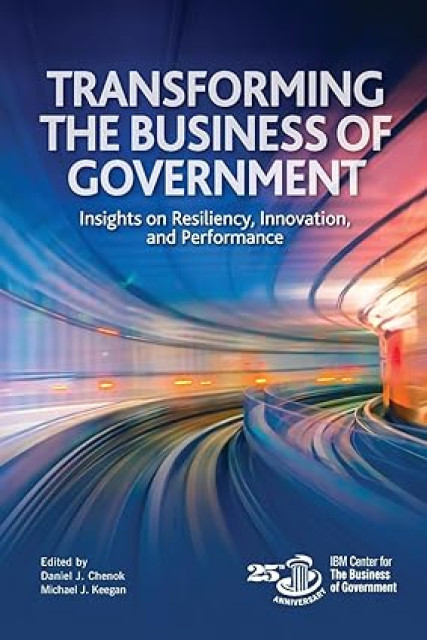
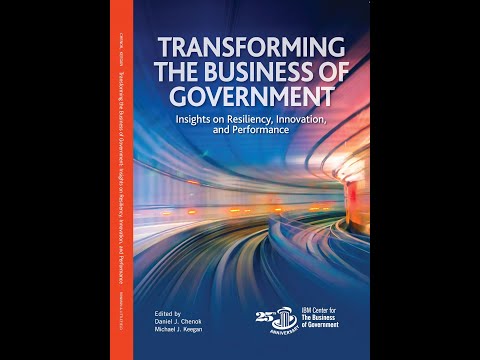
Transforming the Business of Government: Insights on Resiliency, Innovation, and Performance
Rowman & Littlefield Publishers
December 08, 2023
Governments face increasingly serious, seemingly intractable management challenges. This book brings together scholars, thought leaders, and government executives to address the future of government operations, and provide government leaders with practical, actionable insights on how best to manage and lead through uncertain and disruptive times

See publication

Tags: GovTech, Innovation, Leadership

273 Podcasts
Powering NATO's Mission through Technology: A Conversation with Manfred Boudreaux-Dehmer, CIO, NATO
Youtube
August 30, 2025
"The NATO Office of the Chief Information Officer (CIO) is a relatively new entity within NATO. Manfred Boudreaux-Dehmer serves as the first NATO CIO. This office plays a crucial role in modernizing NATO's ICT infrastructure, improving cybersecurity, and fostering a more data-centric approach."

See publication

Tags: GovTech, Innovation, Leadership

Leveraging the 80/20 Rule to Become an Effectively Leader: A Conversation with Bill Canady
Import from wordpress feed
March 31, 2025
How can leaders cut through the noise and focus on the most impactful actions? What tools, frameworks, and insights can help leaders go from panic to profit and find success. What two types of thinking are necessary for building a new path forward? Join host Michael J. Keegan as he explores these qu

See publication

Tags: GovTech

Mastering the Complexities of Strategic Leadership: A Conversation with Dr. John Hillen, author, The Strategy Dialogues
Import from wordpress feed
March 24, 2025
What is strategic thinking? How can leaders cultivate the right strategic mindset and leadership skills to elevate their organization? What can leaders do to reinvent themselves to ensure they grow with the success of their organization? Join host Michael J. Keegan as he explores these questions and

See publication

Tags: GovTech

Conflict Resilience: A Conversation with Robert Bordone and Dr. Joel Salinas M.D
Import from wordpress feed
March 17, 2025
What is conflict resilience? How can we find the skills to grow from disagreement. How can you handle disagreements and differences with integrity while finding a way to create strong, deep, and lasting relationships? Join host Michael Keegan as he explores these questions and more with Robert Bordo

See publication

Tags: GovTech

Transcend: Unlocking Humanity in the Age of AI - A Conversation with Faisal Hoque
Business of Government
March 14, 2025
“…Aristotle was on to something when he taught that wisdom lies in moderation. We will argue in this book that the best path to tread when it comes to AI is one that takes us through the middle ground between extreme visions of the future… The question is no longer whether we should use AI, but how we can use it responsibly and well.”

See publication

Tags: GovTech, Innovation, Leadership

Scaling for Mission Delivery: Exploring Why Some Ideas fail while Others Change the World
Import from wordpress feed
March 10, 2025
How can government leaders scale change and meet their missions? Should policymakers move from evidence-based policy to policy-based evidence? Michael Keegan explores these questions and more in a Special Edition of The Business of Government Hour. Listen to the podcast.

See publication

Tags: GovTech

Transcend: Unlocking Humanity in the Age of AI – A Conversation with Faisal Hoque
Import from wordpress feed
March 03, 2025
There’s no question artificial intelligence (AI) is already reshaping the world as we know it — so how can we properly prepare ourselves for the unprecedented changes that lie ahead? What does it mean to be human in the age of AI? What are the OPEN and CARE frameworks, and how can they be applie

See publication

Tags: GovTech, AI

Transforming the Business of Government: Insights on Resiliency, Innovation, and Performance
Import from wordpress feed
February 24, 2025
How can we find value in the unexpected? What can we do to be more resilient? How can we leverage innovation to improve government performance? Join Michael Keegan on a Special Edition of The Business of Government Hour as he explores these questions and more celebrating the 25th anniversary of the

See publication

Tags: GovTech

Turning the Power of Mindset into Action: Drive Learning & High Performance With a Growth Mindset Culture
Import from wordpress feed
February 17, 2025
What is the performance paradox? What is the difference between learning while doing and learning by doing? How can overcoming the performance paradox make government executives more effective? Join host Michael Keegan as he explores these questions and more with Eduardo Briceno, author of the new b

See publication

Tags: GovTech, Culture

Exploring the Application and Use of Extended Reality: A Conversation with Annie Eaton author of THE EXTENDED REALITY BLUEPRINT
Import from wordpress feed
February 10, 2025
What is Extended Reality? How does it encompass Augmented Reality and Virtual Reality? How is the public sector and government services leveraging AR/VR technology? What does the future hold for Extended Reality? Join host Michael Keegan on a Special Conversation with Authors Edition as he explores

See publication

Tags: GovTech, AR/VR

Leveraging the Upside of Disruption with Terence Mauri
Import from wordpress feed
February 03, 2025
How can leaders better handle this disruption? What skills and mindset do they need? How can we discern the upside to disruption and see it as a strategic advantage? Join host Michael J. Keegan as he explores these questions and more with Terence Mauri, author of THE UPSIDE OF DISRUPTION: THE PATH T

See publication

Tags: GovTech

NAPA Fall Meeting Conversation on Technology and Innovation with Laura Stanton
Import from wordpress feed
January 27, 2025
Join host Michael Keegan for a Special Edition of The Business of Government Hour – The National Academy of Public Administration FALL MEETING SERIES. This is the final conversations exploring the key challenges facing public management today with a focus on technology innovation and procurement s

See publication

Tags: GovTech

NAPA Fall Meeting Conversation on Public Collaboration and East-West Relations with Suzanne Vares-Lum
Import from wordpress feed
January 20, 2025
Join host Michael Keegan for a Special Edition of The Business of Government Hour – The National Academy of Public Administration FALL MEETING SERIES. This is the fourth in a series of conversations exploring the key challenges facing public management today as well as ways to strengthen East-West

See publication

Tags: GovTech

Exploring the Evolution of the Military Health System
Import from wordpress feed
January 13, 2025
How does the military health system (MHS) continue to evolve? How is it leveraging innovation and technology to transform how it delivers care? What does the future hold for the military health system? Join host Michael Keegan as he explores these questions and more on this week’s edition of T

See publication

Tags: GovTech

Fukuyama and DeSeve on Public Service and Agile Strategies – NAPA Fall Meeting Series
Import from wordpress feed
January 06, 2025
Join host Michael Keegan for a Special Edition of The Business of Government Hour – The National Academy of Public Administration FALL MEETING SERIES. This second in a series of conversations exploring the key challenges facing public management today and how an agile mindset is necessary to tackl

See publication

Tags: GovTech, Agile

SPECIAL EDITION OF THE BUSINESS OF GOVERNMENT HOUR – INSIGHTS ON LEADERSHIP, MINDSET, AND THRIVING ON DISRUPTION
Import from wordpress feed
December 30, 2024
How can the U.S. federal government rebuild its digital capabilities and truly transform how government does business? What is the difference between learning while doing and learning by doing? How can government agencies become more adaptive and thrive on disruption. Join host Michael Keegan as he

See publication

Tags: GovTech

DR. JEFF KARP, AUTHOR OF LIT – LIFE IGNITION TOOLS: USE NATURE’S PLAYBOOK TO ENERGIZE YOUR BRAIN, SPARK IDEAS, AND IGNITE ACTION
Import from wordpress feed
December 23, 2024
How can government leaders learn, connect, adapt, and draw energy from their experiences? What role does intention play in being a successful leader? How can Life Ignition Tools help leaders be more effective? Join host Michael Keegan on This Special Edition of The Business of Government Hour –

See publication

Tags: GovTech

STRATEGIES AND INSIGHTS FOR LEADING THROUGH THE UNEXPECTED – THE NAPA FALL MEETING SERIES
Import from wordpress feed
December 16, 2024
Join host Michael Keegan for a Special Edition of The Business of Government Hour – The National Academy of Public Administration FALL MEETING SERIES. This first in a series of conversations focuses on leading through the unexpected and unanticipated. Michael welcomes NAPA Fellow Chris Mihm to dis

See publication

Tags: GovTech

LEADING THE NATIONAL ACADEMY OF PUBLIC ADMINISTRATION: A CONVERSATION WITH TERRY GERTON, PRESIDENT & CEO, NAPA
Import from wordpress feed
December 09, 2024
What is the mission of the National Academy of Public Administration? How does it help government address the most pressing public management challenges facing us today? What does the future hold for the future hold for the National Academy of Public Administration? Join host Michael Keegan as he ex

See publication

Tags: GovTech

DISRUPT WITH IMPACT: ACHIEVING SUCCESS IN AN UNPREDICTABLE WORLD
Import from wordpress feed
December 02, 2024
Listen to the podcast.

See publication

Tags: GovTech

SECURING AMERICA’S FUTURE: A CONVERSATION WITH DAVE WALKER, AUTHOR OF AMERICA IN 2040: STILL A SUPERPOWER? A PATHWAY TO SUCCESS.
Import from wordpress feed
November 25, 2024
Will the United States remain a Superpower in 2040? What are the most significant challenges facing the U.S.? What key reforms are necessary to secure a better future for this country? Join host Michael Keegan as he explores these questions and more with Dave Walker, former Comptroller General of th

See publication

Tags: GovTech

EXPERTS IN GOVERNMENT: A CONVERSATION WITH PROF. DON KETTL
Import from wordpress feed
November 18, 2024
How do we balance the age-old battles between expertise and accountability in government? What is the role of experts in governance? Why have the challenges of bureaucratic capacity and control become far greater in the twenty-first century? Join host Michael Keegan as he explores these questions an

See publication

Tags: GovTech

LEADING THE DEFENSE HEALTH AGENCY: A CONVERSATION WITH LT. GENERAL TELITA CROSLAND, M.D., DIRECTOR, DHA
Import from wordpress feed
November 11, 2024
Listen to the podcast.

See publication

Tags: GovTech

TRANSFORMATIVE POTENTIAL OF DIGITAL DATA: A CONVERSATION WITH PROF. CRISTINA ALAIMO, CO-AUTHOR, DATA RULES: REINVENTING THE MARKET ECONOMY
Import from wordpress feed
November 04, 2024
How is data transforming how today’s organizations operate? What are the most critical components of effective data governance? What emerging technologies or trends should public sector leaders anticipate in a data-driven landscape? Join host Michael J. Keegan as he explores these questions and mo

See publication

Tags: GovTech

EXPLORING THE IT STRATEGY AT THE U.S. AIR FORCE RESEARCH LABORATORY: A CONVERSATION WITH ALEXIS BONNELL, CIO & DIRECTOR DIGITAL CAPABILITIES DIRECTORATE, AFRL
Import from wordpress feed
October 28, 2024
What is the IT strategy for the U.S. Air Force Research Laboratory? How is the U.S. Air Force Research Lab leveraging emerging technology to transform how it does IT? What data-driven approaches are being use to improve decision-making across technical, business, and operational domains? Join host M

See publication

Tags: GovTech, IT Strategy

1 Video
Transforming the Business of Government: Insights on Resiliency, Innovation, & Performance NEW BOOK
IBM Center for the Business of Government
December 07, 2023
"If the 21st century has provided any lessons so far, it is the power of the unexpected. What has been starkly revealed is how systems in place to meet anticipated problems failed when the unanticipated happened. Given this new reality, now more than ever government leaders need practical, actionable insights on how best to manage and lead through uncertain and disruptive periods.That’s why the IBM Center has published, Transforming the Business of Government: Insights on Resiliency, Innovation, and Performance."

See publication

Tags: GovTech, Innovation, Leadership

Thinkers360 Credentials

27 Badges

Radar

Blog

7 Article/Blogs
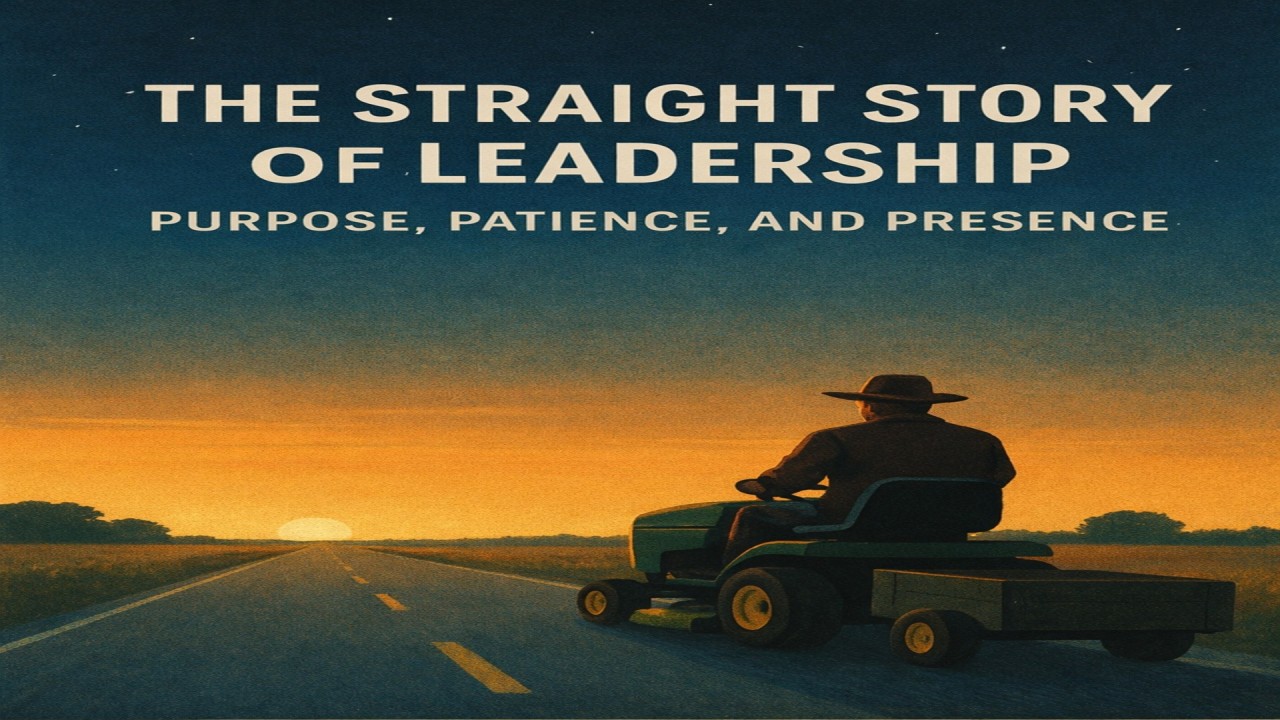
The Straight Story of Leadership: Purpose, Patience, and Presence
Thinkers360
February 12, 2026

In an era where leadership is often measured by the speed of decisions, the volume of communications, and the velocity of results, David Lynch's 1999 film The Straight Story offers a profound counternarrative. The film presents an extraordinary tale of human perseverance, drawn from the real-life odyssey of Alvin Straight, a 73-year-old World War II veteran who embarked on a 240-mile journey from Laurens, Iowa, to Mount Zion, Wisconsin, aboard a 1966 John Deere riding lawn mower, traveling at a painstaking 5 miles per hour.

Portrayed with quiet gravitas by Richard Farnsworth, Alvin rejects conventional solutions to reach his estranged brother Lyle, who had suffered a stroke. Deprived of a driver's license due to failing eyesight and mobility issues, he refuses rides or assistance from others, instead choosing a path that embodies self-reliance and determination. Through Alvin's deliberate, methodical pilgrimage,

we discover leadership lessons that challenge our contemporary obsession with pace and efficiency, revealing that the most transformative leadership often happens not in boardrooms or corner offices, but in the quiet moments of human connection along life's unhurried roads.

The Courage of Slow Decisions

Alvin Straight's decision to traverse two states on a machine capable of only five miles per hour represents perhaps the most counterintuitive leadership principle of our time: the courage to move slowly when the stakes are highest. When Alvin learns of his brother Lyle's stroke, he doesn't rush to catch the first available flight or borrow a car. Instead, he makes a decision that appears irrational to everyone around him, including his concerned daughter Rose, yet demonstrates profound leadership wisdom.

Effective leaders understand that not every situation requires immediate action. Alvin's methodical approach to his journey mirrors the kind of deliberate decision-making that creates lasting change rather than quick fixes. His choice to travel by lawn mower isn't stubbornness; it's a recognition that some journeys require us to experience every mile, to process every emotion, and to prepare ourselves properly for what lies ahead. The physical slowness of his travel allows for the emotional and spiritual preparation necessary for genuine reconciliation.

This principle translates directly to organizational leadership. In our hyperconnected world, leaders are pressured to respond instantly to every crisis, every market shift, every stakeholder concern. Yet Alvin's journey reminds us that some decisions, particularly those involving relationships, values, and long-term strategy, benefit from the kind of careful consideration that can only happen at a human pace. The lawn mower becomes a metaphor for intentional leadership: choosing the right speed for the journey rather than the fastest possible speed.

Leading Through Vulnerability

Throughout his odyssey, Alvin encounters numerous people who are initially puzzled by his unusual mode of transportation and his mission. Rather than defending his choices with bravado or authority, Alvin leads through vulnerability and the wisdom of lived experience. He openly shares his limitations, his failing eyesight, his mobility issues, his decades-long estrangement from his brother. His openness doesn't diminish his leadership; it amplifies it.

When Alvin meets the pregnant teenage runaway, he doesn't lecture her or attempt to impose his authority as an elder. Instead, he shares his own story of family conflict and reconciliation.

His leadership in this moment comes not from his position or age, but from his willingness to be genuinely human in the presence of another person's pain.

He creates space for her to process her own situation by modeling how to think through complex family dynamics with both honesty and hope.

This represents a fundamental shift in how we understand leadership authority. Traditional models emphasize the leader's strength, competence, and certainty, which are all valid and important.

Alvin demonstrates that true influence often comes from acknowledging our limitations and uncertainties while still moving forward with purpose.

His honesty makes it possible for others to do the same, establishing the authentic connections that make real influence possible.

Modern leaders can learn from Alvin's approach when facing team conflicts, organizational changes, or strategic uncertainties. By acknowledging what they don't know while remaining committed to the mission, leaders create environments where innovation and authentic collaboration become possible. Vulnerability, when paired with determination, becomes a source of strength rather than weakness.

The Bundle of Sticks Philosophy

Perhaps the most memorable leadership metaphor in the film emerges from Alvin's conversation with the pregnant runaway about the nature of family bonds. He tells her the story of his father teaching him about the strength found in unity: a single stick breaks easily, but a bundle of sticks bound together becomes nearly unbreakable. This simple metaphor contains profound implications for organizational leadership and team building.

Alvin's bundle of sticks philosophy goes beyond mere teamwork platitudes. It recognizes that individual strengths become exponentially more powerful when properly aligned and mutually supportive.

But the metaphor also acknowledges something many leadership theories miss: even broken sticks can contribute to the bundle's strength when they're bound together with others.

This insight speaks to inclusive leadership that finds ways to leverage every team member's unique contribution.

The metaphor also highlights the importance of the binding element—the shared values, common purpose, and mutual commitment that hold the bundle together. Without this binding force, even strong individual sticks remain vulnerable. Leaders must constantly tend to the relationships, communication patterns, and shared understanding that create organizational coherence. Like Alvin's patient approach to his own family reconciliation, building these bonds requires time, attention, and genuine care.

In practice, this means leaders must resist the temptation to focus solely on star performers or to write off struggling team members. Instead, they must develop the skill of seeing how different strengths can complement each other, how apparent weaknesses can become sources of resilience, and how the collective capability of a well-bound team exceeds the sum of its individual parts.

Leading Across Generations and Differences

Alvin's journey brings him into contact with people from vastly different backgrounds, ages, and life circumstances. His interactions reveal a leadership approach that transcends demographic boundaries through genuine curiosity and respect for others' experiences. When he encounters the group of bicycle racers whose expensive equipment contrasts sharply with his modest lawn mower, he doesn't focus on their different approach to travel. Instead, he engages with them as fellow travelers, each group learning from the other's perspective on movement and endurance.

This generational bridge-building represents crucial leadership capability in today's multigenerational workplaces.

Alvin doesn't try to relate to younger people by adopting their language or pretending to share their cultural references. Instead, he finds common ground in universal human experiences: the challenge of covering distance, the importance of mechanical reliability, the value of persistence.

His leadership across generational lines comes from his ability to see past surface differences to shared human concerns.

The film also demonstrates how effective leaders create learning opportunities from unexpected encounters. Each person Alvin meets teaches him something, just as his presence offers them new perspectives. This reciprocal learning approach to leadership recognizes that influence flows in multiple directions simultaneously. Great leaders don't just teach; they remain perpetually open to being taught.

The Power of Presence and Deep Listening

In a culture dominated by multitasking and digital distraction, Alvin's leadership style offers a masterclass in the transformative power of full presence. When people share their stories with him, whether it's the pregnant teenager, the woman whose deer collisions have left her emotionally devastated, or the fellow World War II veteran he encounters, Alvin gives them his complete attention. He doesn't check his phone, plan his next response, or hurry the conversation along. He simply listens with the kind of deep attention that has become increasingly rare.

This quality of presence creates what psychologists call "psychological safety"—the conditions under which people feel secure enough to be authentic, to share concerns, and to take risks. Alvin's presence doesn't judge, doesn't rush to solve problems, and doesn't redirect conversations toward his own agenda. Instead, it creates space for others to process their experiences and often arrive at their own insights.

For organizational leaders, this approach to presence requires deliberate practice in our attention-deficit culture. It means putting away devices during important conversations, creating uninterrupted time for team members to share their perspectives, and developing the discipline to listen for understanding rather than for the opportunity to respond. Alvin's journey demonstrates that this kind of deep listening often provides more valuable intelligence about what's really happening in an organization than any formal reporting system.

Resilience Through Acceptance and Adaptation

Alvin's lawn mower breaks down repeatedly during his journey, and each mechanical failure becomes an opportunity to demonstrate adaptive leadership.

Rather than abandoning his mission when faced with setbacks, he finds creative solutions: repairing what can be fixed, replacing what cannot, and maintaining his core purpose throughout the process. His approach to mechanical problems reveals a leadership philosophy based on resourcefulness rather than perfectionism.

When the lawn mower's transmission fails completely, Alvin doesn't see this as a sign that his journey was misguided. Instead, he adapts his approach while maintaining his commitment to the underlying goal. He finds a replacement machine and continues forward, having learned from the failure without being defeated by it.

This resilience comes not from denying problems but from maintaining a clear distinction between temporary setbacks and fundamental mission failure.

This adaptive resilience proves essential for modern leadership challenges. Organizations face constant disruption, unexpected obstacles, and resource constraints. Leaders who can maintain their core purpose while adapting their methods—like Alvin switching lawn mowers—create the kind of persistent forward momentum that eventually overcomes seemingly insurmountable challenges.

The key is developing what military strategists call "mission flexibility": remaining absolutely committed to the end goal while staying completely flexible about the means of achieving it.

Authentic Authority Through Service

Alvin's leadership authority doesn't come from his title, wealth, or formal position. He exercises influence through his willingness to serve others along his journey, even when he's the one who arguably needs the most help. When he shares his dinner with the runaway teenager, when he offers wise counsel to the woman struggling with deer collisions, when he connects with the war veteran dealing with painful memories, Alvin demonstrates that authentic authority emerges from our willingness to contribute to others' wellbeing.

This service-oriented approach to leadership challenges the traditional command-and-control models that still dominate many organizations. Alvin shows us that real influence comes from our ability to see and respond to what others need, not from our capacity to get others to meet our needs. His leadership is gravitational.

People are drawn to him because of what he offers, not because of what he demands.

The film illustrates how this service orientation creates a positive feedback loop. By genuinely caring for the people he encounters, Alvin receives care in return. The mechanic goes out of his way to help with repairs, strangers help him on his route, and fellow travelers share their own wisdom and resources. This reciprocal dynamic demonstrates that leaders who genuinely invest in others' success create networks of support that benefit everyone involved.

The Leadership of Patience

Perhaps the most challenging leadership lesson from Alvin's journey is the value of patience in a culture that equates speed with effectiveness. Traveling at five miles per hour across 240 miles requires not just physical endurance but psychological discipline. Alvin must resist the constant temptation to find faster alternatives, to abandon his chosen path when progress seems impossibly slow, or to let frustration undermine his resolve.

This patience isn't passive waiting; it's active persistence in the face of slow progress.

Alvin maintains his daily routines, tends to his equipment, engages meaningfully with people he meets, and makes steady forward progress regardless of external pressures to move faster. His patience becomes a form of leadership that influences everyone around him to slow down, to pay attention, and to value the journey as much as the destination.

In organizational contexts, this kind of patient leadership proves especially valuable during periods of significant change or cultural transformation. Real organizational change—the kind that creates lasting improvements in performance, culture, and capability—rarely happens quickly.

It requires the same kind of patient persistence that Alvin demonstrates, maintaining consistent effort over extended periods while trusting that incremental progress will eventually achieve breakthrough results.

Building Bridges Through Shared Stories

Throughout his journey, Alvin uses storytelling as his primary leadership tool. Rather than giving advice directly, he shares relevant experiences from his own life, allowing others to draw their own conclusions and make their own connections. When speaking with the pregnant teenager about family relationships, he doesn't tell her what to do; instead, he tells her about his own family experiences and lets her apply these insights to her situation.

This storytelling approach to leadership recognizes that people learn more effectively when they can see themselves in the narrative and draw their own conclusions.

Alvin's stories create bridges of understanding that connect his experiences to others' situations without imposing his solutions on their problems. This indirect influence often proves more powerful than direct instruction because it engages people's own critical thinking and emotional intelligence.

Effective organizational leaders can adopt similar approaches by sharing relevant experiences, acknowledging their own learning processes, and creating space for team members to make their own connections. This storytelling leadership builds understanding gradually and sustainably, creating the kind of shared meaning that supports long-term collaboration and innovation.

The Destination as Transformation

The most profound leadership insight from The Straight Story emerges from understanding that Alvin's true destination was never just Mount Zion, Wisconsin.

His real destination was becoming the kind of person capable of genuine reconciliation with his brother.

The 240-mile journey at five miles per hour provided the time and experiences necessary for this internal transformation. By the time he arrives at Lyle's home,

Alvin has become someone different from the man who left Laurens, Iowa—someone humbled by the kindness of strangers, reminded of human interconnectedness, and prepared for the vulnerability that reconciliation requires.

This insight reframes how we think about organizational goals and strategic planning. While leaders must maintain focus on measurable outcomes, Alvin's journey reminds us that the most important transformations often happen in the people and relationships involved in pursuing those outcomes. The process of working toward goals changes us, and effective leaders pay attention to and cultivate these transformational opportunities.

Leaders who understand this principle design initiatives and projects that develop people while achieving business objectives. They recognize that how goals are achieved matters as much as whether they're achieved, because the capabilities and relationships built during the pursuit often prove more valuable than the specific outcomes originally sought.

Conclusion: The Leadership of Being

Alvin Straight's lawn mower journey offers a timely alternative to conventional leadership wisdom.

In a world that values speed, efficiency, and control, Alvin demonstrates the power of slowness, acceptance, and service.

His leadership emerges from his willingness to be fully present to his own mission and genuinely available to the people he encounters along the way, which is a natural complement to his charisma, lived wisdom, and strategic purpose.

The film suggests that the most profound leadership often happens not through grand gestures or dramatic interventions, but through the accumulation of small acts of courage, kindness, and authenticity. Alvin's five-mile-per-hour pace creates space for the kind of human connections that faster travel would have made impossible. His mechanical limitations force him to depend on others, creating opportunities for mutual aid and shared learning.

For contemporary leaders, Alvin's story raises important questions:


  • Are we moving too fast to build genuine relationships?
  • Are we so focused on reaching our destinations that we're missing the transformational opportunities of the journey?
  • Are we creating space for the kind of authentic human connections that make sustainable leadership possible?


The answer isn't too literally slow down to five miles per hour, but to identify the essential pace for genuine human transformation and to have the courage to maintain that pace regardless of external pressures.

Like Alvin's bundle of sticks, effective leadership binds individual capabilities together through patience, authenticity, and unwavering commitment to what matters most.

In a world obsessed with disruption and acceleration, perhaps the most disruptive leadership act is choosing to move at the speed of wisdom rather than the speed of ambition.

The straight story of leadership is often the longest route between two points—but it's also the one most likely to change everyone involved for the better.


See blog

Tags: Management, Leadership

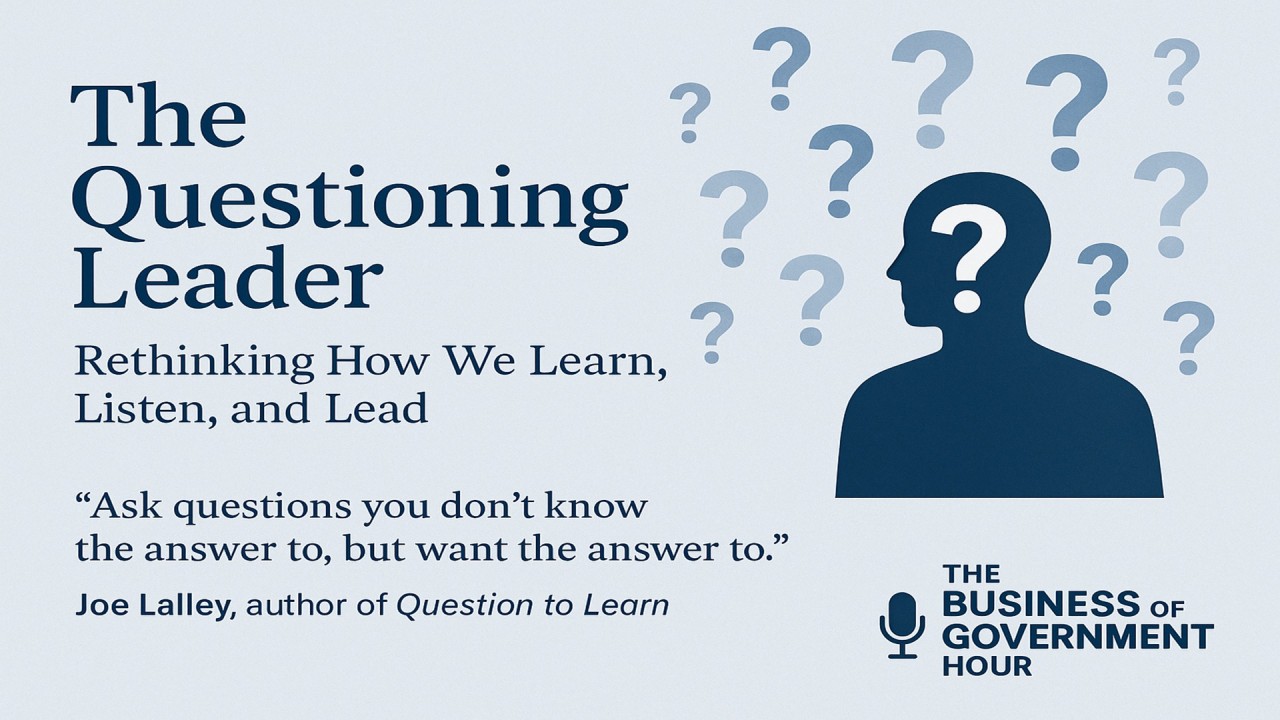
The Questioning Leader: Rethinking How We Learn, Listen, and Lead
Thinkers360
February 12, 2026

In Question to Learn, Joe Lalley invites leaders to rediscover an often-overlooked skill—asking questions not to prove what they know, but to explore what they don’t. In my recent conversation on The Business of Government Hour, Lalley lays out how leaders can reclaim curiosity as a catalyst for learning, empathy, and innovation. Through rich stories drawn from his career and personal life, he argued that “the true power of questions lies not in the questions themselves, but in the motives behind them.” What emerges from Lalley’s reflections is a leadership philosophy centered on intentional curiosity—one that replaces the illusion of knowing with the discipline of discovery.

His insights offer a roadmap for leaders seeking to unlock genuine learning, collaboration, and innovation within their organizations.

From Technical Expertise to Empathic Inquiry

Lalley traces the origins of his transformation to a pivotal experience at Stanford University’s d.school, where he encountered the principles of design thinking. “Up to that point in my career,” he recalled, “I based everything I created on two things: what the business wanted—money, market share—and what was technically feasible.” He was a product manager and user-experience designer focused on specifications and execution.

But after attending a session at the d.school he encountered a different approach: solving problems by applying empathy and iteration.

It was there that Lalley heard the story of Doug Dietz, a GE designer who reimagined the MRI experience for children. Instead of sedating 80 percent of young patients, Dietz and his team engaged with the children and their families to redesign the environment as an adventure—a “pirate ship MRI.” The result? The sedation rate dropped to nearly zero. Lalley described his reaction as “a pivotal moment where I changed my relationship with questions.” The story taught him that genuine inquiry starts with curiosity about people, not processes or profits.

“I realized I had never really asked or looked at the experience of people,” he admitted. “I came back from that program pretty changed.”

The Motives Behind the Question

Central to Lalley’s thesis is his observation that “the questions we ask aren’t always what they seem.” In workplaces, curiosity can easily be replaced by pretense—questions asked to assert power, confirm biases, or perform intelligence rather than to learn. Lalley described this as “the slow degradation of pure motives behind questions.” He catalogued several types of these impure inquiries that plague teams and stifle innovation: the Power Move Question, the Hero Question, the Selfie Question, and what he calls the Time Machine Question.

The Time Machine Question—“How will this scale?”—illustrates how misplaced motives derail learning. As Lalley explained, “It can bring the entire team to a grinding halt because the problem hasn’t even been figured out yet.” When a leader jumps ahead to implementation before understanding, they shift the team’s focus from defining the problem to defending assumptions. The Power Move Question is even more corrosive: a leader firing rapid questions in public to demonstrate authority rather than curiosity. “The motive behind that really isn’t curiosity,” Lalley observed. “It’s to show the group what a visionary thinker I am.” The consequences are predictable: “People detach, defer, and hold back their own ideas.”

Lalley’s insight here is as much psychological as managerial: motives matter.

A question’s form may appear benign, but its intent can shape culture. “You need quantity first so that you can eventually get to quality,” he said. Genuine dialogue thrives when questions invite exploration, not evaluation.

Escaping the “Curiosity Theater”

In what he calls “one of my favorite and most cringe-worthy chapters,” Lalley introduces the concept of Curiosity Theater—the illusion of inquiry without the substance of discovery.

Drawing from his years on conference panels, he described how moderators and panelists often script both questions and answers in advance: “Each panelist would share three or four questions they wanted the moderator to ask them—they knew the answers. It was theater.” The result, he noted, was a missed opportunity for authentic learning. “You’ve got this group of people with really interesting experience and backgrounds,” he lamented, “and there really wasn’t an opportunity for us to interact with each other.”

The antidote to Curiosity Theater is what Lalley calls the workshop mindset—spaces where hierarchy gives way to honesty and leaders ask questions they genuinely don’t know the answers to.

“If you can break down the corporate speak and the adherence to hierarchy,” he explained, “people can have real dialogue and ask questions that they don’t know the answers to—which is very unlike the panel experience.” The principle is simple but profound: ask questions you don’t know the answer to, but want the answer to.

Signals of a Culture That Has Stopped Learning

Lalley’s emphasis on questions as cultural indicators offers one of the book’s most practical leadership lessons.

“If you really want to know a company’s culture,” he advised, “attend some meetings.”

He described a familiar scenario: a leader opens by declaring that “all ideas are welcome,” but then adds, “by the end of this, I want you to get to X.” That single statement, Lalley said, “blocks new thinking” because it sets predetermined outcomes. Another red flag is the leader who leaves the meeting early—signaling that the topic isn’t a priority. Even small habits like consistently arriving late to meetings, he noted, erode a culture of respect and curiosity: “That becomes kind of the culture, where it’s OK not to really respect other people’s time.”

These seemingly minor behaviors accumulate to create what Lalley calls “tell-tale signs that a team has drifted away from asking questions to learn.” Leadership, in his view, is as much about modeling curiosity as commanding direction.

From Brainstorming to Question Storming

Among Lalley’s most actionable contributions is a method he calls Question Storming—a deliberate inversion of the classic brainstorming session. “Brainstorming sessions feel great during the actual meeting,” he said, “but they often fade out right after.” The reason: most ideas are “solutions in search of problems.”

Question Storming flips this pattern by focusing exclusively on questions.

“You may pose a problem to a group,” Lalley explained, “but instead of thinking about solutions, you can only think of questions. When did this start? What do we know about it? What have we heard from customers?”

The process begins with five minutes of silent, individual writing. “It only works if you start silent,” Lalley emphasized. “If you start with discussion, somebody will dominate.” The silence ensures inclusivity and diversity of thought: “Everyone has to participate, and probably everyone has different perspectives.” This practice, he added, “democratizes meetings and stops the derailing by the expert or the talker.”

The Power of Subtraction

In another of his inventive techniques, Lalley advocates for subtraction workshops—sessions designed not to add more initiatives but to intentionally stop doing certain things. “Most workshops result in something new,” he observed. “The word ‘priority’ has stretched into a plural.” Lalley and his team experimented with reversing this dynamic: “We said, let’s explore what we can just stop doing.” The effect was liberating. “We cleared space for the things that are really important and let go of things that weren’t effective.”

Yet, as he noted, subtraction is psychologically harder than addition. “Clients would love the idea but often get nervous as the session approached.” To illustrate why, Lalley shared a personal story: running out of hangers and instinctively reaching for his phone to order more—before realizing he could instead remove unused clothes.

“I solved the problem through subtraction instead of addition,” he said. The metaphor extends seamlessly to leadership: growth often requires letting go.

Flipping the Script: Outroductions and the Five Hows

Lalley’s flair for reframing routine behaviors extends to meetings themselves. He proposes replacing introductions with outroductions. “What happens in most meetings,” he explained, “is that introductions take half the time and subtly reinforce hierarchy.” When someone begins with “I’m the vice president of X,” others naturally defer.

Lalley suggests flipping it: “Start the meeting and say, ‘We’ll leave introductions until the end.’”

By then, participants have context and urgency, making introductions concise and meaningful. "It makes people uncomfortable,” he admitted, “but it works.”

Similarly, Lalley’s “Five Hows” technique pushes teams beyond vague strategy to concrete action. After identifying a goal—say, creating a customer advisory board—he encourages teams to ask, How will we do that? and repeat the question five times, drilling down to specifics: “If those little things don’t happen, the big thing probably doesn’t happen.” The process enforces accountability and bridges the gap between aspiration and execution.

How Might We? Reframing for Possibility

Few phrases capture Lalley’s design thinking roots better than the simple but powerful How Might We…?question.

Each word, he explains, serves a purpose: How signals curiosity, Might allows for possibility, and We implies collaboration. “It involves everyone and sparks new thinking,” he said. By exploring opposites—How might we make people want the middle tier instead of the top?—leaders can reveal hidden insights and expand their creative range. “It probably opens up the possibility for different answers,” Lalley noted. In bureaucratic systems where assumptions calcify quickly, such reframing can be revolutionary.

Learning Through Discomfort

Curiosity, Lalley insists, is inseparable from discomfort. He recounts his experience performing stand-up comedy as an exercise in “getting comfortable with discomfort.” Standing before an audience, “you immediately know if your joke is funny—you see people’s reactions right away.” The experience mirrors leadership: feedback is often instant and unfiltered. “There are very few things where you deliver the product and immediately know how people react,” he observed. The key is embracing that vulnerability as data, not failure.

He also tells a humbling story about accidentally sending a “reply all” email to 50,000 customers. “The most common reply-all message was, ‘Can we all stop replying all?’” What he learned wasn’t about better processes but about mindset: “The instructions were really good. The process was fine. It wasn’t the tool—it was my mindset. I was in a rush.”

His conclusion carries a timeless management lesson: “People often jump to redefine the process when they should rethink their thinking.”

Avoiding False Compromise

In both personal and professional life, Lalley warns against what he calls “false compromise”—solutions that split the difference but satisfy no one. He illustrates this through two anecdotes: a workplace debate about hybrid work and a domestic dispute between his children over an orange. His initial instinct was to “cut it in half,” but later discovered that “one wanted to make juice and one wanted to bake.” By asking why each child wanted the orange, he found a true win-win. The same principle applied to hybrid work. “Instead of dividing the week between home and office,” he said, “we asked people about the kinds of tasks they did.” Some required collaboration, others concentration. “It’s not about the days of the week—it’s about the motives and the goals.”

In other words, leaders should resist defaulting to balance and aim for understanding.

Mindset Over Playbook

Perhaps the most profound takeaway from Question to Learnis Lalley’s rejection of rigid playbooks in favor of adaptable mindsets. “I talk a lot about mindset, skill set, and tool set,” he explained. “Without the mindset, the judgment isn’t there.” Playbooks—like standard operating procedures in government—offer structure but can become stale. “Many situations have their own unique challenges,” Lalley noted. “Almost every time, I would change something along the way.” Instead, he advocates for “smaller building blocks” and empowering teams with the judgment to know when to apply them.

The distinction is crucial: procedures provide consistency, but mindset provides agility.

The Art of Listening

The book’s dedication—to Lalley’s father, Frank—encapsulates its human heart. “He was one of the greatest listeners I’ve ever known,” Lalley wrote. “He was totally fine with silence and would wait patiently for the answer.” From his father, he learned that listening is not the pause between talking, but a form of attention. “He didn’t fill silence with anything,” Lalley recalled. “He just waited. He didn’t have a second question prepared. His second question was based on your answer.”

This, Lalley argues, is the essence of questioning to learn: to listen not for confirmation, but for revelation.

His favorite question embodies this spirit: How did you come to feel that way? It avoids accusation and invites empathy. “The ‘why’ question can feel like an interrogation,” he said. “‘How did you come to feel that way?’ opens dialogue. It helps you learn the steps that got someone there.” Whether applied to customers or colleagues, the question transforms interaction into understanding.

A Leadership Philosophy of Curiosity

Across every story and exercise, Lalley returns to a single conviction: leadership begins with curiosity.

When leaders replace performative certainty with genuine inquiry, they create conditions where innovation and trust can flourish. His message is particularly resonant for government executives, whose environments often prize procedure over exploration. As Lalley demonstrates, the skill of asking better questions is not ancillary to leadership—it is leadership. It fosters empathy with citizens, understanding across agencies, and learning within systems that too often reward answers over insight.

In a world awash in information, Question to Learn reminds us that wisdom starts with wonder. Lalley’s father modeled it through listening; Dietz embodied it through empathy; Lalley himself teaches it through practice. As he told me, “Ask questions you don’t know the answer to—but want the answer to.” In those moments, leaders do more than manage—they learn, and in learning, they lead.

See blog

Tags: GovTech, Management, Leadership

Effective Government Is Built: A Five-Pillar Framework for Public Leaders
Thinkers360
January 15, 2026

Government today stands at a defining crossroads.

Across the U.S. and around the world, public institutions are being asked to do more—often with fewer resources, rising expectations, and growing complexity. Governments must respond to crises while preparing for long-term risks; modernize legacy systems while maintaining continuity of service; and rebuild public trust while delivering tangible, measurable results.

These pressures are not theoretical. They are being felt daily by government leaders responsible for cybersecurity and infrastructure resilience, benefits delivery and emergency response, workforce modernization, financial stewardship, and digital transformation. No single reform, technology, or organizational change is sufficient on its own.

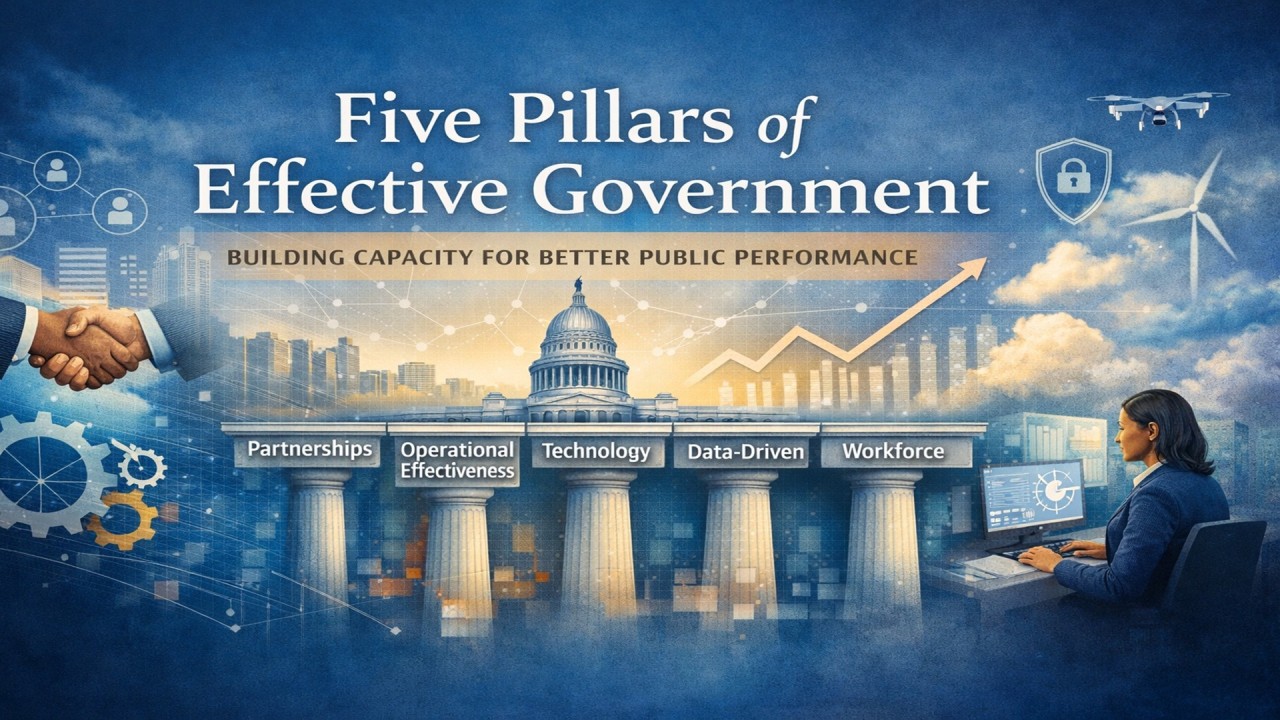
That is why the IBM Center for The Business of Government is releasing a new Special Report, Five Pillars of Effective Government, I co-authored with my colleagues Daniel Chenok and Margaret Graves

This report does not argue for one “silver bullet” solution.

Instead, it offers a practical, integrated framework—rooted in more than two decades of research and real-world experience—designed to help government leaders strengthen institutional capacity, improve performance, and deliver public value in a rapidly changing environment.

Why a Pillars Framework—and Why Now?

Recent years have revealed both the extraordinary potential of government and its persistent vulnerabilities.

The COVID-19 pandemic demonstrated how quickly government can mobilize innovation—accelerating vaccine development, expanding telework, and deploying emergency assistance at unprecedented scale. At the same time, it exposed deep structural weaknesses: fragmented coordination, outdated systems, workforce constraints, and gaps in data and accountability.

Layered onto this experience are longer-term pressures: geopolitical instability, technological disruption, fiscal constraints, and historically low levels of public trust. Citizens increasingly expect government services to be fast, seamless, and responsive—comparable to the best digital experiences in the private sector.

The central insight of the Five Pillars framework is this:

effective government is not the product of isolated reforms. It emerges when multiple, interdependent capabilities are strengthened together, guided by strategic intent and evidence-based practice.

The Five Pillars of Effective Government

The report identifies five core pillars where focused leadership and investment can have the greatest impact:

  1. Advancing Multi-Sector Partnerships
  2. Improving Financial and Operational Effectiveness

  3. Leveraging Technology to Improve Service and Efficiency
  4. Using Data to Drive Priority-Setting, Decision Making, and Performance
  5. Strengthening the Government Workforce

Individually, each pillar addresses a foundational dimension of good governance. Together, they form a coherent framework for delivering results, building resilience, and earning public trust.

Pillar 1: Partnerships Are Now Essential, Not Optional. The complexity of modern public problems means that no agency—and no sector—can succeed alone.

Whether responding to natural disasters, strengthening supply chains, modernizing digital services, or advancing public health, effective solutions increasingly depend on collaboration across agencies, across levels of government, and across sectors.

The report highlights how well-designed partnerships can:

  • Extend government capacity without proportionally increasing cost
  • Tap private-sector innovation and nonprofit expertise
  • Align federal, state, and local efforts toward shared outcomes
  • Enable “whole-of-government” approaches to cross-cutting challenges

Critically, partnerships succeed not through contracts alone, but through trust, shared data, mutual accountability, and clear governance structures. When those conditions are present, collaboration becomes a force multiplier for public value.

Pillar 2: Financial and Operational Effectiveness Underpins Public Trust

Sound stewardship of public resources is fundamental to government legitimacy.

Yet agencies face growing fiscal pressures, aging systems, rising fraud risks, and administrative complexity. Improving financial and operational effectiveness is not simply about cost-cutting—it is about designing operations that deliver value, resilience, and accountability.

The report outlines practical strategies to:

  • Modernize financial management and procurement
  • Prevent fraud and improper payments before they occur
  • Use analytics to anticipate future demands
  • Redesign operations around user needs rather than organizational silos
  • Strengthen risk management and resilience planning

When government operates effectively and transparently, it reinforces public confidence that resources are being used wisely—and that institutions are capable of learning and improving.

Pillar 3: Technology as a Mission Enabler—Not an End in Itself

Technology is transforming how government works—but technology alone does not deliver results.

From artificial intelligence and cloud computing to digital identity and automation, emerging tools offer extraordinary opportunities to improve service delivery, cybersecurity, and operational efficiency. At the same time, poorly implemented technology can exacerbate vulnerabilities, compromise infrastructure, frustrate users, and undermine trust.

This pillar emphasizes a clear principle: technology succeeds only when it is human-centered, mission-driven, and innovatively deployed.

The report shows how technology can:

  • Strengthen emergency preparedness and crisis response
  • Improve benefits delivery while safeguarding program integrity
  • Enhance cybersecurity for critical infrastructure
  • Enable user-centered digital services
  • Augment—not replace—the federal workforce through AI-enabled decision support

Effective leaders pair technological innovation with organizational change, workforce readiness, and governance frameworks that keep people at the center.

Pillar 4: Data as the Foundation of Effective Governance

In an era of complexity, data has become the currency of good decision-making.

Government generates vast amounts of information, but value emerges only when data is governed well, shared responsibly, and used intentionally to drive outcomes.

This pillar demonstrates how data can:

  • Improve priority-setting and strategic planning
  • Strengthen performance management and evaluation
  • Enable cross-agency collaboration and transparency
  • Support early detection of risks, fraud, and emerging challenges
  • Build accountability through evidence-based policymaking

Data-driven government is not about dashboards for their own sake. It is about equipping leaders with insight—so they can make better choices, faster, and with greater confidence.

Pillar 5: A Strong Workforce Is the Backbone of Government

Every public service ultimately depends on people.

Yet government faces a workforce inflection point: rising retirements, skills gaps, slow hiring processes, and the disruptive effects of sustained crises. Strengthening the government workforce is not a peripheral issue, it is central to effective governance.

The report outlines a forward-looking agenda to:

  • Modernize hiring and compensation systems
  • Expand training, upskilling, and leadership development
  • Prepare employees to work effectively alongside new technologies
  • Strengthen accountability and performance management
  • Support resilience, engagement, and adaptability

Technology and data can amplify human potential—but only if the workforce is empowered, supported, and trusted to lead change.

The Power of Integration: Why the Pillars Must Work Together

A defining insight of the Five Pillars framework is that these capabilities are deeply interconnected.

Technology investments fail without skilled people. Data cannot drive decisions without aligned incentives. Partnerships falter without shared governance and accountability. Operational reforms stall without leadership and workforce engagement.

When pursued together, the five pillars help government become:

  • More collaborative
  • More data-driven
  • More technologically agile
  • More financially responsible
  • More resilient and people-centered

This integration is what transforms isolated reforms into sustainable performance.

A Call to Action for Public Leaders

The challenges facing government are real—and growing. But so are the opportunities.

The Five Pillars of Effective Government offers a hopeful message grounded in evidence and practice: with the right strategies, investments, and leadership, government can deliver exceptional value to the public.

This report is intended to be used:

  • By senior executives shaping agency strategy
  • By policymakers designing reform agendas
  • By managers leading transformation on the ground
  • By partners across sectors committed to public impact


Effective government does not happen by accident. It is built—intentionally, collaboratively, and continuously.

We invite public leaders, practitioners, and partners to engage with the framework, apply its insights, and join a broader conversation about how we strengthen the capacity of government to serve—today and in the years ahead.

See blog

Tags: GovTech

Innovating Local Governments with Govtech: Insights from Amanda Renteria, CEO, Code for America
Thinkers360
July 03, 2025

I recently had the pleasure of hosting The Business of Government Hour at CivStart’s State of GovTech 2025. This event convened government executives, technology leaders, startups, and academics to explore innovative solutions for local governments at the intersection of governance and technology. Among the many insightful conversations, my interview with Amanda Renteria, CEO of Code for America, provided valuable insights into how technology is reshaping the relationship between cities and their residents. Our discussion highlighted practical approaches to modernizing government systems, the evolving govtech ecosystem, and the critical role of collaboration and experimentation in driving effective service delivery.

In this essay, I outline the key themes and share insights from our discussion, focusing on how technology and governance converge to enhance local government operations and resident engagement

The Mission of Code for America: Modernizing Government Systems

Local governments face mounting pressures such as aging infrastructure, budget constraints, and rising public expectations shaped by private-sector digital experiences. Amanda Renteria emphasized the critical role of technology in addressing these challenges.

Code for America’s mission centers on modernizing government systems. Over the years, the organization grew into one of the country’s leading civic tech nonprofits, partnering with government at all levels across the country to build digital tools, change policies, and improve programs.

Its mission is to ensure government services remain accessible and effective for all residents, even as technology transforms how these services are delivered. This involves rethinking outdated processes and leveraging digital tools to make government interactions more efficient and user-friendly. For instance, their work often targets legacy systems—aging technological infrastructures that hinder cities’ ability to deliver services effectively. By addressing these challenges, Code for America helps governments stretch limited resources without compromising service quality, a critical balance in today’s environment of economic uncertainty and reduced public investment.

A notable example Amanda shared is the Memphis Youth Jobs Platform, a digital hub connecting young people to career training and employment opportunities. Recognizing that younger generations prefer on online platforms over traditional job fairs, Code for America designed a mobile-friendly, community-oriented system that resonates with its users. The platform’s success stems from its human-centered design, which involved young people in the development process to ensure it met their needs This approach not only delivered practical outcomes—like connecting youth to jobs—but also fostered trust by engaging community organizations as partners.

The Memphis project illustrates how technology can bridge gaps between government services and residents, creating systems that are both accessible and responsive.

Overcoming Legacy Systems Through Iterative Implementation

Legacy systems pose a significant challenge for city leaders, often clashing with modern service demands. Amanda highlighted a shift in how governments approach technology implementation, moving away from large-scale, one-size-fits-all solutions to smaller, iterative pilots. This strategy allows cities to test tools in specific contexts, such as a single county, before scaling up. Piloting reveals issues with legacy systems that might otherwise go unnoticed, enabling governments to address problems incrementally. This approach also incorporates resident feedback through surveys, ensuring that solutions are refined based on real-world usage.

The iterative process aligns with an agile mindset, which Amanda described as a significant departure from traditional government practices. By starting small, cities can experiment with new tools without committing to costly overhauls, reducing risk while improving outcomes. For example, Code for America’s work with Salt Lake City and Georgia on an AI-powered PDF auditing tool demonstrates this approach. The tool scans government websites to identify PDFs that fail to meet accessibility standards, a critical issue given the billions of PDFs in use across government platforms.

By automating this process, the tool saves time and resources while helping cities comply with upcoming accessibility regulations. It also introduces government staff to AI’s capabilities in a practical context, fostering familiarity with emerging technologies without requiring large-scale commitments.

Building Trust Through Transparency and Communication

Building public trust is critical, especially during crises like natural disasters or economic uncertainty. Amanda stressed that transparent, proactive communication is essential for maintaining resident confidence. Governments often lack robust information-sharing mechanisms, yet residents expect timely updates, particularly in emergencies. Code for America’s experience during COVID-19 showed that bringing stakeholders together to solve problems collaboratively—whether through shared data systems or community forums—creates a sense of shared purpose. For instance, their work in crisis response, such as supporting LA County during wildfires or Houston during floods, demonstrated how technology can deliver critical services quickly when traditional systems falter or are strained.

Amanda also stressed the importance of honesty in deploying new technologies like AI. Rather than concealing the use of AI chatbots or automated systems, governments should clearly communicate their purpose and limitations. For example, Code for America’s tax filing tools include features that explain why certain questions are asked, addressing user concerns and building confidence. This transparency is particularly vital as residents’ expectations, shaped by seamless private-sector digital experiences, continue to rise. During COVID-19, the ability to access services like driver’s licenses online shifted public perceptions of what government can achieve digitally.

Cities that prioritize clear communication and user-friendly systems can meet these demands, strengthening resident trust.

The Evolving Govtech Ecosystem: Collaboration and Best Practices

The govtech ecosystem is evolving through collaboration among cities, states, and organizations like Code for America. Amanda explained that events like CivStart’s State of GovTech and Code for America’s annual summit facilitate the sharing of best practices, enabling governments to learn from one another. For example, during COVID-19, states like Colorado and Rhode Island tackled similar challenges in linking school and state data to deliver resources to children. By convening these stakeholders, Code for America helped amplify successful strategies, such as deduplicating data to streamline service delivery.

Collaboration extends beyond government-to-government partnerships. Amanda highlighted the growing openness to working with startups and small businesses, particularly as procurement contracts become shorter and more flexible. This shift allows cities to adopt innovative solutions from the private sector, which can serve as stopgaps or long-term tools.

The State of GovTech 2025 showcased such innovations, from voice and text-based communication tools to translation services that make government services more accessible.

These technologies enable cities to reach residents quickly, especially during crises, and adapt to changing needs driven by factors like shifting public expectations, budgetary constraints, and geopolitical dynamics.

Cultivating a Culture of Experimentation

To keep pace with technological advancements, city leaders must foster a culture of experimentation. Amanda pointed to the influence of younger mayors and officials who are more open to change, citing her experience in San Jose, where proximity to Silicon Valley encouraged innovative thinking. Leaders can drive experimentation by targeting specific areas for improvement—such as pothole reporting or permitting processes—and using dashboards to track progress transparently. These dashboards, which display real-time data on agency performance, hold governments accountable while informing residents about ongoing efforts.

Code for America’s iterative approach supports this culture by encouraging governments to test solutions on a small scale before scaling up. Amanda emphasized that elected officials must also adopt patience, recognizing that meaningful change often requires time and refinement. By embracing this mindset, cities can overcome risk-averse tendencies and explore new technologies, from AI-driven tools to mobile platforms, that enhance service delivery.

The Future of Govtech: A Transformative Decade Ahead

Looking ahead, Amanda described the current moment as a transformative period for government technology, with federal modernization efforts influencing states and cities. Technology enables data sharing and inter-agency collaboration, making services more integrated. Online platforms and virtual city council meetings facilitate two-way resident engagement, moving beyond physical infrastructure limitations. Emerging technologies, such as translation services and voice-activated tools, will likely have significant impacts in the coming years. These tools enable real-time, multilingual communication, addressing urgent needs during crises.

Conclusion

My conversation with Amanda Renteria at CivStart’s State of GovTech 2025 offers a compelling path forward for local governments seeking to harness technology for better service delivery. By modernizing legacy systems, adopting iterative implementation, and prioritizing transparent communication, cities can enhance resident engagement. The evolving govtech ecosystem, driven by collaboration and innovation, provides tools to address challenges like accessibility and crisis response. As city leaders cultivate a culture of experimentation, they position themselves to meet rising public expectations and build resilient, responsive systems. Code for America’s work demonstrates how technology and governance can converge to create efficient, responsive local governments that foster trust and serve residents more effectively.

See blog

Tags: GovTech

Resilient Leadership: Strategic Questions to Lead Through Uncertainty
Thinkers360
May 06, 2025

In today’s world, uncertainty is not an occasional storm but a persistent climate. Leaders across sectors face a barrage of disruption, pandemics, cyberattacks, and supply chain breakdowns—that demand swift, resilient decision-making. The IBM Center for The Business of Government report, Preparing Governments for Future Shocks: A Roadmap to Resilience, illustrates the realities of leading through such volatility, highlighting the need for networked, agile, and innovative responses to complex challenges.

Recently, I read Cheryl Strauss Einhorn’s Harvard Business Review article, In Uncertain Times, Ask These Questions Before You Make a Decision, which offers a powerful framework of four strategic questions to navigate this “perma-crisis” landscape. These questions help leaders cut through noise, avoid reactive traps, and make choices that endure. By integrating Einhorn’s questions with the IBM report’s imperatives, government executives can enhance their ability to lead effectively through uncertainty, fostering resilient outcomes.

This essay explores how Einhorn’s questions can be used to navigate uncertainty, offering actionable insights for government leaders striving to thrive in uncertain times.

The Perma-Crisis Reality

The IBM Center report paints a vivid picture of today’s volatile environment, where “shocks”—disruptive regional or global events like wildfires, cyberattacks, or pandemics—transcend boundaries and stress governments, businesses, and communities. A 2023 IBM survey of 635 government executives found that 60% expect these shocks to grow more frequent, and 70% anticipate greater intensity. The report’s eight imperatives, from building governance networks to investing in agile innovation, underscore that siloed, reactive approaches are inadequate. Instead, leaders must foster collaboration across sectors, leverage data and AI, and prioritize public trust to build resilience.

Einhorn’s article complements this by addressing the decision-making paralysis that volatility can induce. Traditional questions—What’s the ROI? What’s the timeline?—often narrow focus too soon, locking leaders into outdated assumptions. Her four questions, designed to expand perspective and spark creativity, are particularly relevant for navigating the systemic disruptions the IBM Center report describes.

Below, each question is explored as a tool for leaders, with examples drawn from the report to illustrate their practical impact in a crisis-prone world.

Question 1: What Decision Today Will Still Make Sense a Year from Now?

Einhorn’s first question urges leaders to prioritize decisions with lasting value, resisting the pull of short-term fixes. In a crisis, the pressure to act quickly can lead to choices that solve immediate problems but create future vulnerabilities. This question injects long-term thinking into chaotic moments, ensuring alignment with core values and strategic goals. The IBM Center report illustrates this challenge in its discussion of supply chain disruptions, a common shock that tests resilience. For instance, a government agency facing delayed medical supply deliveries might be tempted to double down on a struggling vendor for quick relief.

Einhorn’s question prompts a broader view: Will this decision hold up in a year? Preparing Governments for Future Shocks: A Roadmap to Resilience emphasis on building a Center of Excellence (CoE) for supply chain resilience offers a solution. By creating a multi-agency hub with private sector and academic partners, leaders can map supply chains using AI-driven analytics, ensuring robust sourcing strategies that withstand future disruptions. This mirrors Einhorn’s example of Alana, a consumer brand leader who preserved sustainability initiatives despite cost-cutting pressures, balancing immediate needs with long-term brand identity.

Practical Takeaway: Leaders should use scenario planning to test decisions against potential future shocks, such as disasters or cyberattacks. By asking, “What values do we want this decision to reflect?” they can align choices with resilience goals, as the Center report advocates through its call for proactive risk management.

Question 2: If a Year from Now This Decision Was Used as an Example of Our Leadership, What Would It Teach?

This question shifts focus to the narrative a decision creates, asking leaders to consider the legacy their choices leave. It’s not just about outcomes but about what decisions say about character, priorities, and culture.

In a world where trust in institutions is eroding, as the Center report notes via the Edelman Trust Barometer’s findings, this question is a strategic tool for building credibility.

Preparing Governments for Future Shocks: A Roadmap to Resilience highlights the importance of public participation and communication to counter distrust, especially during climate disasters. Consider a city official deciding whether to enforce a mandatory evacuation in a flood-prone, low-income area. The legal case is clear, but community fears of displacement loom large. Einhorn’s question—What would this decision teach about our leadership?—prompts a human-centered approach. The Center report suggests engaging trusted community voices to communicate risks, avoiding “maladaptation” where poorly planned responses increase vulnerabilities. By involving local leaders to co-design an evacuation plan that addresses financial and medical barriers, the official not only mitigates the crisis but also models inclusive leadership, much like Einhorn’s example of Raj, who delayed a product launch to prioritize ethical data practices, earning trust and respect.

Practical Takeaway: Leaders should integrate stakeholder input into decisions, using town halls or digital platforms to ensure diverse voices shape outcomes. This builds trust and reinforces a leadership legacy of integrity, aligning with the Center’s report call for inclusive planning.

Question 3: What If This Isn’t the Storm—What If It’s the Climate?

Einhorn’s third question challenges the instinct to treat disruptions as temporary, urging leaders to prepare for persistent volatility. This reframing is critical in a world where shocks are not anomalies but part of the systemic “climate,” as the Center’s report survey data confirms with expectations of escalating crises.

The IBM Center report, Preparing Governments for Future Shocks: A Roadmap to Resilience, focuses on crosscutting shocks, like recurring cyberattacks, illustrates this reality. A government IT department facing repeated data breaches might initially patch systems reactively, hoping for a return to stability. Einhorn’s question—What if this is the new normal?—prompts a strategic shift. Our report advocates for a whole-of-government approach, including cross-agency collaboration and AI-enhanced cybersecurity frameworks. By investing in a CoE that coordinates federal, state, and private sector efforts, leaders can build systems that flex under pressure, not snap. This echoes Einhorn’s example of Darryl, who recognized a vendor’s persistent failures as a structural issue, launching a dual-track plan to onboard a new supplier while giving the existing one a final chance to improve.

Practical Takeaway: Leaders should conduct regular wargaming exercises to anticipate ongoing shocks, as the Center report suggests. By mapping interdependencies across sectors, they can design enduring systems, ensuring resilience against chronic uncertainty.

Question 4: What’s the Cost of Waiting?

Einhorn’s final question confronts the hidden risks of inaction, challenging leaders to act despite incomplete data. In volatile environments, waiting for certainty can forfeit momentum, market position, or public confidence.

Consider a public health agency debating whether to adopt AI for predicting disease outbreaks. Budget constraints and ethical concerns might encourage delays. Einhorn’s question—What’s the cost of waiting?—highlights the risks: slower responses, strained resources, and eroded trust. The Center report cites generative AI’s potential to optimize emergency responses by analyzing vast datasets, enabling faster resource allocation. By piloting an AI system with built-in safeguards, the agency could act decisively, mirroring Einhorn’s example of Monica, who hired a marketing officer during economic uncertainty, reimagining compensation to align with strategic goals.

Practical Takeaway: Leaders should launch agile pilot programs to test innovations. Pre-crisis data strategies, like those recommended for data-driven decision-making, ensure informed action, minimizing the costs of hesitation.

A Unified Approach to Resilient Leadership.

Einhorn’s four questions form a cohesive framework for leading through uncertainty, each addressing a critical dimension of decision-making:


  • Durability ensures decisions withstand future shocks, aligning with the IBM Center report’s call for proactive risk management.
  • Legacy builds trust through inclusive choices, supporting the Center report’s emphasis on public engagement.
  • Systemic Thinkingprepares for persistent volatility, echoing the report’s call for crosscutting strategies.
  • Urgency drives timely action, complementing the report’s push for agile innovation.


The Center's report focus on workforce development further ties these questions together, as a skilled, adaptable workforce is essential for executing resilient decisions. With government leaders planning to shift investments toward AI in five years, upskilling employees to leverage technology is critical, ensuring the human capital to act on Einhorn’s insights.

Implementing Einhorn’s Framework

To apply Einhorn’s questions in practice, leaders can take these steps:


  • Embed Questions in Planning: Train teams to use Einhorn’s questions during strategic discussions, ensuring decisions balance short- and long-term goals.
  • Leverage Technology: Use AI and data analytics to model decision outcomes, as the IBM report suggests, supporting Questions 1 and 3.
  • Engage Communities: Host inclusive forums to gather input, aligning with Question 2’s focus on leadership legacy.
  • Pilot Innovations: Test solutions rapidly to address Question 4, minimizing inaction costs.
  • Upskill Teams: Invest in training to ensure employees can implement data-driven, resilient decisions.


Conclusion: Turning Uncertainty into Opportunity

Government executives navigating future shocks cannot rely on outdated assumptions or siloed responses. The IBM Center report, Preparing Governments for Future Shocks: A Roadmap to Resilience depicts escalating shocks that underscore the need for adaptive, collaborative leadership. The report’s eight imperatives provide a roadmap for resilience, emphasizing networked governance, agile innovation, and inclusive communication. Einhorn’s four questions, outlined in her HBR article, complement this by offering a decision-making lens that balances urgency with foresight, reactivity with strategy, and isolation with collaboration.

By asking what decisions will endure, what legacy they create, whether disruptions are systemic, and what inaction costs, leaders can transform uncertainty into opportunity.

As Einhorn reminds us, strategic decision-making isn’t about having all the answers: it’s about asking the right questions to forge a resilient future.  In a perma-crisis world, strategic questioning is not just a tool—it’s a leadership imperative.

See blog

Tags: Emerging Technology, GovTech, Leadership

Leadership Lessons from David Mamet's "True and False: Heresy and Common Sense for the Actor"
Thinkers360
May 16, 2024

True and False: Heresy and Common Sense for the Actor by David Mamet, the award-winning director, playwright, filmmaker, and author, is a bold and insightful book that challenges conventional wisdom in the acting world. While it’s a guide for actors, the book offers profound lessons that can be applied to leadership in various contexts. For Mamet acting isn’t simply about pretending; it is at its core – an act of truth-telling much like leadership.

This blog post explores these leadership lessons and how they can be used to foster a better understanding of leading people and teams. In many of the italicized quotes shared in this piece one can easily replace the word actor with leader and find real insight good leaders can apply.

Simplicity is Key

Mamet’s philosophy in "True and False" centers around simplicity and focus. He advocates for a straightforward approach to acting, without overcomplicating or overthinking the process.

“The actor is onstage to communicate the play to the audience. That is the beginning and the end of the actor’s job. They don’t need to “become” the character. There is no character. There are only lines on a page. There are lines of dialogue meant to be said by the actor. When they say them simply, in an attempt to achieve an object more or less like that suggested by the author, the audience sees an illusion of a character upon a stage.”

Leaders can apply this lesson by simplifying processes and communication within their organizations. Overly complex procedures and jargon can confuse team members, leading to inefficiency and miscommunication. By simplifying and focusing on the essentials, leaders can ensure that everyone is on the same page and understands the goals and objectives. By cutting through complexity and staying grounded in basic principles, leaders can guide their teams more effectively.

Trust Your Instincts

Mamet encourages actors to trust their instincts rather than relying solely on technical skills or over rehearsed techniques. This lesson is crucial for leaders as well. While it's important to have knowledge and expertise, true leadership often comes from trusting your intuition. Leaders who rely on their instincts can make decisions more confidently and encourage their teams to do the same. This creates a culture of empowerment, where individuals feel valued for their unique perspectives.

"The actor, in learning to be true and simple, in learning to speak to the point despite being frightened, and with no certainty of being understood, creates his own character; he forges character in himself."

Embrace Authenticity

Mamet champions authenticity in acting, emphasizing that the best performances come from being genuine rather than imitating others. Authenticity builds trust and credibility with team members, fostering a culture of integrity. When leaders are authentic, they build trust and rapport with their teams. This authenticity fosters loyalty and encourages employees to bring their whole selves to work, leading to greater creativity and innovation.

“You are not one of the myriad of interchangeable pieces, but a unique human being, and if you’re got something to say; say it and think well of yourself while you’re learning to say it better.”

Resist Over-Rehearsal

In the book, Mamet argues that over-rehearsing can lead to a loss of spontaneity and freshness in acting. For leaders, this translates into not over-planning or micromanaging. Leaders who resist the urge to control every detail allow for spontaneity and creativity to flourish within their teams. This flexibility can lead to innovative solutions and a more dynamic work environment.

Focus on the Objective

Mamet stresses the importance of having a clear objective when acting. This focus helps actors stay grounded and connected to their role, their lines. Similarly, leaders should always have a clear vision for their teams. When everyone understands the objective, it's easier to work towards a common goal. This clarity aligns the team and drives collective action, reducing confusion and increasing productivity.

“To deny nothing, inventing nothing, accept everything, and get on with it.”

Encourage Collaboration

Mamet believes that acting is a collaborative art form, where the best outcomes are achieved through teamwork. Leaders can take this lesson to heart by fostering a collaborative culture within their organizations. By encouraging teamwork and open communication, leaders create an environment where diverse perspectives can be shared freely, leading to better problem-solving and, and stronger team dynamics.

Learn from Failure

In "True and False," Mamet acknowledges that failure is part of the process. He encourages actors to embrace failure as a learning opportunity. Leaders can apply this lesson by creating a culture where failure is not stigmatized but seen as a stepping-stone to success. By embracing failure, leaders foster resilience and encourage their teams to take risks, knowing that setbacks are part of the journey toward growth and improvement.

“Let us learn acceptance. This is one of the greatest tools an actor can have. The capacity to accept to wish things to happen as they do It is the root of all happiness in life, and it is the root of wisdom for an actor. Acceptance. The capacity to accept derives from the will and the will is the source of character.”

Value Discipline and Work Ethic

Mamet emphasizes the importance of discipline and a strong work ethic in acting. Leaders can draw from this lesson by instilling discipline within their teams. This doesn't mean being overly strict, but rather fostering a sense of commitment and responsibility. Leaders who set high standards and lead by example inspire their teams to work diligently toward achieving their goals.

“The challenge is to open the mouth, stand straight, and say the words bravely – adding nothing, denying nothing, and without the intent to manipulate anyone.  To learn to do that is to learn to act.”

Respect for the Craft

Mamet's respect for the craft of acting translates to the importance of respecting the expertise and experience of others. Leaders who respect their team's skills and provide them with the necessary resources and autonomy are more likely to build a motivated and engaged workforce.

“Like sports, the study of acting consists in the main of getting out of one’s own way and in learning to deal with uncertainty and being comfortable being uncomfortable.”

Be Courageous

Finally, Mamet's bold approach to challenging established norms in acting demonstrates courage. Leaders can take this lesson to heart by being willing to challenge the status quo and make bold decisions. Courageous leaders inspire others and drive change within their organizations, fostering a culture of innovation and continuous improvement.

“The simple performance of the great deed is called heroism. The person who will not be swayed who perseveres no matter what – that hero has the capacity to inspire us, to suggest that we reexamine our self-imposed limitations and try again.”

In summary, True and False: Heresy and Common Sense for the Actor by David Mamet offers a wealth of lessons for leaders. By embracing simplicity, authenticity, and collaboration, leaders can build strong, dynamic teams and foster a culture of trust, creativity, and continuous improvement. Trusting instincts, resisting over-rehearsal, and encouraging courage can further enhance a leader's ability to guide their teams successfully. By applying these principles, leaders can inspire their teams to achieve greatness and foster a culture of innovation and growth.

See blog

Tags: Agile, Coaching, Creativity

Aaron Wildavsky On Writing and Craftsmanship

Thinkers360
March 22, 2024

This week the IBM Center for The Business of Government posted a blog by Katherine Barrett, Richard Greene, and Don Kettl announcing the release of their monograph, The Little Guide to Writing for Impact: How to Communicate Research in a Way that People Will Read.

The subtitle is key. The authors acknowledge the importance that government officials write well with the intent to produce government communication that the public can understand and use. However, they are even more worried about a connected issue: “too many people with great academic training are writing about powerful ideas, backed by years of research, that are obscure at best and incomprehensible at worst.” The book is aimed at those people with big ideas who want people to read them.

As I read this blog, it reminded me of Aaron Wildavsky’s excellent book of essays, Craftways: On the Organization of Scholarly Work.Wildavsky, a premier figure in the field of public administration, was a true intellectual craftsman: a superb prose stylist as well as an acute mind. He truly believed that quality writing is ineluctably linked to quality of thought. This compilation of essays is his meditation on craftsmanship offering insight less on the mechanics of writing and more on the craft of communicating.  His focus on craftsmanship continues to make his work on such diverse topics as political culture, policy analysis, implementation, budgeting, and public administration approachable, engaging, and revelatory. I’d like to share some of his thoughts on the craft of writing and how he approached it throughout his career. It is intended as a nice and worthwhile complement to the guidance offered today by Barrett, Green, and Kettl.

“In the Same Place, at the Same Time, and in the Same Way”

This is the essay that started all. It began Wildavsky’s effort to state the rules of writing he followed so that others might adapt them for their own use. “Were it not for the warm reception accorded this [essay], I might not have continued developing this genre,” he admits. He believed that the basic elements of craftsmanship in social science were not being taught nor observed close to give students a sufficiently precise idea of how to do their scholarly work. Here are some insights in his own words.

Bridging that Chasm Between the Thought and the Deed. Even if the thought is in you, there is no guarantee it will come out. That gulf can only be bridged by taking seriously the task of organizing work.

Developing Appropriate Habits. In addition to having things to say, the ability to write depends on developing appropriate habits, finding the right kind of place, obtaining useful criticism, learning how to arrange material, working out suitable physical style, combining teaching with research, and overcoming temptations to divert energies.

Importance of Habit and Rhythm. One cannot overestimate the importance of habit and rhythm: Try to work in the same place, at the same time, and in the same way.  Once the rhythm of work begins to take hold, it carries one through fallow periods. It keeps you going through the inevitable descriptive passages that contain nothing new but are essential for the story you are telling or the point you wish to make.

‘I write when sit and think when I walk.’ [Wildavsky liked to write for an hour or two then walk and think over the next steps.] There is something about releasing the physical energy kept under control while writing that makes it easier to begin again.  It is a mistake to push oneself when the flesh is weak and the spirit unwilling. Writing is not only a mental but a physical process in which a sense of though connects thought with word.

Writing is a Process of Self-Discovery. That sometimes leads you to say more than you knew was in you or carries you far from original intentions. That is why I have learned not to worry about introductions to books or essays. There is no sense in trying too hard to get them “right” because you do not know what that will be until you finish. The purpose of a beginning is to get you started; when the work is completed, you can go back to the beginning and tell the reader not what you thought you were going to say but what you ended up saying.

“Rationality in Writing: Linear and Curvilinear”

In this essay, Wildavsky introduces two distinctly different ways to approach writing. He describes how he used each of these approaches in writing two of his book. However, the ultimate point of the essay is to underscore the connection between thought and writing.

Writing as an Integral Part of Thinking. A writer by vocation is a person who cares about the quality and craft of writing as inseparable from the content of whatever they are trying to communicate. Indeed, for me writing has become an integral part of thinking. I don’t know what I think until I have tried to write it. Sometimes the purpose of writing is to discover whether I can express what I think I know; if it cannot be written, it is not right. Other times I write to find out what I know; writing becomes a form of self discovery. I hope to learn more than was in me when I started. Few feelings compare with the exhilaration of discovering a thought in the writing that was not in the thinking.

Writing Should Resonate with the Subject Matter. Making the form fit the substance so style reinforces content, is what craftmanship is about. However, the style should also fit the author, for style is a personal signature. It should be possible to recognize the author from the style. However, it is one thing to want to read a piece because of the author and quite another to learn more about the author than the subject.

Linear or Curvilinear – “Straight on” or “Roundabout”. Books and essays can be written linearly, straight-on according to plan, with one topic following another in orderly sequence. They may also be written in curvilinear fashion much like fitting together the parts of a puzzle except that all pieces are not available at the beginning but only as one goes along, and the final shape is made up by the pieces instead of being fit into a predetermined form. Though process may be roundabout, the story should be linear.  I have written both ways and each has its pleasures and pitfalls.  Linear is easier, but it must be done consecutively, the relationship among the parts being retained, so that time is a critical constraint. Curvilinear is more rewarding because of the surprise at creating something new.

This blog shares only a snapshot of some of the salient insights about the craftsmanship of writing and the organization of scholarly pursuits as documented by Aaron Wildavsky. Craftways: On the Organization of Scholarly Work has even more to offer its reader exploring such diverse but complementary topics as reading with a purpose, working with others, organizing your time wisely, and how best to do interviews. Throughout these essays, Wildavsky tries to transmute the personal into the general. From his own experience coupled with his observation of others, he offers advice on the craft aspects of scholarship and writing. He admits this advice may be inadequate or out of place, so when in doubt, he advises the reader to do it their own way. In the acknowledgment, he makes another worthwhile suggestion for those who are interested in exploring craftways to checkout C. Wright Mills’ exemplary “On Intellectual Craftsmanship.”

See blog

Tags: Coaching, Creativity, Leadership

Opportunities

Events

Contact Michael J Keegan

Book Michael J Keegan for Speaking

Book a Video Meeting

Media Kit

Share Profile

Contact Info

  Profile

Michael J Keegan


Latest Activity

Latest Member Blogs

Search
How do I climb the Thinkers360 thought leadership leaderboards?
What enterprise services are offered by Thinkers360?
How can I run a B2B Influencer Marketing campaign on Thinkers360?