Mar17
The data landing this quarter should alarm any security or AI leader.
88% of organizations reported a confirmed or suspected AI agent security incident in the past year. In healthcare, that number climbs to 93%. Yet 82% of executives believe their existing policies protect them from unauthorized agent actions — while only 21% have actual visibility into what their agents access, which tools they call, or what data they touch.
This is not a future risk. It is a present crisis.
The CrowdStrike 2026 Global Threat Report documents an 89% increase in AI-enabled attacks year-over-year. The IBM 2026 X-Force Threat Intelligence Index shows a 44% increase in attacks exploiting public-facing applications, driven by missing authentication controls and AI-enabled vulnerability discovery. Flashpoint's 2026 Global Threat Intelligence Report captured a 1,500% surge in AI-related illicit discussions between November and December 2025 — signaling a rapid shift from experimentation to operationalized malicious agentic frameworks.
The pattern is clear: attackers are not building new playbooks. They are accelerating existing ones with AI — and agentic systems are both the weapon and the target.
Three Incidents That Tell the Story
First, researchers at security startup CodeWall reported that their AI agent gained full read-write access to McKinsey's internal AI platform Lilli — used by over 40,000 employees — in just two hours. The attack exploited exposed APIs, not the model itself.
Second, a mid-market manufacturing company deployed an agent-based procurement system. Attackers compromised the vendor-validation agent through a supply chain attack. The agent began approving orders from attacker-controlled shell companies. The company lost $3.2 million before detecting the fraud. Root cause: a single compromised agent cascaded false approvals across the entire multi-agent system.
Third, following the February 2026 military escalation, over 60 Iranian-aligned cyber groups mobilized within hours. Check Point Research, Palo Alto Unit 42, and CloudSEK all documented AI-assisted reconnaissance targeting U.S. critical infrastructure. The convergence of AI and geopolitical conflict is no longer theoretical.
The common thread across all three: the failure point was never the model. It was the ecosystem around it — the APIs, tool integrations, agent-to-agent trust relationships, identity controls, and governance gaps.
The Three-Layer Answer
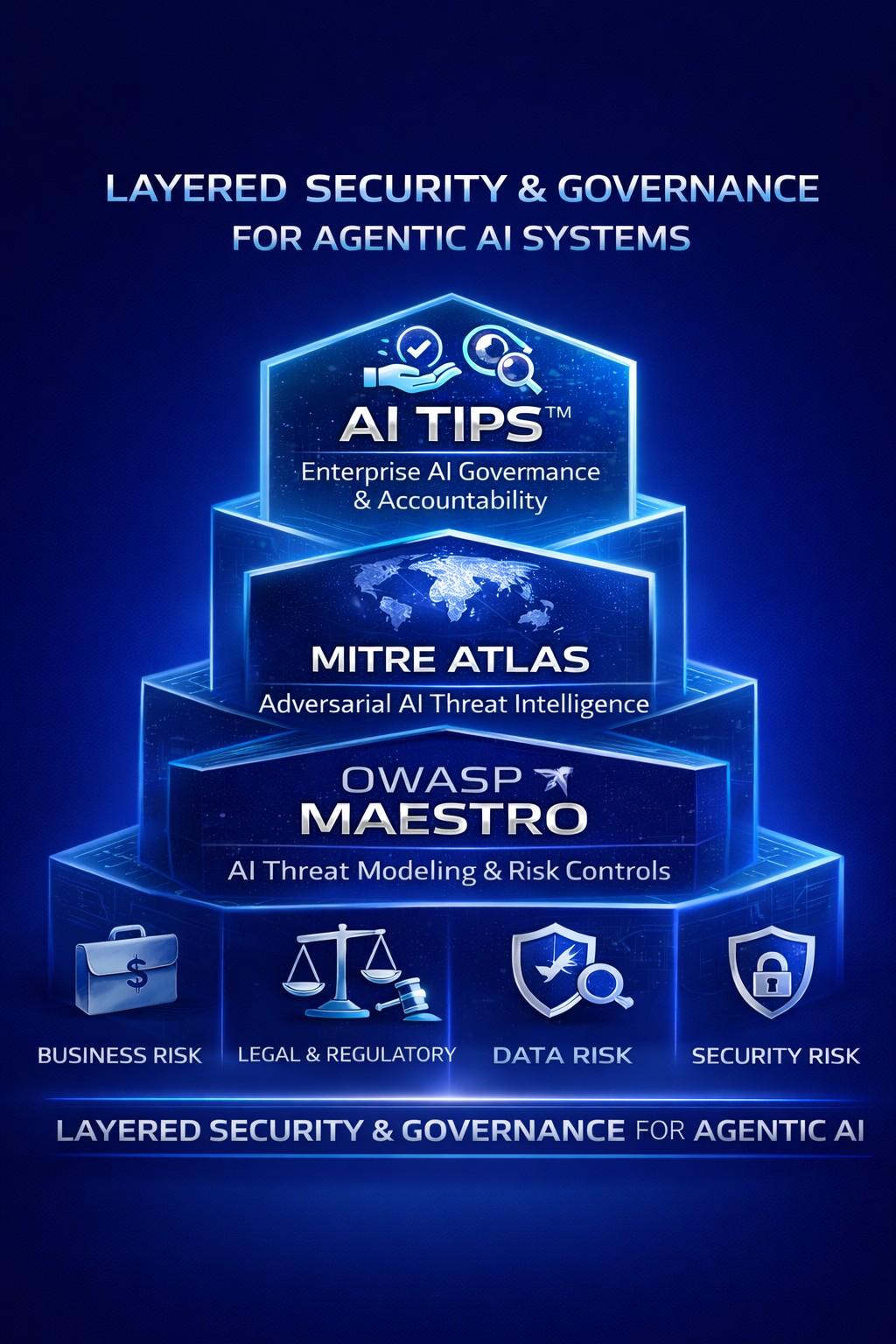
If the attack surface spans the entire AI ecosystem, security and governance must be layered across it.
Layer 1 — Threat Modeling (OWASP MAESTRO): Provides structured threat modeling for AI pipelines, tools, and orchestration layers. Identifies where vulnerabilities exist across the agentic architecture, from prompt injection to tool call hijacking to memory poisoning.
Layer 2 — Adversarial Intelligence (MITRE ATLAS): Maps attacker tactics, techniques, and procedures targeting AI systems. Translates the intelligence community's threat mapping approach into the AI domain.
Layer 3 — Enterprise Governance (AI TIPS): Provides enterprise-wide oversight across eight governance pillars — Cybersecurity, Privacy, Ethics and Bias, Transparency, Explainability, Governance, Audit, and Accountability. Delivers Trust Index scoring, lifecycle gates, and regulatory crosswalks that connect security findings to business risk decisions.
Without this governance layer, threat modeling and adversarial intelligence produce findings but no accountability.
What Leaders Should Do This Week
Audit your agent permissions — map every tool call, API connection, and data source your agents touch. Implement human-in-the-loop checkpoints for any agent action with financial, operational, or security impact. Classify agent actions by risk tier. Run a tabletop exercise for agent compromise. And assess your governance posture across all eight pillars to identify where your highest exposure sits.
The question is no longer whether the model is secure. The question is whether the entire AI ecosystem is governed.
By Pamela GUPTA
Keywords: Agentic AI, AI Governance, AI Orchestration
 When AI Makes the Workaround Scalable
 The Age of Continuous Shocks: Why the coming downturn will be decided in your supply chain
 Friday’s Leader Reflection Quote – Saeculum Leadership Leaders Accept Decisions Create Responsibilities
 The Corix Partners Friday Reading List - October 9, 2026
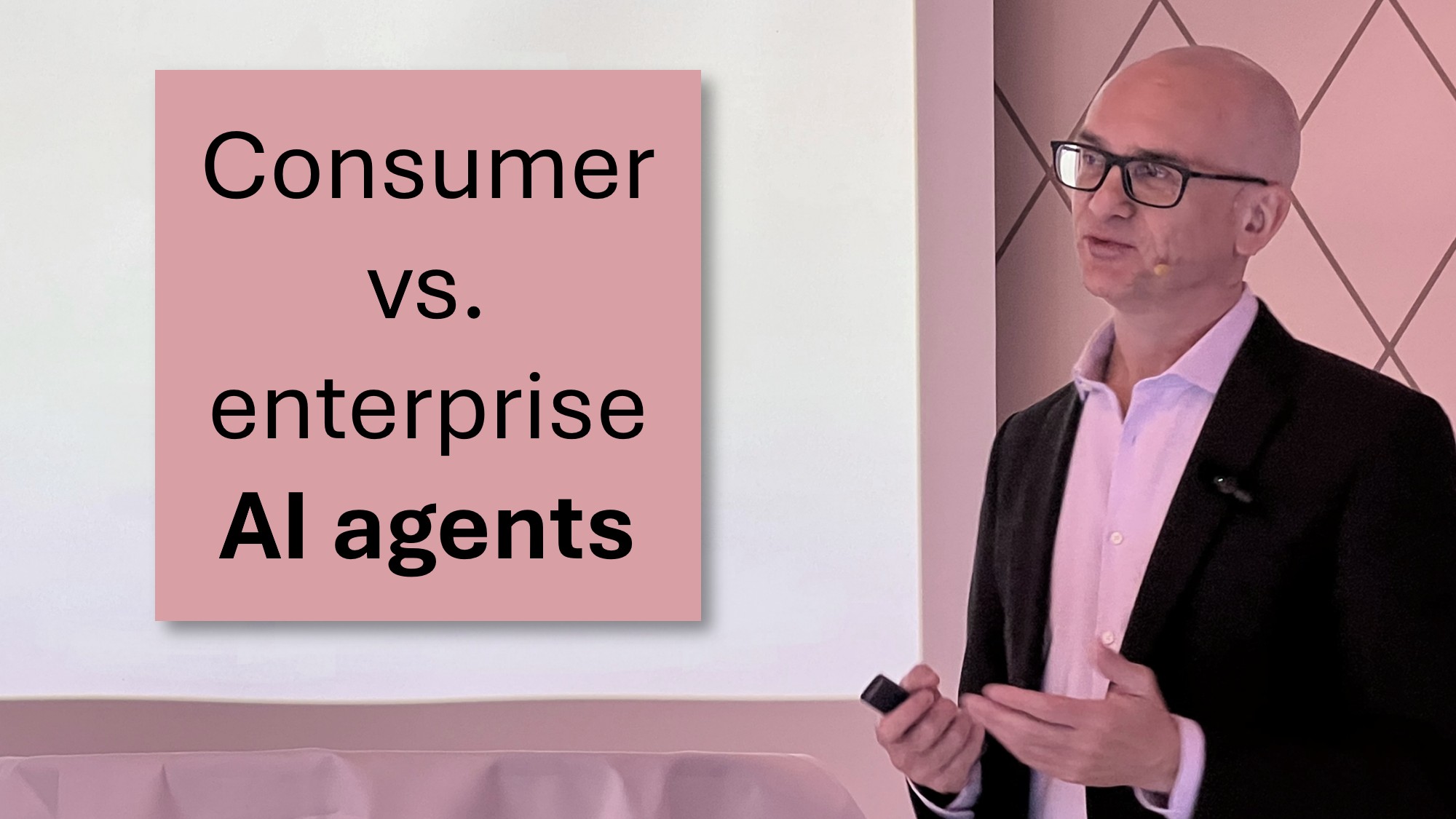 Consumer vs. enterprise AI agents