Dec04

A lot of organizations think they have a strategy issue, but more often it’s a planning issue.
If your annual plan starts with last year’s numbers, you’re already negotiating against your own ambition.
When planning turns into a routine of templates, historical run rates, and incremental tweaks, strategy quietly moves to the background.
Outcome-driven planning changes that. Start with the outcomes you actually want, agree on the few decisions that matter, and build the plan around those choices.
It sounds simple, but it forces clarity and real alignment. Most importantly, it keeps leaders focused on where the business needs to go — not where it happened to be last year.
Keywords: Digital Transformation, Finance, Transformation
 AI Is Exposing the Data Problems Humans Used to Hide
 "The AI may in fact be conscious." Really?
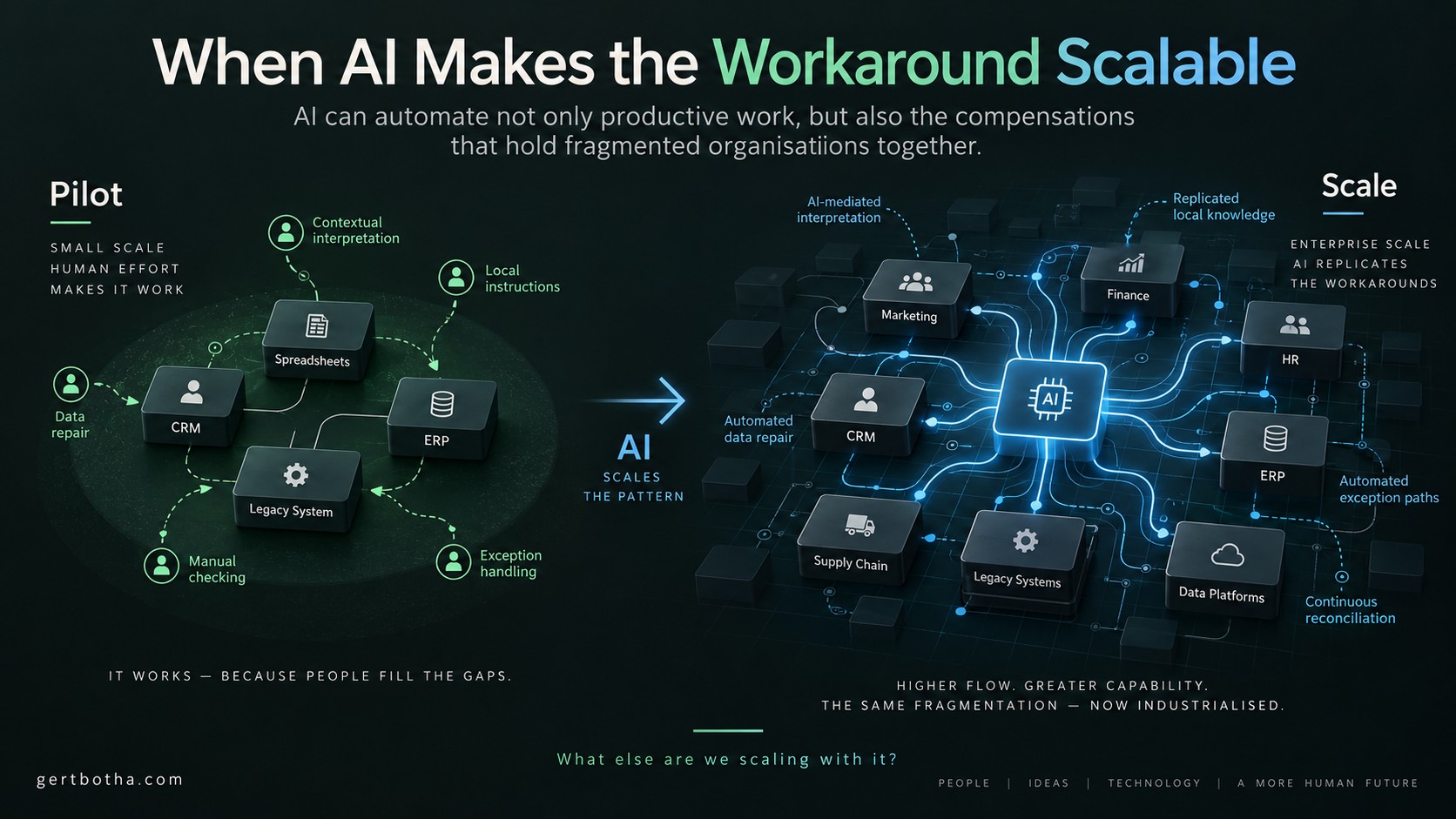 When AI Makes the Workaround Scalable
 The Age of Continuous Shocks: Why the coming downturn will be decided in your supply chain
 Friday’s Leader Reflection Quote – Saeculum Leadership Leaders Accept Decisions Create Responsibilities