Dec11

Sponsored Post
Insurance companies are increasingly adopting claims automation to transform their operations. While speed and cost are often highlighted benefits, the advantages extend much further. Understanding these can help insurers make informed decisions about technology investments.
In recent years, the insurance industry has experienced a significant shift towards automation, particularly in claims processing. This transformation is largely driven by the desire to enhance efficiency and reduce costs. Measuring the true ROI of claims automation requires looking beyond these immediate financial gains. By examining the comprehensive benefits, you can better grasp how this technology supports both operational improvements and strategic business goals. Utilizing insurance claims processing software in conjunction with other tools can yield even more substantial results.
One of the most impactful benefits of insurance claims processing software is its ability to significantly improve customer satisfaction. By streamlining processes, insurers can offer faster and more transparent communication with their clients. This transparency builds trust, as policyholders appreciate knowing where they stand in the claims process at any given time. Moreover, automated systems can personalize interactions by using data to tailor responses to individual needs and preferences, further enhancing the client experience.
Additionally, automation reduces the likelihood of human error, which can lead to misunderstandings or delays. When errors are minimized, customers receive accurate information promptly, leading to increased confidence in the insurer's reliability. These improvements in service quality directly correlate with higher customer retention rates and positive word-of-mouth referrals. In a competitive market, such enhancements are invaluable for maintaining a strong reputation and securing long-term customer loyalty.
Beyond immediate transactional benefits, claims automation enables insurers to provide 24/7 accessibility through self-service portals and mobile applications. Policyholders can submit claims, upload documentation, and track progress at their convenience without being constrained by traditional business hours. This level of accessibility is particularly valuable for customers dealing with stressful situations such as accidents or property damage, where immediate action and constant updates provide peace of mind. The ability to engage with the claims process on their own terms empowers customers and demonstrates the insurer's commitment to putting their needs first, ultimately fostering deeper relationships and brand loyalty.
The integration of automation into claims handling significantly reduces human error, resulting in more accurate and consistent outcomes. Automated systems meticulously follow programmed protocols, ensuring that each claim is processed according to predefined rules without deviation. This precision not only boosts efficiency but also enhances the reliability of claim settlements, minimizing disputes and appeals.
Accuracy in claims processing is crucial for maintaining both regulatory compliance and customer trust. Errors can lead to financial losses for insurers and dissatisfaction among policyholders. By employing automation, you mitigate these risks and ensure that your processes adhere strictly to industry standards. This not only safeguards your company from potential legal issues but also fortifies your reputation as a reliable service provider.
Advanced automation systems leverage artificial intelligence and machine learning algorithms to continuously improve accuracy over time. These intelligent systems can identify patterns in claims data, flag anomalies that may indicate fraud, and even predict potential issues before they escalate. By analyzing thousands of historical claims, automated systems develop increasingly sophisticated decision-making capabilities that surpass manual review processes. This predictive accuracy not only prevents fraudulent claims from slipping through but also ensures legitimate claims are processed without unnecessary delays or scrutiny. The result is a more equitable and efficient claims ecosystem that protects both the insurer's financial interests and the policyholder's right to fair treatment.
Automation plays a pivotal role in facilitating business growth by enabling insurers to scale operations effectively. As your business expands, managing increased claim volumes manually becomes unsustainable. Automated solutions provide the scalability needed to handle such growth without compromising service quality or incurring prohibitive costs. This capability allows you to explore new markets and expand your client base with confidence.
Additionally, automation equips you with the flexibility to adapt to evolving market demands swiftly. Whether it's integrating new types of insurance products or complying with regulatory changes, automated systems can be updated efficiently to accommodate these shifts. By staying agile and responsive, you position your company at the forefront of industry innovation, ready to capitalize on emerging opportunities and trends.
Understanding the multifaceted advantages of claims automation requires a holistic evaluation approach that considers more than just immediate returns on investment (ROI). When assessing ROI, it's essential to factor in long-term benefits such as enhanced customer satisfaction, reduced error rates, and strategic scalability, all contributing to sustained business success.
To truly gauge the effectiveness of your automation efforts, it's helpful to establish clear metrics that reflect these diverse benefits. For example, measuring customer satisfaction scores before and after implementing automation provides insight into service improvements. Additionally, tracking error reduction rates and analyzing their impact on operational costs can highlight further efficiencies gained through technology investments.
Moreover, new outcome metrics like Lifetime Value (LTV) lift, churn reduction, and Net Promoter Score (NPS) delta by claim type can offer deeper insights into the value added by automation. These metrics help in understanding the broader impact on customer loyalty and business growth, making them particularly appealing to executives and data teams looking for comprehensive evaluation methods.
Keywords: AI, Predictive Analytics, InsurTech
 AI Is Exposing the Data Problems Humans Used to Hide
 "The AI may in fact be conscious." Really?
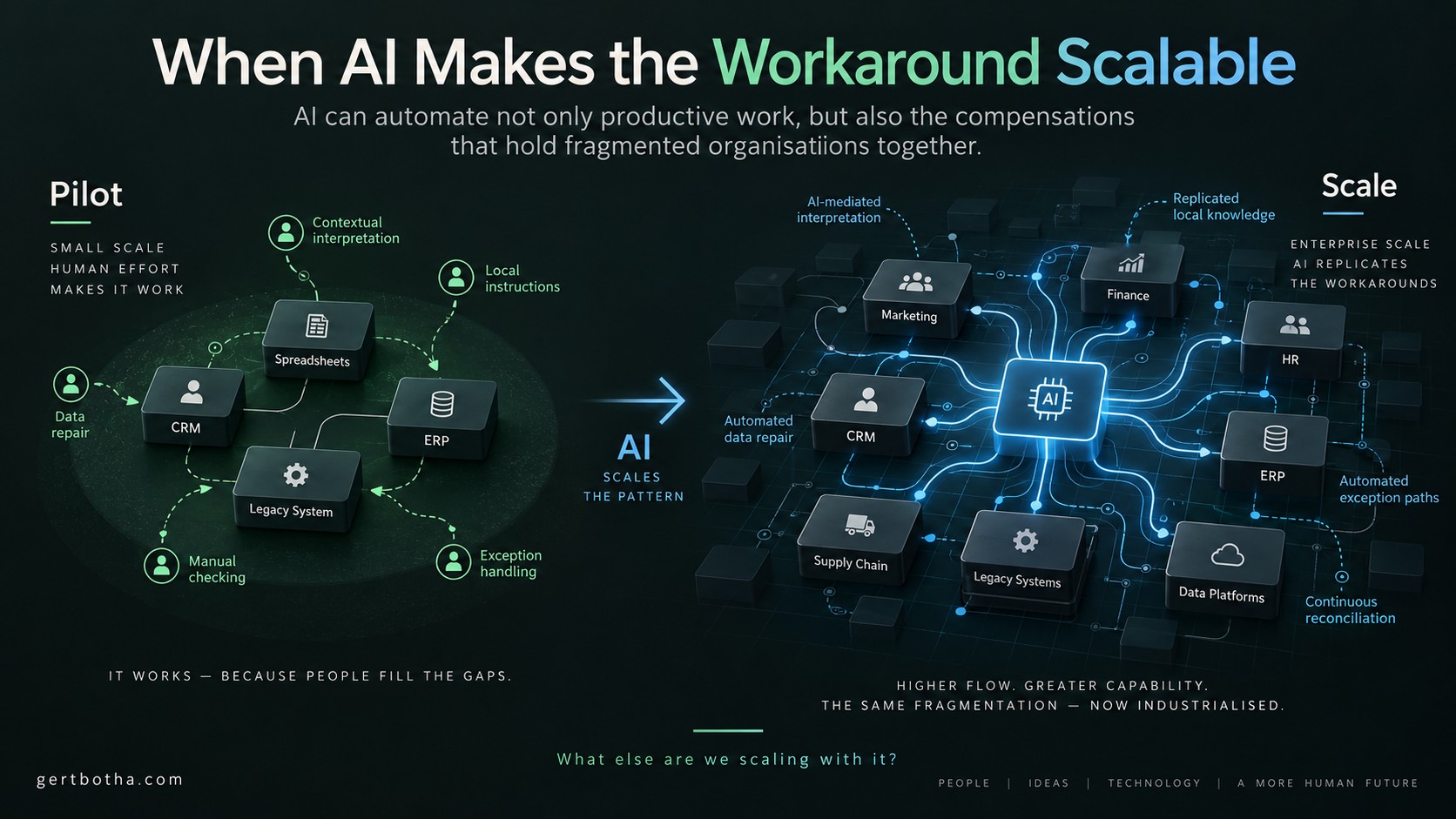 When AI Makes the Workaround Scalable
 The Age of Continuous Shocks: Why the coming downturn will be decided in your supply chain
 Friday’s Leader Reflection Quote – Saeculum Leadership Leaders Accept Decisions Create Responsibilities