Mar11
There are moments when the world suddenly feels less predictable.
We seem to be in one of those moments again.
Geopolitical tensions rise.
Energy markets shift.
Confidence wobbles.
Supply chains feel the strain.
What felt stable yesterday suddenly feels less certain today.
When uncertainty rises like this, leaders rarely struggle with information.
They struggle with decision-making.
Not because there isn’t enough data.
But because volatility changes the psychology of leadership.
And when that happens, decision quality often drops just when it matters most.
Over the past three decades I’ve guided clients and audiences through many periods like this.
Different crises.
Different industries.
Different triggers.
But the human response to uncertainty tends to follow remarkably familiar patterns.
And that’s where leadership thinking becomes most important.
When environments become volatile, people don’t suddenly become irrational.
But they do become more cautious, more reactive, and sometimes more emotional in their decision-making.
That’s human.
Across many leadership teams I’ve worked with, three patterns tend to appear when the world becomes uncertain.
The first instinct is to pause.
Leaders wait for the situation to settle.
They want clearer signals before committing to decisions.
The challenge is that volatile environments rarely produce perfect clarity.
Markets move.
Policies shift.
Global events ripple through systems.
Waiting too long quietly becomes a decision in itself.
And sometimes the wrong one.
The second pattern is the opposite.
When uncertainty rises, organisations feel pressure to act quickly.
Movement feels productive.
But movement is not the same as progress.
Decisions made purely to relieve pressure often lack strategic thinking.
Leaders feel better in the moment.
But the organisation may spend months unwinding those decisions later.
The third pattern is one I often describe as PTFA — Past Trauma, Future Anxiety.
Previous crises leave emotional fingerprints inside organisations.
Pandemics.
Financial shocks.
Supply chain disruptions.
When new uncertainty appears, leaders unconsciously react based on what hurt them last time.
The result is that organisations often start fighting the previous crisis instead of responding intelligently to the current one.
When the world becomes volatile, most leaders focus on the headline event.
The conflict.
The policy change.
The economic shock.
But in practice, the biggest impacts rarely come from the event itself.
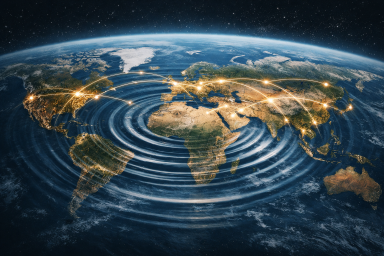
They come from the ripple effects.
Energy costs move through supply chains.
Consumer confidence shifts.
Investment decisions change.
Hiring patterns move.
These ripple effects spread quietly across industries.
And often faster than organisations expect.
One of the most valuable foresight questions leaders can ask in uncertain times is:
Where will the ripple effects appear next?
That question alone often reveals far more than trying to predict the original event.
When volatility rises, many organisations instinctively look for large strategic responses.
Major restructures.
Big investments.
Dramatic pivots.
But in reality, volatile environments reward something much simpler.
Micro-decisions.
Small, thoughtful decisions made consistently over time.
Not dramatic swings.
Just the next intelligent step.
Micro-decisions work because they allow organisations to move forward without locking themselves into assumptions that may change quickly.
Large decisions can be difficult to unwind.
Small decisions are easier to adjust as new information appears.
In volatile environments, leadership is less about controlling the future and more about navigating it intelligently.
In uncertain environments, leadership teams benefit from asking simple but powerful questions.
Not complicated frameworks.
Just disciplined thinking.
For example:
How often should we be reviewing our assumptions right now?
Where could ripple effects actually touch our organisation first?
Which decisions are reversible if the situation changes?
Which decisions would be difficult to unwind later?
What genuinely needs to happen this week, and what can wait?
These questions help leadership teams focus on decision quality rather than decision speed.
And that distinction becomes critical when environments are volatile.
One of the least discussed aspects of leadership in uncertain environments is psychological.
A decision that looks sensible today may need to change next week.
Not because it was wrong.
But because the environment moved.
Strong leaders understand this.
They adjust.
They refine.
They move forward without spending energy defending old assumptions.
Sometimes leadership simply requires the ability to forgive decisions when conditions change and keep moving forward.
Volatility does not remove the need for leadership.
It actually demands more of it.
Not louder leadership.
Not dramatic leadership.
Just calm judgement.
The ability to observe signals clearly.
The discipline to think about ripple effects.
And the confidence to make the next good decision.
The future rarely arrives in a single dramatic moment.
More often it unfolds through a series of subtle shifts.
In those moments, the most effective leaders don’t try to control everything.
They simply focus on making the next intelligent decision.
And then the one after that.
Choose Forward.
By Morris Misel
Keywords: Business Strategy, Innovation, Leadership
 Best Supply Chain AI Tools in 2026: SCM SENSEI AI and Ask Lora Compared
 Making Silos Permeable
 The Corix Partners Friday Reading List - October 2, 2026
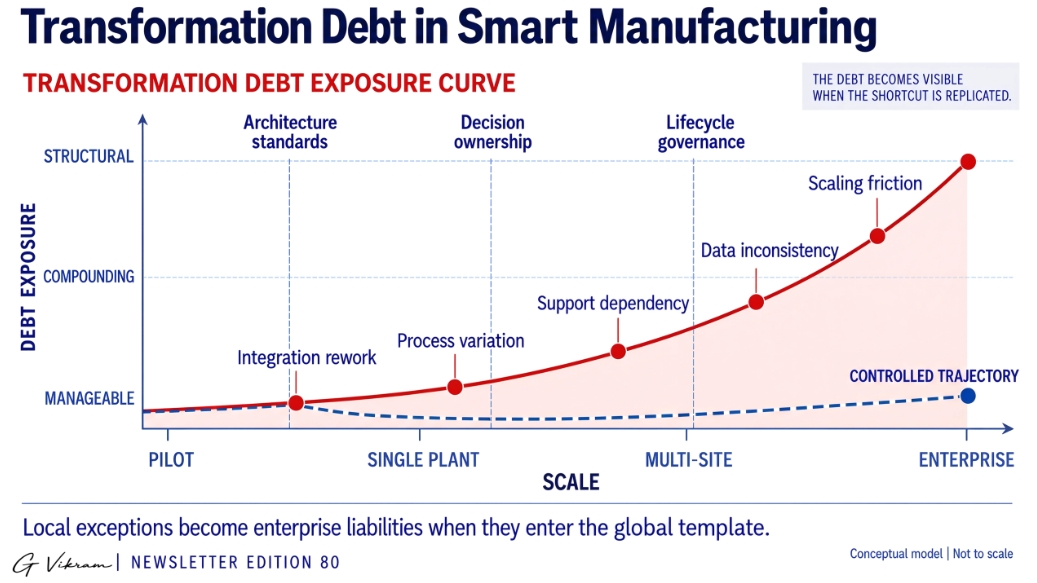 The most dangerous debt in a smart factory isn’t financial.
 Why mission changes everything, leadership lessons from two boardrooms