
Jan02

FCRQ179 Leadership Learning!
On this day, 2 January 1905, Japan’s victory at Port Arthur marked Russia’s collapse under strategic misjudgement, operational pressures and evolving military realities. The Russian command entered the conflict with a belief in the superiority of its fortifications and naval presence, assuming that Port Arthur’s defences were strong enough to withstand any prolonged assault. This confidence was reinforced by the port’s reputation as one of the most heavily fortified positions in the world, defended by close to fifty thousand men and more than five hundred artillery pieces. The surrounding terrain had been shaped into a multi-layered defensive system designed to repel any sustained attack. Japanese forces approached the campaign with meticulous preparation, coordinated land and naval operations, and a willingness to adapt tactics as conditions evolved. Their use of heavy artillery, including twenty eight-centimetre howitzers capable of firing nearly five hundred pound shells over long distances, decisively degraded Russian positions. The Japanese also employed trench systems, searchlights, tactical radio signalling, and early forms of radio jamming, technologies that foreshadowed the industrialised warfare of the First World War. The fall of Port Arthur delivered a profound psychological shock to the international system, marking the first modern defeat of a European empire by an Asian power. As the siege progressed, deteriorating supplies, declining morale, and fractured command structures compounded the garrison’s isolation. The Japanese naval blockade prevented effective reinforcement or evacuation, leaving defenders increasingly cut off. Internal disagreements among Russian commanders and conflicting assessments of the situation further weakened cohesion under sustained pressure. The death of General Roman Kondratenko, one of the most capable Russian officers, significantly reduced the garrison’s ability to resist. The eventual decision to surrender was driven by humanitarian concerns, recognising that continued resistance would result in unnecessary suffering for soldiers and civilians alike. In the broader context of the Russo-Japanese War, Japan’s strategic planning, rapid mobilisation, and unified command structure contrasted sharply with Russia’s logistical difficulties, slower decision-making, and persistent underestimation of its opponent. The fall of Port Arthur shifted momentum decisively in Japan’s favour and undermined Russian confidence. It contributed to domestic unrest within Russia, exposing weaknesses in governance, military organisation, and strategic foresight, and feeding the discontent that would erupt in the 1905 Revolution. Its legacy continues to inform how leadership judgement, preparation, and awareness determine outcomes when realities shift faster than assumptions.
Change Leadership Lessons: These historical dynamics mirror the challenges leaders face when organisational assumptions collide with evolving competitive realities. The fall of Port Arthur reveals enduring truths about how leaders respond when reality diverges from belief. Leaders of change recognise that relying on outdated assumptions rather than current evidence allows external threats to grow unnoticed. They understand that genuine capability development matters more than inherited prestige when competing in shifting environments. Change leaders know that disciplined preparation consistently outperforms rivals who depend on past success instead of present readiness. They accept that confronting uncomfortable realities early prevents avoidable crises created by reassuring internal narratives. Leaders of change update their strategic understanding as conditions evolve to protect their organisations from stagnation driven by rigid beliefs. Change Leaders Recognise Emerging Realities.
“Change demands leaders who stay aware, prepare with discipline, act with unity, adapt with purpose, and respond with courage when circumstances move beyond inherited assumptions.”
Application. Change Leadership Responsibility 1 - Articulate a Change Vision: The fall of Port Arthur demonstrates how organisations falter when leaders articulate futures based on inherited assumptions rather than emerging realities. A clear change vision requires leaders to define a credible and evidence-informed future before pressure forces reaction. When leaders articulate a vision grounded in reality, they create the conditions for coherence, discipline, and alignment across the organisation. Such a vision does not deny uncertainty or complexity. Instead, it acknowledges them while remaining unequivocal about the future the organisation is committed to deliver. A disciplined change vision prevents assumption-driven failure by forcing leaders to confront reality before it confronts them. This clarity becomes the reference point that guides judgement, exposes contradictions, and prevents drift as conditions evolve. Leadership of change demands that leaders use this vision to anchor decisions, maintain direction, and ensure organisational energy is directed toward a future shaped by awareness rather than assumption. When leaders fulfil this responsibility with integrity, they strengthen resilience and ensure action remains aligned with reality.
Final Thoughts: Enduring transformation is not sustained by momentum alone but by leadership grounded in judgement as uncertainty intensifies. As AI and emerging technologies reshape organisational environments at an accelerating pace, the ability to recognise reality and articulate clear direction becomes a defining leadership responsibility. Leaders who remain anchored to a credible future despite ambiguity create the conditions for confidence, alignment, and sustained organisational progress.
Further Reading: Change Management Leadership - Leadership of Change® Volume 4.
For further reading please visit our websites: https://www.a2b.consulting https://www.peterfgallagher.com Amazon.com: Peter F Gallagher: Books, Biography, Blog, Audiobooks, Kindle
Leadership of Change® Body of Knowledge Volumes: Change Management Body of Knowledge (CMBoK) Books: Volumes 1, 2, 3, 4, 5, 6, 7, 8, 9, 10, A, B, C, D & E available on both Amazon and Google Play:
~ Leadership of Change® Volume 1 - Change Management Fables
~ Leadership of Change® Volume 2 - Change Management Pocket Guide
~ Leadership of Change® Volume 3 - Change Management Handbook
~ Leadership of Change® Volume 4 - Change Management Leadership
~ Leadership of Change® Volume 5 - Change Management Adoption
~ Leadership of Change® Volume 6 - Change Management Behaviour
~ Leadership of Change® Volume 7 - Change Management Sponsorship
~ Leadership of Change® Volume 8 - Change Management Charade
~ Leadership of Change® Volume 9 - Change Management Insanity
~ Leadership of Change® Volume 10 - Change Management Dilenttante
~ Leadership of Change® Volume A - Change Management Gamification - Leadership
~ Leadership of Change® Volume B - Change Management Gamification - Adoption
Keywords: Business Strategy, Change Management, Leadership
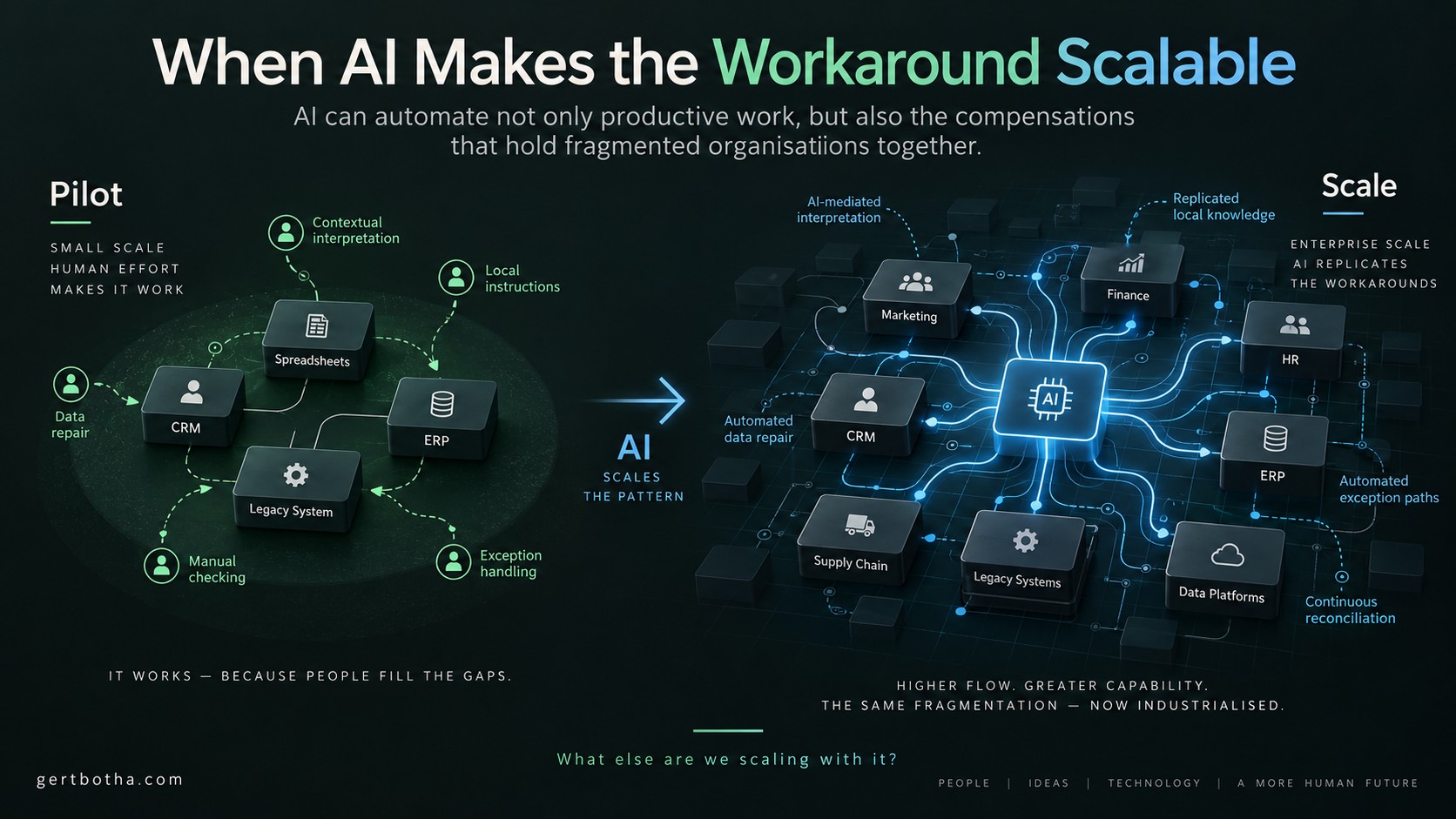 When AI Makes the Workaround Scalable
 The Age of Continuous Shocks: Why the coming downturn will be decided in your supply chain
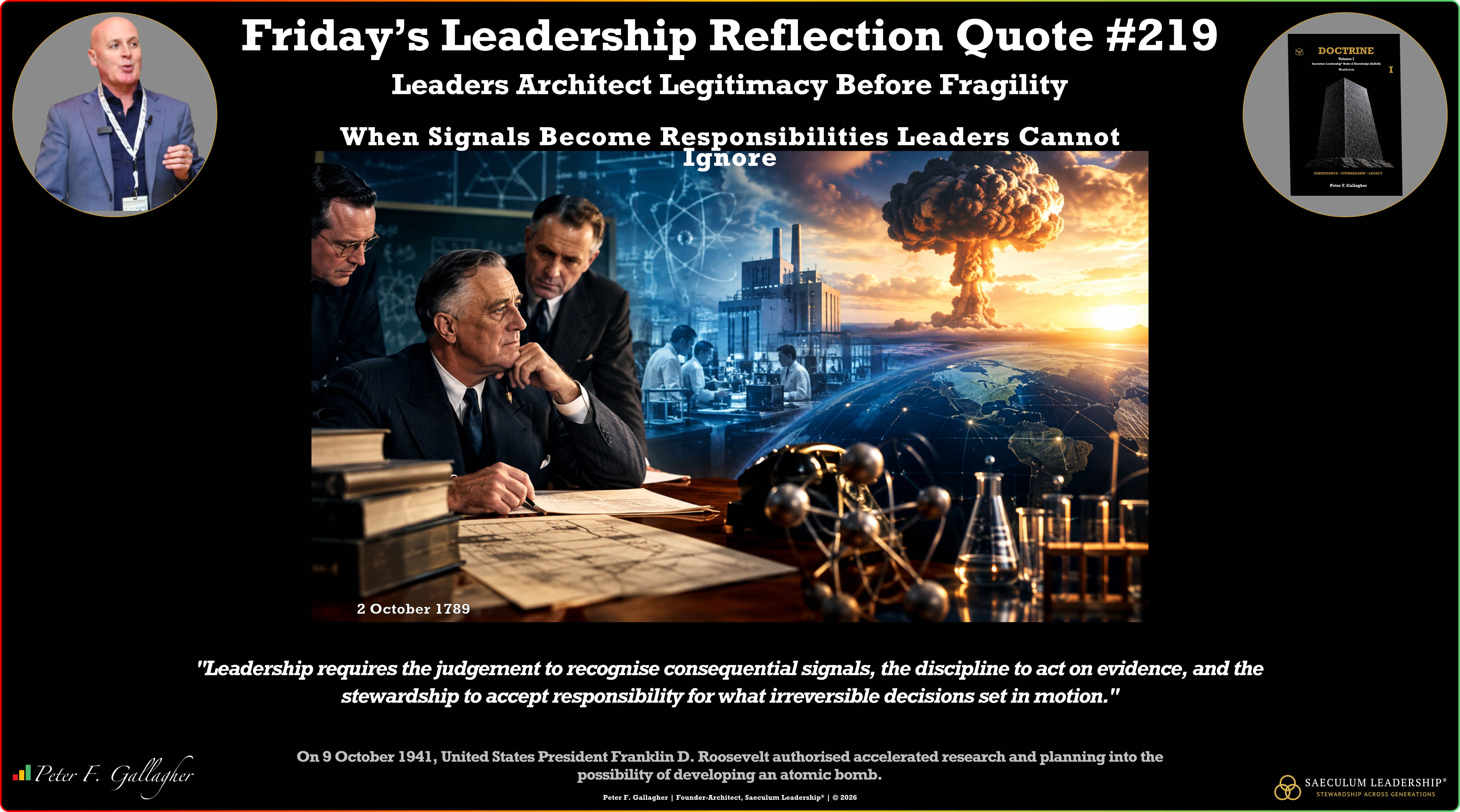 Friday’s Leader Reflection Quote – Saeculum Leadership Leaders Accept Decisions Create Responsibilities
 The Corix Partners Friday Reading List - October 9, 2026
 Consumer vs. enterprise AI agents