Apr03
FCRQ192 Leadership Learning!
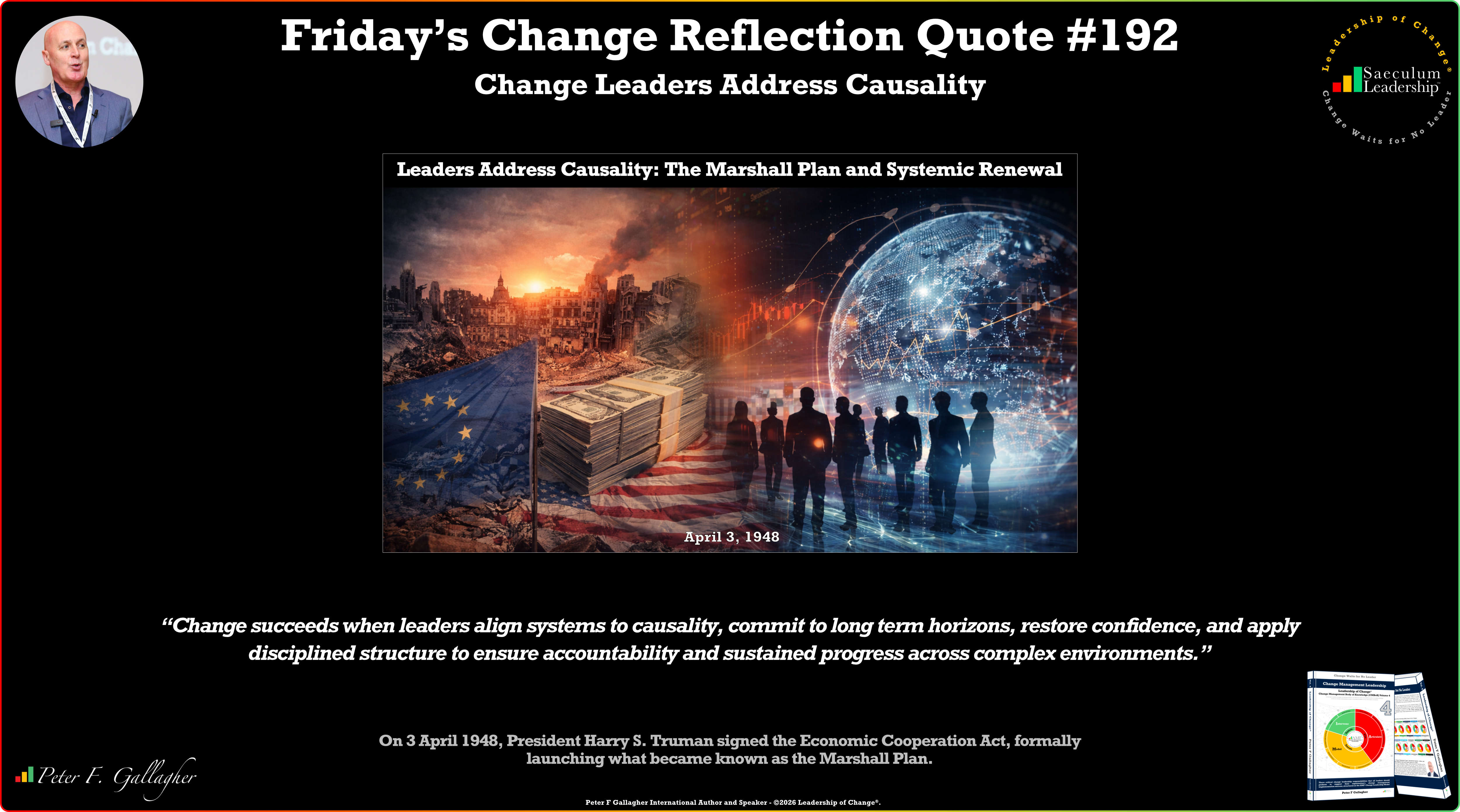
On 3 April 1948, President Harry S. Truman signed the Economic Cooperation Act, formally launching what became known as the Marshall Plan. This legislation authorised approximately 13.3 billion dollars in economic assistance to Western European nations over a four-year period, at a time when the continent remained economically devastated following the Second World War. Industrial output had collapsed, infrastructure was severely damaged, and political instability was rising across multiple nations. The significance of this moment lies not only in the scale of financial support, but in the strategic intent underpinning it. The programme was designed to address underlying economic causality, including weakened production systems, disrupted trade flows, and declining institutional confidence, rather than responding only to visible symptoms. Rather than providing fragmented or reactive aid, the programme was structured to restore productive capacity, stabilise currencies, and rebuild confidence in market systems. It required European nations to collaborate in planning and allocating resources, thereby fostering early forms of economic coordination that would later influence broader regional integration. This initiative also reflected a growing recognition that economic instability posed systemic risks beyond national borders. Widespread unemployment, inflation, and supply shortages were not isolated issues but interconnected pressures capable of undermining democratic institutions and enabling alternative ideological models to take hold. The Act therefore represented a deliberate effort to address root causes rather than symptoms. Execution required disciplined and accountable governance. Funds were allocated conditionally, with oversight mechanisms ensuring accountability and alignment with recovery objectives. This was not an open-ended transfer of resources, but a structured intervention designed to produce measurable outcomes over time. Industrial recovery accelerated, trade flows resumed, and confidence gradually returned to European economies. The historical importance of this decision rests in its demonstration that large scale recovery demands coordinated, sustained effort anchored in clear purpose. It also marked a shift from short term relief thinking to long term system rebuilding. The programme contributed to economic stabilisation across Western Europe and helped establish the conditions for future growth and cooperation. This moment illustrates how periods of disruption expose structural weaknesses that require deliberate redesign. It also shows that recovery is rarely achieved through isolated action, but through integrated approaches that align resources, governance, and intent over time. The enduring impact of the Act lies in its ability to convert crisis into an opportunity for systemic renewal and sustained economic resilience. For Saeculum Leadership™, the Marshall Plan stands as a defining signal of the post‑war order—an early marker of a cycle whose stabilising structures are now reaching their natural end.
Change Leadership Lessons: The Marshall Plan demonstrates that effective change leadership begins by diagnosing causality before mobilising action. Leaders of change align complex systems around underlying causality to ensure coherence, consistency, and shared direction across interconnected organisational and economic environments. They establish structured interventions grounded in causality, supported by governance to ensure accountability and measurable progress throughout the change process. Change leaders commit to long term horizons, recognising that sustainable transformation requires persistence beyond immediate corrective actions. They focus on restoring confidence to stabilise behaviour, reinforce trust, and enable coordinated progress during periods of uncertainty. Leaders of change ensure resources are deployed conditionally, linking investment to reform and reinforcing responsibility for outcomes. Change Leaders Address Causality.
“Change succeeds when leaders align systems to causality, commit to long term horizons, restore confidence, and apply disciplined structure to ensure accountability and sustained progress across complex environments.”
Application. Change Leadership Responsibility 1 - Articulate a Change Vision: Sustained organisational transformation rarely begins with certainty. It begins with understanding causality. It often emerges when leaders interpret early signals within complex environments and translate those insights into a coherent direction for progress. A credible change vision does more than express ambition. It clarifies the underlying causality connecting emerging developments, organisational capability, and long-term opportunity. Leaders engaging with complexity recognise patterns across technology, markets, institutions, and behaviour that indicate where change is likely to unfold. This interpretation is not optional. It is a central leadership responsibility. Without clear articulation, organisations struggle to understand why a direction is valid or why early commitment is required. Stakeholders sustain engagement when the rationale is understood and when present actions are clearly linked to future outcomes. Leaders therefore translate complexity into structured explanation, ensuring uncertainty is recognised as part of disciplined discovery rather than confusion. Effective articulation strengthens organisational focus. When individuals understand the forces shaping future conditions, they are less likely to disengage when results are not immediate. By recognising emerging ecosystem relationships and communicating their significance clearly, leaders enable organisations to move with coherence, discipline, and sustained long-term intent.
Final Thoughts: The Marshall Plan demonstrates that leaders who address causality do not simply respond to disruption, they redesign systems to produce sustained outcomes. In an era shaped by artificial intelligence, accelerating complexity, and systemic interdependence, leadership effectiveness will increasingly depend on the ability to diagnose causality and act with precision. The responsibility of change leaders is clear: articulate a compelling vision grounded in causality, aligning insight and intent to build resilient and adaptive systems for the future.
Further Reading: Change Management Leadership - Leadership of Change® Volume 4.
Peter F. Gallagher, a 20‑book author, consults, speaks, and writes on Saeculum Leadership™ and Leadership of Change®. He works exclusively with boards, CEOs, and senior leadership teams to prepare and align them to effectively and proactively lead their organisations through transformation in a rapidly evolving epoch.
For further reading please visit our websites: https://www.a2b.consulting https://www.peterfgallagher.com Amazon.com: Peter F Gallagher: Books, Biography, Blog, Audiobooks, Kindle
Leadership of Change® Body of Knowledge Volumes: Change Management Body of Knowledge (CMBoK) Books: Volumes 1-10.A-E & I-5
~ Leadership of Change® Volume 1 - Change Management Fables
~ Leadership of Change® Volume 2 - Change Management Pocket Guide
~ Leadership of Change® Volume 3 - Change Management Handbook
~ Leadership of Change® Volume 4 - Change Management Leadership
~ Leadership of Change® Volume 5 - Change Management Adoption
~ Leadership of Change® Volume 6 - Change Management Behaviour
~ Leadership of Change® Volume 7 - Change Management Sponsorship
~ Leadership of Change® Volume 8 - Change Management Charade
~ Leadership of Change® Volume 9 - Change Management Insanity
~ Leadership of Change® Volume 10 - Change Management Dilenttante
~ Leadership of Change® Volume A - Change Management Gamification - Leadership
~ Leadership of Change® Volume B - Change Management Gamification - Adoption
Keywords: Leadership, Change Management, Business Strategy
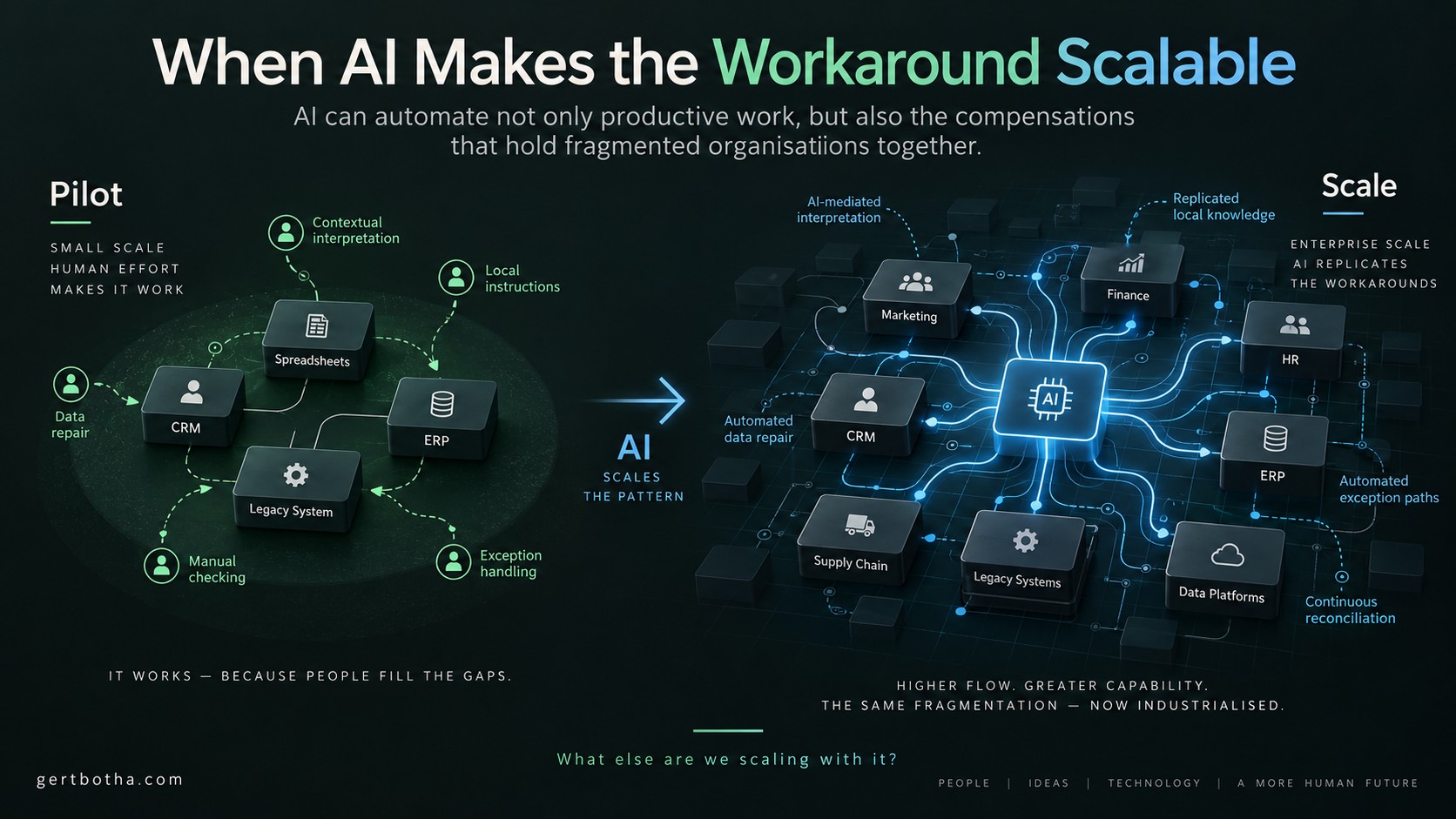 When AI Makes the Workaround Scalable
 The Age of Continuous Shocks: Why the coming downturn will be decided in your supply chain
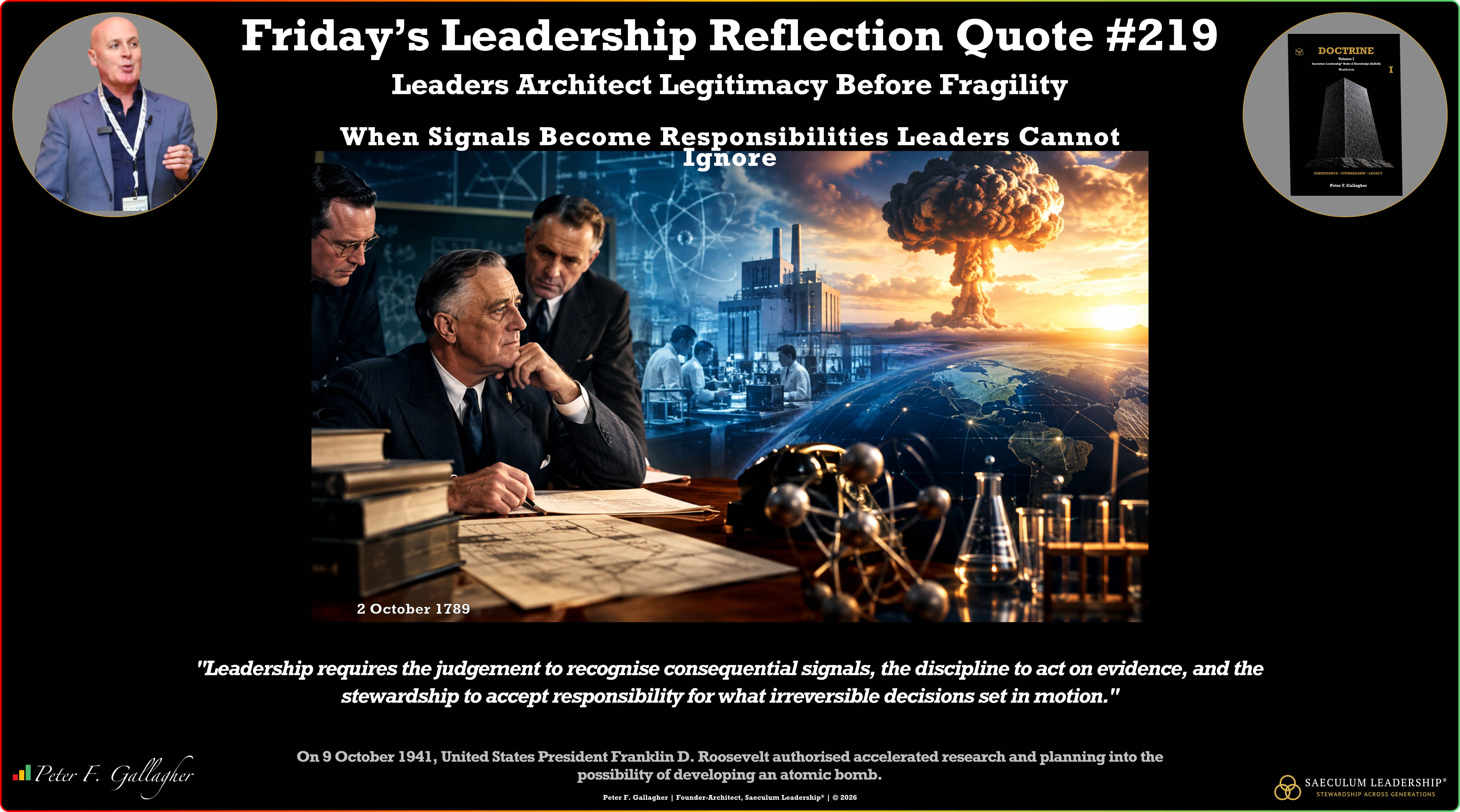 Friday’s Leader Reflection Quote – Saeculum Leadership Leaders Accept Decisions Create Responsibilities
 The Corix Partners Friday Reading List - October 9, 2026
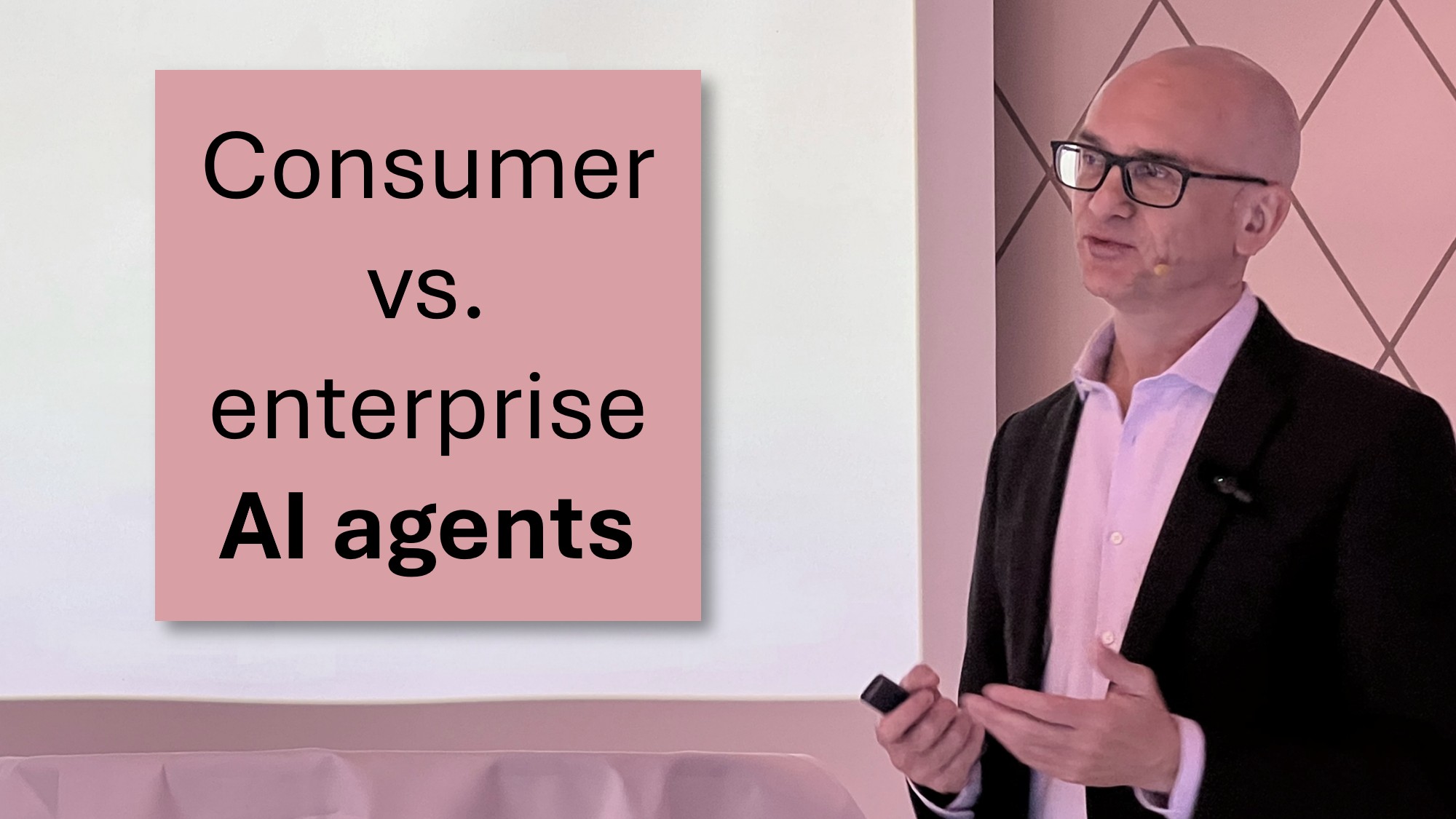 Consumer vs. enterprise AI agents