Jan28

Sponsored Post
Leadership education still leans heavily on strategy frameworks, financial literacy, and operational control. Those areas matter. Yet they rarely explain why two leaders with similar credentials produce very different outcomes. One builds loyalty and momentum. The other manages constant friction and quiet disengagement.
The difference often lies in emotional intelligence. Many still label it a soft skill, which makes it sound optional or intuitive. In reality, emotional intelligence functions as a practical leadership capability. It shapes trust, decision quality, and execution speed. Teams with emotionally intelligent leaders resolve tension faster, communicate with more precision, and stay focused under pressure. These outcomes translate into results that appear hard and measurable, even though the skill behind them feels human and subtle.
The problem lies in how leadership development treats emotional intelligence. It often appears as a workshop topic rather than a core discipline. That gap leaves capable leaders underprepared for the human complexity that defines modern organizations.
Leadership rarely improves through experience alone. Experience can reinforce habits, both effective and limiting. Advanced education provides structure for reflection, language for complex dynamics, and frameworks that connect behavior to outcomes. In business leadership, this level of education supports better judgment in moments that carry risk, ambiguity, or interpersonal strain.
Programs that focus on leadership at an advanced level tend to integrate psychology, ethics, and organizational behavior into strategic thinking. This integration matters because leadership decisions often trigger emotional responses long before they show financial impact. Leaders who understand this sequence gain more control over outcomes.
An advanced program, such as an online doctorate in leadership, addresses this gap directly. It equips future business administration experts with tools to study leadership as a system rather than a role. Coursework often examines how values, emotional awareness, and communication patterns influence performance across teams and institutions. This approach suits leaders who already operate at a high level and want to refine how they influence people at scale.
Education at this depth reframes emotional intelligence as a leadership instrument. It becomes something to analyze, practice, and apply with intention.
Emotional intelligence shows up in observable behaviors. Leaders demonstrate it when they recognize emotional cues in meetings, respond without escalation, and adjust communication based on context. These behaviors create patterns that teams notice quickly.
Trust grows when leaders respond consistently and listen without defensiveness. Conflict resolution improves when leaders separate emotion from accusation and guide conversations toward shared goals. Team performance accelerates when people spend less energy on uncertainty and more on execution.
Organizations often measure these outcomes not just through KPIs, but also indirectly through engagement surveys or retention patterns. Even without formal metrics, leaders can observe faster alignment after decisions and fewer unresolved tensions. Emotional intelligence acts as a multiplier. It increases the effectiveness of strategy by reducing friction in how that strategy travels through people.
This advantage becomes clearer in high-pressure environments. Leaders who regulate their own reactions set the emotional tone for others. Calm responses invite clarity. Reactive responses invite hesitation. Over time, teams learn which environment they operate in and adjust effort accordingly.
Emotional intelligence loses credibility when treated as abstract or inspirational. It gains power when embedded into daily leadership routines. Leaders practice it during performance conversations, cross-functional negotiations, and moments of disagreement.
One practical shift involves how leaders ask questions. Open questions invite information and signal respect. Closed questions signal control and limit insight. Another shift involves timing. Leaders who pause before responding create space for better judgment. This pause often prevents misunderstandings that cost time later.
Feedback conversations offer another example. Leaders with emotional intelligence address behavior without attacking identity. They focus on impact rather than intent. This approach preserves dignity while still driving accountability.
These practices require discipline. They also require self-awareness, which develops through reflection and feedback. Leaders who seek input on their own behavior model the learning mindset they expect from others.
Conflict reveals leadership quality quickly. Avoidance allows issues to harden. Aggression escalates them. Emotional intelligence offers a third path that focuses on resolution and learning.
Effective leaders acknowledge tension early. They name the issue without assigning blame. This acknowledgment reduces speculation and signals fairness. During discussion, they listen for underlying concerns rather than surface positions. This skill often uncovers shared priorities that move conversations forward.
Emotionally intelligent leaders also manage their own responses during conflict. They recognize triggers and regulate tone. This regulation keeps discussions productive, even when the stakes feel high.
Common behaviors that support this approach include:
These actions slow conversations slightly, yet they save time by preventing repeated disputes. Over time, teams learn to address issues directly rather than around corners.
Emotional intelligence influences culture through repetition. Leaders model behaviors. Teams mirror them. Over time, these patterns define how work happens.
Organizations with emotionally intelligent leadership often experience smoother collaboration across functions. Decisions move faster because trust reduces the need for excessive validation. Change initiatives gain traction because leaders address concerns openly rather than dismissing them.
Leaders can strengthen this impact by aligning emotional intelligence with performance expectations. Clear standards for communication, feedback, and decision-making reinforce consistency. Training programs that connect emotional intelligence to business outcomes further legitimize its role.
Keywords: Management, Leadership, Education
 AI Is Exposing the Data Problems Humans Used to Hide
 "The AI may in fact be conscious." Really?
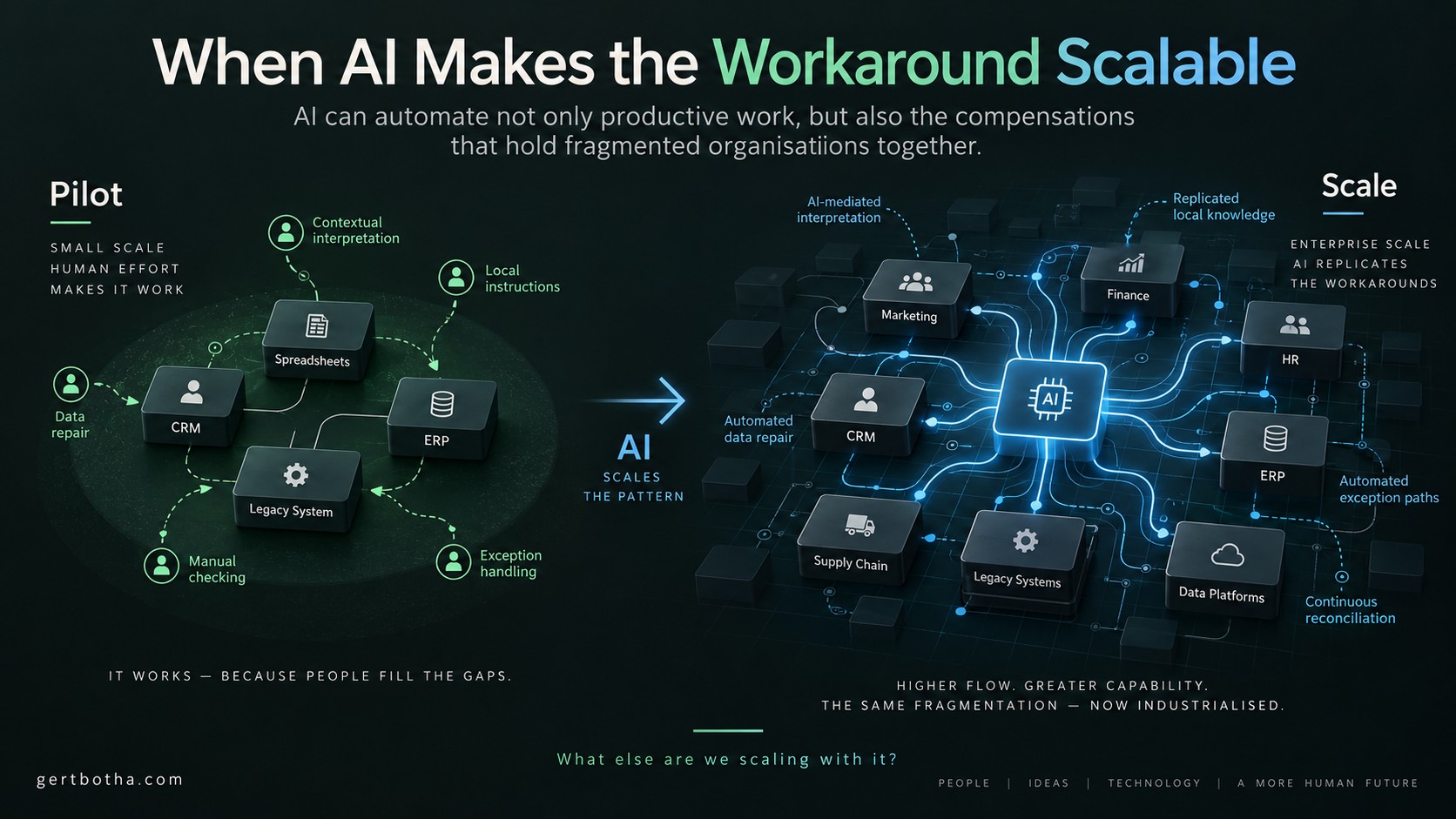 When AI Makes the Workaround Scalable
 The Age of Continuous Shocks: Why the coming downturn will be decided in your supply chain
 Friday’s Leader Reflection Quote – Saeculum Leadership Leaders Accept Decisions Create Responsibilities