Apr22
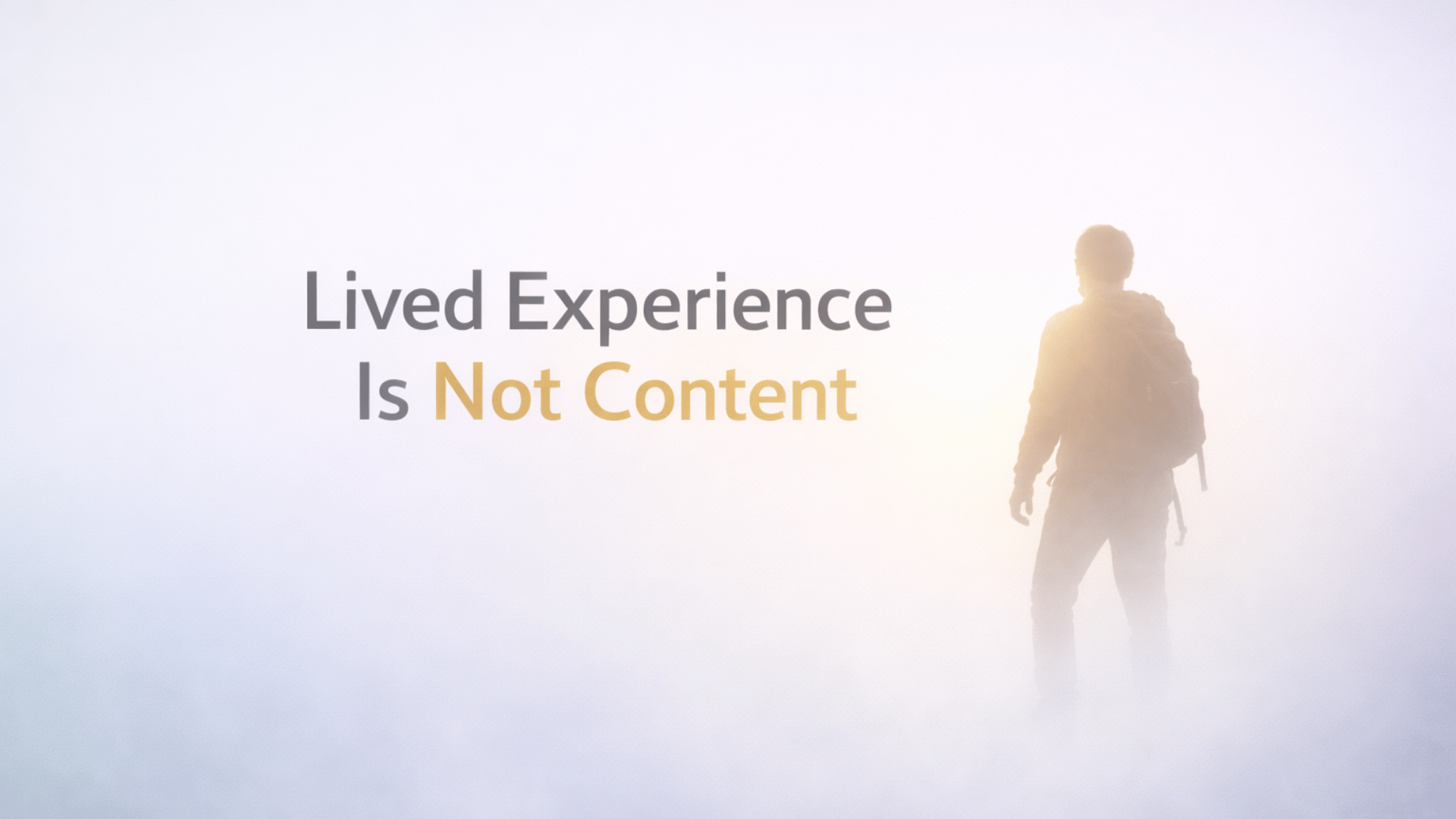
We are not lacking content.
We are lacking truth.
In a landscape where AI can produce articles, posts, and opinions in seconds, the volume of information has never been higher. And yet, trust has never been lower.
Because what’s missing isn’t more content.
What’s missing is lived experience.
The Illusion of Authority
We’ve entered a phase where expertise can be simulated.
Well-written posts.
Polished insights.
Confident language.
On the surface, it all looks like authority.
But when everything sounds right, something else becomes more important - what’s real.
Real authority is not created by how well something is written.
It’s created by what has been lived, tested, challenged, and earned.
You can generate content.
You cannot generate experience.
Why Lived Experience Changes Everything
Lived experience does something that information cannot.
It adds weight.
It carries context, consequence, and understanding that only comes from being inside the moment, not observing it from the outside.
When someone speaks from lived experience:
This is where trust is built.
Not through perfection.
Through reality.
The Difference Between Sharing and Leading
Not everyone who shares content is leading.
And not everyone who has lived something knows how to translate it into impact.
This is where most experts get stuck.
They have the experience.
They have the knowledge.
But they are still not being seen, heard, or trusted at the level they expect.
Because experience alone is not enough.
It needs to be shaped.
Turning Experience Into Authority
This is the work I do.
I’ve built a 667-episode body of work exploring leadership, business, and lived experience. I created the OPAL System© and the SHINE Formula© to help people take what they’ve been through and turn it into something structured, clear, and meaningful.
Not performative.
Not extractive.
Not overwhelming.
But intentional.
Because not every story should be told the same way.
And not every story should be told publicly.
The Responsibility of Story
Storytelling is often positioned as a visibility strategy.
I don’t agree with that.
Storytelling, when it involves lived experience, is a responsibility.
There are real risks:
This is why ethical storytelling matters.
It’s not about telling more.
It’s about telling what is safe, true, and aligned.
And sometimes, it’s about choosing not to tell it at all.
What This Means for Thought Leadership
If you are building a personal brand or positioning yourself as a thought leader, this shift matters.
Because the question is no longer:
“What should I say?”
The question is:
“What have I lived that changed the way I see the world?”
And then:
“What part of that is mine to share — in a way that creates value for others?”
Five Shifts That Change Everything
The Line That Can’t Be Crossed
AI can support content.
It can organise ideas.
It can improve structure.
It can increase efficiency.
But it cannot replace the one thing that creates real authority.
It cannot replicate:
That is where your authority lives.
Final Thought
I don’t help people create content.
I help them turn lived experience into authority that actually moves people.
Because in a world where everything can be generated, what you have lived is the one thing that cannot be replicated.
And that is exactly why it matters.
Keywords: Business Strategy, Education, Personal Branding
 Best Supply Chain AI Tools in 2026: SCM SENSEI AI and Ask Lora Compared
 Making Silos Permeable
 The Corix Partners Friday Reading List - October 2, 2026
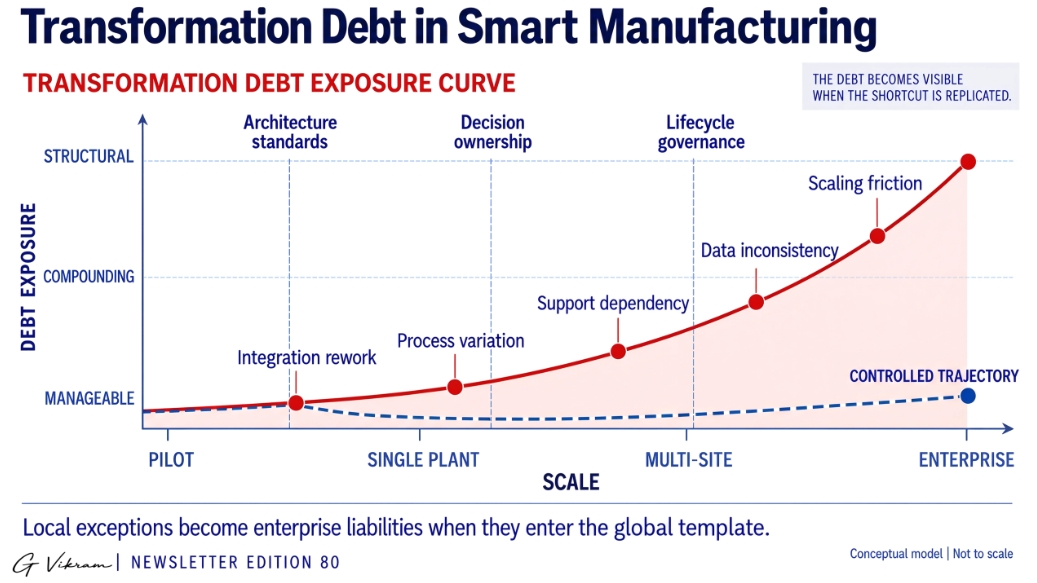 The most dangerous debt in a smart factory isn’t financial.
 Why mission changes everything, leadership lessons from two boardrooms