Sep18
I am Advisor to the CEO of Phantom Space. I also still work clinical shifts in the emergency department. Most weeks those two jobs feel like they belong to different people.
In one, the question is where computation should physically sit. Orbit, edge, ground. Latency budgets. Power. What happens to a model when the link drops.
The other job asks whether the 78-year-old in bed 4, with a vague story and a soft blood pressure, is about to crash.
For a long time I treated these as separate problems. I don't anymore, and the reason is worth explaining, because I think most healthcare AI strategy is being written at the wrong altitude, aimed at a layer where the interesting engineering happens rather than the layer where the failures actually occur.
Here is what I mean. Almost every serious conversation about clinical AI right now happens at the level of the model. Which foundation model. What context window. How it scores on a benchmark built from board questions. Those are real questions. They are also the wrong place to be spending most of the attention, because the model is almost never what fails.
What fails is the last three feet.
The last three feet is the distance between where the inference happens and where the decision gets made. It is the nurse who cannot see the alert because it fired into a tab nobody has open. It is the recommendation that arrives four minutes after the patient left. It is the rural hospital where the connection drops during a transfer and the tool that was supposed to help is simply gone.
I have watched all three of those happen. None of them are model problems. All of them are infrastructure problems, and infrastructure is exactly what the space work taught me to think about properly.
When you design for orbit you can't assume the link. You can't assume power. You cannot assume that the clever thing you built on the ground will behave the same way once it is somewhere hard to reach. So you design for degradation. You decide in advance what the system does when it is cut off, and you make sure the degraded state is still useful rather than merely safe.
Healthcare hasn't done that work. It has built for the demo environment instead, which is a conference room with good wifi, a curated case, a patient whose record is complete, and an audience that already wants the thing to succeed.
A rural emergency department at two in the morning during a storm is closer to a spacecraft than it is to a conference room. Intermittent connectivity. Limited power redundancy. One physician, no specialist on site, and a decision that cannot wait for the link to come back.
If your clinical AI only works when everything works, you haven't built a clinical tool. You have built a demo that happens to run in a hospital.
So the question I now ask vendors is not which model they are using. It is: what does this do when the network drops mid-case? Where does the inference actually run? What is the degraded mode, and has anyone here watched a clinician use it?
Most can't answer. The ones who can are building something different from the rest.
There is a second thing the orbit work taught me, and it is less technical.
Distance is not the enemy. Distance is a design constraint. Satellites made distance tractable by refusing to pretend it was not there. Healthcare keeps pretending distance is not there. It builds for the academic medical center and then acts surprised when the tool does not survive contact with a critical access hospital 200 miles from the nearest neurologist.
Those hospitals are where the need is largest and where the deployments are thinnest. That is not a coincidence. It is a consequence of designing for the easy case.
I don't think the fix is more capable models. I think the fix is deciding, before anything is built, that the hardest environment is the design target and the easy one is the special case.
That is how you build for orbit. It is also, as far as I can tell, how you build something that still works at three in the morning when the person in bed 4 is getting worse and the link just dropped.
The model is not the hard part. It has not been the hard part for a while now.
TAGS: 2,91,25
Keywords: AI, HealthTech, Healthcare
 "The AI may in fact be conscious." Really?
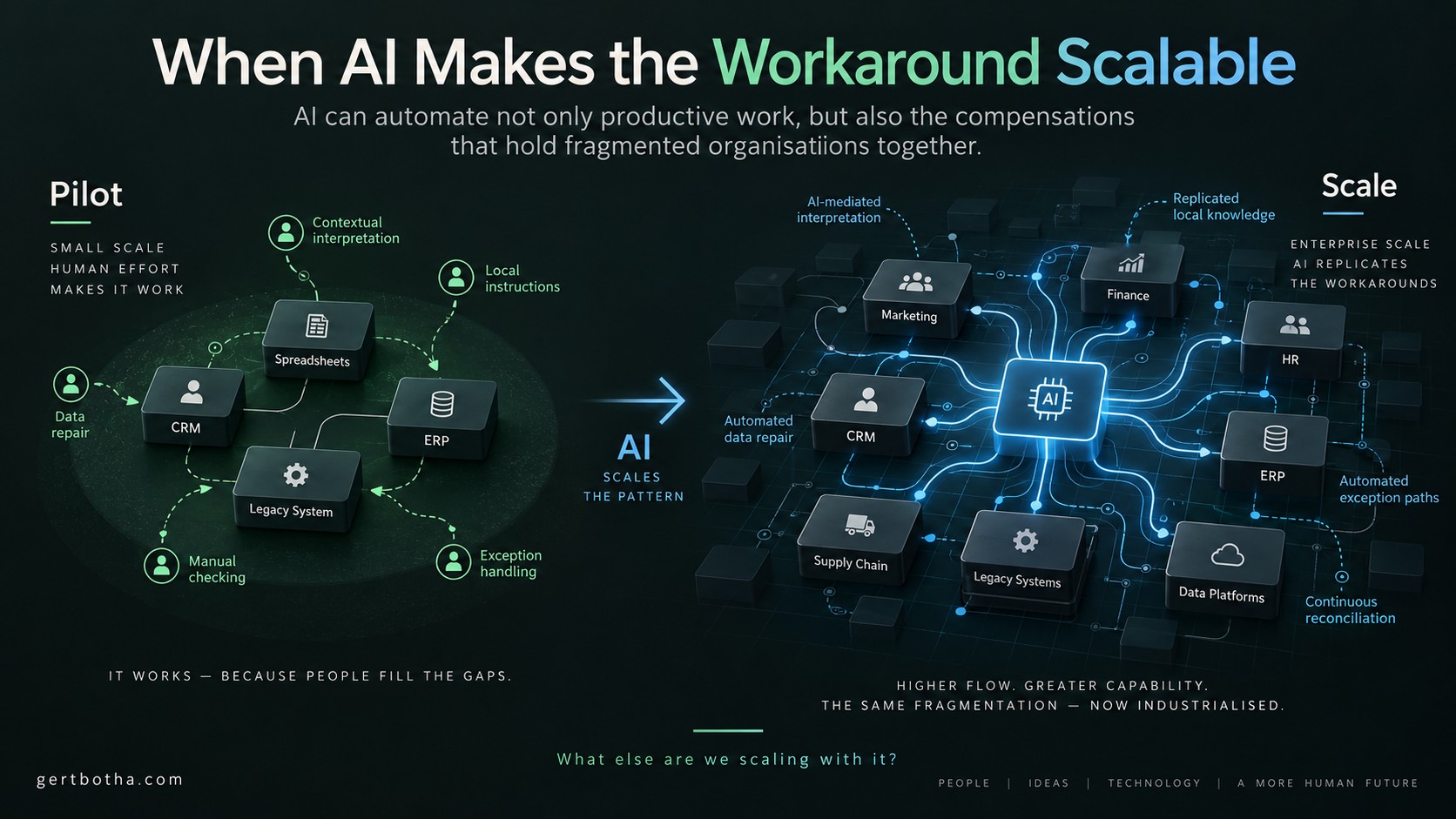 When AI Makes the Workaround Scalable
 The Age of Continuous Shocks: Why the coming downturn will be decided in your supply chain
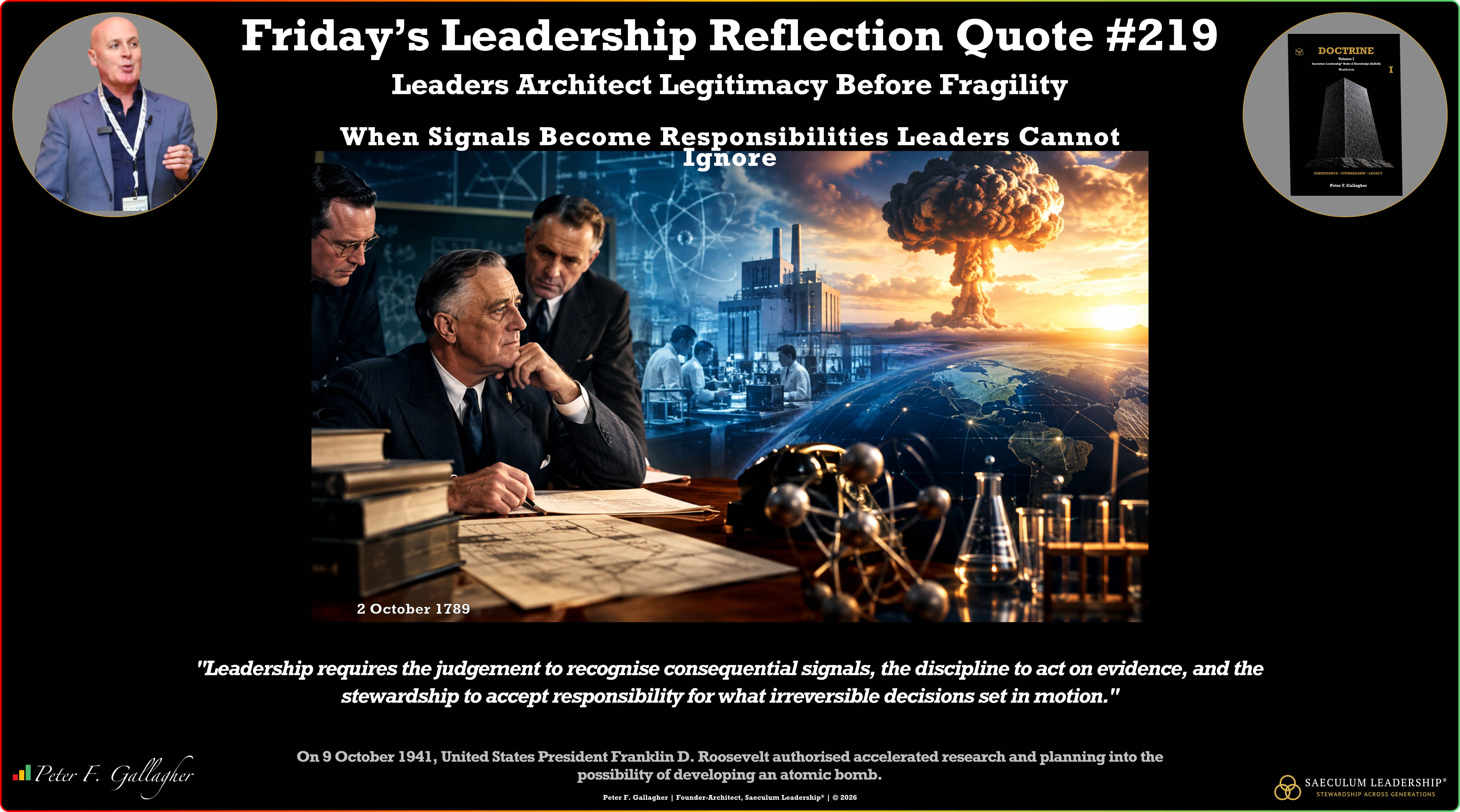 Friday’s Leader Reflection Quote – Saeculum Leadership Leaders Accept Decisions Create Responsibilities
 The Corix Partners Friday Reading List - October 9, 2026