Sep20
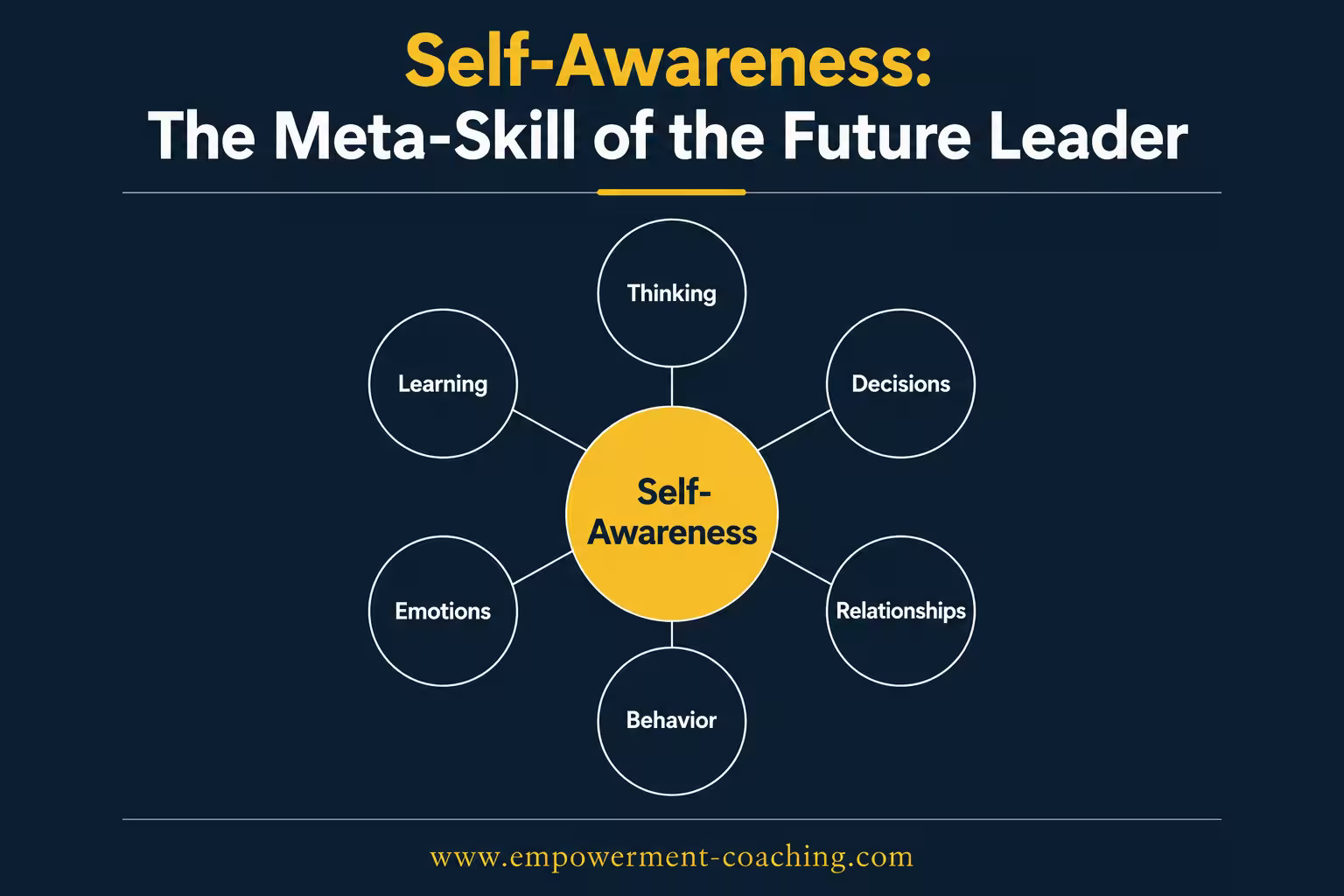
As artificial intelligence automates more tasks and organizations become increasingly complex, self-awareness is emerging as one of the most important leadership capabilities of the future. Self-aware leaders make better decisions, build healthier cultures, adapt more effectively to change, and develop stronger relationships. In a rapidly changing world, understanding oneself may become one of the greatest competitive advantages.
Self-awareness is becoming a strategic leadership capability.
Technology increases external complexity and exposes internal blind spots.
Leadership effectiveness depends heavily on understanding one’s thinking, emotions, assumptions, and behaviors.
Self-aware leaders tend to make better decisions and build healthier cultures.
Coaching and reflection strengthen self-awareness.
The future belongs to leaders who continuously develop both external skills and internal awareness.
Ask people what future leaders need, and the answers are usually predictable.
They mention:
strategic thinking,
communication,
innovation,
adaptability,
AI literacy,
emotional intelligence.
All of these matter.
Yet there is one capability that quietly influences all the others.
Self-awareness.
Without self-awareness:
intelligence can become arrogance,
confidence can become overconfidence,
decisiveness can become rigidity,
ambition can become exhaustion,
and experience can become resistance to change.
Self-awareness is different from most skills.
It does not simply add another capability.
It improves the quality of every other capability.
That is why it may be best understood as a meta-skill.
A capability that shapes all other capabilities.
The modern workplace is becoming increasingly complex.
Leaders face:
continuous change,
digital acceleration,
global uncertainty,
information overload,
hybrid work,
and AI-driven transformation.
External complexity is increasing rapidly.
But complexity creates another challenge.
It amplifies internal limitations.
Under pressure, people often become more vulnerable to:
emotional reactivity,
cognitive bias,
defensive thinking,
stress responses,
and unconscious habits.
Technology may evolve exponentially.
Human psychology does not.
This creates a gap.
And inside that gap, self-awareness becomes essential.
Because leaders who cannot understand themselves often struggle to understand the environments they are trying to lead.
Many organizations still assume that intelligence automatically creates effective leadership.
Reality is more complicated.
Some exceptionally intelligent leaders struggle because they are unaware of:
how they communicate,
how others experience them,
how stress affects them,
or how their assumptions shape decisions.
Knowledge alone does not guarantee wisdom.
Information alone does not guarantee insight.
Leadership failures often emerge not from insufficient intelligence but from insufficient awareness.
History provides countless examples of highly intelligent individuals whose lack of self-awareness eventually undermined their effectiveness.
The future of leadership therefore requires something beyond expertise.
It requires conscious leadership.
And conscious leadership begins with self-awareness.
Every leader makes decisions.
But decisions are rarely purely rational.
They are influenced by:
assumptions,
beliefs,
emotions,
experiences,
fears,
expectations,
and cognitive biases.
Many of these influences operate outside conscious awareness.
This creates risk.
Because leaders often assume:
I see reality objectively.
Usually, they do not.
None of us do.
We see reality through our mental models.
Self-awareness helps leaders examine these models.
It encourages questions such as:
Why do I believe this?
What assumptions am I making?
What information am I ignoring?
What emotional factors are influencing my judgment?
These questions improve decision quality.
Not because leaders become perfect.
But because they become more reflective.
And reflection often improves judgment.
Perhaps the greatest danger in leadership is not weakness.
It is unconscious weakness.
Blind spots are particularly dangerous because people cannot see them.
Leaders may unintentionally:
discourage participation,
create fear,
resist feedback,
avoid difficult conversations,
or become overly controlling.
Their intentions may be positive.
Their impact may not.
Leadership is always experienced by other people.
Which means self-awareness requires understanding not only ourselves, but also our impact on others.
This is why feedback is so important.
It allows leaders to see parts of themselves that are difficult to observe alone.
Growth often begins at the edge of awareness.
Modern leadership is emotionally demanding.
Leaders encounter:
uncertainty,
conflict,
disappointment,
pressure,
and constant change.
Emotions influence leadership continuously.
The question is not whether emotions exist.
The question is whether leaders understand them.
Self-awareness allows people to recognize:
What situations trigger stress?
What creates frustration?
What causes defensiveness?
What increases energy?
What depletes motivation?
These insights matter enormously.
Because emotional states influence:
thinking,
communication,
relationships,
and decisions.
Leaders who understand their emotions generally regulate them more effectively.
And emotional regulation creates stability.
Stable leaders often create stable systems.
Leadership is fundamentally relational.
Organizations function through interactions between people.
Relationships depend on:
trust,
communication,
understanding,
and emotional intelligence.
Self-aware leaders tend to:
listen more effectively,
communicate more clearly,
seek feedback,
and remain open to different perspectives.
They become more curious.
Less defensive.
More willing to learn.
This does not make them perfect.
It makes them adaptive.
And adaptability is increasingly important in uncertain environments.
Many people assume that future leadership will become increasingly technological.
That is true.
But it is only part of the story.
As technology grows more powerful, human capabilities become more important.
AI can:
analyze information,
identify patterns,
generate recommendations,
and process extraordinary amounts of data.
What AI cannot fully replace is human self-understanding.
Technology can tell leaders:
what happened,
what might happen,
and what options exist.
It cannot completely answer:
Why do I react this way?
What values drive my decisions?
What assumptions shape my leadership?
What kind of leader do I want to become?
These questions remain deeply human.
And they may become increasingly valuable.
The future rewards adaptation.
Adaptation requires learning.
Learning requires awareness.
This sequence matters.
People rarely change behaviors they do not recognize.
Self-awareness allows leaders to notice:
habits,
assumptions,
patterns,
and limitations.
Once visible, these patterns become manageable.
Without awareness, change becomes difficult.
With awareness, growth becomes possible.
In this sense, self-awareness is the foundation of adaptability.
And adaptability may be one of the defining capabilities of future leadership.
Leaders influence culture continuously.
Every reaction, every conversation, every decision, every behavior sends signals.
These signals shape organizational norms.
Unaware leaders often create cultures unintentionally.
Their stress becomes organizational stress.
Their fear becomes organizational fear.
Their defensiveness becomes organizational defensiveness.
The opposite is also true.
Self-aware leaders often create cultures characterized by:
trust,
openness,
learning,
and psychological safety.
Because awareness changes behavior.
And behavior shapes culture.
One of the reasons why coaching has become increasingly valuable is that awareness rarely develops accidentally.
Modern life moves quickly.
People are constantly:
responding,
solving problems,
making decisions,
and managing complexity.
Reflection becomes rare.
Coaching creates space.
Space to think.
Space to notice.
Space to understand.
Often the most transformative moments in coaching occur when leaders suddenly realize:
I have been operating from assumptions I never questioned.
These moments may appear simple.
Yet they often create profound change.
Because awareness changes possibilities.
Leadership development often focuses on external competencies.
How to:
communicate,
influence,
motivate,
delegate,
and lead change.
These capabilities matter.
But there is also an inner dimension of leadership.
The ability to understand:
ourselves,
our motivations,
our fears,
our assumptions,
our values,
and our patterns.
This inner work is not separate from leadership.
It is leadership.
Because people always lead from who they are.
Not merely from what they know.
The leaders who thrive in the coming decade may not necessarily possess:
the highest IQ,
the greatest expertise,
or the most advanced technology.
Instead, they may possess something more fundamental.
Awareness.
Awareness allows leaders to:
learn continuously,
adapt effectively,
build healthy relationships,
make better decisions,
and create stronger cultures.
It becomes a multiplier.
A capability that improves all other capabilities.
This is why self-awareness may be one of the most important leadership competencies of the future.
Not because it replaces other skills. But because it elevates them.
The future of leadership will undoubtedly involve:
artificial intelligence,
technological transformation,
organizational complexity,
and continuous change.
But amid all this change, one reality remains remarkably stable:
Leaders still lead through themselves.
Their thinking shapes decisions.
Their emotions shape relationships.
Their behaviors shape culture.
Their awareness shapes everything else.
Because ultimately:
The most important system every leader will ever lead is themselves. And the quality of that leadership begins with one capability: Self-awareness.
Keywords: Coaching, Future of Work, Leadership
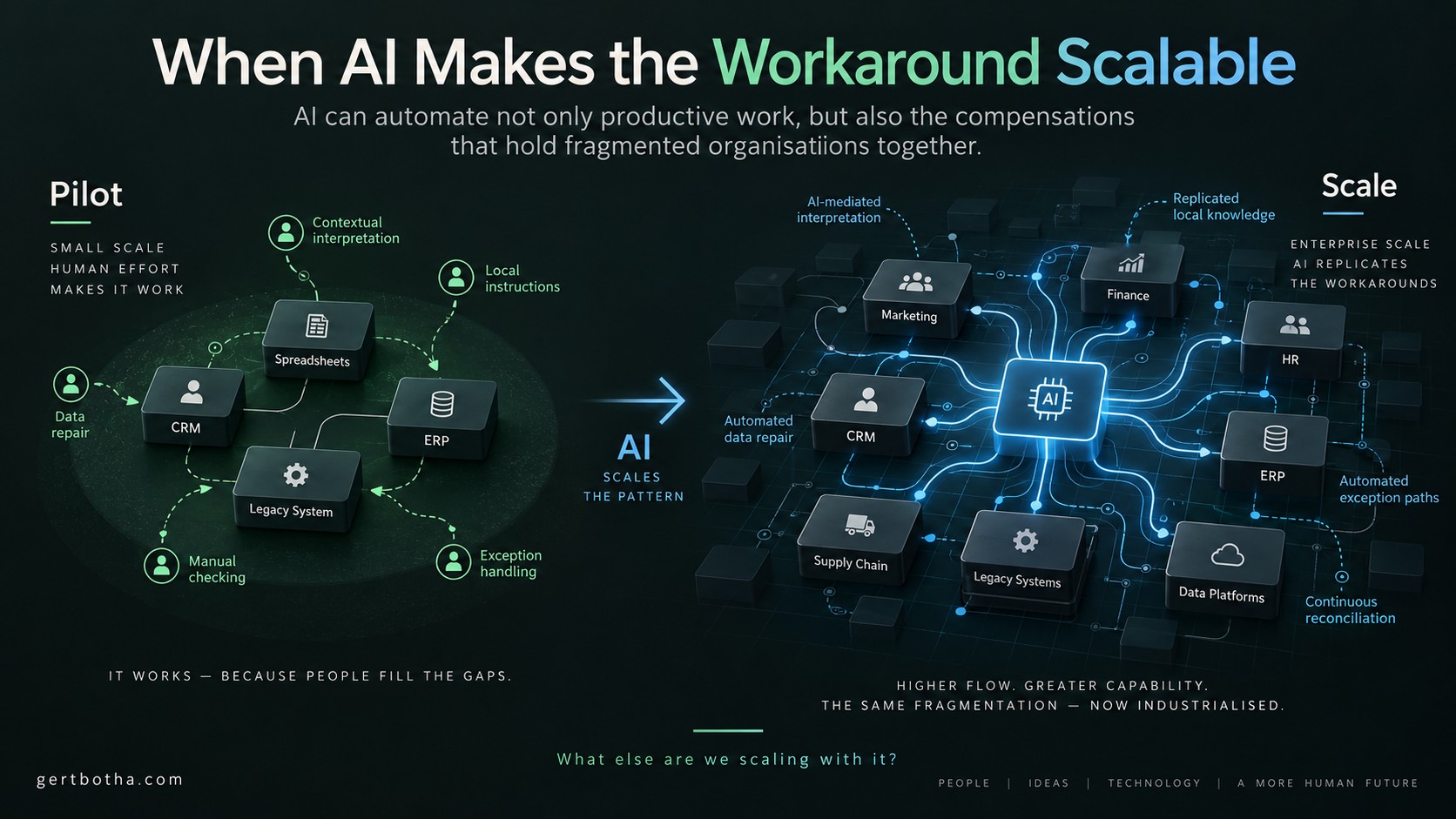 When AI Makes the Workaround Scalable
 The Age of Continuous Shocks: Why the coming downturn will be decided in your supply chain
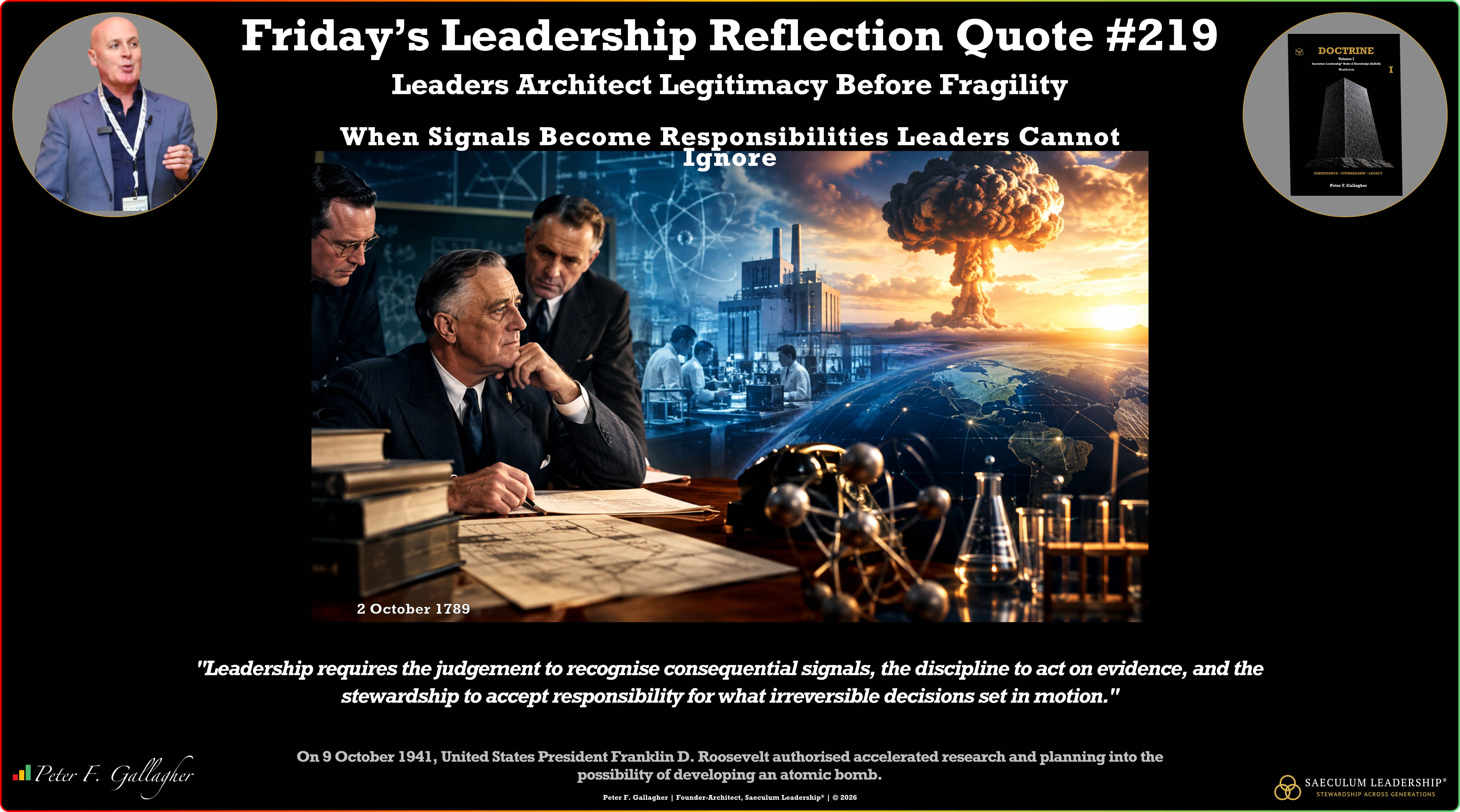 Friday’s Leader Reflection Quote – Saeculum Leadership Leaders Accept Decisions Create Responsibilities
 The Corix Partners Friday Reading List - October 9, 2026
 Consumer vs. enterprise AI agents