Sep18
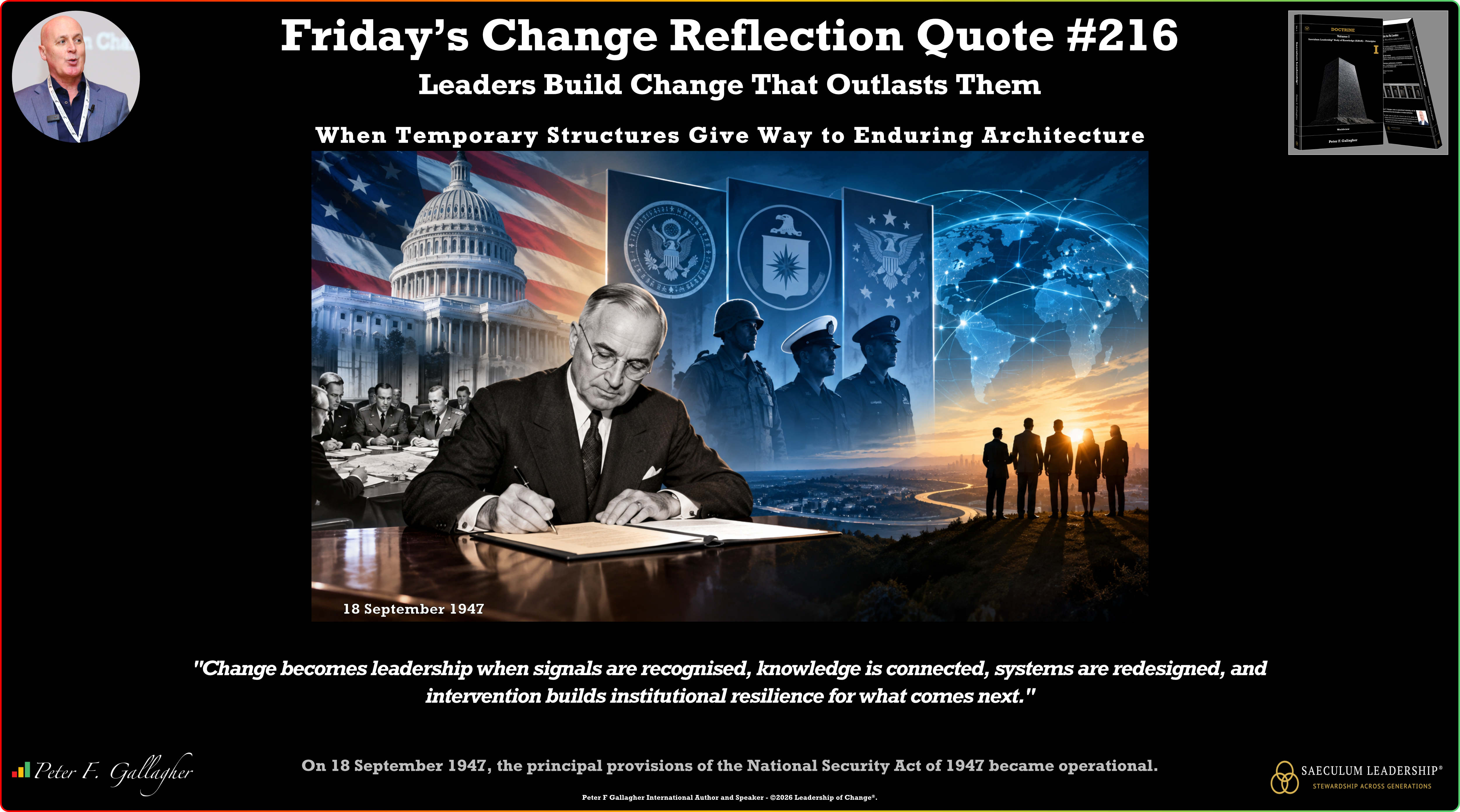
On 18 September 1947, the principal provisions of the National Security Act of 1947 became operational. Signed into law by President Harry S Truman on 26 July, the legislation represented a foundational reorganisation of United States defence and intelligence architecture after the Second World War.
The National Security Council brought senior political, diplomatic and defence perspectives into a common forum. Its original statutory membership included the President and the Secretaries of State, Defense, Army, Navy and Air Force, together with the Chairman of the National Security Resources Board. The Council was established to integrate domestic, foreign and military policies relating to national security and facilitate cooperation across government departments and agencies.
These changes reflected a fundamental shift in the strategic environment: temporary wartime arrangements were no longer sufficient to manage enduring intelligence and defence responsibilities. The end of the war did not remove the need for strategic intelligence or military coordination. The emerging international environment instead required permanent structures capable of operating in both peace and conflict.
The Central Intelligence Agency succeeded the Central Intelligence Group and was given statutory authority to coordinate national intelligence activities and to correlate, evaluate and disseminate intelligence essential to national security, embedding intelligence within the wider institutional framework.
The military reorganisation also redefined the relationship between the services by creating a National Military Establishment while establishing the Department of the Air Force and a separate United States Air Force, alongside the existing Army and Navy. The new framework sought to create greater coordination while preserving distinct service identities. The architecture was not static: amendments in 1949 strengthened the Secretary of Defense's authority and converted the National Military Establishment into the Department of Defense.
The significance of 18 September therefore lies in the creation of a permanent post-war security architecture: institutions designed to endure beyond the circumstances and individuals that created them, while remaining capable of adaptation as technologies, geopolitical conditions and national security requirements evolved.
Saeculum Leadership® Lessons: The Act illustrates how leaders steward systems by redesigning institutional architecture when accumulated signals show that inherited structures can no longer support emerging responsibilities. Saeculum leaders of change recognise signals showing that existing institutional structures are no longer sufficient for emerging conditions. They connect knowledge across organisational boundaries so that information can inform decisions rather than remain fragmented within separate functions. Saeculum leaders redesign systems when the conditions surrounding those systems have materially changed, rather than preserving structures merely because they succeeded under the assumptions of a previous era. They intervene when accumulated evidence demonstrates that existing arrangements require deliberate restructuring to remain relevant to the emerging environment. Saeculum leaders understand that sustainable transformation requires architecture capable of supporting new responsibilities, behaviours and decision-making beyond their own tenure. Leaders Build Change That Outlasts Them.
“Change becomes leadership when signals are recognised, knowledge is connected, systems are redesigned, and intervention builds institutional resilience for what comes next.”
From the Canon — Practice 5 — System Stewardship. The National Security Act of 1947 demonstrates System Stewardship in practice: redesigning institutional architecture when inherited arrangements no longer support emerging responsibilities. The post-war environment exposed fragmented intelligence arrangements, weak coordination between military departments, and decision-making structures shaped by wartime assumptions. System Stewardship requires leaders to recognise when such structural drift is occurring and when temporary arrangements must be replaced with durable frameworks capable of operating across both peace and conflict.
Stewardship operates at the level of architecture, not tools. It demands that leaders examine how information moves, where it becomes trapped, and how institutional design enables or obstructs coherent understanding. System Stewardship requires leaders to intervene when evidence shows that institutional architecture must be re‑engineered to remain relevant to emerging conditions.
Saeculum Leaders strengthen architectures that support clarity, coordination and informed action. They build systems that transmit disciplined judgement across generations, enabling future leaders to inherit structures capable of adapting without losing institutional coherence.
The Stewardship Reflection Lens:
What are we inheriting? We inherit systems shaped by earlier conditions, carrying assumptions that determine how signals are recognised and decisions are made.
How should we steward it? We steward systems by redesigning the architectures through which intelligence, coordination and clarity move when evidence shows inherited structures are no longer sufficient.
What legacy are we creating? We create legacy when the systems we build endure beyond our tenure, enabling future leaders to recognise signals, integrate knowledge and act with coherence.
Further Reading: Saeculum Leadership® Body of Knowledge (SLBoK). Saeculum Leadership®: Doctrine – Volume I.
Peter F. Gallagher is the Founder–Architect of Saeculum Leadership®, a doctrine of generational stewardship that equips leaders to strengthen what they inherit and shape what future generations receive. A 21-book author, global keynote speaker, and trusted advisor to boards, CEOs, and executive leadership teams, he helps organisations strengthen leadership capability, institutional stewardship, and transformational change in an increasingly complex world.
For further insights please visit our websites: https://www.a2b.consulting https://www.peterfgallagher.com Amazon.com: Peter F Gallagher: Books, Biography, Blog, Audiobooks, Kindle
Saeculum Leadership® Body of Knowledge (SLBoK): Volumes 1-10.A-E & 0, I-V
~ Leadership of Change® Volume 1 - Change Management Fables
~ Leadership of Change® Volume 2 - Change Management Pocket Guide
~ Leadership of Change® Volume 3 - Change Management Handbook
~ Leadership of Change® Volume 4 - Change Management Leadership
~ Leadership of Change® Volume 5 - Change Management Adoption
~ Leadership of Change® Volume 6 - Change Management Behaviour
~ Leadership of Change® Volume 7 - Change Management Sponsorship
~ Leadership of Change® Volume 8 - Change Management Charade
~ Leadership of Change® Volume 9 - Change Management Insanity
~ Leadership of Change® Volume 10 - Change Management Dilenttante
~ Leadership of Change® Volume A - Change Management Gamification - Leadership
~ Leadership of Change® Volume B - Change Management Gamification - Adoption
Keywords: Business Strategy, Change Management, Leadership
 "The AI may in fact be conscious." Really?
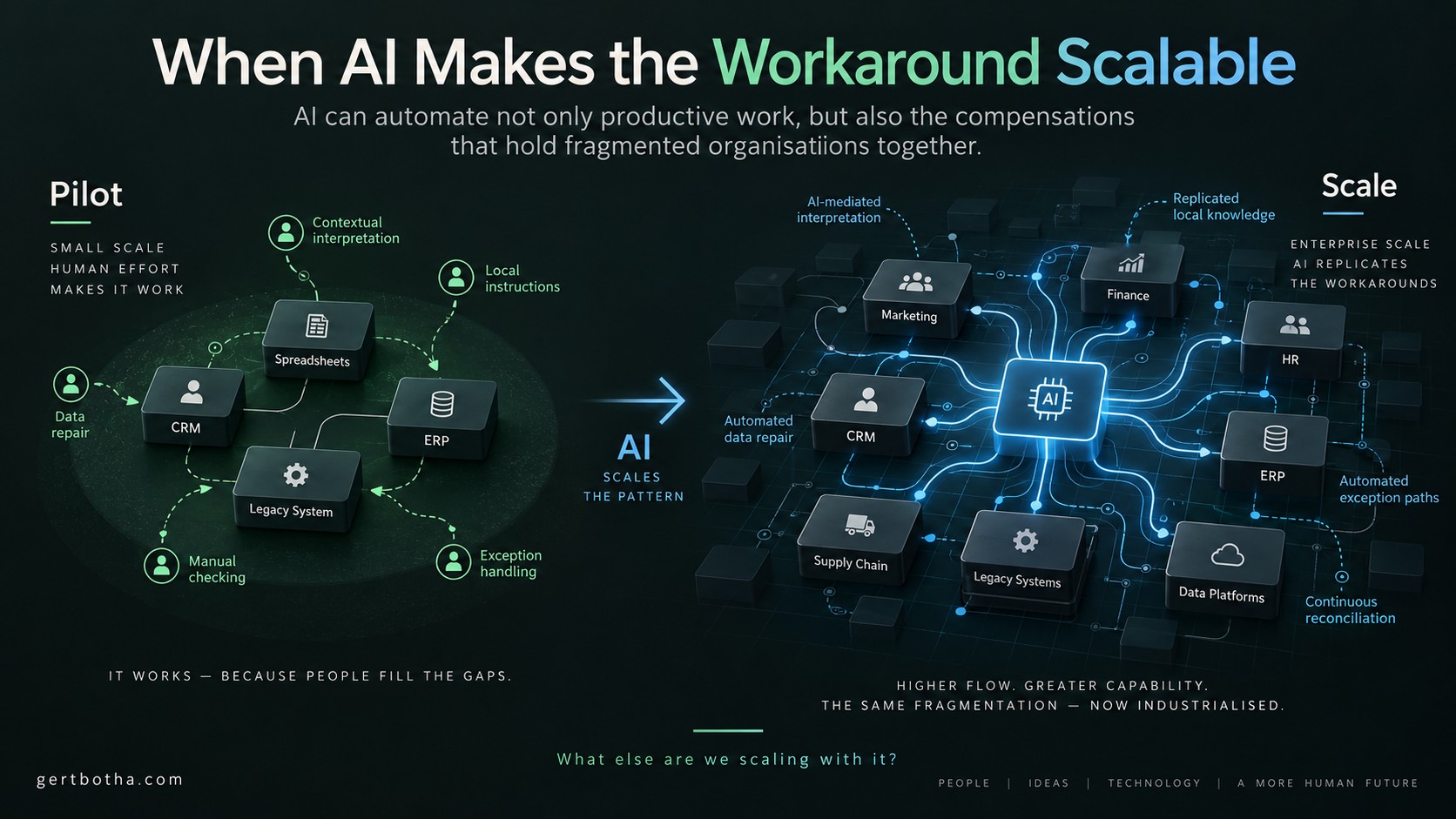 When AI Makes the Workaround Scalable
 The Age of Continuous Shocks: Why the coming downturn will be decided in your supply chain
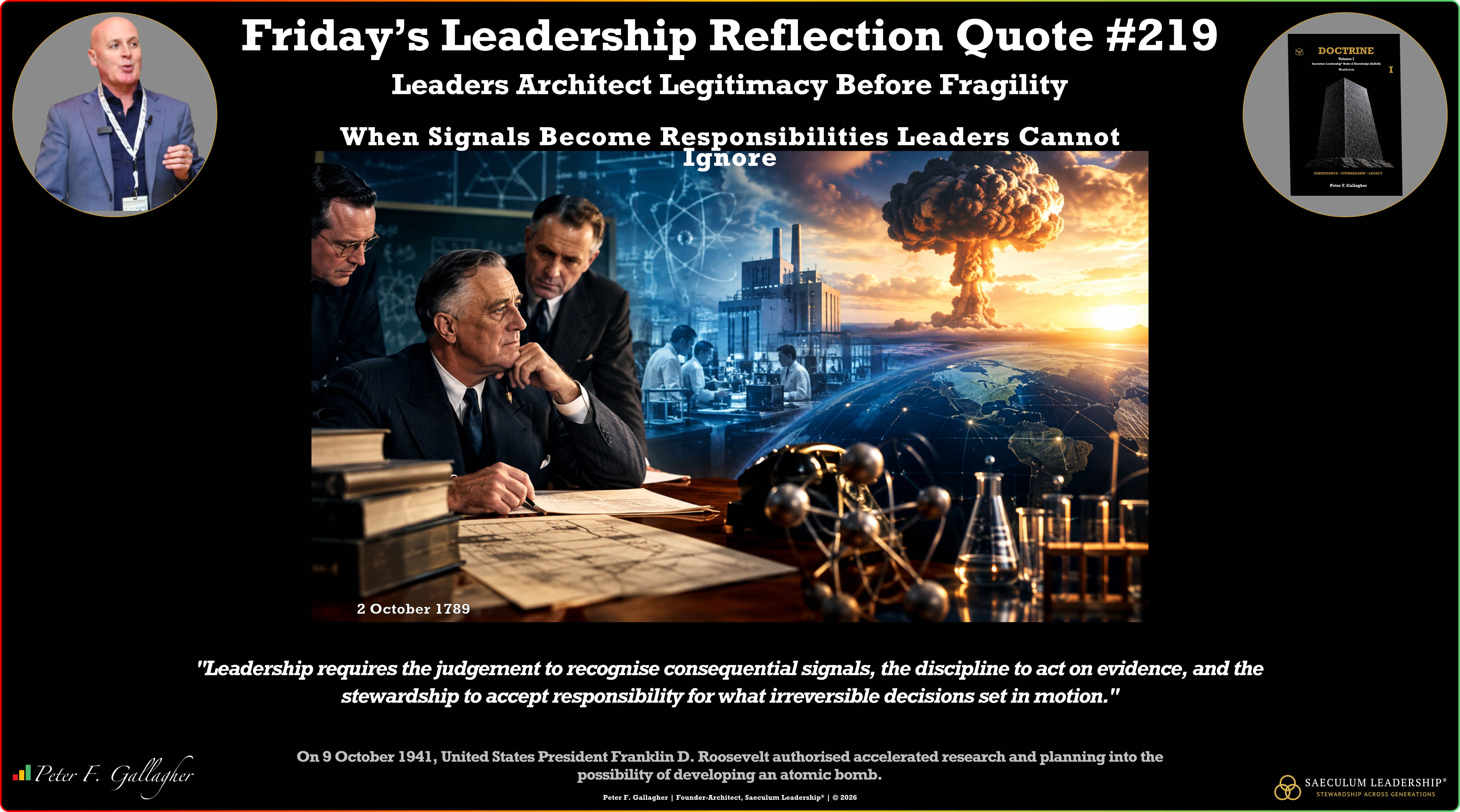 Friday’s Leader Reflection Quote – Saeculum Leadership Leaders Accept Decisions Create Responsibilities
 The Corix Partners Friday Reading List - October 9, 2026