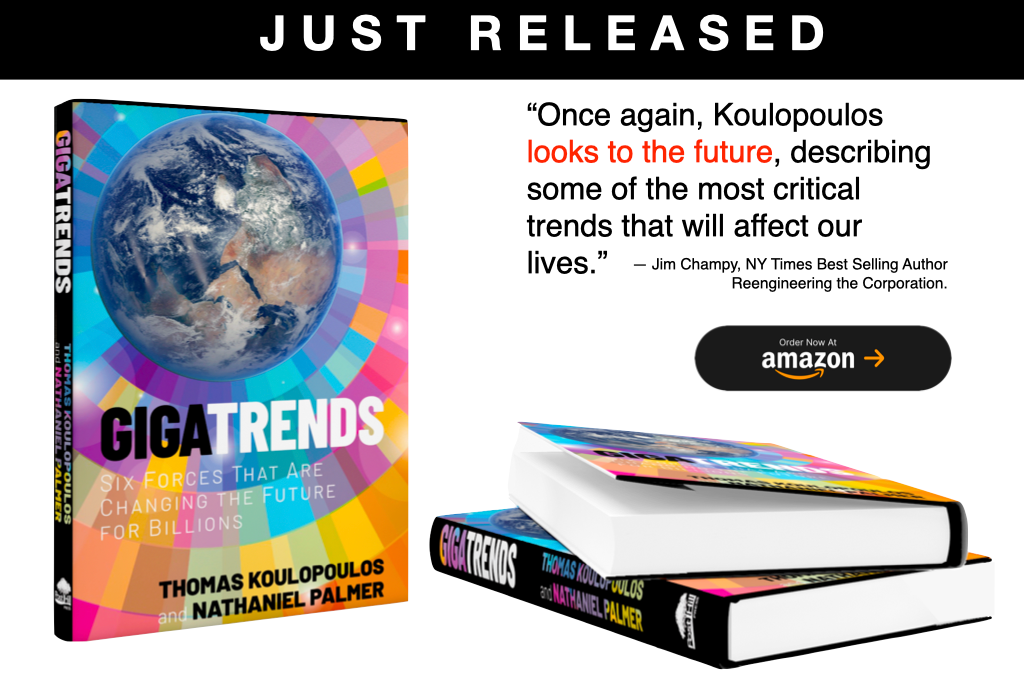
Oct09

A prophecy is not a prediction of a date. It is a description of a direction.
I believe the global economy is in that moment now. Not because one indicator flashes red, but because many indicators are bending in the same direction at the same time, some red, some orange. An economic downturn is on the horizon, and it will not look like 2008 or 2020. It will not be a single event with a clear beginning and a recovery curve. It will be a sequence of shocks arriving from different directions, overlapping before the previous one has been absorbed. The defining feature of the coming years is not the depth of any single crisis, but the continuity of disruption.
For everyone who works in contracts, procurement, sales, supply chain and operations, this is not background noise. It is the job description for the next decade.
Energy is the bloodstream of every supply chain, and it is under pressure. The transition away from fossil fuels is necessary, but it runs in parallel with an old system that is not yet replaced. We are paying twice: for the grid we have and for the grid we are building.
Underneath sits the petrodollar. For half a century oil has been priced and settled predominantly in dollars, creating permanent global demand for the currency. That arrangement is no longer taken for granted. Producers experiment with other settlement currencies, bilateral deals bypass the dollar, and central banks accumulate gold at a pace not seen in decades. I am not predicting a sudden collapse. I am predicting a slow loosening, and a slow loosening is exactly what makes planning difficult. Prices of energy, raw materials and freight are linked to currency, and currency is linked to trust. When trust becomes negotiable, every long-term price in every contract becomes a little less certain.
Many managers still treat interest as a single number. Wake up! The difference between short-term and long-term interest tells a story the headline rate hides. When short-term money is expensive while long-term money reflects doubt about growth, debt and inflation, the market is saying something uncomfortable: it does not believe the present calm will last.
For supply chains the consequences are practical. Short-term interest determines the cost of working capital, and therefore how much inventory you can afford and how long your suppliers can wait for payment. Long-term interest determines whether anyone invests in the factory, the mine, the port or the platform you will depend on in five years. Expensive short-term money and hesitant long-term money produce exactly what we should fear: fragile suppliers, thin buffers and under-investment in capacity.
Artificial intelligence is a genuine technological shift, probably more then the internet is. But a genuine technology and a sound valuation are two different things. Much of the current market confidence rests on the expectation that AI investment will translate into productivity and profit at a speed and scale not yet demonstrated.
If that expectation corrects, the effect will not stay within technology. Pension funds, indices and corporate balance sheets are exposed, and a sharp correction would reduce wealth, investment and appetite for risk in the very sectors that supply the physical world. There is also a quieter effect: the AI build-out competes for electricity, copper, water, engineers and construction capacity. The bubble, if it is one, is not only a financial risk. It is a competitor for the resources your supply chain needs.
Compliance requires data, data requires systems, and systems require people, who are scarce. The cost of regulation is rising faster than most budgets assume, and it falls unevenly: large organisations absorb it, while smaller suppliers, especially in developing regions, struggle with requirements written elsewhere for different circumstances.
This touches a deeper divide. The distance between north and south, between regions with stable institutions, capital and energy security and regions without, is not narrowing as we once hoped. Within countries, welfare is distributed ever more unevenly. When a growing part of the population feels the system works for others, political pressure follows: protectionism, export bans, tariffs and sudden changes in the rules of the game. Inequality is not only a moral question. It is a supply risk, because it breeds instability in the places where we source our goods, materials and people.
There is a threat of war, and there is actual war. The threat changes behaviour: governments stockpile, defence budgets crowd out other spending, critical materials become strategic assets, and companies are asked to choose sides. Actual war changes physics: ports close, shipping lanes become unsafe, insurance becomes unaffordable, and entire categories of supply vanish overnight.
Recent years showed how fast a regional conflict becomes a global procurement problem. The map of what counts as a remote risk has been redrawn, and many of our contracts were drafted on the old map.
Put these forces together and the pattern is clear. Disruption no longer comes from one direction we can monitor. It comes from raw materials, because competition for critical minerals is intensifying. It comes from energy, because price and availability are political. It comes from human resources, because demographics, migration policy and skills mismatches tighten labour markets everywhere. It comes from political pressure through sanctions, tariffs and local-content demands. It comes from war. And it comes from all of these interacting, so that a shortage in one area becomes a price spike in another and a labour problem in a third.
Resilience in that environment is not a project with an end date. It is a permanent management discipline.
In this environment, the professionals who make sure we can deliver become the most valuable people in the organisation. Contract managers, procurement specialists, planners and supplier relationship managers translate a promise made to a customer into a chain of promises made to suppliers, and keep that chain intact when the world interferes. Their value is visible only when something goes wrong, which is why it is so often underestimated until too late.
Retaining this talent is therefore not a question of paying more than the competition. Salary is the easiest lever for a competitor to match. What retains people in turbulent times is a mandate to act, access to decision-makers, tools that help rather than hinder, and a visible connection between their work and the organisation's survival. Professionals treated as administrators of paperwork will leave for those who treat them as guardians of continuity.
The answer to continuous shocks is not a better human resources policy alone. It is a total resource management strategy in which people, materials, energy, capital, data, capacity and supplier relationships are planned as one interdependent system rather than as separate budgets owned by separate departments.
A shortage of skilled labour is also an energy question if your shift patterns follow energy tariffs. A raw material constraint is also a financial question if your working capital cannot carry additional stock. A supplier dependency is also a political question if that supplier sits in a region facing sanctions.
How far ahead should you plan? Further than your budget cycle, with more scenarios than your forecast. Combine a long horizon for structural choices, such as where capacity and key suppliers are located, with short, frequent review cycles for operational decisions. The point is to decide in advance what you will do when each plausible future arrives.
How far should you stock up? Distinguish between what is critical, what is substitutable and what is merely convenient. Hold deliberate buffers for the first, build alternatives for the second and accept volatility for the third. Just-in-time was an optimisation for a stable world; just-in-case everywhere is unaffordable. The skill lies in knowing where a buffer costs less than a stoppage, and that calculation is only possible when finance, operations and procurement look at the same data.
Nowhere is the gap between the old map and the new world more visible than in the force majeure clause. It usually sits near the end of the contract, in standardised language, copied from template to template. It was written for the exceptional event: the earthquake, the flood, the unforeseeable catastrophe. It was not written for a world in which disruption is frequent, interconnected and partly foreseeable.
Does your clause cover energy price spikes, or only supply interruption? Sanctions and export controls? A supplier's own supplier failing? A cyberattack or a war? What happens when an event was foreseeable but its consequences were not? How long may a party rely on the clause before the other can terminate?
Revisit your force majeure language now, while relationships are intact and goodwill is available. A modern clause defines events precisely rather than generically, distinguishes full prevention from partial impairment, requires mitigation and communication so it is not an escape hatch, sets clear time limits and consequences including rights to source elsewhere, and connects to price adjustment, volume flexibility and joint contingency planning. A contract should not only allocate blame after a shock. It should describe how two parties will behave together when one arrives.
If all this is visible, why do so many leaders wait? Not out of laziness. They are, as yet, blissfully unaware of the cumulative effect of continuous shocks.
Each disruption, viewed alone, looks manageable. The last crisis was absorbed and the numbers came back, so experience teaches that shocks are temporary. What experience cannot easily teach is that the interval between shocks is shrinking and that recovery capacity is finite. Every crisis consumes cash, goodwill, attention and supplier trust. By the time the pattern becomes undeniable, the options have narrowed and the cost of acting has risen. And because contract risk sits in the gaps between legal, procurement, finance and operations, what is everyone's responsibility often becomes nobody's priority.
The unit of competition has changed. Organisations no longer compete as isolated entities; they compete as ecosystems of suppliers, partners, customers and technology providers. The strength of the weakest link determines the strength of the whole, and nobody can fix that link alone. We live in a world in which nobody can do it alone, so we make agreements. Those agreements are contracts, and a contract must be managed as a document, as a relationship and as an expectation.
AI will help most those who have done the groundwork. It can scan thousands of contracts for clauses that no longer fit the new risk map, monitor supplier signals, simulate scenarios and surface dependencies no human team could trace. But AI applied to disorganised data, unclear ownership and outdated contracts only accelerates confusion. The advantage goes to organisations that combine intelligent tools with disciplined processes and with people who understand why the contract exists.
My message is not one of fear. Storms are survivable, and some organisations will emerge stronger. They will be the ones that read the barometer early, treated resources as one system, invested in the professionals who keep the promise, and rewrote their contracts before they needed them.
When the next shock arrives, and it will, will your contracts, your people and your ecosystem be ready to carry it together?
Keywords: Ecosystems, Leadership, Supply Chain
The Age of Continuous Shocks: Why the coming downturn will be decided in your supply chain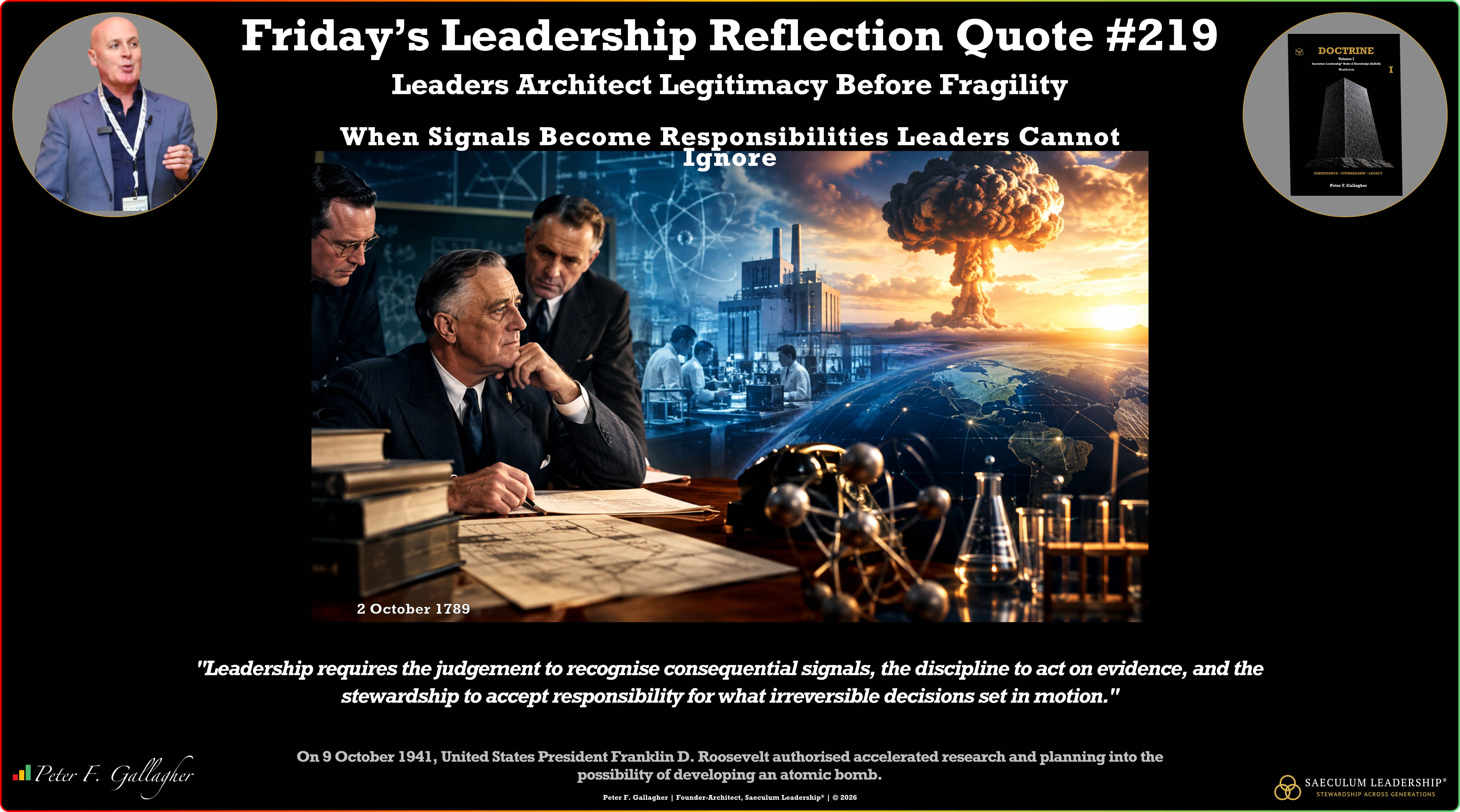 Friday’s Leader Reflection Quote – Saeculum Leadership Leaders Accept Decisions Create Responsibilities
 The Corix Partners Friday Reading List - October 9, 2026
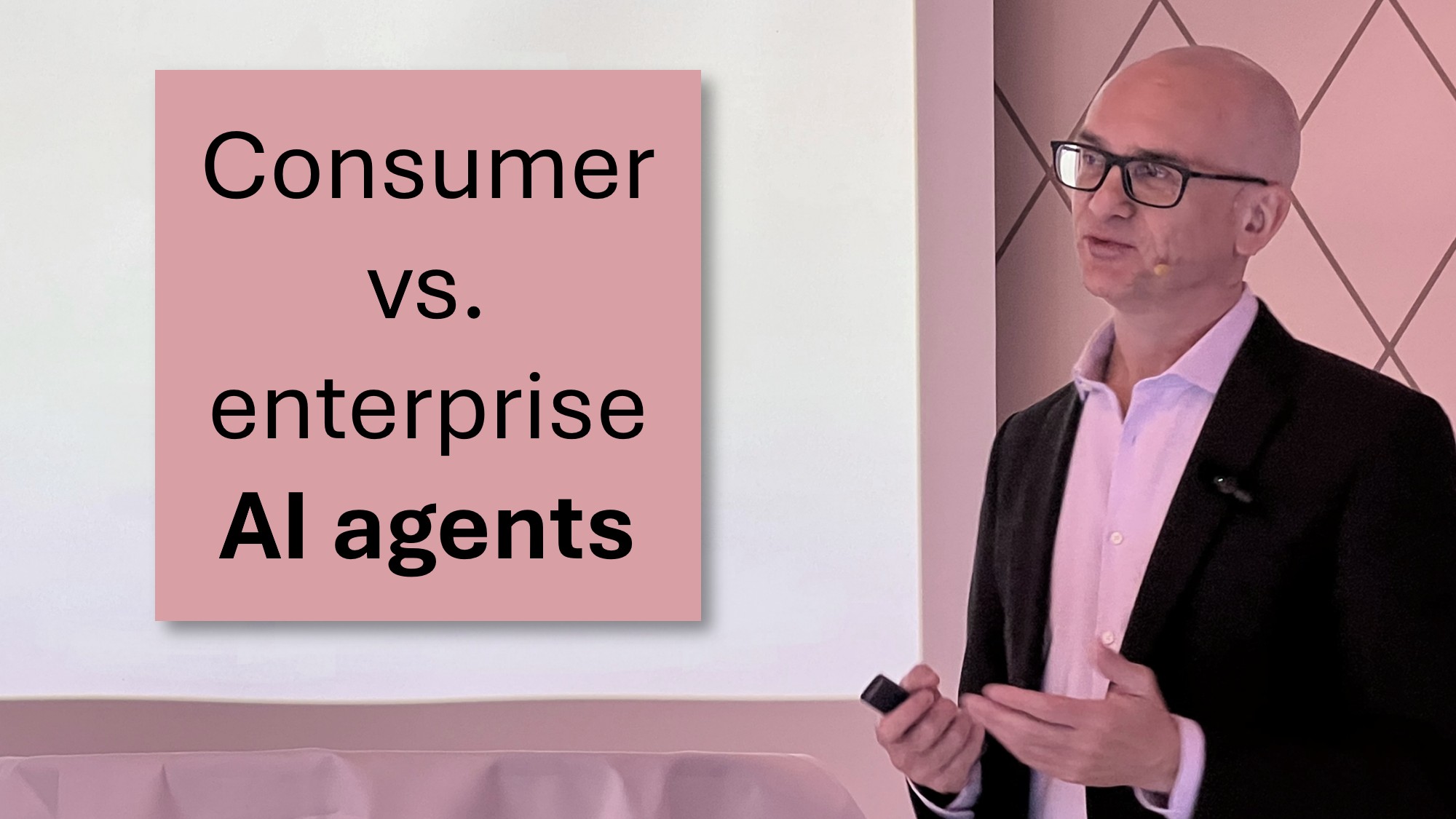 Consumer vs. enterprise AI agents
 Best Supply Chain AI Tools in 2026: SCM SENSEI AI and Ask Lora Compared