Oct03
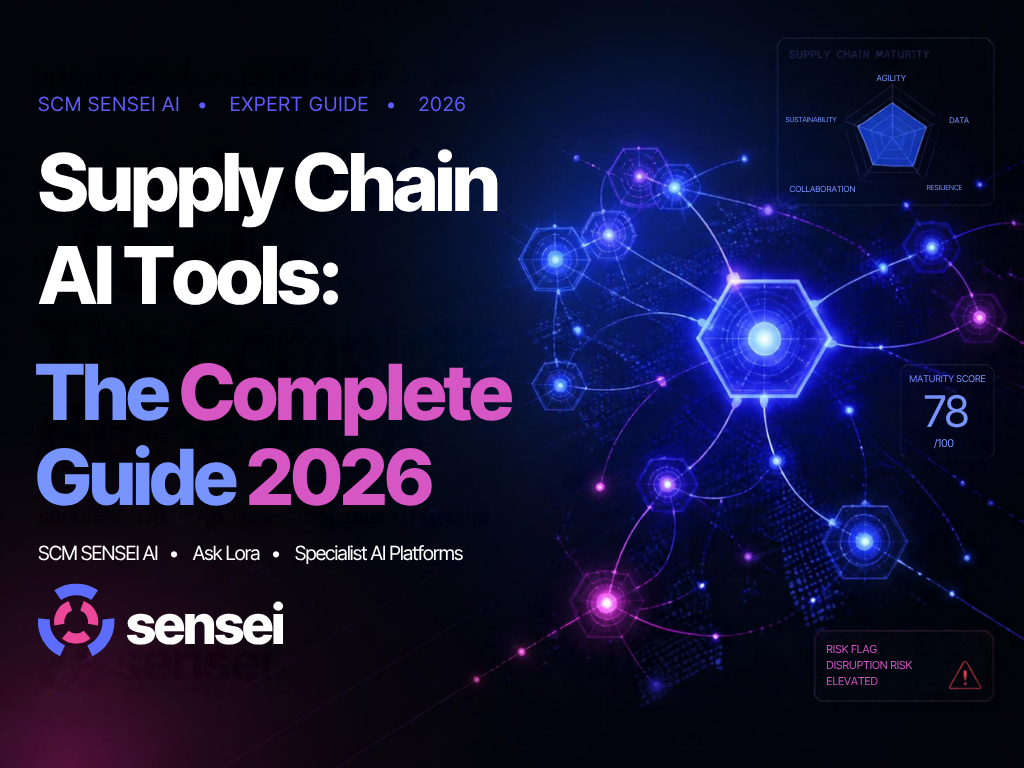
Search Google or ask ChatGPT "supply chain influencers" and you will find two names that consistently appear: Lora Cecere, founder of Supply Chain Insights, and Dr. Muddassir Ahmed, founder of SCMDOJO. Both have spent decades serving the global supply chain community, creating research content, building frameworks, and helping practitioners make better decisions. Now both have taken that accumulated expertise and channelled it into AI, making decades of specialised knowledge available on demand to any supply chain professional. The most common question I receive from supply chain leaders and consultants is: "Which AI tools should we actually be using?" This guide gives you an honest, practitioner answer focused on two of the most specialised and capable platforms currently available.
The supply chain function is sitting on a massive data problem dressed up as an information problem. Most organisations have more supply chain data than ever before: ERP exports, supplier performance data, logistics KPIs, demand signals, procurement spend data, S&OP outputs. The problem is not the data. The problem is that the analytical and decision-making capacity of supply chain teams has not kept pace with the volume and complexity of that data.
Generic large language models like ChatGPT, Claude, and Gemini are useful for general tasks, but they were not built for supply chain decision-making. They lack domain-specific training, structured assessment frameworks, and the ability to benchmark your organisation against real supply chain peer data. They produce generic advice that sounds reasonable but lacks the specificity, quantification, and sequencing that supply chain decisions require.
Specialised supply chain AI tools address this gap directly. They are trained on domain-specific knowledge, built around structured supply chain frameworks, and designed to produce outputs that are directly actionable for procurement managers, supply chain directors, S&OP leaders, and logistics specialists. Two of the most capable purpose-built supply chain AI tools available today are SCM SENSEI AI and Ask Lora.
Both tools are specialised supply chain AI platforms, not generic chatbots applied to supply chain topics. This matters fundamentally. Specialisation means domain-specific training data, structured assessment frameworks, supply chain-specific output formats, and the ability to benchmark and score rather than simply converse. This is the difference between a specialist and a generalist.
SCM SENSEI AI is an agentic AI supply chain consultant trained exclusively on SCMDOJO's proprietary supply chain knowledge base, frameworks, and courses. It is designed as a daily operating system for supply chain decision-making: a tool that supply chain professionals and consultants use every day to get expert advice, run diagnostic assessments, automate complex workflows, draft documents, and analyse raw data.
What makes SCM SENSEI AI distinctive among supply chain AI tools is its five operating modes, each purpose-built for a different type of supply chain task.
SCM SENSEI AI is trained exclusively on SCMDOJO's proprietary supply chain frameworks and courses. This is not a general-purpose AI model with a supply chain system prompt. It is an AI system built on 15+ years of accumulated supply chain knowledge, practitioner frameworks, and proven methodologies. When you ask SCM SENSEI AI a question about demand planning, S&OP process design, supplier risk management, or procurement strategy, the answer comes from a foundation of domain-specific expertise rather than general internet text.
The Agentic Workflows mode is where SCM SENSEI AI moves from answering questions to executing processes. Rather than giving you advice about how to run an RFP sourcing process, it runs the process for you: generating the questionnaire, managing the workflow steps, processing supplier responses, and producing structured outputs. This is the capability that delivers the 70% time saving on sourcing RFPs and the 3 to 20% operational cost reduction.
SCM SENSEI AI Diagnostics includes 28+ pre-built assessment types covering S&OP, procurement, logistics, inventory, supplier risk, supply chain resilience, lean manufacturing, warehouse operations, and more. You can also simply describe your specific situation in plain language and the AI generates a custom diagnostic: a network disruption scenario, a specific supplier qualification challenge, a lean manufacturing maturity review. If you can describe it, SCM SENSEI can assess it.
Ask Lora is a supply chain AI platform powered by a specialised large language model integrated with 15 years of supply chain research from Lora Cecere, founder of Supply Chain Insights and one of the most respected voices in the supply chain industry. Where SCM SENSEI AI focuses on operational execution and workflow automation, Ask Lora's signature capability is dynamic peer-group benchmarking: comparing your supply chain performance against a database of 571+ companies using visual analytics specifically designed for supply chain strategic assessment.
Keywords: Agentic AI, AI, Supply Chain
Best Supply Chain AI Tools in 2026: SCM SENSEI AI and Ask Lora Compared Making Silos Permeable
 The Corix Partners Friday Reading List - October 2, 2026
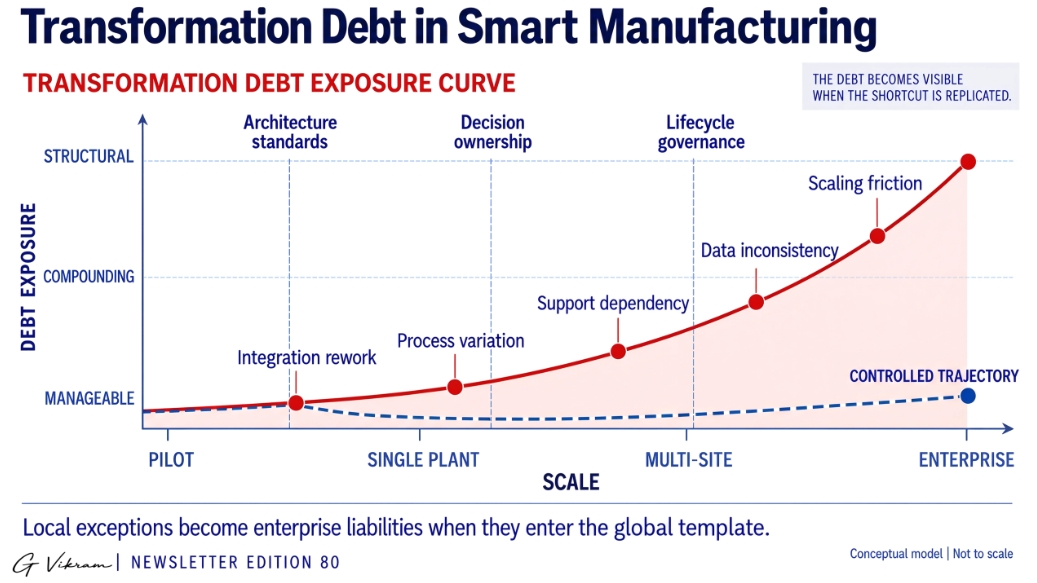 The most dangerous debt in a smart factory isn’t financial.
 Why mission changes everything, leadership lessons from two boardrooms