Nov15
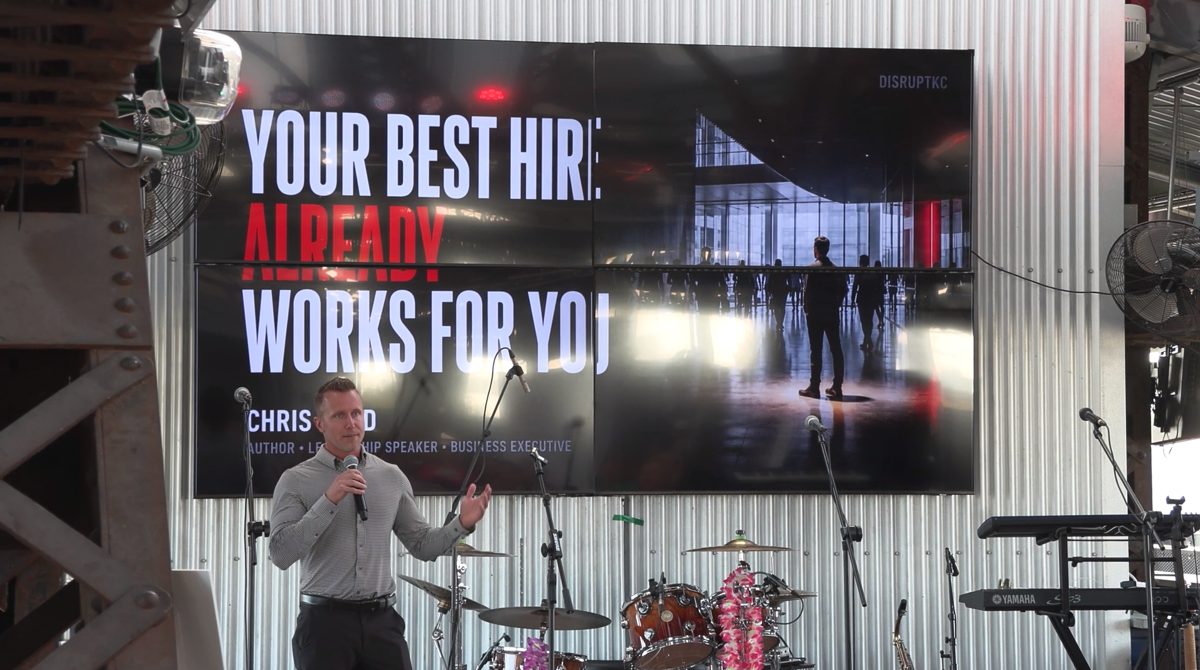
Coming home from the Healthcare Staffing Summit in Arlington, Texas this month, I kept turning a handful of numbers over in my head on the flight back to Nebraska. On their own, each one is a statistic you could skim past in a report, but when you put them side by side they explain why so many hospital leaders tell me they are working harder than ever to recruit and still feel like the ground keeps shifting under them.
I have spent the past decade in healthcare staffing and recruiting, and my wife is a respiratory therapist, so I get to hear about this from both sides of the table, from the executives trying to fill the roles and from the people who walk into those hospitals every day. Here are the five numbers I believe every hospital and health system leader should carry into 2027, along with what I think each one is really telling us.
The Bureau of Labor Statistics projects that private healthcare and social assistance will add more than 2.2 million jobs between 2025 and 2035, which works out to roughly 37 percent of all the new jobs expected across the entire US economy. That is not a busy season that settles down next year, but a long, structural shift, and it means the competition for clinical talent is going to stay intense for the rest of this decade. It also understates the real work ahead, because every organization still has to replace the people who retire, relocate or leave their profession along the way.
Using federal job openings data, Staffing Industry Analysts showed that healthcare has carried roughly 1.9 job openings for every hire in recent months, and that it fills openings more slowly than manufacturing, transportation and professional services. If I had to choose one number from this list to put in front of a board, it would be this one, because it shows that healthcare has no shortage of opportunity to offer people. What it needs is a better way to turn those openings into hires, and posting more jobs on its own rarely does that. Understanding where qualified people actually are, what matters to them and why they say no is what closes the distance.
The 2026 NSI National Health Care Retention and RN Staffing Report put national RN turnover at 17.6 percent for 2025, but the average hides a great deal of variation from one unit to the next. Behavioral health ran at 22.5 percent, emergency at 20.7 percent, and telemetry and step-down units near 19 percent, and those step-down and telemetry roles also took close to three months to fill. NSI estimates that every one-point change in RN turnover costs or saves the average hospital about $295,000 a year. When leaders ask me where to begin, I usually suggest looking at turnover unit by unit, because that is where both the problem and the return on solving it really live.
According to the Association for Advancing Physician and Provider Recruitment, physician searches in 2025 had a median time to fill of 119 days, and the typical time from posting a position to the physician's first day on the job was 229 days, with half of the searches studied still open at year end. Federal projections show the largest physician shortages in family medicine and general internal medicine, and they fall hardest on rural communities that can least afford a long vacancy. In practice, that means physician recruiting has to start a year or more before the need arrives, and it has to welcome the whole family making the move, not just the physician signing the contract.
The same BLS projections show employment at outpatient care centers growing about 19 percent through 2035, compared with roughly 5 percent for hospitals. Hospitals are no longer competing only with the hospital across town, but with surgery centers, specialty clinics and home health agencies, many of which can offer weekday schedules and fewer holidays. Hospitals still hold real advantages, including variety, faster skill growth and many career paths under one roof, and the ones that win will be those that make flexibility genuine and tell that story clearly and often.
When you read them together, a clear picture comes into focus. Demand will keep growing faster than hiring, the pressure is concentrated in specific roles and units rather than spread evenly, and candidates have more choices today than they have ever had. In a market like that, the organizations that pull ahead will not simply be the ones offering the biggest sign-on bonus or running the most job postings.
They will be the ones that plan their workforce years in advance, treat retention as the most important recruiting strategy they have, recruit specialty by specialty instead of leaning on averages, and give candidates an honest, well-told reason to choose them. In my experience, people rarely leave over pay alone. They leave because of a manager who stopped listening, a schedule that no longer fits their life or a workplace that slowly stopped feeling like theirs, and they stay for exactly the opposite reasons.
When my wife comes home from a shift, the stories she shares are almost never about equipment or charts. They are about the patients she was able to help and the coworkers who had her back on a hard day, and I have come to believe those are the experiences that decide where healthcare professionals choose to build their careers. The encouraging part is that every leader reading this can shape those experiences, starting this year, on their own units and in their own buildings.
If you would like to go deeper, I put the full research, including data on nursing specialties, physicians, allied health, rural recruiting and a five-step plan for 2027, into The State of Healthcare Recruiting in 2027 on my website. I would love to hear which of these five numbers you are feeling most in your own organization.
Keywords: Healthcare, Leadership, Recruiting
The State of Healthcare Recruiting in 2027: Five Numbers Every Hospital Leader Should Know Telling AI stories
 Friday’s Leadership Reflection Quote – Saeculum Leadership: Institutional Permanence Must be Earned
 The Corix Partners Friday Reading List - November 13, 2026
 Small Is Not the Same as Safe