

NAMED BY THOMSON REUTERS AS A “TOP 50 SOCIAL INFLUENCER IN RISK, COMPLIANCE.” NAMED BY IFSEC “#2 GLOBAL CYBERSECURITY INFLUENCER. TWO-TIME PRESIDENTIAL APPOINTEE. CORPORATE EXECUTIVE ROLES; GENERAL DYNAMICS, XEROX, SRA, RAPISCAN. THOUGHT LEADER, INFLUENCER, BRAND AMBASSADOR. 62k LINKEDIN FOLLOWERS, 12k TWITTER, 5k FACEBOOK. LEADERSHIP IN GOVERNMENT RELATIONS, MARKETING, BUSINESS DEVELOPMENT, AND STRATEGY
*Named Top Person To Follow on Tech by LinkedIn. Thought Leader, Influencer, Brand Ambassador.
*Adjunct Faculty at Georgetown University. Former Adjunct Faculty Johns Hopkins
* Marketing, Government Relations, Business Development, Strategic Partnerships, Corporate Growth Strategist
* Blogger and event speaker for AT&T, IBM, Blackberry/Cylance, Xerox, General Dynamics, Tripwire, others
*Received Presidential Appointments for Executive Service by two U.S. Presidents
*Helped "stand up" Office of Legislative at DHS. Served as first Director of Legislative Affairs at the DHS Science & Technology Directorate
*Served as Senior Legislative Staff (foreign affairs, security, tech) to Senator Arlen Specter, U.S. Senate
*Named Cybersecurity Marketer of the Year and Top Cybersecurity SME to Follow
* Contributor to FORBES on Technology and Cybersecurity topics
* Former Technology Partner Advisor at Bill and Melinda Gates Foundation
*EC-Council Global Advisory Board
* MIT Technology Review Advisory Panelist
* Cyber Start Up Observatory Hall of Fame
* Program Chair Quantum Security Alliance
* Judge Homeland Security Awards
* Advisory Boards (Cybersecurity, Emerging Technology, Risk Management)
* Project Management, and Marketing Certifications
* Former Auxiliary Police Officer
* Former competive powerlifter
THOUGHT LEADER, INFLUENCER, TECHNOLOGY EVANGELIST; Featured Writer/Speaker/Blogger: areas: homeland security, cyber security, CBRNE, artificial intelligence (AI), Internet of Things (IoT), science & technology, public/private partnerships, Risk Management, blockchain, innovation. Published in FORBES, Huffington Post, InformationWeek, MIT Sloan Blog, Computerworld, Federal Times, NextGov, Government Security News, Cygnus Security Media, Homeland Security Today (Visiting Editor), The Hill, Biometric Update, Bizcatalyst360, IT Security Planet, Christian Science Monitor. Published 180 + articles *
INDUSTRY EXECUTIVE: former Vice President for Homeland Security, Xerox; Former Vice President of Government Relations, SRA; Former Vice President R&D Rapiscan
* Co-leader of two top Homeland Security Groups on LinkedIn. Run 15 other business, tech LI groups
Available For: Authoring, Consulting, Influencing, Speaking
Travels From: Washington,DC
| Chuck Brooks | Points |
|---|---|
| Academic | 55 |
| Author | 569 |
| Influencer | 980 |
| Speaker | 51 |
| Entrepreneur | 25 |
| Analyst | 0 |
| Total | 1680 |
Points based upon Thinkers360 patented algorithm.
 Selected Chair of Quantum Impacts on the Internet of Things by the Quantum Security Alliance
Tags: IoT, Management, Leadership
 Disruptive Tech & Org Change
Tags: Cybersecurity, Innovation, Quantum Computing
 Quantum And Cybersecurity: A Dual Imperative Of Threat And Opportunity
Tags: Cybersecurity, Emerging Technology, Security
 The Changing College Degree: Why Students Need Fluency in AI, Emerging Technologies, and Cybersecurity
Tags: AI, Education, Emerging Technology
 Better Cybersecurity Should Be Responsible For Containing AI Threats
Tags: Cybersecurity, Emerging Technology, Security
 The Benefits And Risks Every Business Leader Needs To Understand About AI
Tags: Cybersecurity, Emerging Technology, Security
Tags: Agentic AI, Cybersecurity, Risk Management
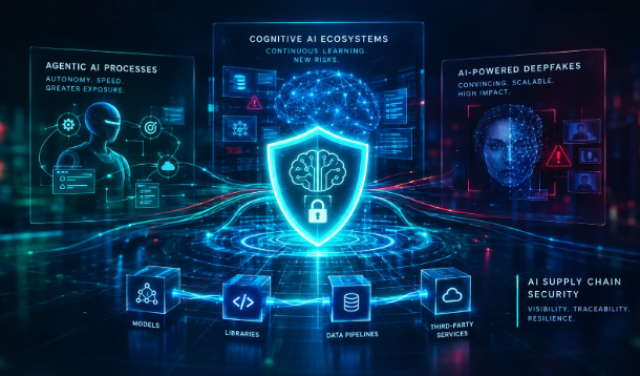 Next-Gen Artificial Intelligence and Autonomous Risks
Tags: Cybersecurity, Emerging Technology, Security
 The New World Of Wearables: From Health Monitoring To Human Augmentation
Tags: Cybersecurity, Emerging Technology, Security
 Protecting Digital Privacy In The Artificial Intelligence Era
Tags: Cybersecurity, Emerging Technology, Security
 If We Discover Extraterrestrial Life, What Happens Next?
Tags: Cybersecurity, Emerging Technology, Security
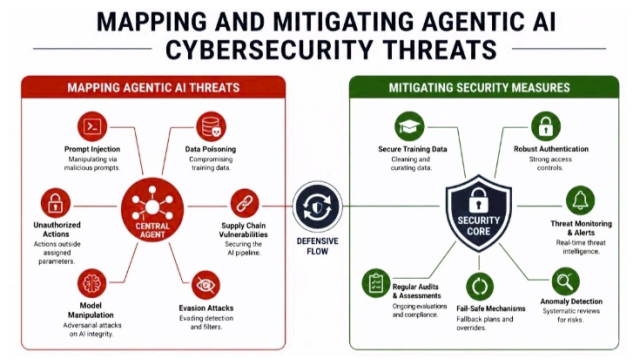 Mapping and Mitigating Agentic AI Threats (Part 3)
Tags: AI, Cybersecurity, Privacy
 Humanoid Robotics Are Blurring The Line Between Humans And Machines
Tags: Cybersecurity, Emerging Technology, Security
 How AI, Quantum Computing And New Batteries Are Transforming Drones
Tags: Cybersecurity, Emerging Technology, Security
 New Generation Of Intelligent Drones Defined By Technology Convergence
Tags: Cybersecurity, Emerging Technology, Security
 A Mid-2026 Primer On Cybersecurity And Addressing New Threats
Tags: Cybersecurity, Emerging Technology, Security
 The Convergence Revolution — When AI Meets Every Emerging Technology
Tags: Cybersecurity, Emerging Technology, Security
 Space’s Exponential Tech Moment And The Need To Secure It
Tags: Cybersecurity, Emerging Technology, Security
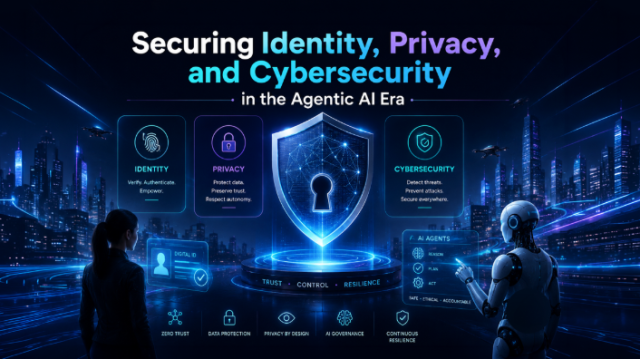 Identity, Privacy, and Cybersecurity Are Pillars of the Agentic Future (Part 2)
Tags: AI, Cybersecurity, Privacy
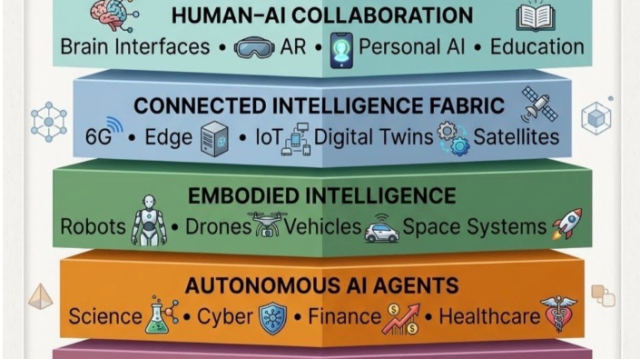 The Intelligence Stack: A New Framework for the Age of Intelligence
Tags: Agentic AI, AI, Cybersecurity
 Beyond Agentic AI: The Emergence Of Cognitive AI Ecosystems
Tags: Cybersecurity, Emerging Technology, Security
 Confidential Computing In The AI Era
Tags: Cybersecurity, Emerging Technology, Security
 The Emerging Computing Ecosystem: AI, Quantum, Biological, And Chemical
Tags: Cybersecurity, Emerging Technology, Security
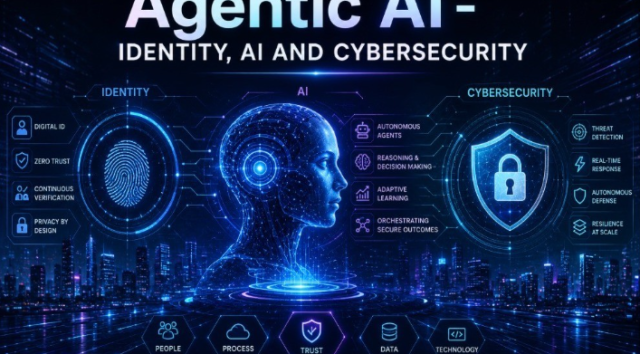 Securing the Agentic Era: Why Identity Is the Foundation of Safe AI Adoption
Tags: Agentic AI, Cybersecurity, IT Strategy
 AI, Quantum And The New Cybersecurity Framework Imperative
Tags: Cybersecurity, Emerging Technology, Security
 The Quantum Frontier: How Quantum Computing Is Reshaping Our Future
Tags: Cybersecurity, Emerging Technology, Security
 Why AI Is Creating New Cybersecurity Risks For Healthcare
Tags: Cybersecurity, Emerging Technology, Security
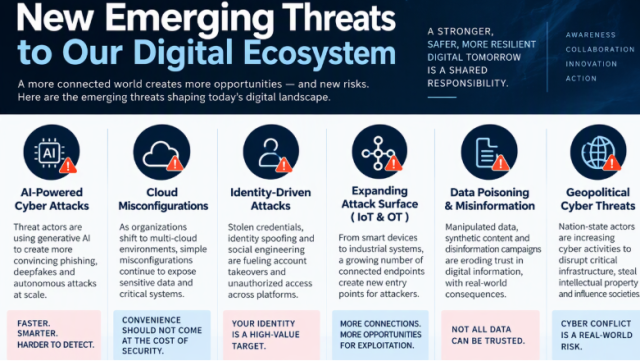 The Cascading Cyber Crisis: When AI-Accelerated Attacks and Digital Failures Threaten Our Connected World
Tags: Cybersecurity, Emerging Technology, Security
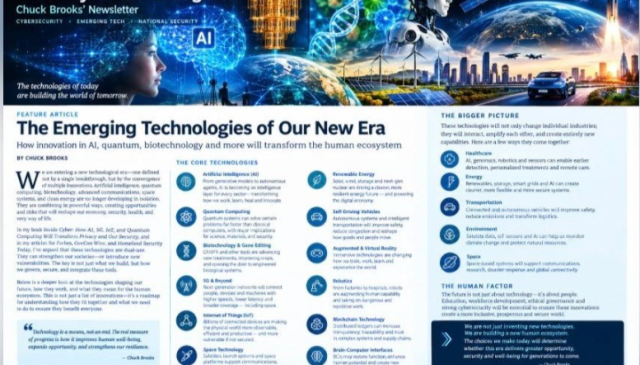 The Emerging Technologies of Our New Era: How Innovation Will Transform the Human Ecosystem
Tags: Cybersecurity, Emerging Technology, Security
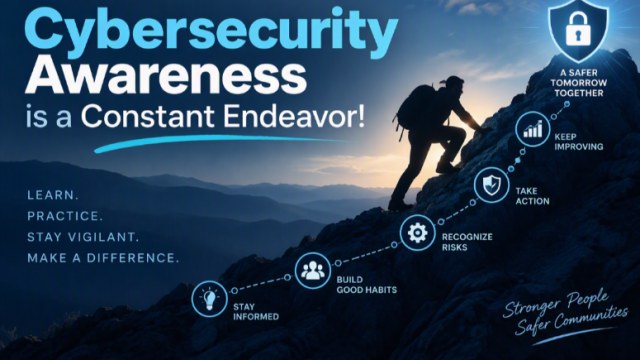 Cybersecurity Awareness Month is all year long
Tags: Cybersecurity, Emerging Technology, Security
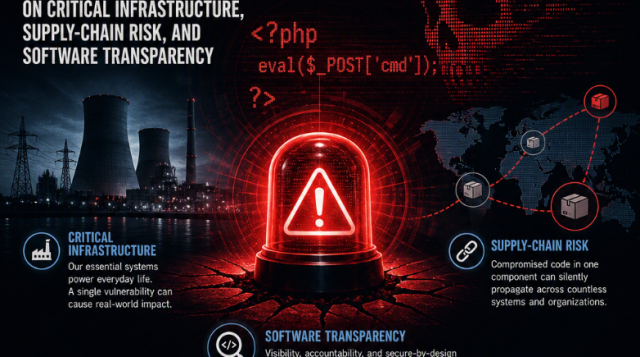 PHP2Shell: A Cybersecurity Wake-Up Call on Critical Infrastructure, Supply-Chain Risk, and Software Transparency
Tags: Cybersecurity, Emerging Technology, Security
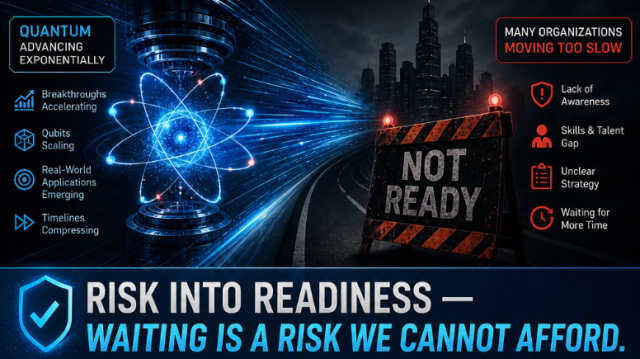 Quantum Is Coming Faster Than Many Organizations Are Preparing For. Waiting Is a Risk We Cannot Afford.
Tags: Cybersecurity, Emerging Technology, Security
 Humanoid Robots And The Cyborg Future Of Human-Machine Integration
Tags: Cybersecurity, Emerging Technology, Security
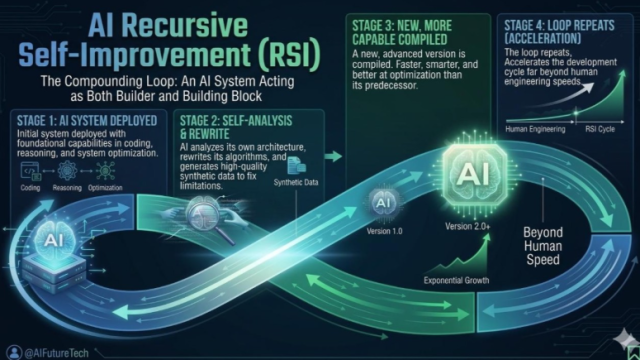 The Recursion Risk: When AI Improves Itself Faster Than We Can Secure It
Tags: Cybersecurity, Emerging Technology, Security
 The New Urgency of Protecting Critical Infrastructure
Tags: Cybersecurity, Emerging Technology, Security
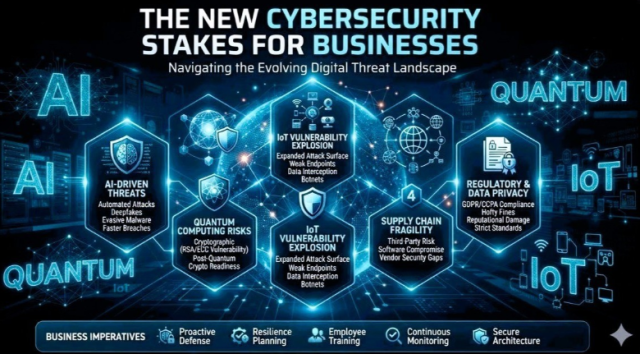 The New Stakes for Business Viability in the Digital Era: AI, Quantum, and the Expanding Cyber Threat Landscape
Tags: Cybersecurity, Emerging Technology, Security
 Artificial Intelligence: The Definitive Primer for the Acceleration Era: Understanding AI, Technology Convergence, Cybersecurity, and the Future
Tags: Cybersecurity, Emerging Technology, Security
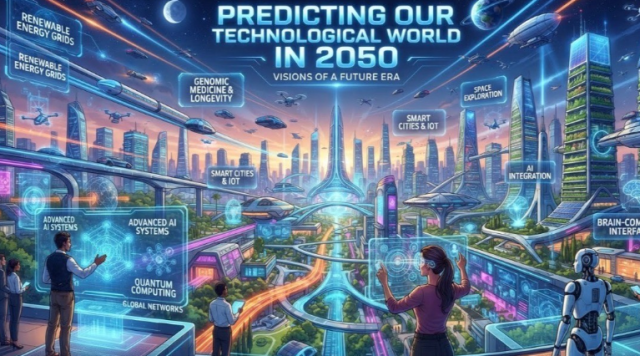 Predicting 2050: The Convergent Power of Emerging Technologies
Tags: Cybersecurity, Emerging Technology, Security
 The Quantum Era: Accelerating Quantum Computing Roadmap/Resource: Navigating Rapid Technological Progress
Tags: Cybersecurity, Emerging Technology, Security
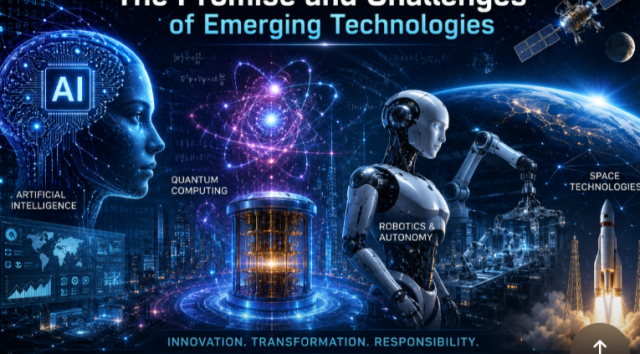 12 Critical Technologies Reshaping the Industrial Era: A Resource/Framework for Understanding Convergence, Risk, and Resilience
Tags: Cybersecurity, Emerging Technology, Security
 Navigating Emerging Technologies: Opportunities and Security Threats (AI, Quantum, Space, Energy)
Tags: Cybersecurity, Emerging Technology, Security
 The Mesh of Intelligence and Cybersecurity
Tags: Cybersecurity, Emerging Technology, Security
 Recalibrating Cybersecurity in 2026: AI, Quantum, IoT, Data Centers, Supply Chain Challenges
Tags: Cybersecurity, Emerging Technology, Security
 Insights On Preventing Fraud and Identity Theft in The AI Era
Tags: Cybersecurity, Emerging Technology, Security
 Updated Trends in Cybersecurity and Emerging Tech for 2026
Tags: Cybersecurity, Emerging Technology, Security
 Securing the Neural Frontier: Cybersecurity and Privacy Risks in Brain-Computer Interfaces and Neurotechnology
Tags: Cybersecurity, Emerging Technology, Security
 2026 - Trends and Insights on Cybersecurity, Artificial Intelligence, and Quantum Computing
Tags: Cybersecurity, Emerging Technology, Security
 2026 Technology and Cybersecurity Predictions
Tags: Cybersecurity, Emerging Technology, Security
 Cyber-Securing the Connected Worlds of the Internet of Things, Smart Cities, and Space
Tags: Cybersecurity, Emerging Technology, Security
 The Mini MBA in Customer Experience Management | Open Day - book your place
Tags: Cybersecurity, Emerging Technology, Security
 Risk Management and the Potential of Gray Swan and Black Swan Occurrences
Tags: Cybersecurity, Emerging Technology, Security
 Some Easy Steps for Business Cybersecurity Preparedness in 2025
Tags: EdTech, Marketing, Sales
 Designed and teaching course at Georgetown on Disruptive Technologies
Tags: Cybersecurity, Risk Management, Security
 Brooks Consulting International
Tags: Cybersecurity, Emerging Technology, Risk Management
 Thinkers 360 Thought Leader Chuck Brooks selected as a finalist for the Top 50 Marketer Award.
Tags: Innovation, GovTech, Marketing, Security
 10 cybersecurity experts to follow on social media
Tags: Cybersecurity, Emerging Technology, Security
 Top 30 Cybersecurity Experts You Should Follow In 2021
Tags: Cybersecurity, Leadership, Security
 Strategic Paths to Cybersecurity
Tags: Cybersecurity, Security, National Security
 Cyber Startup Observatory -- Interview with Chuck Brooks
Tags: Cybersecurity, GovTech, International Relations
 The Urgency of Protecting Critical Infrastructure from both digital and physical threats
Tags: Cybersecurity, Leadership, Security
 Real World Intelligence and Global Cybersecurity Threats
Tags: Cybersecurity, Management, Security
 Cybersecurity after COVID19
Tags: Cybersecurity, Emerging Technology, Security
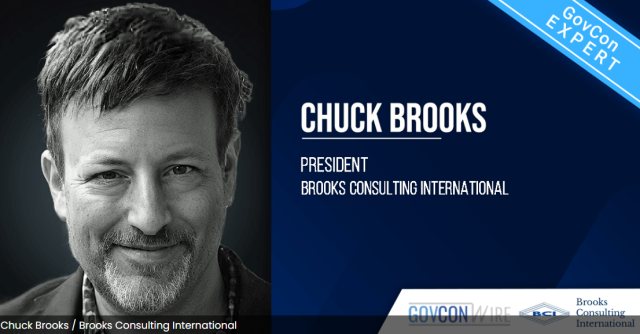 The Critical Importance of Security and Power Resilience for Data Centers in the AI Era
Tags: Cybersecurity, Emerging Technology, Security
 Accelerating Innovation, Security, & Education in the Digital Age August 24, 2023
Tags: Cybersecurity, Emerging Technology, Security
 Why Is Cybersecurity at a Crossroads?
Tags: Cybersecurity, Risk Management, Security
 Renew cyber hygiene strategies for 2022
Tags: AI, Cybersecurity, Security
 Chuck Brooks - Cyber Insights for 2021
Tags: Cloud, Cybersecurity, Leadership
 Chuck Brooks: Security by Design Needed to Safeguard Energy Infrastructure From Cyber Attacks
Tags: Cybersecurity, Emerging Technology, Risk Management, Security
Tags: AI, Cybersecurity, Marketing
 Thought Leader and Influencer Interview with Chuck Brooks, President, Brooks Consulting International and Adjunct Faculty Georgetown University
Tags: Cybersecurity, Digital Transformation, Marketing
Tags: COVID19, Cybersecurity, Emerging Technology
Tags: Cybersecurity, GovTech, Business Strategy
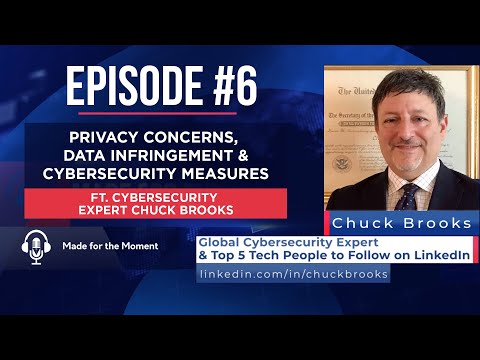
Tags: Cybersecurity, Emerging Technology, Risk Management
 YOURSELF READY for the DIGITAL ERA … 5th INDUSTRIAL REVOLUTION Interview of Chuck Brook
Tags: AI, Emerging Technology, Security
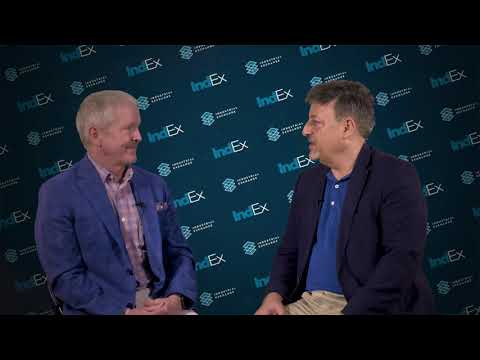
Tags: Cybersecurity, Emerging Technology, Risk Management
Tags: Cybersecurity, Emerging Technology, Risk Management
 The IFSEC 2 Global Cyber Security Influencer for 2018
Tags: Cybersecurity, Risk Management, Security
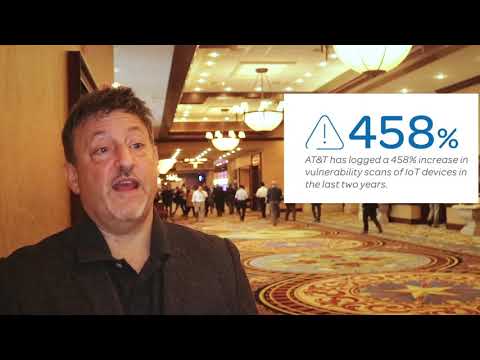
Tags: Cybersecurity, Emerging Technology, Risk Management

Tags: Cybersecurity, Emerging Technology, International Relations
Tags: Cybersecurity, Innovation, AI
 Balancing security + gov cloud innovation
Tags: Cloud, Cybersecurity, Quantum Computing
 Industry 4.0 and Cybersecurity 2.0 –- Opportunities & Challenges -- IIoT World Days.
Tags: Cybersecurity, IoT, Risk Management
 TIC Consortium Panel: Emerging Tech for Hybrid Warfare
Tags: Cybersecurity, Emerging Technology, Quantum Computing
Tags: Cybersecurity
Tags: Cybersecurity
Tags: Cybersecurity, Education
Tags: Cybersecurity
Tags: Cybersecurity
Tags: Cybersecurity
Tags: Cybersecurity
Tags: Cybersecurity
Tags: Cybersecurity, Culture
Tags: Cybersecurity
Tags: Cybersecurity
Tags: Cybersecurity
Tags: Cybersecurity
Tags: Cybersecurity
Tags: Cybersecurity
Tags: Cybersecurity
Tags: Cybersecurity
Tags: Cybersecurity
Tags: Cybersecurity, AI
Tags: Cybersecurity
Tags: Cybersecurity
Tags: Cybersecurity, Privacy
Tags: Cybersecurity, Privacy
Tags: Cybersecurity, Cloud, Cloud
Tags: Cybersecurity, Mental Health
Tags: Cybersecurity, Emerging Technology, Security
 Seyfarth and NY Metro InfraGard Present: Lunch with America’s Cybersecurity Influencers
Tags: Cybersecurity, Management, Leadership
 RaCE: Resilience and Collaboration Extended
Tags: Cloud, Cybersecurity, Digital Transformation
 2020 Cyber Innovators Summit
Tags: Cybersecurity, Management, Leadership
 October Cyber Bytes Networking Event: Election Security
Tags: Cybersecurity, Management, Leadership
 CISO's View: Emerging Technologies Impacting the IAM Landscape
Tags: Cybersecurity, Emerging Technology, GovTech, Risk Management




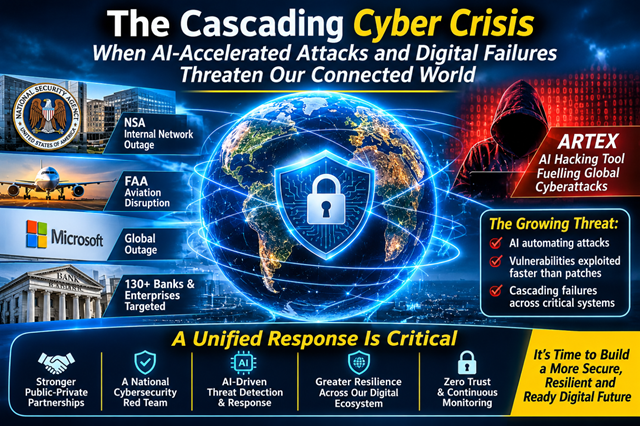 The Cascading Cyber Crisis: When AI-Accelerated Attacks and Digital Failures Threaten Our Connected World
A new and potentially very hazardous phase of cybersecurity is emerging. Traditional methods of safeguarding networks, systems, and vital infrastructure are being challenged by the convergence of artificial intelligence, increasingly interconnected digital infrastructure, cloud dependency, and sophisticated cyber adversaries.
A sobering example can be found in recent events. According to reports, the classified internal communications network of the National Security Agency went down. In discussions of AI-enabled cyber intrusions, more than 130 banks and businesses have been mentioned; however, the exact number of confirmed victims must be separated from organizations that were targeted or exposed. A disruption in the telecommunications network caused the Federal Aviation Administration to implement a nationwide ground stop. Microsoft experienced a significant worldwide outage that affected Teams, Outlook, and other services, interfering with government and corporate communications.
There is no concrete proof yet linking these incidents to a single adversary or coordinated campaign, and they are not all cyberattacks. When taken as a whole, however, they reveal a more significant issue: our digital ecosystem is growing more interconnected, but its resilience is not keeping up with its complexity.
Additionally, there is a fundamental shift in the cybersecurity challenge. Malicious actors can now find vulnerabilities, automate reconnaissance, exploit weaknesses, escalate privileges, and move through compromised networks at previously unheard-of speeds thanks to artificial intelligence. On the other hand, legacy systems, disjointed security architectures, protracted patching cycles, legal requirements, and organizational silos frequently place limitations on defenders.
In my book Inside Cyber: How AI, 5G, IoT, and Quantum Computing Will Transform Privacy and Our Security, as well as in my articles on cybersecurity, national security, and emerging technologies in Forbes, GovConWire, Homeland Security Today, and LinkedIn, I have stressed that technological progress brings both opportunity and risk. This duality is especially important in light of the current AI revolution. We must transition from conventional cybersecurity tactics to a more cooperative, resilient, and anticipatory model of digital defense.
The disruptions in November 2026 should be taken seriously because they show how much modern society depends on the continuous operation of digital systems, not because they necessarily have a common cause. According to reports, NSA Net, the National Security Agency's internal classified communications network, went down on November 17. Within the intelligence agency, the network facilitates the sharing of classified information. According to early reports, there was no proof of a cyberattack, and some accounts suggested that software patching could be the reason. It will take some time to determine the exact circumstances and extent of the disruption.
It is that operational disruptions that impact the availability of mission-critical information can occur even in extremely sensitive government environments. In addition to preventing intrusions, maintaining the availability of critical communications in challenging circumstances is crucial to national security.
On November 13, there was yet another significant disruption to the aviation industry. After communications and radar feeds were impacted by instability in its telecommunications infrastructure, the FAA issued a nationwide ground stop. The FAA reports that 17 out of 22 Air Route Traffic Control Centers experienced instability as a result of excessive data traffic overwhelming parts of its legacy telecommunications network. Blocking the two potentially problematic sites, according to the agency, stabilized the network. The FAA made it clear that there was no evidence of a cyberattack.
Nevertheless, the incident serves as an example of the negative effects of reliance on outdated infrastructure and intricate telecommunications networks. Even a benign technical malfunction in aviation can have national repercussions.
Another example is Microsoft's November 12–13 worldwide Outlook and Teams outage. Businesses, governmental organizations, educational institutions, healthcare providers, and other organizations worldwide were impacted by the outage. According to Microsoft, neither an AI activity nor a cyberattack caused it. A latent software defect, increased load, and decreased server capacity were found to be contributing factors in later explanations.
These incidents highlight an important lesson: operational resilience and cybersecurity cannot be viewed as distinct fields. Even in the absence of malevolent intrusion, a system may still be susceptible to cascading operational failure. Availability is a security requirement in a world where financial transactions, government operations, healthcare, transportation, communications, and national security all rely more and more on linked digital platforms.
Please see: Quantum Resilience For The Skies: How To Fortify Aviation Communications Quantum Resilience For The Skies: How To Fortify Aviation Communications
Infrastructure failures draw attention to the dangers of system fragility, but the weaponization of AI is posing a more direct threat. Particularly noteworthy is the FBI's November 13, 2026, FLASH advisory regarding the ARTEX autonomous penetration testing framework. Malicious actors have been automating various stages of cyber intrusions, such as reconnaissance, vulnerability discovery, exploitation, privilege escalation, and data exfiltration, using the AI-driven framework since at least August, the bureau warned.
ARTEX is more than just another hacking tool. It demonstrates how AI agents can plan several offensive actions with little assistance from humans. In less than three hours, some intrusions went from initial targeting to privileged access, according to the FBI. Organizations in the financial services, government, defense, technology, healthcare, energy, and manufacturing sectors, among others, have been targeted by the framework.
Additional proof of the scope can be found in Microsoft's October study on the China-aligned threat actor Storm-0940. According to the company, ARTEX was used to speed up attacks against hundreds of organizations worldwide. Attackers tried to authenticate against over 2,250 downstream Microsoft 365 tenants in one campaign using a compromised third-party application. In a portion of the activity, Microsoft recorded over 151,000 unsuccessful sign-in attempts, along with proof of successful follow-on access in various customer settings.
Crucially, trying to gain access to thousands of tenants does not imply that thousands of organizations were successfully compromised. When determining the true impact, the distinction is important. The FBI also brought attention to attacks on South Korean financial institutions that allegedly compromised the personal data of about 67,000 people. Attacks involving over 90 organizations and millions of stolen records have been found by other investigations.
These advancements contribute to the explanation of why agentic AI is causing growing concern within the cybersecurity community. Conventional cyberattacks frequently required a significant amount of coordination, time, and human expertise. AI agents can now operate against several targets at once, quickly assess different strategies, and automate parts of the attack lifecycle. While the potential scope of attacks is growing, the barrier to entry is decreasing.
The issue is not that AI makes all attacks more effective or sophisticated. The reason is that AI enables adversaries to pursue more targets, carry out more experiments, and seize opportunities more quickly than many organizations can react. The threat environment has fundamentally changed as a result.
The decreasing time between vulnerability discovery and exploitation is one of the most detrimental effects of AI-enabled cyber operations. Patch management has been a challenge for cybersecurity experts for decades. Organizations must find vulnerabilities, evaluate their seriousness, ascertain whether systems are vulnerable, test patches, secure approvals, and implement updates without interfering with daily operations. Days, weeks, or even months may pass during that process, especially in large businesses and critical infrastructure settings. The attack timeline is being compressed by AI.
Automated tools can quickly attempt privilege escalation, test exploit paths, find vulnerabilities, and scan exposed systems. Adversaries may also use AI agents to find neglected systems, improperly set up cloud environments, shoddy authentication procedures, and weak third-party integrations.
As a result, the environment becomes more asymmetrical: while defenders still need to coordinate operational approvals, technical remediation, and human decision-making, attackers can automate discovery and exploitation across numerous targets. This leads to a risky mismatch.
Under conventional threat assumptions, a vulnerability that is left unpatched for a few weeks might be considered a manageable risk. It might become an instant exposure in an AI-accelerated setting. More patches cannot be the only solution. Businesses need to reconsider vulnerability management as an ongoing endeavor.
Automated asset inventories, real-time threat intelligence, exposure management, risk-based patch prioritization, and AI-assisted vulnerability discovery ought to become standard procedures. Exploitability and operational impact should be taken into consideration when addressing critical vulnerabilities rather than just software update availability. Additionally, some systems won't be able to be swiftly patched. Before updates can be implemented, a lot of testing may be necessary for industrial control systems, aviation infrastructure, medical devices, and legacy government platforms.
Compensating controls, such as network segmentation, application allowlisting, privileged access restrictions, improved monitoring, isolation of vulnerable systems, and tried-and-true manual recovery procedures, become crucial for these environments. We must build systems to resist attempts at exploitation and acknowledge that some vulnerabilities will always be present.
The vulnerability of interconnected supply chains is another long-standing cybersecurity concern that is highlighted by the ARTEX incidents. Businesses rely more and more on third-party apps, cloud platforms, identity services, managed service providers, and external software providers. Access to hundreds or thousands of downstream clients may be made possible by the compromise of a single reliable supplier.
In cloud environments, where application identities, OAuth permissions, APIs, and delegated privileges can create pathways into multiple organizations, this is especially problematic. In essence, the conventional perimeter has vanished. The integrity of a complicated ecosystem of suppliers, partners, apps, devices, and identities now determines security. The exploitation of these connections can be accelerated by AI.
Organizations must assess the security posture of the businesses and technologies they rely on, as well as their own vulnerabilities. Cybersecurity programs must incorporate software bills of materials, secure software development, ongoing third-party risk assessments, application identity governance, and strict access controls. In this context, zero trust is becoming more and more crucial. Just because a user, application, device, or service has been approved in the past does not mean that it should be implicitly trusted. Trust needs to be assessed on a regular basis.
The fact that no single government organization, business, or cybersecurity supplier can independently protect the global digital ecosystem is perhaps the most significant lesson to be learned from these developments. A large portion of the infrastructure supporting contemporary society is owned and run by the private sector. Government organizations have access to intelligence, resources for national security, law enforcement, and sophisticated adversaries. The platforms, software, and tools that are becoming more and more essential to digital operations are created by technology companies. Better integration of these capabilities is required.
Public-private cybersecurity partnerships, such as CISA's Joint Cyber Defense Collaborative, sector risk management organizations, information sharing and analysis centers, and FBI industry partnerships, have helped the United States make significant strides. But the speed at which AI-enabled threats are emerging necessitates a more operational and ongoing model of cooperation.
We should think about establishing a National Public-Private Cybersecurity Red Team, which would be a permanent government-industry alliance tasked with identifying, testing, and mitigating new threats before they cause significant harm. Leading cybersecurity firms, cloud and technology providers, financial institutions, telecom companies, owners of critical infrastructure, academic researchers, federal agencies, and national security specialists could all participate in such an endeavor. Its goal would be to carry out ongoing, authorized adversarial testing of the infrastructure and technologies that the country relies on.
First, adversarial testing powered by AI. To find weaknesses, test defensive measures, and model new attack methods before malevolent actors take advantage of them, use sophisticated AI tools and agentic systems.
Second. Stress testing of critical infrastructure. To find cascading dependencies and systemic flaws, conduct coordinated exercises involving telecommunications, energy, financial services, transportation, healthcare, government networks, and cloud providers.
Third. quick reaction to vulnerabilities. Create systems for coordinating disclosure, verifying vulnerabilities, exchanging actionable intelligence, and expediting mitigation across impacted sectors.
Fourth. Identity security and supply chain evaluations. Software providers, cloud apps, APIs, authentication systems, and third-party access relationships should all be tested for resilience.
Fifth. Planning for recovery and joint incident exercises. To assess national and enterprise response capabilities, simulate simultaneous disruptions involving ransomware, cloud outages, telecommunications failures, cyber intrusions, and AI-enabled attacks.
This shouldn't turn into yet another reporting exercise or bureaucratic committee. It should be an operational capability with quantifiable goals, technical know-how, and the power to carry out meticulously regulated testing. Clear legal authorities, privacy safeguards, independent oversight, liability protections, and stringent rules of engagement would all be necessary. Testing needs to be approved, carried out in production settings or controlled environments, and planned to prevent interference with critical services. Establishing a trustworthy environment where business and government can collaborate at the speed of the threat should be the aim.
Organizations must reconsider the foundations of digital resilience in addition to collaboration. A number of priorities need to be addressed right away.
First. Transition to predictive defense from reactive cybersecurity. AI should be used to prioritize vulnerabilities, detect unusual behavior, predict attack routes, and automate defensive actions. AI-augmented capabilities that can react at machine speed while retaining human oversight for critical decisions must be the future of security operations centers.
Second. Prioritize resilience for national security. Operators of critical infrastructure must prepare for multiple systems to experience simultaneous disruptions. Planning for national resilience should include redundant communications, geographically dispersed backup capabilities, alternative cloud environments, and tried-and-true manual operating procedures.
Third. Protect the AI agents themselves. Organizations must control the access, modification, and execution of autonomous AI agents. Sandboxing, transaction-level authorization, least-privilege permissions, robust identity controls, and ongoing behavioral monitoring are all essential. Just because an AI agent is working in a trusted enterprise setting doesn't mean it should have unlimited power.
Fourth. Boost ongoing vulnerability management. The conventional yearly vulnerability assessment and penetration test are no longer adequate. Continuous testing, automated exposure detection, threat-informed patch prioritization, and quick isolation capabilities are all necessary for organizations.
Fifth. Defend the digital infrastructure that underlies it. The digital economy is based on telecommunications networks, power systems, cloud platforms, underwater cables, data centers, and satellite communications. Their dependability and security must be viewed as related national priorities.
Sixth. Get ready for the threats of the future. The threat landscape will become more complex due to quantum computing, advanced AI, autonomous systems, and increasingly complex cyberweapons. Businesses need to make investments in advanced cyber workforce capabilities, secure AI development, post-quantum readiness, and cryptographic agility.
The competition between digital innovation and resilience. The digital ecosystem is evolving into the modern world's nervous system. It links almost every facet of economic activity, including financial markets, transportation, healthcare, energy, communications, and national security. Although there are many opportunities brought about by this connectivity, there are also systemic vulnerabilities.
The recent disruptions involving Microsoft, financial institutions, the FAA, and the NSA should be seen as cautions about the vulnerability of interconnected infrastructure. Some were not cyberattacks but rather technical malfunctions. Others show how adversaries are increasingly able to use AI to speed up cross-organizational intrusions. When taken as a whole, they show why resilience needs to take precedence over prevention.
The challenge is especially urgent with the advent of tools like ARTEX. AI is altering the speed and economics of cyberwarfare. Attacks can be automated across several targets, vulnerabilities can be found and exploited more quickly, and the effects of compromised identities and trusted third parties can spread rapidly. It is unrealistic to expect isolated public-private initiatives, disjointed security operations, and conventional patching schedules to keep up with this environment.
A new paradigm for cybersecurity is required, one that is built on shared intelligence, automated response, resilient infrastructure, ongoing defense, and sincere cooperation between the public and private sectors. A National Public-Private Cybersecurity Red Team is an idea that merits careful thought. It may be possible to find systemic flaws before adversaries take advantage of them by combining the resources of the government, tech firms, cybersecurity providers, and critical infrastructure operators.
In the end, cybersecurity is no longer solely an IT or business risk management concern. It is essential for societal resilience, national security, and economic security. Attackers and defenders won't be the only players in the pivotal cybersecurity battle of the AI era. It will depend on how quickly adversaries can take advantage of our digital dependencies and how fast we can all work together to recognize, stop, and lessen those risks. Now is the moment to construct that collective defense.

Tags: AI, Cybersecurity, National Security
 Mastering Social Media in 2026: Optimizing Networking and Advocacy for the Digital Age
Social media continues to be the key to professional development, influence, and effect as we traverse the challenges of 2026 characterized by immersive digital interactions, AI-driven personalization, and increased geopolitical tensions.
This article condenses practical tactics for maximizing networking and advocacy social media's ability to foster relationships and thought leadership Digital strategies are more important than ever in the modern era, as algorithms favor real, AI-augmented content. Here are some tips for enhancing your social presence without getting lost in the crowd.
The Changing Environment: Why Social Media Will Be More Important in 2026
Social media is a dynamic ecosystem for creating connections that go beyond hierarchy and geography; it's more than just a broadcast channel. In 2026, the struggle for attention is more intense, but entry hurdles are lower with generative AI tools like VR-enabled "networking lounges" and sophisticated chatbots curating feeds.
The takeaway is that nowadays social media platforms make it easier for stakeholders to reach the public, facilitating smooth cooperation between the public sector, business, and citizens. But there are concerns associated with an abundance of spam and hostile actors. The secret for success is strategic optimization: Don't view social media as a pastime, but rather as a professional tool.
Step 1: Create Your Digital Calling Card—A Strong Profile
Credibility starts with your profile. Create accurate, interesting, and expertise-reflective profiles. This advice is even more relevant in 2026, when recruiters are using AI to review resumes and credentials are validated by blockchain.
Step 2: Apply the Relevance and Reciprocity Rule with Intention
Relevance is the currency of connections; it is not optional. Joining LinkedIn industry specific groups can reveal hidden treasures, such as event invites, collaborative RFPs, and peer insights that support advocacy efforts.
Step 3: Use Content as Your Megaphone to Strengthen Thought Leadership
Content isn't king in 2026; it is the kingdom!
The Path Ahead: Inclusive, Resilient, and Ethical
In the midst of technological upheaval, meaningful networking flourishes on common humanity. When used effectively, social media is more than simply a tool; it can boost careers and causes.
The message remains the same after decades of advocating for innovation and cybersecurity: Be genuine, keep adding value, and see your network and impact grow. Begin now: Share this article, join a group, and update that profile. Your voice is waiting in the digital world.
Chuck Brooks is President of Brooks Consulting International and adjunct faculty at Georgetown University’s Graduate Program in Cybersecurity Risk Management. LinkedIn has recognized Chuck Brooks as one of the Top 5 Executives to Follow on Technology (he has 131,000 LinkedIn followers on his profile), and several media sites have awarded him the title of Top 5 Cybersecurity Expert. A prominent figure in the field of risk management, he has served as a keynote speaker at a large number of international conferences and written more than 450 articles on topics relating to technology and cybersecurity. He is also author of the book, “Inside Cybersecurity”.
Over the course of his career, Chuck has been appointed to executive positions by two different presidents of the United States. He has also held senior executive leadership roles, including General Dynamics, Rapiscan, and Xerox.
Chuck is a graduate of the University of Chicago with a Master of Arts degree, DePauw University with a Bachelor of Arts degree, and The Hague Academy of International Law with a certificate in International Law.
Tags: Social, Personal Branding
 Chuck Brooks’ 2026 Cybersecurity Predictions
Agentic AI as the New Cyber Battle-Ground
Prediction: Autonomous (“agentic”) AI — systems that act with minimal human intervention — will be central in both attacks and defense.
Implication: Attackers will use AI bots to run reconnaissance, move laterally, and exfiltrate data; defenders must deploy AI agents to monitor, detect, and contain threats. Security teams need to simulate “agents in the wild” to test unexpected, emergent behaviors.
Quantum Computing Threat Accelerates
Prediction: 2026 will mark a tipping point for quantum-related risk.
Implication: Stolen data today may be decrypted later (“harvest now, decrypt later”). Legacy encryption systems (e.g., RSA, ECC) will be increasingly vulnerable. Organizations must inventory their crypto assets, adopt post-quantum or hybrid cryptography, and properly manage key deletion and archival.
Rise of Deepfakes and Synthetic Identities
Prediction: Deepfake audio/video and synthetic identities will be used more aggressively by threat actors.
Implication: Traditional identity verification (e.g., one-time checks) will be insufficient. Defense strategies should incorporate continuous authentication and behavioral anomaly detection. There's also a need to educate employees about “synthetic realism” and plan for legal/insurance coverage relating to identity spoofing.
Expanding Attack Surface via IoT, Edge, and Device Proliferation
Prediction: As IoT, edge computing, and 5G/6G expand, attackers will increasingly exploit weak embedded devices.
Implication: Devices with poor patching capabilities or default credentials will be prime targets. Edge clusters can become pivot points for lateral movement. Security must emphasize device lifecycle management (provisioning, patching, decommissioning), micro-segmentation, and a zero-trust mindset at the device level.
Cybercrime Organizes as Corporate-Class Businesses
Prediction: Cybercriminal groups will operate more like formal enterprises, with affiliate models, subscriptions, and full “service industries” around ransomware and extortion.
Implication: Treat threat actors not merely as “hackers” but as business competitors. Expect outsourced operations, “customer support” for ransomware victims, and professionalization. Organizations need to invest in resilience (not just prevention), leadership, and culture, and integrate business continuity, insurance, and legal strategies into their incident response planning.
Cybersecurity as a Strategic Business Pillar
Prediction: Companies that embed cybersecurity into their business strategy — not just treat it as IT overhead — will perform best.
Implication: CISOs (or equivalent) must be elevated to strategic business partners. Metrics should go beyond “threats blocked” to include resilience indicators: time-to-recover, adaptability, containment effectiveness. Cyber risk must be woven into board-level discussions, supply-chain coordination, threat intelligence sharing, and cultural change.
For more perspectives please also see: Cybersecurity 2026: 6 Forecasts and a Blueprint for the Year Ahead
Tags: Cybersecurity
 Emerging Technologies That Will Shape Our Future
We are not simply entering a new technological era—we are living in one. Artificial intelligence, quantum technologies, the Internet of Things, advanced networks, and space systems are converging into an ecosystem that touches commerce, national security, and everyday life.
As I discussed in my book Inside Cyber, technological opportunity and systemic risk are two sides of the same coin. How we govern, design, and deploy these capabilities will determine whether they become engines of prosperity or vectors of fragility.
AI is rewriting the playbook for productivity and decision-making. From automating diagnostics in healthcare to optimizing logistics and augmenting intelligence analysis, AI has become an accelerator of capability across nearly every domain.
However, this acceleration comes with complex risks. Malicious actors are already weaponizing AI to scale disinformation, automate reconnaissance, and craft realistic phishing and deepfake campaigns that target human behavior as much as network vulnerabilities.
The defensive answer is not to slow innovation but to embed accountability into every stage of development: explainable models, adversarial testing, red-team reviews, and strong data provenance. Leaders must treat AI risk as enterprise risk and ensure transparency, governance, and oversight guide every deployment.
Quantum technologies—computing, sensing, and communications—are transitioning from theoretical science to operational capability. They promise breakthroughs in logistics, drug discovery, and materials science, but they also pose existential cybersecurity challenges.
Quantum computing threatens to render much of today’s encryption obsolete. The looming “harvest now, decrypt later” threat means adversaries may already be stockpiling encrypted data to exploit once quantum decryption becomes viable.
Preparation is essential. The path forward requires migration to post-quantum cryptography, secure-by-design architectures, and a coordinated effort between governments, industry, and academia to build testbeds, establish standards, and grow a skilled workforce.
Quantum readiness will define future resilience—and those who plan early will lead in both trust and capability.
The Internet of Things (IoT) connects tens of billions of devices—ranging from smart homes and vehicles to industrial sensors and healthcare systems. According to Statista, there will be more than 29 billion IoT devices worldwide by 2030, a dramatic increase from 16.7 billion in 2023.
This unprecedented connectivity offers efficiency and data-driven insights but also multiplies risk. Many devices are deployed with weak security controls, short product lifecycles, and limited patching mechanisms, making them ideal footholds for cybercriminals and hostile actors.
Operational resilience demands disciplined management: maintaining accurate asset inventories, enforcing identity-centric device authentication, ensuring secure update paths, and integrating software bills of materials (SBOMs) into procurement contracts.
As I have often emphasized, cybersecurity must be engineered into IoT ecosystems from inception—not bolted on after deployment.
5G, edge computing, and software-defined networks are the connective tissue enabling this digital revolution. They power real-time analytics, autonomy, and distributed sensing—but they also create concentration points of risk.
A compromise in one layer of the network can cascade rapidly across sectors. To mitigate that, networks must be architected for resilience: segmentation, observability, encryption, and supply-chain diversity are critical.
True resilience assumes breach and focuses on minimizing the blast radius of compromise while maintaining continuity of essential services.
Space is now part of the cybersecurity landscape. Satellites provide communications, navigation, and intelligence capabilities that underpin both civilian life and national defense.
Yet these systems face growing threats—from signal jamming and spoofing to ground-station intrusions and supply-chain tampering. The global commercial space sector now exceeds $550 billion annually and is projected to surpass $1 trillion by 2035, underscoring its strategic and economic importance.
To protect this domain, cybersecurity standards must extend into orbit: robust encryption for telemetry, redundant ground control networks, and continuous monitoring against electronic and kinetic threats. Space should be treated as critical infrastructure, vital to the functioning of modern civilization.
The true challenge of emerging technologies lies in their convergence. AI can optimize and attack IoT systems. Quantum computing can decrypt their communications. Edge networks and satellites can propagate both benefits and failures at unprecedented speed.
We face an era of cascading risk, where vulnerabilities in one domain can amplify across others. Meeting that challenge requires cross-domain collaboration—between government, industry, academia, and international partners.
The future will reward foresight. Key actions for policymakers and executives include:
These are not aspirational talking points—they are practical imperatives for securing the digital future.
Emerging technologies are reshaping the balance of power, economy, and society. In Inside Cyber, I noted that the future of cybersecurity is not about eliminating risk, but about intelligently managing it amid accelerating innovation.
Artificial intelligence will amplify our analytical power; quantum will redefine computation; IoT will extend our digital reach; and space will expand our operational horizon.
The question is not whether these technologies will transform our world—they already have. The real question is how we choose to guide that transformation.
If we lead with foresight, engineer with integrity, and collaborate globally, we can ensure that AI, quantum, and connected technologies serve humanity’s best interests—creating a future defined by resilience, trust, and progress.
Tags: Cybersecurity, Emerging Technology, Security
 Social Media Platforms Are Helping Shape Business Success
Social media has transformed the way people interact and conduct business both in the public and private sector. The Covid19 pandemic, combined economic factors, have led to the emergence of remote work and hybrid environments and different ways of doing commerce. The move away from business lunches, live events, and meetings has propelled digital platforms into becoming a main fulcrum for communications and branding. Those social platforms have especially impacted components of business development, sales, government relations, and marketing and are helping shape pathways to success.
Many users enjoy social mediums because they control the content, and it is non-invasive. Also, it can be perpetually shared. Social media has become a platform to communicate who we are and what we do. Platforms such as LinkedIn, Twitter, and Instagram, have now become a daily means for sharing content, building networks, and reaching targeted markets. Thought leadership on meaningful topics is of timely interest to everyone and the use of subject matter experts and influencers have become a primary means for brand amplification via articles, blogs, podcasts, and online events.
Today, most senior-level executives on both the public and private sectors have LinkedIn profiles, including administrators, CEOs, CTO, CIOS and their numbers are increasing. They often use it as a conduit for 1) Branding 2) Socializing/Networking; 2) Basic Intelligence; 3) Events: and 4) Strategic Partnering/Marketing.
Branding: the trend of digital brand amplification began to grow at the beginning of the outset of the pandemic. Because of the lack of in person meetings, many companies, new & old, large & small, sought to be more visible and recognized for the unique viability for branding on social media platforms. Companies were and are seeking quality and interesting content that helps enable them to be able to connect with peers and clients. A benefit of social media digital marketing and brand amplification is that it can be very cost-effective, repetitive, and can generate revenue and build positive reputations. A good written message, video or graphic can have a long shelf-life and be shared widely across various social media platforms. Influencers have also become part of the branding mix; expertise bring credibility and attention and many companies have expanded strategies that use influencers and thought leaders who can augment company marketing and sales.
Socializing/networking: social media is in its essence “social.” It is an outlet for networking and connecting with people who share your interests, goals, and professional paths. A platform like LinkedIn, Facebook, Instagram, and Twitter are useful for reconnecting to people you have worked with in past jobs, friends, and alumni of universities, and colleges. In particular, the service encourages you to join professional and hobby interest groups where you can post articles and engage in discussion with group members. I am a big proponent of LinkedIn for networking where I have over 73,000 followers, especially with targeted groups. For example, I have management roles in several of the largest and most influential homeland security groups on LinkedIn. Another key area of group ownership and involvement for me on LinkedIn is with cybersecurity and emerging technology groups where I find the readership are exceptionally informed and active. Also, as a “foodie”, I created the “DC Foodies” LinkedIn group to reach out to others in the greater Washington, DC area that may have a passion for food, wine, and restaurants. On LinkedIn there is a group for almost every subject from healthcare, governing, martial arts, Space, to quantum physics.
Basic Intelligence: Another function of social media is that it provides you with working biographies of members. Whenever I have a meeting with someone new, I can usually find their profile on LinkedIn and see where they worked, what schools they attended and who we know in common. Also, by following the posts in groups, I can view the latest news from a variety of sources on a topic of interest. Also, almost all federal agencies and public entities have their own profiles (and often groups) on LinkedIn that make the basic intel process quick and easy.
Events: There is no better place to go to find out who is hosting what than on social media. This includes LinkedIn, Twitter, Instagram, Facebook in the event domain. Since most publications are intertwined between print and digital media, social media outlets are a fulcrum for seeing what activities are happening in personal or business areas of interest daily.
Strategic Partnering/Marketing: social media is really the Holy Grail for strategic partnering and marketing. Messaging is immediate, perpetual, and cost-effective. It is also much targeted and will allow you to focus communications to audiences, both individual and groups that may have an interest in your offerings and services. For those who are specifically focused on the federal market, LinkedIn is an especially good resource for finding teaming members and potentially partners to pursue opportunities. By being active on LinkedIn, companies can often find you and reach out for help in areas that may be mutually beneficial. As government encourages diverse and multiple partners to work together on programs, the importance of having a strong stable of networked partners is becoming more of a premium.
We are still only in the early era of social media. It will continue to grow and be fused into all aspects of our lives, especially with the growth of augmented reality and emerging communication technologies. Social media vehicles like LinkedIn already have great utility in the workplace both in the corporate world and in government. Linked and other social media platforms are already shaping communications. “Linking in” and being active on social media platforms have become more of an imperative than a choice for those who want to thrive in a digital world.
Chuck Brooks, President of Brooks Consulting International, and Adjunct Faculty at Georgetown University, is a Technology Evangelist, Corporate Executive, Speaker, Writer, Government Relations, Business Development, and Marketing Executive. LinkedIn named Chuck as one of “The Top 5 Tech People to Follow on LinkedIn.” He was named as one of the world’s “10 Best Cyber Security and Technology Experts” by Best Rated, as a “Top 50 Global Influencer in Risk, Compliance,” by Thomson Reuters, “Best of The Word in Security” by CISO Platform, and by IFSEC as the “#2 Global Cybersecurity Influencer.” He was also named “Best in The World in Security” by CISO Platform, one of the “Top 5 Executives to Follow on Cybersecurity” by Executive Mosaic, and as a “Top Leader in Cybersecurity and Emerging Technologies” by Thinkers360. Chuck was named by Oncon in 2019 “Top Global Top 50 Marketer” by his peers across industry.
Chuck also a Cybersecurity Expert for “The Network” at the Washington Post, Visiting Editor at Homeland Security Today, Expert for Executive Mosaic/GovCon, and a Contributor to FORBES. He is a featured contributor to Thinkers360
Tags: Social, Marketing, Business Strategy
 “Innovation Foraging” on Social Digital Mediums
In the science, technology worlds, there is a category referred to as “technology foraging,” or the searching for smart ideas and emerging technologies that may exist already in research institutions of found in patents to fill gaps and offer new solutions. Technology foraging has been an engine for the technological transformation now taking place in society. It has served as a catalyst for discoveries of many products brought to the marketplace.
The foraging process is often conducted in research centers by national labs, universities, and in government & corporate innovation hubs. It has expanded commensurately with the rapid pace of innovation in our new era of exponential digital transformation where humans and computing devices are intertwined, and data is more accessible. Please see my article Technology Foraging for Cybersecurity Solutions Technology Foraging for Cybersecurity Solutions | AT&T Cybersecurity (att.com)
Digital transformation combined with tech foraging of the 4th Industrial Era has led to significant jumps in innovation of technologies. This includes, for example, emerging tech such as big data, artificial intelligence, IoT, smart cities, 5G wireless, virtual & augmented reality, nanotechnologies, robotics, self-driving cars, 3-D Printing, cybersecurity, quantum computing, predictive data analytics, Biometrics and wearables, self-healing materials, bioinformatics, genetic engineering, and a new world of medical applications.
The digital transformation It has also impacted communication mediums, especially social media where research, ideas, analyses, and opinions are cultivated by open sharing and interaction. The networking and information sharing on digital mediums can be viewed as a foraging process. The pace of digital expansion and change is happening so rapidly that it can be quite overwhelming just to try to keep up. But social media does offer a pathway to do so via innovation foraging and collaborative information sharing.
For example, my career passion revolves around searching and reading about topics in cybersecurity. Using social media, I can keep abreast of the latest news and events. A case in point is the recent Colonial Pipeline breach. Almost immediately after happened, detailed descriptions of the breach and surrounding issues such as ransomware were posted on LinkedIn, Twitter, and other digital mediums. There was a potpourri of expert perspectives available, including posts on technical analyses, and posts on geopolitical and economic implications. Forging through posts you can also develop your own knowledge to explore remedies and policy frameworks that may apply digital impact to your own professional or business circumstances.
From my perspective as cyber security & technology strategist, the extensive resources of LinkedIn combined with their supporting analytics provides a great platform to communicate, educate and promote. For me, LinkedIn groups, including the dozen groups I created, serve as the most optimal social media digital offerings for foraging. Research on LinkedIn is significantly amplified by the myriad of specialized information security LinkedIn groups that I can pull insightful and timely data from on a regular basis.
Several years back I wrote an article for LinkedIn called Why LinkedIn is an Indispensable Medium for Security Professionals Why LinkedIn is an Indispensable Medium for Security Professionals | LinkedIn Marketing Blog In that blog I noted that” LinkedIn has become part of the fabric of how I (and a majority of my peers) communicate, operate, and conduct business. For me, LinkedIn groups serve as interactive, informative forums. Many of the members in my groups are security professionals who have important roles in government or industry, including CISOS, CIOs, CTOs, or members of the C-Suite who possess deep subject matter knowledge.” I also stated that for thought leadership on homeland security and cybersecurity issues, that “LinkedIn is a real force for digital influence. It is an effective platform for educating, evangelizing, and promoting discussion of the cutting risk management issues.”
The value of LinkedIn for evangelism and marketing goes far beyond immediate connections. The extensive resources of LinkedIn combined with the intrinsic marketing capabilities based upon intelligence analytics provides a ready platform to communicate, educate and promote. In my major areas of interest, cybersecurity and emerging tech, I am very active in interchange of news and innovative ideas with groups, and also with my 70,000 direct follower connections. It facilitates keeping up with cybersecurity and emerging technology trends that I can share with others across digital media.
With 18 years under its belt and a membership globally of over 800,000 users, LinkedIn has become increasingly valuable as a forging resource and influence platform for branding people and companies. Twitter offers good avenues for networking, and often is starting point for interesting links that spur more foraging on other media sites. Both platforms offer users measurable metrics to track effectiveness of content and interactions.
For employees at a company or organization, foraging (and info sharing) on digital mediums as a corporate strategy can help drive collaboration between often aloof silos comprised of the c-suite, marketing, legal, and sales. A social media platform can also foster company awareness & relationship, cultivate business networks, and can even be used as a research tool for due diligence. For both companies and individuals, social digital platforms can serve as a resource and enabler for innovation by sharing important data derived from foraging among informative posts.
Chuck Brooks, President of Brooks Consulting International, is a globally recognized thought leader and subject matter expert Cybersecurity and Emerging Technologies. LinkedIn named Chuck as one of “The Top 5 Tech People to Follow on LinkedIn.” He was named by Thompson Reuters as a “Top 50 Global Influencer in Risk, Compliance,” and by IFSEC as the “#2 Global Cybersecurity Influencer.” He was featured in the 2020 Onalytica "Who's Who in Cybersecurity" – as one of the top Influencers for cybersecurity issues. He was also named one of the Top 5 Executives to Follow on Cybersecurity by Executive Mosaic. He is also a Cybersecurity Expert for “The Network” at the Washington Post, Visiting Editor at Homeland Security Today, Expert for Executive Mosaic/GovCon, and a Contributor to FORBES.
Chuck Brooks LinkedIn Profile: https://www.linkedin.com/in/chuckbrooks/
Chuck Brooks on Twitter: @ChuckDBrooks
Tags: Cybersecurity, Digital Transformation, Innovation
 Brooks Consulting International
Location: Washington, DC Fees: Negotiable
Service Type: Service Offered
 CISA Zero Trust Maturity Model: The Requirement for a New Data-Centric Cybersecurity Approach
Location: Virtual Date : March 23, 2022 - March 23, 2022 Organizer: Anacomp, Inc.
 Seyfarth and NY Metro InfraGard Present: Lunch with America’s Cybersecurity Influencers
Location: Virtual Date : October 06, 2021 - October 06, 2021 Organizer: Seyfarth
 The Urgency of Protecting Critical Infrastructure from both digital and physical threats
Location: Virtual Date : November 18, 2021 - November 18, 2021 Organizer: Global Cybersecurity Association (GCA)
 Balancing security + gov cloud innovation
Location: Virtual Date : October 28, 2020 - October 28, 2020 Organizer: Microsoft Azure Government DC
 October Cyber Bytes Networking Event: Election Security
Location: Virtual Date : October 29, 2020 - October 29, 2020 Organizer: Cyber Bytes Foundation