Aug29

The adviser leans back slightly. The line disconnecting with a soft click signals, at least operationally, that the call is complete.
Another contact handled; another customer moved on. On screen, the CRM and metrics continue their quiet accounting. Handling time, outcome notes, resolution. The interaction, it would seem, is finished.
And yet something remains. The call has ended, but the conversation hasn’t quite left the room.
It is there in the pause before the next task begins, lingering as a kind of emotional afterimage. For advisers, this experience is no longer incidental, but structural. Because this call did not take place in a contact centre. It took place in what was once a personal space. Their safe space. The call was handled by an adviser working from home.
There was a time when the architecture of contact centre work provided its own form of experiential containment. The physical environment acted as both stage and boundary.
The commute home, often dismissed as a frustration, functioned as a psychological transition, allowing the residue of the day to settle before the individual re-entered a different role.
The transactional experience of contact centre work has not changed. Remote and hybrid working have not removed the work itself, but they have altered its edges.
The adviser now occupies a space that must hold multiple identities. The headset is placed on a desk that may also hold a morning coffee or an evening meal. The chair used for a challenging escalation may, only hours later, become the place where one attempts to relax.
What was once separated by distance is now separated only by attention. And attention, as it turns out, is a far less reliable boundary.
Not all calls follow us. Many pass through with little friction, absorbed into the rhythm of the day. But emotionally charged interactions behave differently, because they engage parts of our psychology that are not easily switched off.
Advisers are not passive recipients of customer emotion; they are active managers of it. They listen, absorb, reframe, and respond, often suppressing their own immediate reactions in favour of what the situation requires. This is the essence of emotional labour: effortful, deliberate, and, when done well, largely invisible.
Sociologist Arlie Hochschild described emotional labour as the requirement to manage and present emotion as part of the role itself. In The Managed Heart, the expectation for flight attendants was not simply to perform tasks, but to perform feeling: warmth, patience and reassurance, regardless of what was genuinely experienced in the moment.
In contact centres, this expectation is no less present, even if it is framed more softly as “service with a smile”. The difficulty is not in the display of emotion itself, but in the gap that can emerge between what is felt and what must be shown. Over time, this gap creates a quiet tension that does not always resolve when the interaction ends.
Hochschild’s theory suggests that surface acting – pretending to feel something you don’t – creates cognitive dissonance: a mental conflict between true emotions and those we are required to express. Over time, this can contribute to exhaustion, detachment and a sense of inauthenticity.
Employees develop coping mechanisms to manage the strain. In contact centres, these might include suppression, apathy, or sarcasm and dark humour: “Another angry customer? It must be Tuesday.” Such mechanisms can create emotional distance, but they do not necessarily resolve what has been experienced.
A customer interaction may end with the appropriate tone, the correct phrasing, even the right outcome, and still leave behind an emotional trace if what was absorbed has not been fully processed.
The customer’s frustration, anxiety, or distress does not simply disappear at disconnection. It is, in a sense, carried forward, held briefly by the person who worked to contain it.
Where colleagues are physically present, this burden is often shared, even in small ways. A glance exchanged across a desk, a brief comment, a moment of collective recognition that something difficult has just occurred. These interactions do not solve the problem, but they provide release.
At home, that release is less readily available. The emotion has been managed, but it has nowhere obvious to go.
With an unresolved issue, an unhappy customer, or a response that could have been phrased differently, the mind has a tendency to return to the moment. Experiences that feel incomplete are afforded a kind of psychological priority, resurfacing as the brain attempts to bring them to a more satisfying conclusion.
In a busy contact centre, the next call arrives and attention shifts. In the relative stillness of home working, there may be more space for these loops to continue, replaying fragments of the interaction in search of something that cannot now be changed.
Perhaps the most subtle shift, though, is the meaning of the space in which it occurs.
Homes are not neutral environments. They carry associations of safety, control, and recovery, built over time through repetition and experience. When emotionally charged work begins to take place within that same environment, those associations can begin to blur.
The desk is no longer just a place of productivity, but of pressure. The kitchen table is no longer only a place for family meals and shared pastimes; it is also the scene of emotionally charged conversations with strangers. The room is no longer entirely separate from the demands of the role.
In effect, the boundary that once protected the individual from the work becomes permeable. And what passes through is not just the tasks assigned to the role, but the feelings and experiences attached to those tasks.
If the challenge is one of unfinished processes and blurred boundaries, the response is not simply to endure it more effectively, but to reintroduce forms of closure that remote work has quietly removed.
One of the overlooked functions of the traditional workday was its structure of transitions. The beginning had a ritual, however mundane a commute might be, and so did the end. Without these markers, the mind is left to infer when something has concluded, and it does not always do so reliably.
Creating a deliberate end to the day is therefore about signalling. A walk, a change of clothes, stepping away from the workspace, or altering its configuration. These are cues that allow one role to recede so another can take its place.
Similarly, where interactions feel incomplete, there is value in providing a form of artificial closure. Writing a brief account of what occurred, what was handled well, and what lay beyond one’s control can help resolve the cognitive tension that keeps the experience active. It does not change the outcome, but it changes the way the outcome is held in our mind.
There is also a need to reintroduce forms of shared processing, even in distributed teams. A message to a colleague, a brief acknowledgement of a difficult call, or a structured moment to reflect and reset can externalise what would otherwise remain internal.
Finally, the physical environment, however constrained, can be shaped to reinforce separation. A dedicated space, even if modest, or simply packing work away at the end of the day, can help restore a sense that the role has a place, and that place is not everywhere.
How many laptop-based employees log off and physically close the laptop at the end of the day? Or change clothes to signal that they’re finishing work and starting a different role? These gestures might seem small. Psychologically, they punch well above their weight.
It would be easy to frame this as a question of individual coping, of resilience in the face of emotionally demanding work.
Indeed, many organisations have invested in resilience training. But that framing misses something important: it is not the individual, but the context in which the work is experienced, that has changed.
The removal of boundaries, the reduction of shared recovery, and the merging of professional and personal spaces are structural shifts, and they carry psychological consequences.
For leaders, rather than focusing only on performance output, we must be cognisant of the conditions under which that performance is sustained. The measure of a well-handled call is not only that it ends successfully, but that it can, in some meaningful sense, be left behind.
Encouraging recovery, normalising the emotional impact of difficult interactions, and designing workflows that allow space between them are not inefficient. They recognise the psychological demands that remote work entails.
Before the COVID-19 pandemic, homeworking was relatively uncommon in the UK. Data from the Annual Population Survey indicates that from January to December 2019, approximately 12% of working adults reported working from home at some point during the week prior to being surveyed.
Today, it is estimated that between 56% and 75% of contact centres utilise hybrid working for at least part of their frontline operations. Hybrid and remote work is here to stay, and advisers will continue to handle emotional interactions in their homes.
Technology is also changing the nature of these calls. Simpler, transactional interactions could be considered respite, psychologically speaking, from the emotional dissonance required in more complex discussions.
A study published in Frontiers in Psychology explored emotional dissonance in call centre environments and found links with increased job stress and reduced well-being. Another study in the International Journal of Applied Psychology highlighted higher burnout and significantly lower psychological well-being among agents handling a greater ratio of complex interactions.
In short, as technology removes the simple, the psychological pressure on those who remain increases.
As AI removes many transactional interactions whilst concentrating the remaining complex, emotive calls with advisers, the aim cannot be to remove emotion from contact centre work. To do so would be to strip away the qualities that make service human.
Instead, emotion needs a pathway to be engaged with, processed, and eventually released, rather than carried forward into spaces that were never intended to hold it.
This requires intentionality in how we consider the adviser. Not simply as a resource measured through talk utilisation, occupancy and outcomes, but as a person. A person who shares their safe space with strangers and allows the emotional impact of the role into their home.
Our role as leaders is not to accept that this is simply part of the job for home-working advisers, nor to treat emotional residue as an inevitable by-product of efficiency. When work enters the home, it does not arrive as a neutral task, but as an experience that must be held, processed, and ultimately released.
That requires more than resilience training. It requires design.
Designing space between interactions, not just queues between calls. Designing moments of closure, not just measures of completion. Designing environments, even in their smallest form, that allow people to step out of the role rather than carry it with them.
Otherwise, emotion lingers in the background of spaces that were once reserved for something else and can quietly reshape what “home” feels like, without ever fully announcing that it has done so.
The call has ended. The system has moved on. The metrics have been met.
But unless we create the conditions for it to do so, the experience itself may still be there, waiting.
Keywords: Culture, Leadership
 The Age of Continuous Shocks: Why the coming downturn will be decided in your supply chain
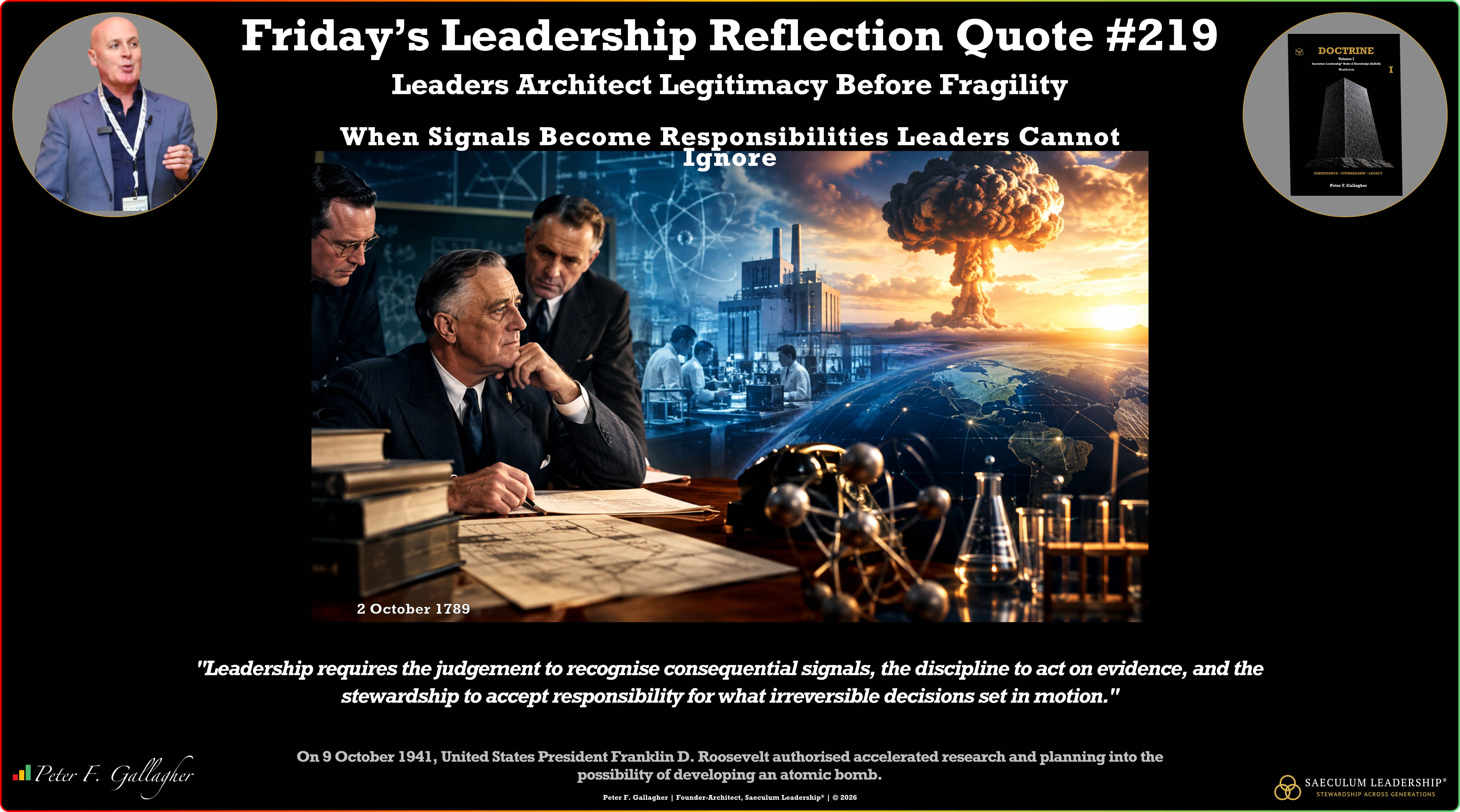 Friday’s Leader Reflection Quote – Saeculum Leadership Leaders Accept Decisions Create Responsibilities
 The Corix Partners Friday Reading List - October 9, 2026
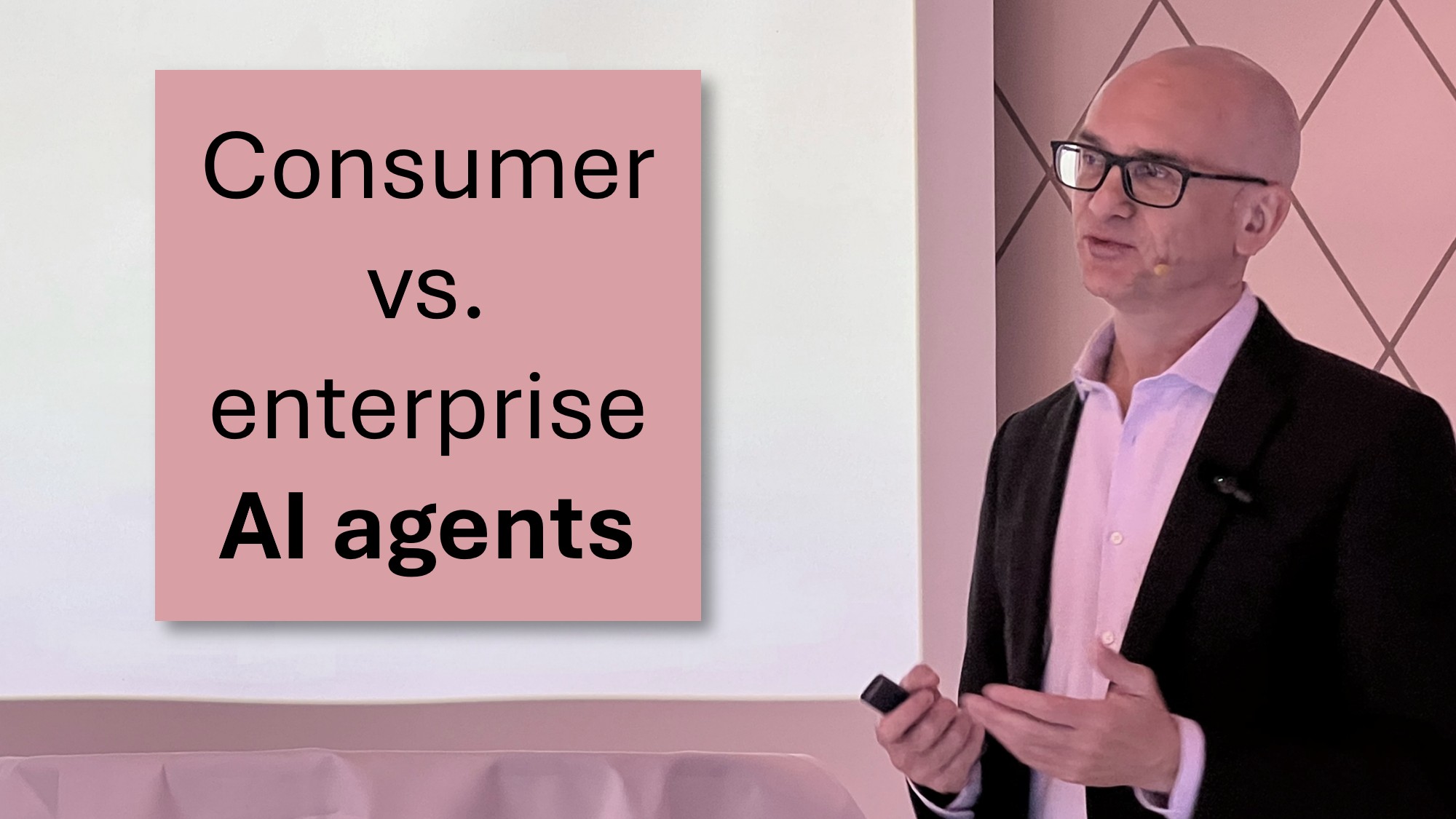 Consumer vs. enterprise AI agents
 Best Supply Chain AI Tools in 2026: SCM SENSEI AI and Ask Lora Compared