Aug29
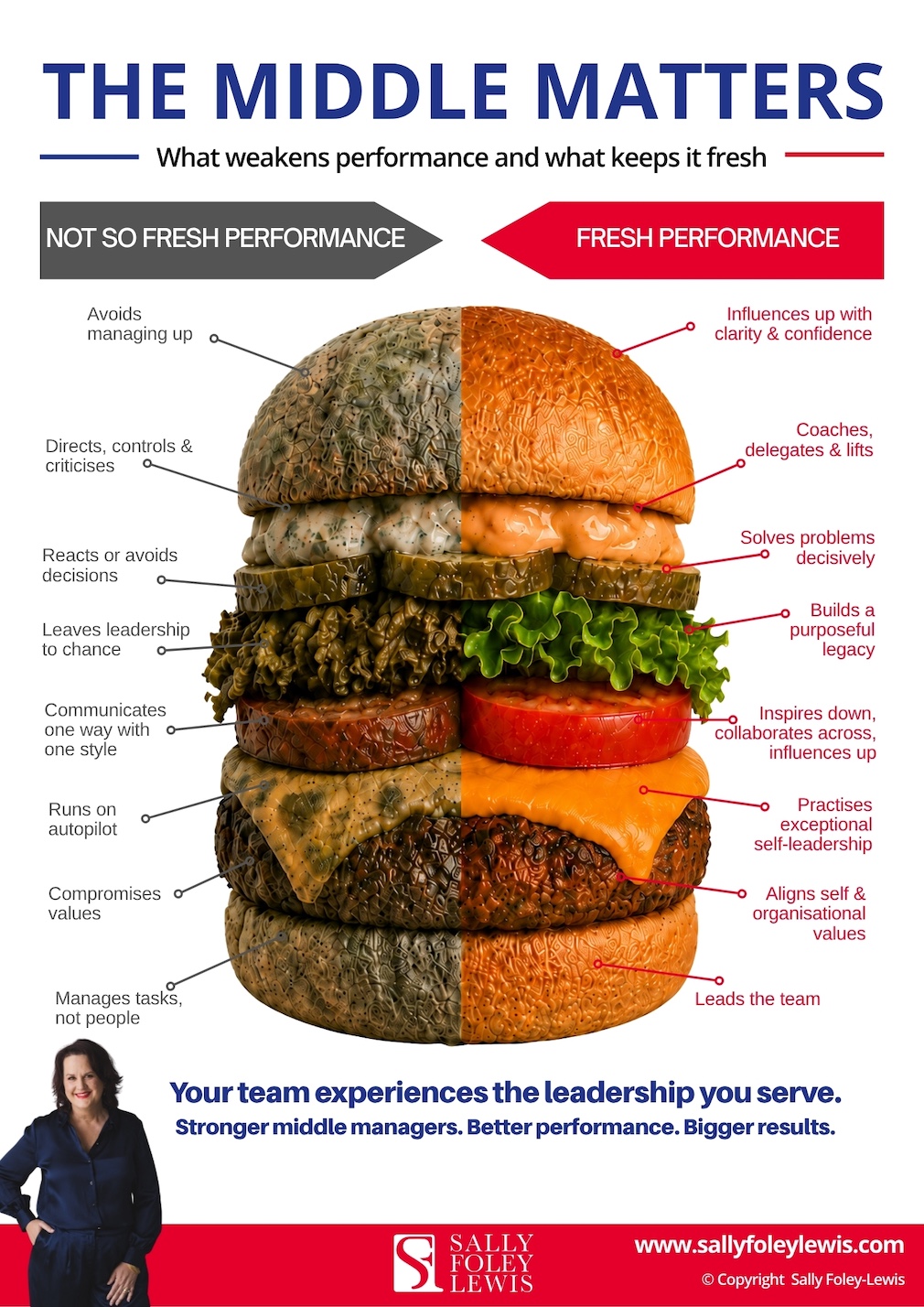
Middle managers do not become ineffective overnight. Performance deteriorates ingredient by ingredient: values are compromised, communication becomes one-directional, decisions are avoided, self-leadership slips, and developing others gives way to controlling them.
That is why the burger is more than a playful metaphor. Every layer represents a capability that contributes to high performance. Values provide the substance. Self-leadership builds credibility. Communication enables managers to inspire down, collaborate across and influence up. Problem-solving keeps work moving. A clear leadership legacy gives people something meaningful to follow. The secret sauce is the ability to lift others through feedback, coaching, delegation and performance management.
The top and bottom buns matter too. Middle managers must influence upwards while leading the people who report to them. They translate strategic direction into daily priorities, then bring frontline insight back to decision-makers. When either connection breaks down, senior leaders lose visibility, employees lose clarity and the manager in the middle absorbs the pressure from both directions.
When one ingredient is neglected, the effect spreads. Poor decisions create delays. Weak communication fuels confusion. Avoided feedback lowers standards. Misaligned values damage trust. Eventually, a capable manager can look like the problem when the real issue is an underdeveloped leadership system.
The warning signs are often visible before performance seriously declines. Meetings become updates rather than conversations. The manager answers every question instead of building the team’s judgement. Difficult feedback is postponed. Problems travel upwards without possible solutions. Employees wait for permission, while senior leaders wonder why the middle is not taking greater ownership.
None of this is fixed by adding another generic leadership course to the calendar. Development must connect directly to the work middle managers are expected to perform. They need opportunities to practise difficult conversations, make decisions with incomplete information, delegate meaningful responsibility and influence stakeholders without relying on positional authority. Learning becomes useful when it changes what managers do the very next day.
Keeping performance fresh requires attention from both sides. Middle managers must own their development, examine their habits and practise the skills their role demands. Senior leaders must provide clear expectations, useful feedback, appropriate authority and genuine development. Organisations can not simply promote strong technical performers and hope leadership appears.
For middle managers, the practical starting point is an honest ingredient check. Where are you strongest? Which capability has been neglected? What behaviour is your team experiencing from you consistently? Choose one ingredient and improve it deliberately. Better leadership is built through repeated behaviour, not occasional bursts of inspiration.
Freshness also depends on regular maintenance. Like a commercial kitchen, cleanliness, food use-by dates, temperature controlled environments, avoiding cross contamination of different food stuffs all leads to a safe and well maintained kitchen that leads to, or at least strongly contributes to, great food.
Leadership capabilities weaken when workloads increase and reflection disappears. Short, frequent conversations about priorities, decisions, relationships and team capability are more valuable than waiting for an annual review. They help managers adjust early, before a neglected ingredient becomes a serious costly performance problem.
For executives, the question is not simply whether middle managers are performing. It is whether the organisation has created the conditions in which they can perform. Conflicting priorities, unclear decision rights, excessive reporting and constant escalation can spoil even capable leadership. Accountability without authority is not development; it is a pressure cooker.
High-performing organisations do not leave the middle to chance. They deliberately strengthen every leadership ingredient and ensure managers can lead their teams while navigating competing demands from above and across the business.
That is why strengthening the middle is not a training initiative; it is a core business performance strategy.
When every leadership ingredient is working, the middle becomes the engine of performance. Because the middle does not merely carry strategy, it determines whether strategy reaches people, shapes behaviour and produces results.
...
Check out the Burger Program: https://www.sallyfoleylewis.com/burger-workshop-pub or reach out if you would like to discuss this program for your mid-level leaders.
Keywords: Leadership, Management
 The Age of Continuous Shocks: Why the coming downturn will be decided in your supply chain
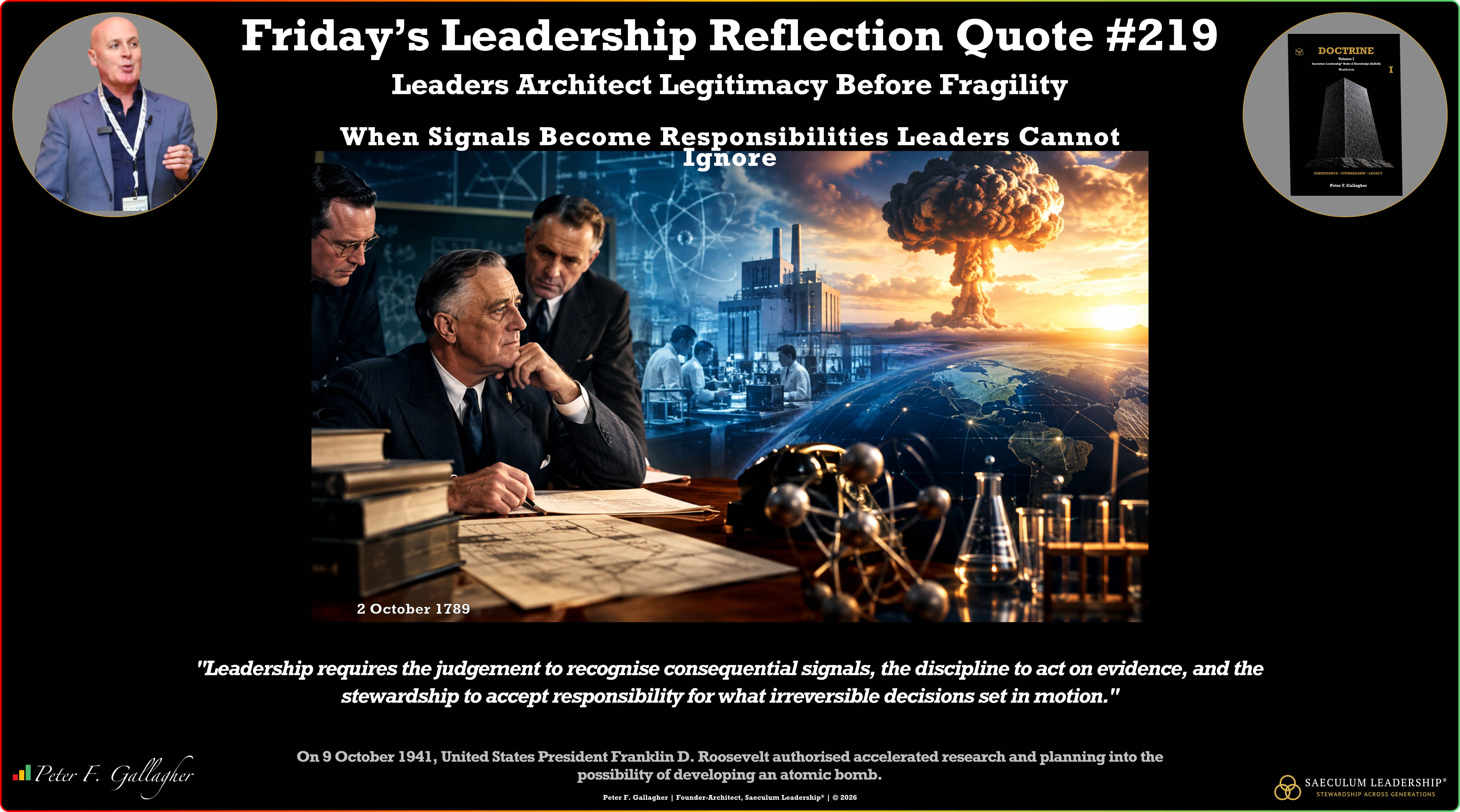 Friday’s Leader Reflection Quote – Saeculum Leadership Leaders Accept Decisions Create Responsibilities
 The Corix Partners Friday Reading List - October 9, 2026
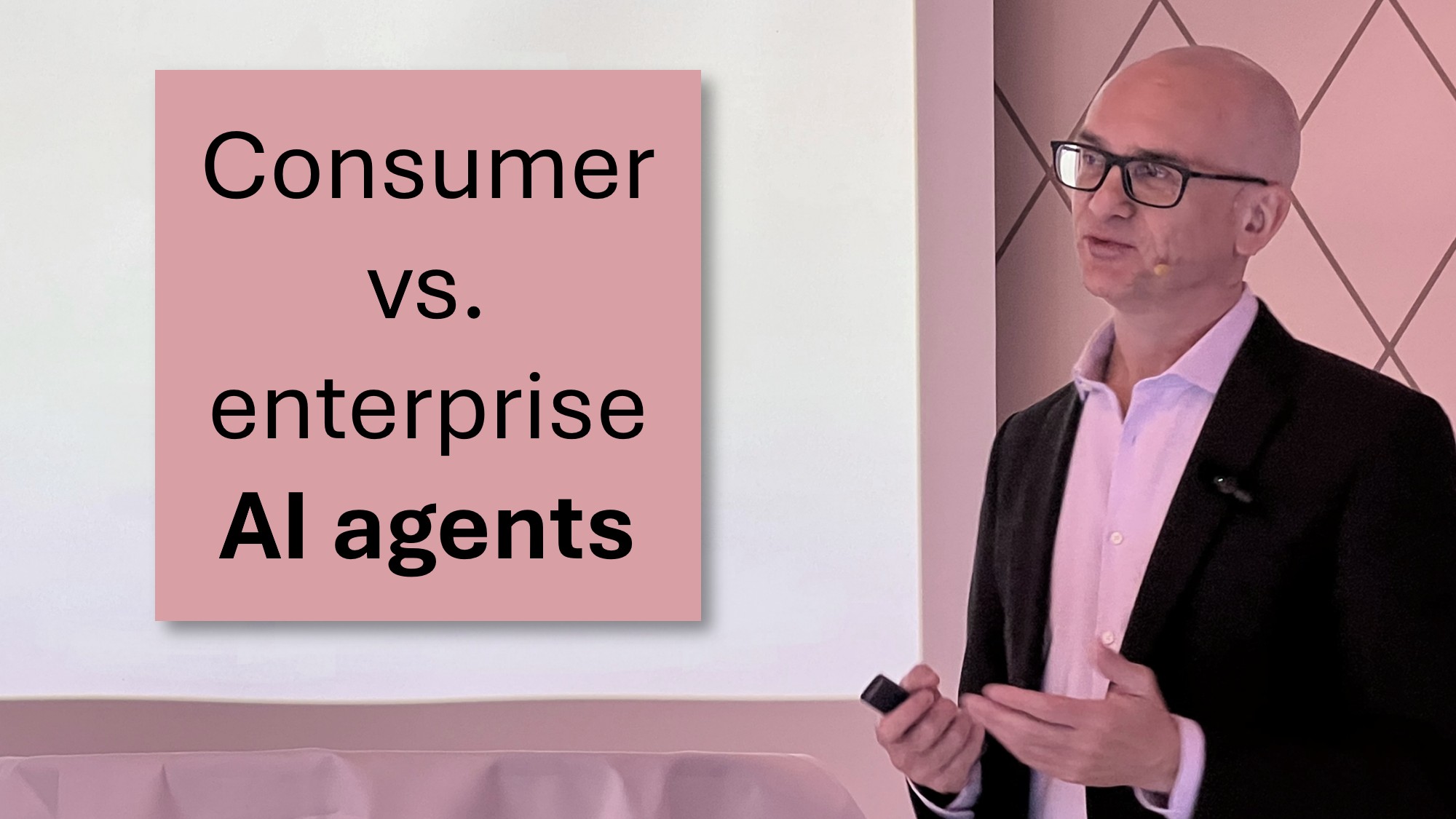 Consumer vs. enterprise AI agents
 Best Supply Chain AI Tools in 2026: SCM SENSEI AI and Ask Lora Compared