You've reached your limit for this session. Upgradefor2questions per session /5monthly and deeper insights.
Upgrade for more features
Unlock investment topics functionality via joining any of our paid plans.
Upgrade for more features
Unlock access to Thinkers360 AI to fast-track your search for analysts and influencers.
This feature is available for Enterprise Lite and Enterprise Members Only.
Upgrade for more features
Upgrade to create your own analyst relations newsroom and interact with over 10K B2B analysts and influencers on Thinkers360.
Upgrade for more features
Unlock all social handles for all members via joining any of our paid plans.
Upgrade for more features
Gain a competitive edge with full Company Rankings. Available onEnterpriseandEnterprise Lite.
Unlock Full Rankings
You have been temporarily restricted. Please be more thoughtful when adding content for your portfolio. Your portfolio and digital media kit and should be reflective of the professional image you wish to convey. Accounts may be temporarily restricted if we receive reports of spamming or if the system detects excessive entries.
Publish your original ideas on the Thinkers360 platform!
This feature is available for Pro and Pro-Plus Members Only.
Upgrade for more features
Speaker Bureau functionality whereby individuals can be featured speakers within our Speaker Bureau service and enterprises can find and work with speakers.
This feature is available for Pro, Pro-Plus, Premium and Enterprise Members Only.
Upgrade for more features
Highlight your featured products and services within our company directory for enhanced visibility to active B2B buyers worldwide.
This feature is available for Pro, Pro Plus, Premium and Enterprise Members Only.
Upgrade for more features
You’ve reached your limit for this feature.
Upgrade for more features
Publish on the Web’s #1 Thought Leadership Blog.Join the elite. Ranked the top thought leadership blog by Feedspot (2021–2025), Thinkers360 offers you more than just a platform - it offers authority. Share your insights with our community and tap into a combined network of over 100M followers through our peer-to-peer marketplace.
Upgrade to Publish & Scale Your Reach
You’ve reached your daily limit for entering quotes. Please only add personally-authored content which is reflective of your digital media kit and thought leadership portfolio.
For full access to the Thinkers360 content library, please join ourContent Planor become a contributor by posting your own personally-authored content into the system viaAdd PublicationorImport Publication.
Unlock your personalized dashboard including metrics for your member blogs and press releases as well as all the features and benefits of our member plans!
Upgrade for more features
ExploreFeatures & BenefitsPage
Aug11

For years, artificial intelligence has been positioned as procurement's next competitive advantage. AI-powered tools can benchmark supplier prices, analyze spend data, identify sourcing opportunities, simulate negotiation scenarios, and recommend optimal negotiation strategies in minutes. Organizations that adopted these capabilities early gained a significant edge by making faster, more informed decisions.
But the landscape is changing.
Suppliers are embracing AI just as rapidly. They are using AI to optimize pricing strategies, predict buyer behavior, identify negotiation patterns, recommend counteroffers, and even automate parts of the sales process. The same technologies that help procurement professionals prepare for negotiations are helping suppliers prepare just as effectively.
This creates a new reality for procurement leaders. Negotiations are no longer taking place between one informed buyer and one less-informed supplier. Increasingly, they are becoming conversations where both sides arrive armed with AI-generated insights, market intelligence, and predictive analytics.
When everyone has AI, technology itself stops being the differentiator. Critical thinking becomes the competitive advantage.
Historically, procurement teams invested significant time gathering information before entering negotiations. They analyzed historical spend, benchmarked prices, studied supplier performance, and monitored market trends to strengthen their position. Better information often translated directly into better outcomes.
Today, AI has dramatically reduced that information gap.
Within seconds, both buyers and suppliers can access pricing benchmarks, contract insights, demand forecasts, risk indicators, and historical performance data. Both can model different negotiation scenarios. Both can anticipate likely objections. Both can generate compelling negotiation strategies.
This democratization of information is changing the nature of negotiations. Winning is no longer about having access to more data. It is about making better decisions with the same data.
One of the greatest dangers of AI is not that it produces incorrect recommendations. In many cases, its analysis is remarkably accurate. The bigger risk is that its recommendations are delivered with such confidence that users stop questioning them.
This phenomenon, often referred to as automation bias, occurs when people place excessive trust in machine-generated recommendations simply because they come from an intelligent system. In procurement, that can lead to missed opportunities, poor commercial decisions, and strained supplier relationships.
Imagine an AI recommending an aggressive price reduction because historical data suggests a supplier accepted similar concessions in previous negotiations. On paper, the recommendation appears sound.
What the AI may not know is that the supplier recently experienced higher raw material costs, invested in expanding manufacturing capacity, or is prioritizing long-term strategic customers over short-term revenue. Following the recommendation without questioning its assumptions could damage a relationship that is strategically valuable.
AI provides answers.
Procurement leaders must determine whether those answers still make sense in today's business context.
Artificial intelligence is exceptionally good at optimizing measurable objectives.
Ask AI to reduce procurement costs, and it will identify opportunities to negotiate lower prices. Ask it to improve payment terms, and it will recommend strategies to maximize working capital. Ask it to benchmark suppliers, and it will quickly identify those that appear most competitive.
But negotiations rarely revolve around a single objective.
Sometimes the goal is to secure supply continuity during market volatility. Sometimes it is to encourage supplier innovation, strengthen collaboration, reduce geopolitical risk, improve sustainability performance, or establish long-term strategic partnerships.
These priorities often require trade-offs that extend beyond what data alone can reveal.
A procurement leader may intentionally accept a slightly higher price from a supplier that consistently delivers on time, invests in innovation, and has demonstrated resilience during supply chain disruptions. From AI's perspective, this may not appear to be the optimal financial decision. From a business perspective, it may be exactly the right one.
AI optimizes for measurable outcomes --- Humans optimize for business intent.
That distinction will become increasingly important as AI adoption accelerates.
Many professionals approach AI as though it were an expert whose recommendations should simply be followed.
The most successful procurement leaders will adopt a different mindset. They will treat AI as their toughest colleague. Rather than asking AI for a negotiation strategy and accepting the first response, they will challenge it from multiple perspectives.
Why is this recommendation the best option?
What assumptions are driving this conclusion?
What information could change the recommendation?
What would the supplier argue against this strategy?
What risks have been overlooked?
If you were negotiating on behalf of the supplier, how would you respond?
These questions transform AI from a recommendation engine into a strategic debate partner.
Instead of validating existing assumptions, AI becomes a tool for exposing weaknesses, identifying blind spots, and testing alternative strategies before entering the negotiation room.
In an environment where suppliers are asking their own AI similar questions, this ability to challenge recommendations becomes a powerful competitive advantage.
Some observers believe that as buyers and suppliers adopt AI, negotiations will become evenly matched because both sides possess similar technological capabilities.
The opposite may be true.
As AI systems converge on similar market data, pricing benchmarks, and optimization strategies, negotiations risk becoming increasingly predictable. If both AI systems recommend nearly identical approaches, progress can stall.
The breakthrough often comes from a human who reframes the conversation.
Consider a procurement manager negotiating a three-year agreement with a strategic supplier. The buyer's AI recommends pursuing an additional 8% price reduction based on market benchmarks. Meanwhile, the supplier's AI recommends holding firm because switching costs make the customer unlikely to change vendors.
If both parties follow their AI recommendations rigidly, negotiations reach an impasse.
A skilled negotiator, however, may recognize that both organizations value long-term stability more than a short-term price adjustment. Instead of continuing to debate pricing, the conversation shifts toward longer contract terms, collaborative demand forecasting, inventory optimization, joint innovation initiatives, or improved service levels.
Neither AI initially identified this solution because both were optimizing for price. The human negotiator optimized for value. That is where competitive advantage emerges.
As AI becomes embedded in procurement workflows, organizations should develop a disciplined approach to evaluating its recommendations.
The first step is verifying the quality and completeness of the underlying data. Even the most advanced AI cannot compensate for outdated supplier information, incomplete spend data, or inaccurate market intelligence.
The second step is evaluating whether the recommendation aligns with the organization's strategic objectives rather than simply optimizing a single metric such as cost or payment terms. Procurement leaders should ask whether the proposed strategy strengthens supplier relationships, supports resilience, enables innovation, and contributes to long-term business goals.
Finally, every recommendation should pass through the filter of human judgment. A useful question to ask is, Would I still make this decision if AI had never suggested it? If the answer is no, it is worth exploring why. Sometimes AI reveals opportunities humans overlook. At other times, it encourages decisions that require greater scrutiny.
The objective is not to distrust AI. The objective is to think alongside it.
Ironically, the more organizations invest in AI, the more valuable uniquely human capabilities become.
Negotiations are influenced by trust, credibility, empathy, timing, cultural awareness, creativity, and the ability to understand motivations that are never explicitly stated. They require balancing commercial outcomes with long-term relationships and adapting strategies as new information emerges.
These are capabilities that AI can support but not fully replicate.
Procurement leaders who combine analytical insights with emotional intelligence, curiosity, and sound judgment will consistently outperform those who rely solely on algorithms.
Technology can recommend the next move. Only humans can decide whether it is the right move.
Twenty years ago, procurement teams competed on access to information. Organizations with better market intelligence often secured better commercial outcomes because they knew more than their suppliers.
Today, AI is rapidly democratizing information. Buyers and suppliers increasingly have access to the same market data, similar predictive models, and comparable negotiation tools.
The next competitive advantage will not come from owning better technology. It will come from thinking more critically.
The procurement leaders who succeed in the AI era will not be those who unquestioningly accept AI-generated recommendations, nor those who reject AI altogether. They will be the professionals who know when to trust AI, when to challenge it, and when to rely on experience to see what algorithms cannot.
In the future of procurement negotiations, the winner will not be the buyer with the smartest AI or the supplier with the most advanced algorithm.
It will be the negotiator who asks the better questions.
Keywords: AI, Business Strategy, Procurement
 "The AI may in fact be conscious." Really?
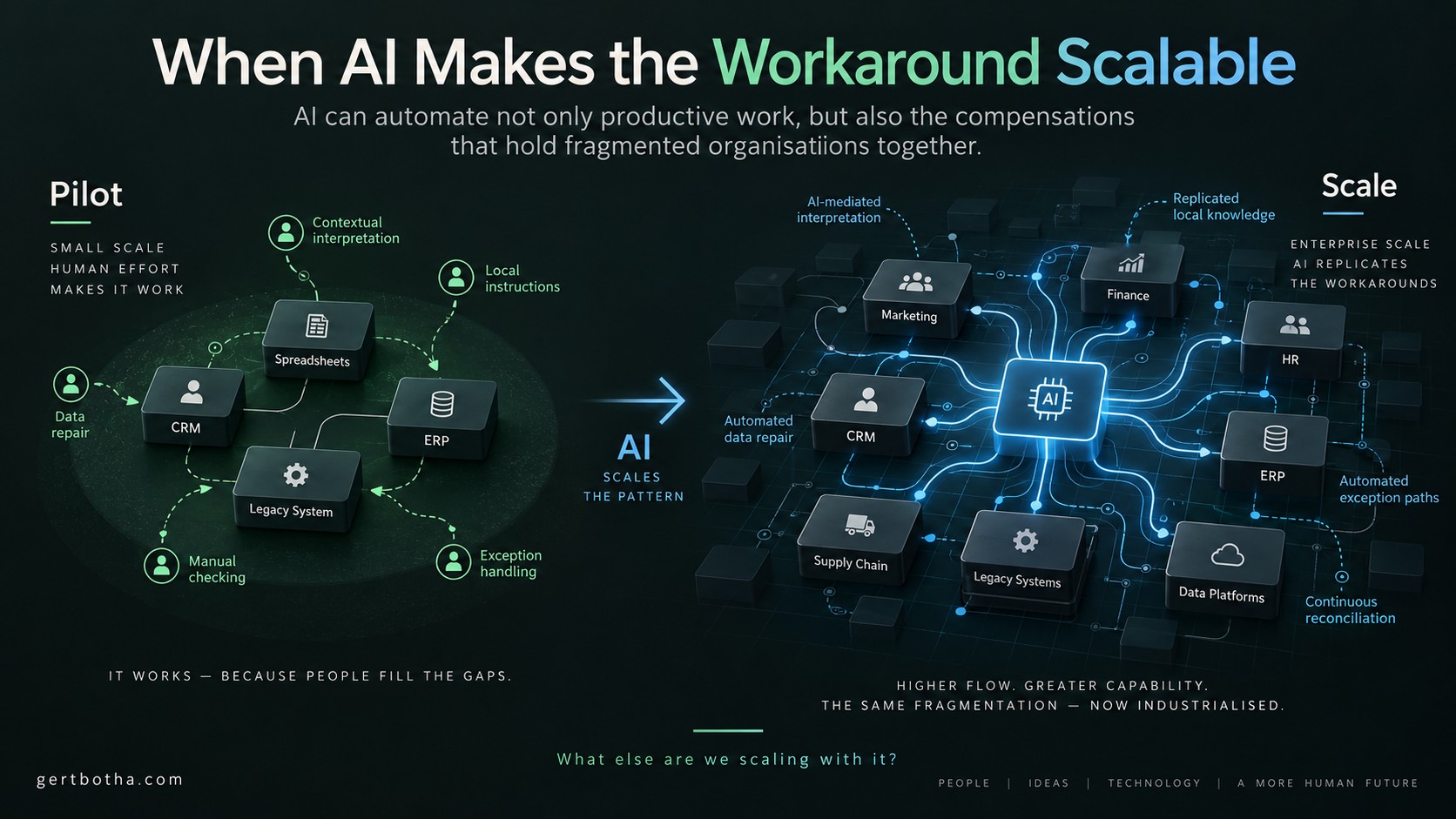 When AI Makes the Workaround Scalable
 The Age of Continuous Shocks: Why the coming downturn will be decided in your supply chain
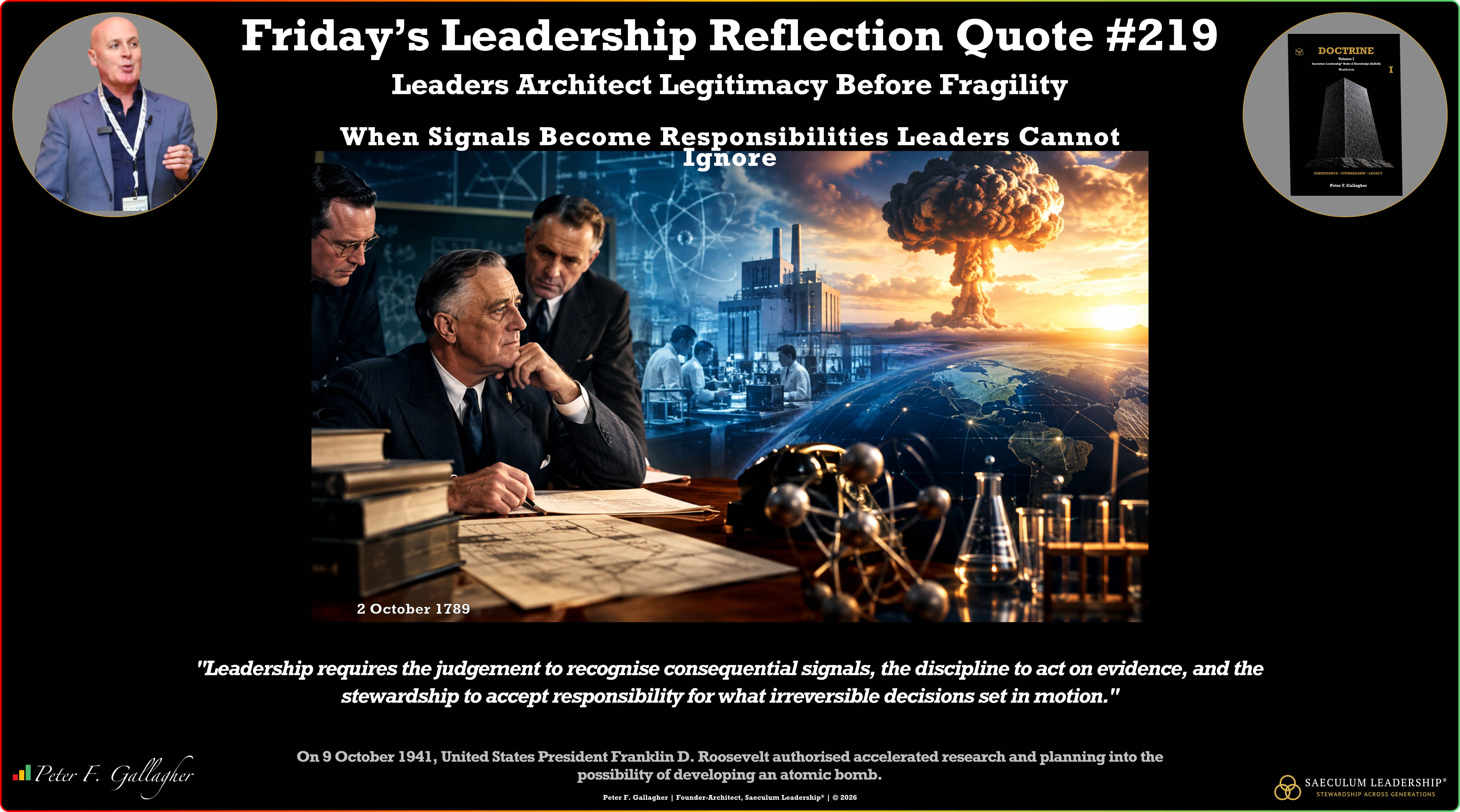 Friday’s Leader Reflection Quote – Saeculum Leadership Leaders Accept Decisions Create Responsibilities
 The Corix Partners Friday Reading List - October 9, 2026