
Mar12
“When times are tougher, you can’t leave. And when times are better, you don’t want to leave.”
— Lloyd Blankfein, former CEO of Goldman Sach
That quote captures one of the most difficult realities of leadership.
If the business is struggling, the CEO feels responsible for fixing it. But if the company is thriving, it’s hard to imagine stepping away from something you’ve spent years—or decades—building.
For founders especially, the CEO role isn’t just a job. It’s an extension of who they are. Which is why transitioning out of the role is rarely just a logistical decision. It’s emotional, personal, and organizational all at once.
But here’s the truth: leaving the CEO role well requires as much leadership as stepping into it.
And doing it well is an art.
Start With a Real Timeline
As leadership researchers note, without a defined timetable, it becomes much harder to groom successors and follow an orderly succession process.
Many founder-led companies don’t begin thinking about CEO succession until the owner decides they’re “getting close” to retirement.
By then, it’s often too late to do the transition well.
One of the most important decisions a founder can make is establishing a clear timeline for stepping out of the CEO role. Without a timeline, it’s extremely difficult to prepare future leaders or give them the experiences they need to succeed.
In my experience, three to five years of planning and preparing your successor is ideal.
That amount of time allows you to develop a few leaders, test them in larger roles, and give them the exposure they need to run the entire business—not just one department. As your retirement date nears, you’l begin to see the one who would thrive under the pressure of running the whole company.
Succession planning is not about finding someone when you’re ready to leave.
It’s about developing someone who will be ready when the time comes.
Make Succession an Ongoing Conversation
In founder-led companies, succession planning often happens in private—inside the owner’s head.
That’s a mistake.
The best transitions occur when the CEO and their HR leader (or leadership team) discuss the future leadership pipeline regularly. The CEO of a 300-person manufacturing firm described his company’s process to me: he and his HR partner constantly ask questions like:
Those conversations lead to real development decisions. A potential successor might lead a strategic initiative like standing up a new facility, or reorganizing two departments into one, or representing the company with key industry clients or partners.
Over time, these experiences stretch leaders beyond their current roles and prepare them for the broader responsibilities that affect running the whole company.
The Final Years Are About Enterprise Exposure
One of my clients wanted to elevate a department leader to COO for two years and then to the CEO role. Strategically, that was not a good decision. If someone moves into a new division with only a year or two before the CEO handoff, they may not have enough time to establish credibility or demonstrate results.
The final years of a CEO’s tenure are often better spent giving future leaders enterprise-level exposure, as explained above.
These experiences allow potential successors to see the business as a whole—and allow others in the organization to see them operating at an enterprise level.
Who Should Facilitate the Succession Process?
One question often asked is whether succession planning should be managed internally or facilitated by an outside advisor.
Both approaches can work.
Some companies prefer to keep the conversation inside the leadership team. Others find that an outside facilitator helps guide difficult discussions, ask tough questions, and bring structure to the process. One benefit of an outside facilitator is that they have no agenda other than to do what is best for you, their client.
The important thing is not who leads the conversation, but that the conversation happens consistently.
Transparency Builds Confidence During the Transition
Leadership transitions can make people nervous—especially in founder-led companies where the CEO has often been the face of the business for years.
This is why transparency matters so much in a CEO transition.
The strongest organizations don’t wait until the founder is walking out the door to address succession. Instead, they communicate early that a thoughtful transition is underway.
That message does something powerful.
It reassures stakeholders that the company is stable. It signals that leadership continuity has been planned. And it allows the incoming CEO to begin building credibility with employees, customers, lenders, and partners before the formal handoff occurs.
Handled well, the announcement of a successor doesn’t create unease – quite the opposite.
People see that the founder is not simply leaving, but intentionally passing the baton in a way that protects the future of the company and its various stakeholders.
And that is one of the strongest signals of leadership a CEO can give.
Leadership Means Knowing When to Pass the Baton
Building a successful company takes vision, persistence, and years of hard work.
But the final act of leadership is something different.
It requires stepping back and preparing the next generation to take the organization further than you could alone.
Leadership isn’t only measured by how well you ran the company; it’s measured by how well the company performs after you leave it.
One final piece of advice: Succession discussions should be revisited regularly as leaders grow, business needs evolve, and timelines become clearer.
Keywords: Entrepreneurship, HR, Leadership
 Best Supply Chain AI Tools in 2026: SCM SENSEI AI and Ask Lora Compared
 Making Silos Permeable
 The Corix Partners Friday Reading List - October 2, 2026
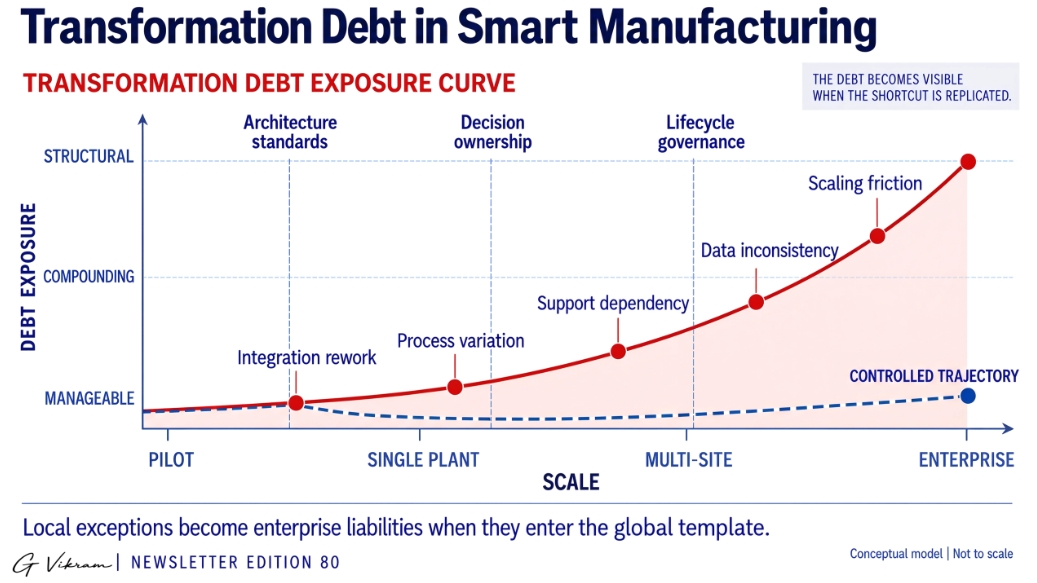 The most dangerous debt in a smart factory isn’t financial.
 Why mission changes everything, leadership lessons from two boardrooms