Dec22

Sponsored Post by Signalhire
Talent acquisition has fundamentally changed. The days of posting job descriptions and waiting for applications are over. Today's competitive hiring landscape requires a proactive approach where recruiters source, engage, and convert candidates before they even know they're looking for new opportunities.
Yet most organizations still approach hiring reactively. They wait for roles to open, scramble to fill pipelines, and compete for the same active candidates everyone else is chasing. This reactive model creates delays, drives up costs, and often results in settling for "good enough" rather than exceptional.
The organizations winning the talent war have made a strategic shift. They've moved from reactive hiring to continuous talent intelligence. They're building relationships with potential candidates months or years before positions open. And they're using contact intelligence to make this approach scalable.
This isn't about technology replacing human judgment. It's about arming talent acquisition teams with the intelligence they need to operate strategically rather than constantly firefighting.
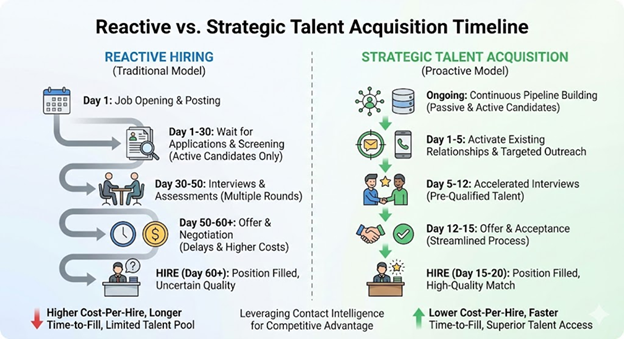
When a critical role opens, most companies follow the same playbook. Post the job. Review applications. Screen candidates. Schedule interviews. The entire process takes 40-60 days on average, and that's assuming everything goes smoothly.
But the real cost isn't just time. It's opportunity cost.
Every day a revenue-generating role sits vacant, your company loses potential income. Every week, a critical technical position remains unfilled, projects stall and timelines slip. Every month you operate without key leadership, strategic initiatives languish.
Then there's the quality cost. When you're hiring reactively under pressure, you're limited to whoever happens to be actively job searching right now. The best candidates, the ones currently thriving in their roles, aren't checking job boards. They're busy doing excellent work for your competitors.
Reactive hiring forces you to choose from a constrained pool rather than pursuing the ideal candidates your organization actually needs.
Forward-thinking talent acquisition teams have rejected the reactive model entirely. Instead, they're building continuous talent pipelines for critical roles, identifying high-potential candidates long before positions open.
This approach requires fundamentally different infrastructure. You can't build relationships at scale without knowing who to build relationships with. You can't engage passive candidates without having their contact information. And you can't move quickly when a role opens if you're starting from zero.
Strategic pipeline building means identifying potential candidates based on specific criteria,their current role, skills, company, location, and career trajectory. It means having direct contact information so you can reach decision-makers personally rather than competing with hundreds of other recruiters in LinkedIn InMail.
The most sophisticated teams are researching potential candidates systematically, building databases of qualified talent segmented by role type, skill set, and readiness to move. When a position opens, they're not starting from scratch. They're activating existing relationships.
This transforms hiring from a frantic sprint into a strategic process where you control timing, quality, and outcomes.
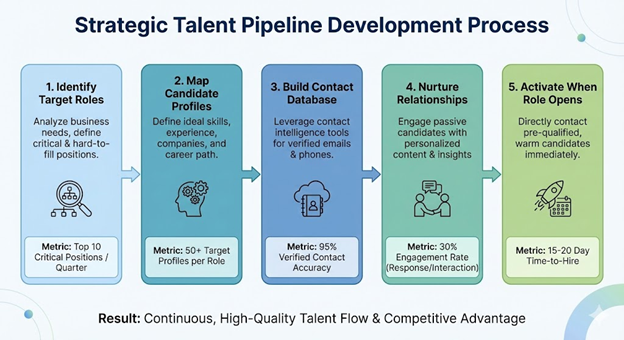
Strategic pipeline building only works if you can actually contact the people you've identified. This is where most recruitment strategies break down.
Traditional sourcing finds names and titles. But names and titles don't build relationships. Direct communication does. And direct communication requires verified contact information, professional email addresses and phone numbers that actually reach the person you're trying to engage.
The challenge is scale. Manually researching contact information for hundreds of potential candidates is impossibly time-consuming. Generic email addresses (info@company.com) go to gatekeepers, not decision-makers. And outdated contact data wastes time on bounced emails and disconnected numbers.
Contact intelligence solves this infrastructure problem. Rather than manually hunting for each person's email address and phone number, strategic recruiters leverage aggregated professional contact databases that provide verified, current information at scale.
This isn't just about efficiency, though saving hours per candidate adds up quickly. It's about making proactive recruitment actually feasible. You can't build a strategic pipeline if every candidate requires three hours of manual research just to find their contact information.
Generic talent pools don't work for specialized hiring. If you're recruiting for niche technical skills, specific industry experience, or leadership roles in particular sectors, you need targeted approaches that reflect those specializations.
This is where industry and company-specific talent mapping becomes critical. Rather than broadly searching for "software engineers" or "marketing managers," strategic teams map talent within specific companies known for excellence in relevant areas.
Consider retail technology roles. If you need someone who understands retail operations at enterprise scale, you're not looking at random e-commerce companies. You're identifying people currently working at organizations like Walmart that operate at the complexity level your role requires. Building a targeted Walmart employee email list for relevant departments gives you direct access to candidates with exactly the experience your role demands.
This company-specific approach works across industries. Need pharmaceutical regulatory expertise? Map talent at major pharma companies. Looking for fintech product managers? Target employees at leading financial technology firms. Recruiting machine learning engineers? Identify teams at AI-forward companies.
The strategic advantage comes from precision. You're not sorting through thousands of loosely relevant candidates. You're engaging dozens of highly qualified people whose current experience directly translates to your open role.
Contact intelligence doesn't just accelerate reactive hiring. It fundamentally enables relationship-based recruiting at scale.
When you have direct contact information for potential candidates identified months before you need them, you can nurture relationships over time. You can share relevant content, provide industry insights, and establish your organization as a desirable employer long before asking them to consider a specific role.
This relationship-building approach transforms candidate perception. Instead of being "just another recruiter with a job," you become a valuable professional contact who provides insights and opportunities. When you eventually present a role, candidates respond because you've already established credibility and trust.
The best talent acquisition teams treat this like enterprise sales. They segment audiences, create nurture sequences, and track engagement over time. They don't blast the same generic outreach to everyone. They personalize communication based on the candidate's background, interests, and career stage.
This only works if you have the infrastructure to execute it, direct contact information, organized candidate databases, and systems for tracking communication history. Without these foundations, relationship-based recruiting remains theoretical rather than practical.
Strategic contact intelligence raises important questions about data privacy and ethical recruiting practices. Just because you can contact someone doesn't always mean you should.
Responsible talent acquisition teams establish clear guidelines around contact usage. They respect candidates who've indicated they're not interested. They avoid aggressive outreach that damages their employer brand. And they ensure their data sourcing complies with relevant privacy regulations.
The distinction between strategic intelligence and invasive harassment matters. Strategic recruiting uses professional contact information to initiate respectful, personalized conversations about career opportunities that might genuinely benefit the candidate. Invasive harassment involves repeated unwanted contact, sharing information candidates consider private, or disrespecting stated boundaries.
Organizations committed to ethical recruiting establish internal standards that exceed minimum legal requirements. They train recruiters on appropriate outreach frequency, message personalization, and respecting opt-out requests. They audit their data sources to ensure information comes from legitimate professional contexts, not personal or private channels.
Done properly, contact intelligence enables respectful professional networking at scale. Done poorly, it enables spam. The difference is in implementation, not technology.
Traditional recruiting metrics focus on time-to-fill and cost-per-hire. These matters, but they don't capture the full value of strategic talent acquisition.
More sophisticated organizations track pipeline health metrics: How many qualified candidates exist in pipelines for critical roles? What percentage of pipeline candidates respond to initial outreach? How many pipeline relationships convert to applications when roles open?
They measure proactive versus reactive hiring ratios. What percentage of hires came from pre-existing pipelines versus emergency postings? How does quality-of-hire compare between these sources?
They track relationship development metrics. How many candidates have they engaged but not yet recruited? How many stay engaged over 6, 12, 18 months? What's the eventual conversion rate on long-term relationships?
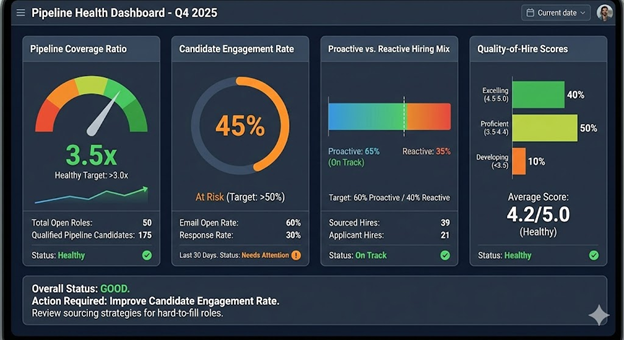
These metrics tell a different story than traditional measures. They reveal whether your talent acquisition function operates strategically or reactively. They show whether you're building a sustainable competitive advantage in hiring or constantly starting from zero.
Moving from reactive to strategic talent acquisition doesn't happen overnight. It requires changing processes, mindsets, and technologies.
Start by identifying your highest-value roles,positions that are business-critical, hard to fill, or both. Don't try to build strategic pipelines for every role immediately. Focus on the 10-20 positions where proactive recruiting delivers the most value.
For each priority role, define your ideal candidate profile precisely. What specific experience matters? Which companies employ people with these skills? What career progression typically precedes this role?
Build your contact intelligence infrastructure. Evaluate tools and databases that provide verified professional contact information at scale. Ensure whatever solution you choose integrates with your existing applicant tracking system and CRM.
Train your team on relationship-based recruiting. Strategic talent acquisition requires different skills than reactive hiring. Recruiters need to become comfortable with long-term nurture, personalized outreach, and consultative conversations.
Measure rigorously and iterate constantly. Track which outreach messages generate responses. Monitor which talent sources produce the best hires. Adjust your approach based on data, not assumptions.
Organizations that master strategic talent acquisition gain compounding advantages over time.
They reduce time-to-fill because they're not starting from zero when roles open. They improve quality-of-hire because they're selecting from broader, more qualified candidate pools. They lower cost-per-hire by reducing dependence on expensive external recruiters and job board promotions.
Perhaps most importantly, they hire people their competitors never even knew were available. While others compete for the same active candidates, strategic recruiters are having private conversations with passive candidates who aren't visible in public job markets.
In talent-constrained markets, this advantage becomes decisive. The companies that can consistently hire exceptional people faster than competitors can execute strategies others can't. They move faster, innovate more effectively, and build stronger teams.
The infrastructure enabling this advantage isn't complicated. It's contact intelligence, systematic pipeline building, and relationship-based recruiting discipline. But like most strategic advantages, it's simple in concept and difficult in execution.
The organizations that commit to this approach, who invest in the tools, processes, and training required, create sustainable competitive advantages that compound year over year. Those who continue hiring reactively will find themselves perpetually behind, competing for scraps while strategic recruiters engage the best talent first.
Keywords: HR, Future of Work, Careers
 "The AI may in fact be conscious." Really?
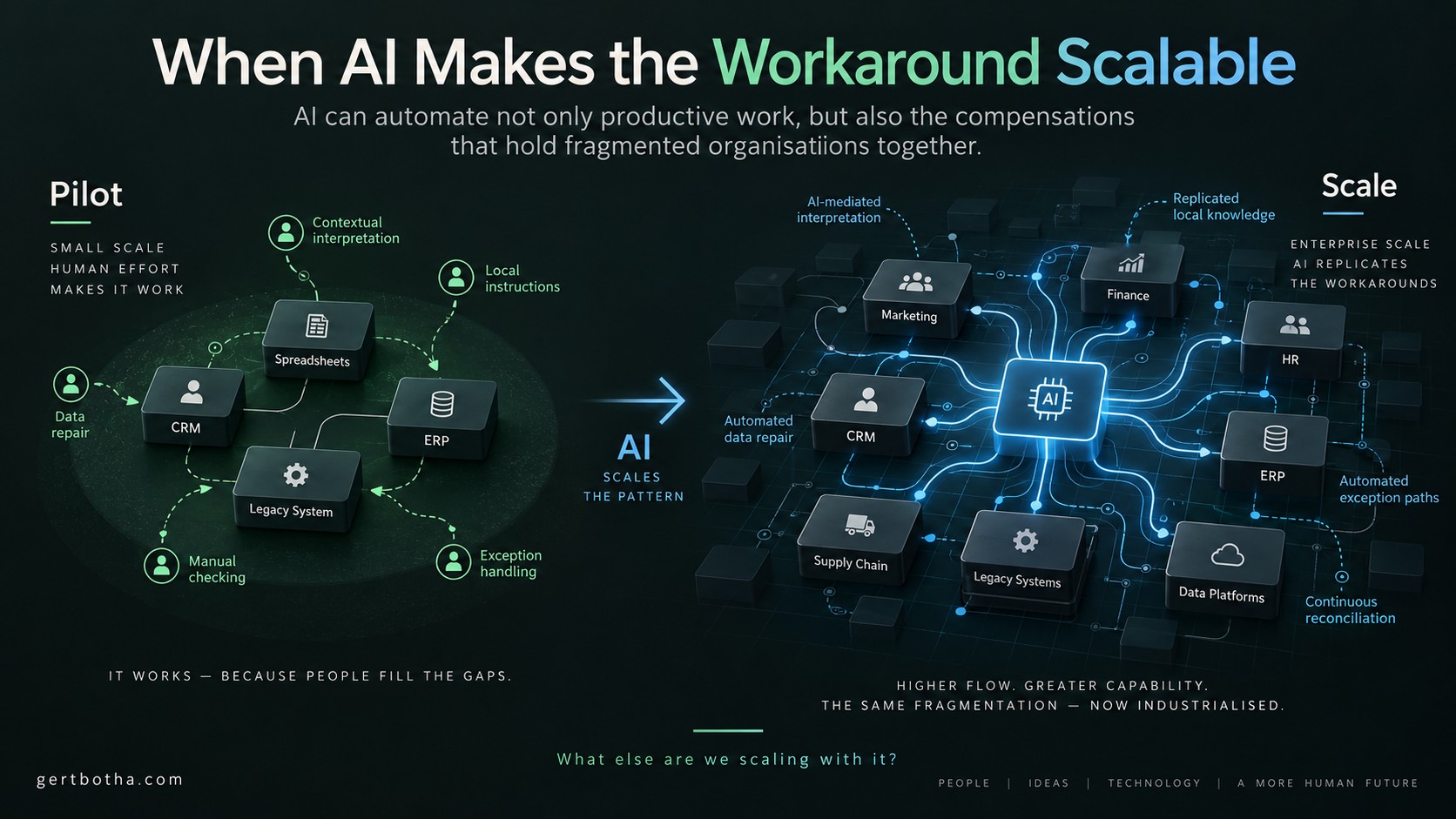 When AI Makes the Workaround Scalable
 The Age of Continuous Shocks: Why the coming downturn will be decided in your supply chain
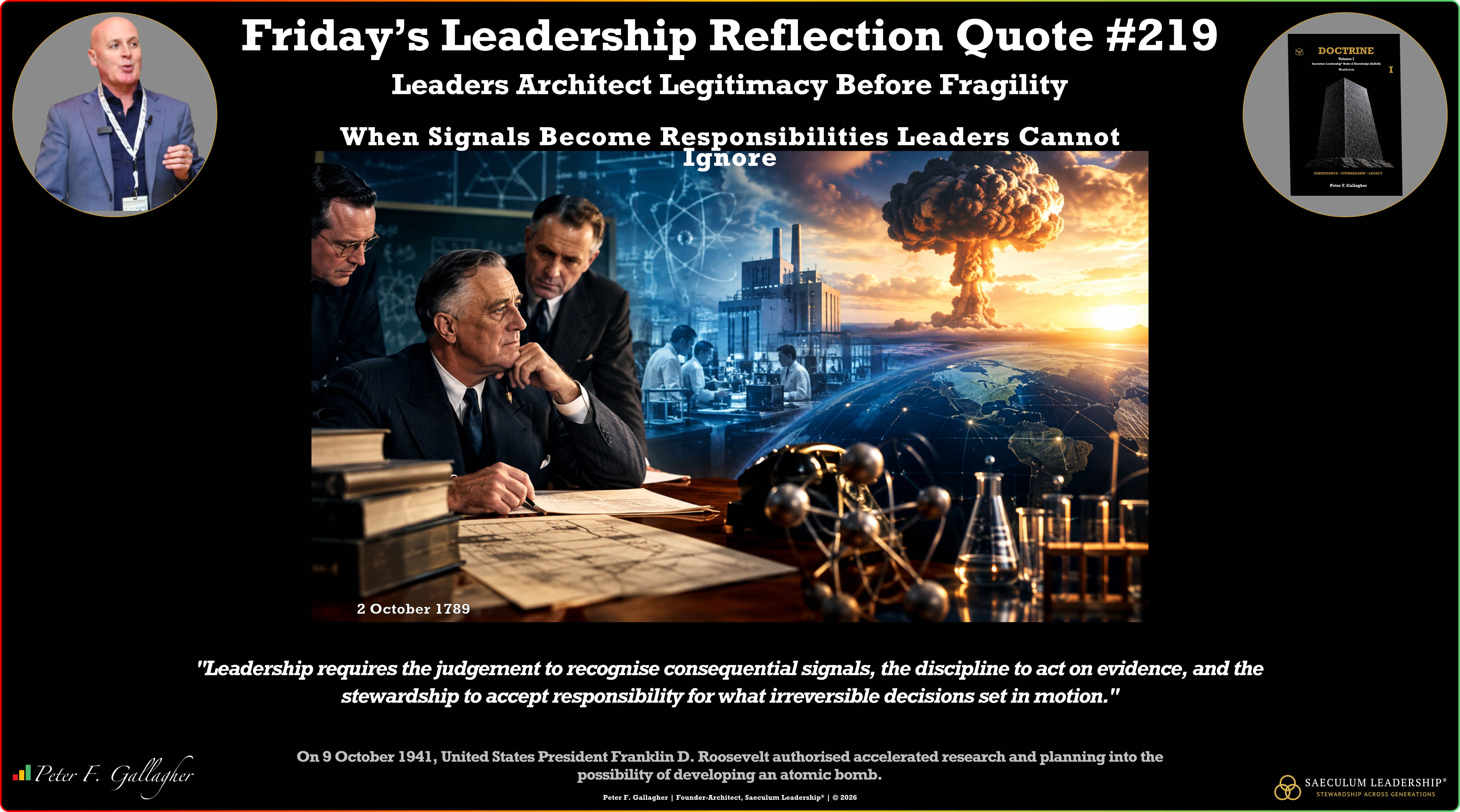 Friday’s Leader Reflection Quote – Saeculum Leadership Leaders Accept Decisions Create Responsibilities
 The Corix Partners Friday Reading List - October 9, 2026